Bathroom Hardware Finishes: How to Coordinate Every Metal
A clear system for choosing and mixing bathroom metal finishes.

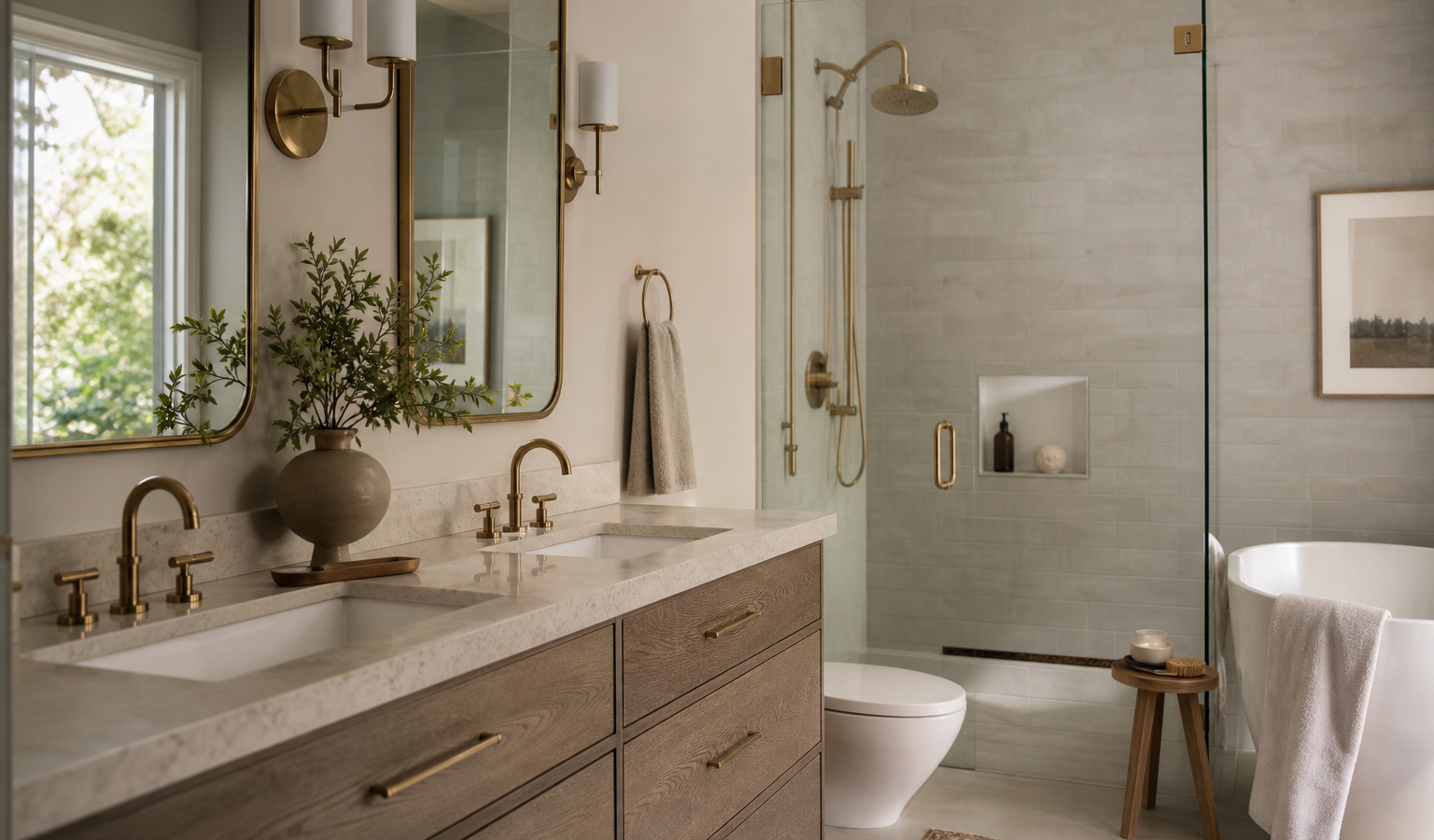
Getting bathroom hardware finishes right is what separates a room that looks designed from one that looks assembled piece by piece. The faucet, showerhead, towel bars, cabinet pulls, light fixtures, mirror frame, and even the drain all carry a metal tone, and when those tones are chosen deliberately the whole bathroom snaps into focus. This guide covers the main finishes available in 2026, how durable each one is, the rules for mixing metals without it looking accidental, and what a coordinated set of hardware actually costs.
Key takeaways
- Limit a bathroom to two or three finishes; pick one dominant metal and let the others play a supporting role.
- Keep your plumbing fixtures (faucet, showerhead, tub filler) in one finish, then vary the easily swapped pieces like pulls and accessories.
- PVD finishes resist scratching and tarnish far better than electroplated chrome and are worth the premium in hard-water homes.
- Matte black and warm brushed brass remain the leading 2026 finishes, usually paired with a cool anchor metal.
- A full coordinated hardware set runs roughly $400 to $1,500 for most bathrooms depending on finish and brand.
What bathroom hardware finishes include
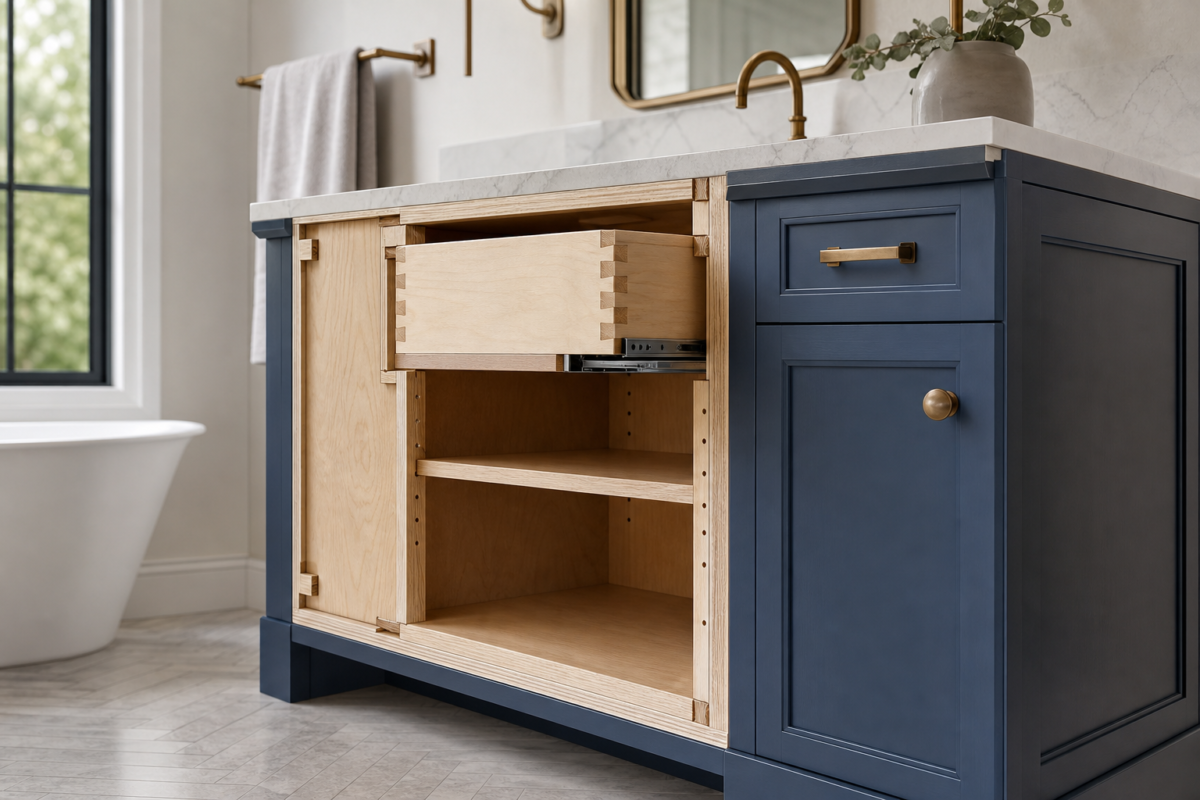
Bathroom hardware finishes cover every metal surface you touch or see in the room: the faucet and its handles, the showerhead and valve trim, the tub filler, towel bars and rings, the toilet paper holder, cabinet knobs and pulls, hinges, the mirror or medicine cabinet frame, light fixtures, the shower door hardware, and the visible drain and overflow plate. Each one comes in a range of finishes, and because there are so many pieces, small inconsistencies read loudly.
Coordination does not mean everything must match. It means every finish in the room looks like a decision. The payoff is both visual and practical: a thoughtfully coordinated room photographs better, feels more expensive, and supports a stronger resale story, which is why finish selection shows up in nearly every discussion of bathroom remodel cost and value.
The main finishes compared
The six finishes below account for the vast majority of bathroom hardware sold in the United States. Chrome is the budget cool-tone standard, brushed nickel the forgiving everyday choice, and matte black and brushed brass the design-forward picks of the moment. The right one balances the look you want against how much cleaning and how much hard water you live with.
| Finish | Tone | Shows spots / prints | Durability | Relative cost |
|---|---|---|---|---|
| Polished chrome | Cool, mirror-bright | Shows both readily | Good; can dull over years | $ |
| Brushed nickel | Cool-warm, soft satin | Hides both well | Very good | $$ |
| Matte black | Neutral, graphic | Shows water spots, hides prints | Very good (best as PVD or powder coat) | $$ |
| Brushed brass / gold | Warm | Hides both well | Excellent as PVD | $$$ |
| Oil-rubbed bronze | Warm, dark | Hides both | Good; living finish that patinas | $$ |
| PVD any color | Varies | Resists both | Excellent; hardest coating | $$$ |
Why PVD is worth the premium
Physical vapor deposition bonds a hard, colored layer to the metal at the molecular level instead of electroplating a thin surface coat. The result resists scratching, tarnishing, and corrosion far better than standard chrome or plated brass, and it holds its color under cleaning products that would strip a lesser finish. In homes with hard water, PVD brushed gold or matte black will look new years after an electroplated version has pitted or clouded. Expect to pay 20 to 40 percent more, which is usually the best durability dollar in the room.
Chrome versus brushed nickel
Chrome is brighter, cheaper, and easy to wipe clean, but it broadcasts every water spot and fingerprint, which is punishing on a faucet handle. Brushed nickel costs a little more and hides spots and prints in its satin texture, making it the low-maintenance default for busy family bathrooms. Both coordinate easily, and the choice often comes down to whether you want shine or a softer, warmer gray. Match whichever you choose to the trim on your bathroom faucet first, since that fixture sets the tone for everything else.
Does all your hardware need to match?
No. A single finish throughout is the safe, cohesive choice, but intentionally mixing two or three finishes often looks richer and more custom. The key is that matching is foolproof while mixing requires a plan, so decide early which path you are taking rather than discovering a clash after the pieces arrive.
If you want certainty, keep all plumbing and lighting in one finish and introduce a second metal only through swappable accessories. If you want depth, follow the mixing rules in the next section. Either way, decide the strategy before you buy, because returning installed shower door hardware or a mounted light fixture is a headache you can avoid with a plan.
How to mix metals without it looking accidental
Successful metal mixing follows four rules: cap the palette at two or three finishes, choose one dominant metal, repeat each finish at least twice, and balance warm against cool. Break those and the room reads as a series of mismatched replacements rather than a layered design.
- Pick a dominant finish for the biggest, most prominent pieces: faucet, showerhead, and light fixtures.
- Add a secondary finish through two or more smaller elements so it looks repeated, not random.
- Pair a warm metal (brass, gold, bronze) with a cool one (chrome, nickel) so neither overpowers.
- Distribute each finish around the room instead of clustering it all on one wall or vanity.
- Let hardworking, swappable pieces, cabinet pulls, rings, and hooks, carry the accent metal.
- Keep the finish on nearby fixtures that read as a set, like the faucet and drain, identical.
The dominant-plus-accent formula
A reliable starting point is roughly 70 percent dominant finish and 30 percent accent. For example, matte black faucets, showerhead, and sconces as the dominant metal, with brushed brass cabinet pulls, a brass mirror frame, and a brass toilet paper holder as the repeated accent. The black anchors the room while the brass adds warmth exactly where the eye lingers.
Matching finishes to your palette and style
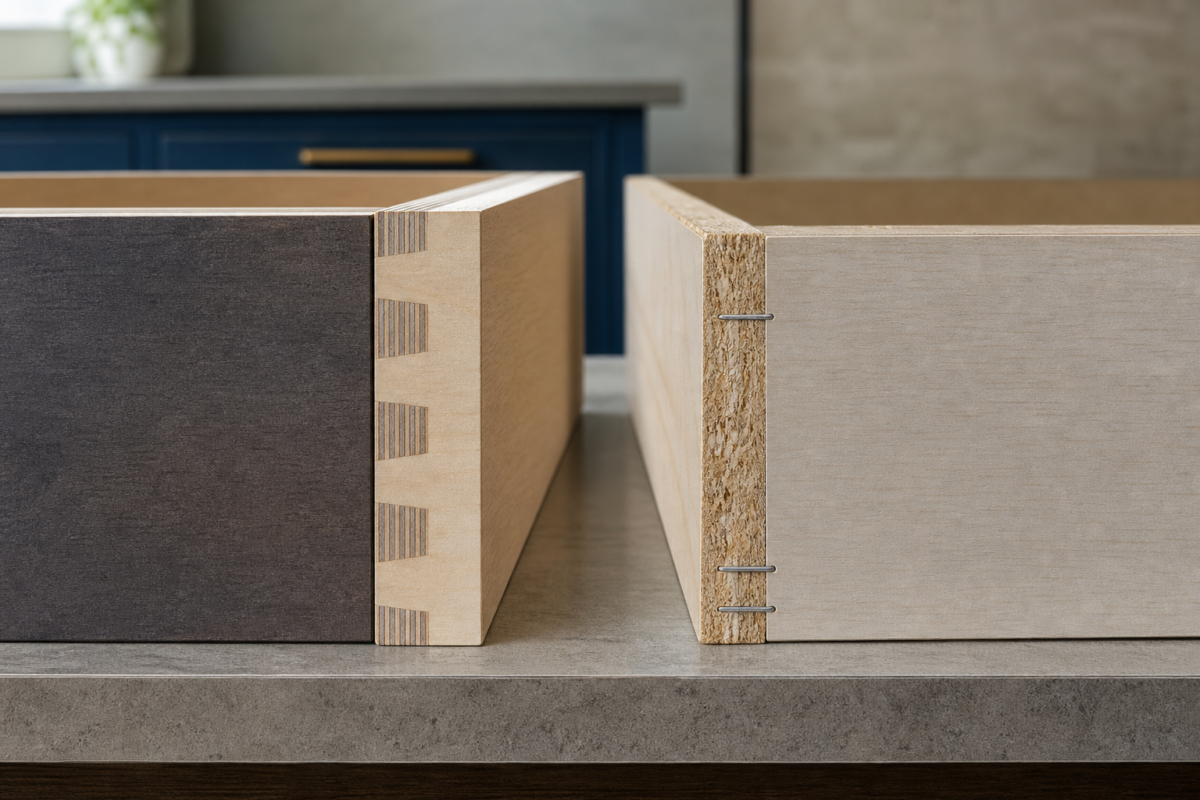
Cool finishes suit cool palettes, warm finishes suit warm ones, and the undertone of your tile, paint, and vanity should steer the choice. A gray-and-white marble bathroom reads crisp with chrome or nickel, while a warm greige or green room comes alive with brass. Lay a finish sample against your actual tile and paint color in the room’s real light before committing, because showroom lighting lies.
Style matters too. Matte black leans modern and transitional, brushed brass reads warm-contemporary or classic, oil-rubbed bronze suits traditional and farmhouse rooms, and polished chrome fits both vintage and clean modern looks. Carry the same logic to the frame of your bathroom mirror, which sits at eye level and reads as strongly as the faucet.
What must match and what can vary
Keep the hard-to-change plumbing fixtures consistent, and let the easily swapped pieces carry variety. This single principle resolves most finish anxiety, because it puts the permanent elements on a safe, matching foundation and reserves experimentation for the parts you can change in an afternoon.
Grab bars and towel warmers count as hardware too, and they look best matched to the dominant finish. Designer lines now offer bathroom grab bars and heated racks in the same finishes as faucets, so safety and comfort features disappear into the scheme instead of standing out.
Durability, fingerprints, and hard water
Brushed and satin finishes hide fingerprints and water spots best, while polished chrome and polished brass show everything. If your home has hard water, lean toward brushed PVD finishes and keep a microfiber cloth handy, because mineral scale is the fastest way to ruin the look of any fixture.
Clean every finish with mild soap and water, not abrasive pads or acidic descalers, which can strip plating and etch living finishes. Oil-rubbed bronze is designed to patina and will lighten at high-touch points over time, a feature to some owners and a flaw to others, so choose it only if you like a finish that evolves. A quality towel warmer or faucet in PVD will shrug off years of daily wiping where an electroplated piece slowly clouds.
What coordinated hardware costs in 2026
A fully coordinated hardware package for a standard bathroom runs about $400 to $1,500, with finish and brand driving most of the spread. Chrome and basic brushed nickel sit at the low end, while PVD brushed gold and designer matte black from premium brands push the top.
| Piece | Budget | Mid-range | Premium / PVD |
|---|---|---|---|
| Sink faucet | $60 – $120 | $150 – $300 | $350 – $700 |
| Shower trim kit | $90 – $180 | $220 – $450 | $500 – $1,000 |
| Towel bar set | $30 – $60 | $70 – $150 | $180 – $350 |
| Cabinet pulls (each) | $3 – $8 | $10 – $20 | $25 – $45 |
| Full coordinated set | $400 – $650 | $700 – $1,100 | $1,200 – $3,000+ |
Because hardware is one of the lowest-cost ways to lift a room’s perceived quality, it is a smart place to spend within a budget bathroom remodel, swapping tired builder-grade pieces for a coordinated set delivers an outsized visual return for a few hundred dollars.
Contractor’s take
I tell clients to buy their faucet first and bring it to every other decision. That one fixture sets the finish, the shape language, and often the brand’s trim family for the whole room. When people pick tile, paint, and vanity before hardware, they end up forcing a finish to fit and it always shows. Decide the metal story on day one, order a single physical sample of each finish, and look at them on the actual vanity under the actual light before anything gets installed.
Coordination mistakes to avoid
The common errors are using too many finishes, letting an accent appear only once, and matching a finish by name across brands that render it differently. Guard against each before you buy.
- Do not exceed three finishes, and never leave an accent metal appearing only one time.
- Confirm that one brand’s “brushed gold” matches another’s in person; names are not standardized.
- Do not mix polished and brushed versions of the same metal on adjacent pieces unless intentional.
- Avoid trendy niche finishes on permanent fixtures if you plan to sell within a few years.
- Match the shower valve trim to the faucet, since they sit in the same sightline.
Design authorities like the National Kitchen and Bath Association emphasize that finish consistency is one of the cheapest, highest-impact choices in a renovation, and it is easy to get right with a little upfront planning.
Frequently asked questions
Your next move
You know the number. What are you deciding next?
Walk-in tub cost in 2026: $5,000 to $20,000 installed. Compare tub types, features, and the real Medicare coverage…
Continue →Bathroom remodel financing explained: compare home equity loans, HELOCs, cash-out refi, personal loans, and 0% cards with 2026…
Continue →Steam shower cost runs $3,000 to $10,000 installed in 2026. See prices by generator size, enclosure, and prefab…
Continue →Frequently asked
Can I mix metal finishes in one bathroom?
Yes, and it often looks more custom than a single finish. Keep it to two or three metals, choose one dominant finish for the largest fixtures, repeat each metal at least twice, and balance a warm tone against a cool one.
What is the most durable bathroom finish?
PVD finishes are the most durable because the color is bonded to the metal rather than plated on. They resist scratching, tarnishing, and corrosion, which makes them the best choice in hard-water homes despite costing 20 to 40 percent more.
Is matte black bathroom hardware hard to keep clean?
Matte black hides fingerprints well but shows water spots and dried soap, especially in hard water. A quick wipe with a dry microfiber cloth after use keeps it looking crisp, and a PVD or powder-coated version resists wear far better than a painted one.
Which finish is best for resale value?
Brushed nickel and chrome are the safest resale choices because they appeal broadly and never read as dated. Matte black and brushed brass are popular now and still safe, while very niche finishes can narrow your buyer pool if you sell soon.
Do the faucet and showerhead have to match exactly?
They should share the same finish, since they are in the same sightline and read as a set. Buying both from the same brand’s trim family is the surest way to get an exact match, because a given finish name can vary between manufacturers.

Finish and cost figures reflect 2026 US fixture pricing.