Bathroom Remodel Financing: How to Pay for Your 2026 Project
Every realistic way to pay for a bathroom remodel in 2026, with current rate ranges and how to borrow the least at the lowest cost.

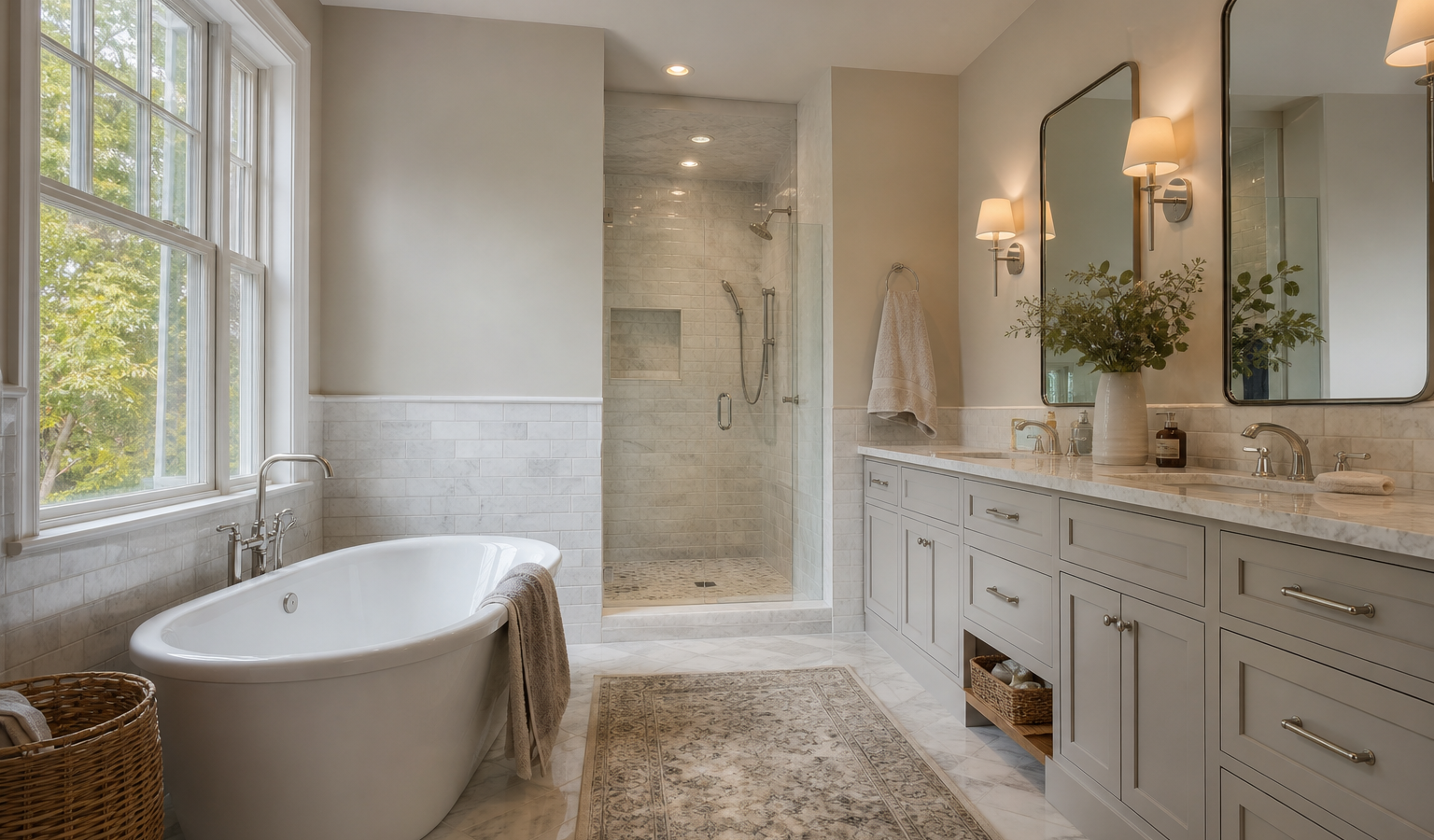
Bathroom remodel financing gives you several ways to pay for a project that typically runs $6,000 to $35,000 in 2026, from tapping home equity to personal loans, 0% credit cards, and government-backed renovation loans. The right choice depends on how much you are borrowing, how much equity you hold, and whether you want a fixed payment or a flexible line of credit. This guide compares every realistic option, shows current rate ranges, and helps you borrow the least amount at the lowest cost.
Few people pay cash for a full bath renovation, and with interest rates still elevated in 2026, how you finance the work affects the total price as much as the materials you pick. A $20,000 remodel financed poorly can cost thousands more in interest than the same project on the right loan. Start by pinning down the number you actually need, then match it to the cheapest money you qualify for. For the full price picture, see our bathroom remodel cost guide.
Key takeaways
- A 2026 bathroom remodel runs $6,000 to $35,000; mid-range projects land near $12,000 to $15,000.
- Home equity loans and HELOCs usually carry the lowest rates (roughly 7.5% to 9%) because your home secures them.
- Personal loans fund fast with no collateral but charge 8% to 20%+ depending on credit.
- A 0% intro APR card can be free money if you repay before the promo ends, dangerous if you do not.
- FHA 203(k) and Fannie Mae HomeStyle loans roll renovation costs into your mortgage and now cover up to $75,000 in limited repairs.
What a bathroom remodel costs in 2026
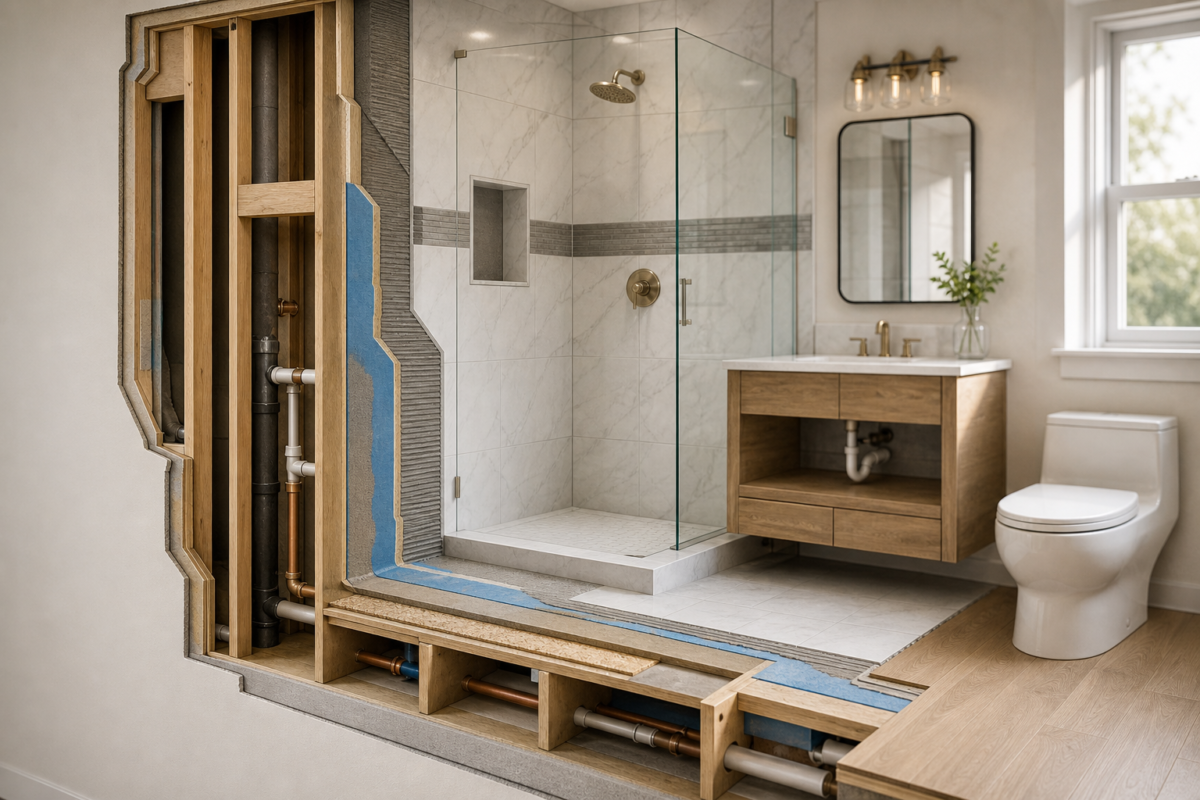
A bathroom remodel costs $6,000 to $35,000 in 2026, with most mid-range projects at $12,000 to $15,000 and high-end or primary-bath renovations exceeding $30,000. Knowing your realistic target is the first step to financing it, because you never want to borrow more than the project needs.
Cost scales with the size of the room and the scope of the work. A small bathroom remodel or powder room can land under $10,000, while a primary (master) bathroom remodel with a custom shower, double vanity, and heated floors routinely tops $30,000.
Labor typically eats 40% to 65% of a bathroom budget, which is why the financing conversation matters. Materials you can shop and swap; skilled plumbing, tile, and electrical labor is a fixed cost you are often borrowing against. The more your project leans on trades, the more the loan has to cover and the more a low rate pays off over the repayment term.
| Project level | Typical 2026 cost | Per sq ft | Common scope |
|---|---|---|---|
| Budget / cosmetic | $6,000 – $10,000 | $70 – $120 | Fixtures, paint, vanity, lighting |
| Mid-range | $12,000 – $18,000 | $120 – $200 | New tile, shower, vanity, plumbing |
| Upscale | $25,000 – $35,000 | $200 – $275 | Custom shower, double vanity, finishes |
| Luxury / full gut | $35,000 – $70,000+ | $275 – $500 | Layout change, high-end everything |
If your number feels high, our budget bathroom remodel ideas and DIY vs. pro guides show where to trim before you borrow a dollar.
Bathroom remodel financing options compared
The main bathroom remodel financing options are home equity loans, HELOCs, cash-out refinancing, personal loans, credit cards, and government-backed renovation loans. Secured options cost less but put your home on the line; unsecured options fund faster but carry higher rates.
| Option | Typical 2026 APR | Best for | Trade-off |
|---|---|---|---|
| Home equity loan | 7.5% – 8.5% fixed | Known, one-time cost | Uses home as collateral |
| HELOC | 7.5% – 9% variable | Phased or unknown cost | Rate can rise |
| Cash-out refinance | 6.5% – 7.5% | Large projects + rate win | Resets whole mortgage |
| Personal loan | 8% – 20%+ fixed | Fast, no equity needed | Higher rate, shorter term |
| 0% intro credit card | 0% then 18% – 29% | Small projects paid fast | Brutal rate after promo |
| FHA 203(k) / HomeStyle | Near mortgage rates | Buyers + big renovations | Paperwork, inspections |
Home equity loan vs. HELOC
A home equity loan gives you a lump sum at a fixed rate; a HELOC is a revolving credit line you draw from at a variable rate. Both are secured by your home and usually offer the lowest remodel financing rates, around 7.5% to 9% in 2026.
When a home equity loan wins
Choose a home equity loan when you have a firm bid and want one predictable monthly payment. You borrow the full amount at closing and repay over 5 to 30 years at a locked rate. It is the cleanest fit for a defined-scope bathroom project.
When a HELOC wins
A HELOC suits phased work or uncertain costs because you draw only what you use and pay interest only on the balance. The variable rate is the catch; if rates climb, so does your payment. Most lenders cap combined loan-to-value at 80% to 85% of your home value.
A tax angle worth knowing
Interest on a home equity loan or HELOC may be tax-deductible when the funds are used to buy, build, or substantially improve the home that secures the loan, which a bathroom remodel generally qualifies as. Interest on a personal loan or credit card used for the same work is not deductible. Keep your contracts and receipts, and confirm your situation with a tax professional, because the deduction can quietly shave a point or more off your effective borrowing cost.
Cash-out refinance for larger projects
A cash-out refinance replaces your existing mortgage with a larger one and hands you the difference in cash. It makes sense for big renovations when you can also lower your overall mortgage rate, but it is rarely worth resetting a low pandemic-era rate for a bathroom alone.
Because it is a first mortgage, the rate (roughly 6.5% to 7.5% in 2026) is usually the lowest of any option, and you may spread repayment over 30 years. Weigh the closing costs (2% to 5% of the loan) and the fact that you restart your amortization clock. This option shines when you are renovating several rooms, such as pairing a bath with a kitchen remodel, not for a single room.
Personal loans and contractor financing
A personal loan is unsecured, funds in days, and keeps your home out of the deal, which makes it popular for mid-size remodels by homeowners with limited equity. Expect fixed APRs from about 8% for excellent credit to over 20% for fair credit, with 2 to 7 year terms.
Personal loans are fastest when speed matters, such as an emergency bathroom repair after a leak, because many online lenders fund within one to three business days with no appraisal or home inspection. The trade-off beyond the higher rate is the shorter term: a five-figure balance on a five-year loan carries a meaningfully higher monthly payment than the same amount stretched over a 20-year equity loan.
Contractor and retailer financing
Many remodelers and big-box stores offer promotional financing through third-party lenders. Some deals are genuinely 0% for 12 to 24 months; others are deferred-interest traps that backdate interest if you miss the payoff date. Read the terms, and compare the quoted rate against a plain personal loan before signing.
Contractor financing is convenient because it is arranged at the point of sale, but convenience has a price. Always ask whether the rate is a true APR or a deferred-interest promotion, what the payment is if you cannot clear the balance in the promo window, and whether there is an origination fee baked into the contract price. A reputable contractor will give you straight answers; a high-pressure pitch to sign same-day financing is a red flag.
Credit cards and 0% intro APR offers
A 0% introductory APR credit card can finance a small bathroom project interest-free if you repay the full balance before the promo ends, typically 12 to 21 months. Used that way it is the cheapest money available; carried past the promo, the 18% to 29% go-to rate makes it the most expensive.
Reserve cards for cosmetic updates you can clearly pay off on schedule, fixtures, paint, a new value-adding vanity, not a full gut. Never finance a five-figure remodel on a revolving card at standard rates.
Government-backed renovation loans
FHA 203(k), Fannie Mae HomeStyle, and FHA Title I loans let you finance renovations at near-mortgage rates, and are especially useful when buying a home that needs work. The limited FHA 203(k) now covers up to $75,000 in repairs without the full-program paperwork.
FHA 203(k) and HomeStyle
These roll purchase or refinance and renovation into one loan based on the home value after improvements. They require licensed contractors, inspections, and more paperwork, but the blended rate beats unsecured borrowing for large projects.
FHA Title I property improvement loans
Title I loans fund improvements for borrowers with little equity, up to $25,000 for a single-family home, and do not always require home equity. They are a fit for newer owners who have not yet built up value.
Bathroom remodel financing mistakes to avoid
The costliest financing mistakes are borrowing before you have firm bids, ignoring the total interest paid over the life of the loan, and using short-term revolving credit for a long-term project. Each one can add thousands to the real price of your remodel.
Homeowners often fixate on the monthly payment and overlook the total cost of borrowing. A 20,000 dollar remodel on a seven-year personal loan at 14% costs far more in interest than the same amount on a 10-year home equity loan at 8%, even though the monthly figures look similar. Always ask the lender for the total finance charge, not just the payment.
A second trap is under-borrowing and then scrambling. Bathrooms are notorious for hidden surprises once demolition starts, old galvanized pipe, a rotted subfloor, or wiring that no longer meets code. Build a contingency into the loan from day one rather than reaching for a high-rate card mid-project. And resist financing a full gut on a 0% card you cannot realistically clear before the promotional rate expires; the backdated interest can erase any savings.
How to choose and lower what you borrow
Choose the cheapest loan you qualify for that matches your project size and timeline, then shrink the amount you borrow with rebates and smart scope. Borrowing less at a lower rate is the whole game.
- Get at least three contractor bids so you finance a real number, not a guess.
- Compare secured (home equity) vs unsecured (personal) APRs for your exact credit tier.
- Add a 10% to 15% contingency to the loan so change orders do not force a second loan.
- Check ENERGY STAR and EPA WaterSense rebates on efficient fans, toilets, and fixtures.
- Look for local utility and water-authority rebates on low-flow and efficient products.
- Keep documentation; some energy upgrades qualify for federal tax credits.
Contractor’s take
My advice to clients is always to finance the project, not the dream. Get firm bids first, then borrow that number plus a 10 to 15 percent cushion for the surprises we always find once the walls are open, old plumbing, a soft subfloor, a vent that is not up to code. I have watched homeowners max a 0% card on a gut remodel, miss the payoff window, and get hit with two years of backdated interest. If you have equity, a home equity loan with a fixed payment is the boring, correct answer for most full bathroom remodels.
Your next move
You know the number. What are you deciding next?
Walk-in tub cost in 2026: $5,000 to $20,000 installed. Compare tub types, features, and the real Medicare coverage…
Continue →Steam shower cost runs $3,000 to $10,000 installed in 2026. See prices by generator size, enclosure, and prefab…
Continue →Luxury bathroom upgrades cost $30,000 to $75,000 in 2026. See the features, real prices, and tradeoffs worth the…
Continue →Frequently asked
What is the best way to finance a bathroom remodel?
For most homeowners with equity, a fixed-rate home equity loan offers the lowest cost and a predictable payment. If you lack equity, a personal loan funds fast; for small cosmetic projects you can repay quickly, a 0% intro APR card is cheapest.
Can I get a loan for a bathroom remodel with no equity?
Yes. Personal loans and FHA Title I property improvement loans do not require home equity. Your rate will depend on your credit score, and terms are usually shorter than equity-based options.
How much can I borrow against my home for a remodel?
Most lenders let you borrow up to 80% to 85% of your home value minus your mortgage balance. On a $400,000 home with a $200,000 mortgage, that is roughly $120,000 to $140,000 of available equity.
Is a HELOC or home equity loan better for a remodel?
A home equity loan is better for a one-time, fixed-cost project because the rate and payment are locked. A HELOC is better for phased work or uncertain costs, but its variable rate can rise over time.
Does a bathroom remodel increase home value enough to justify financing?
Often, yes. A mid-range bathroom remodel typically returns 60% to 70% of its cost at resale, and the daily use value is high. See our bathroom remodel ROI guide for current recovery rates.

Rate ranges reflect typical 2026 US lending conditions; confirm current APRs with lenders before applying.