Best Kitchen Flooring in 2026: LVP vs. Tile vs. Hardwood
Luxury vinyl, tile, or hardwood - the three floors most kitchens come down to. Here they are head to head on 2026 cost, water resistance, comfort underfoot, and how they age.

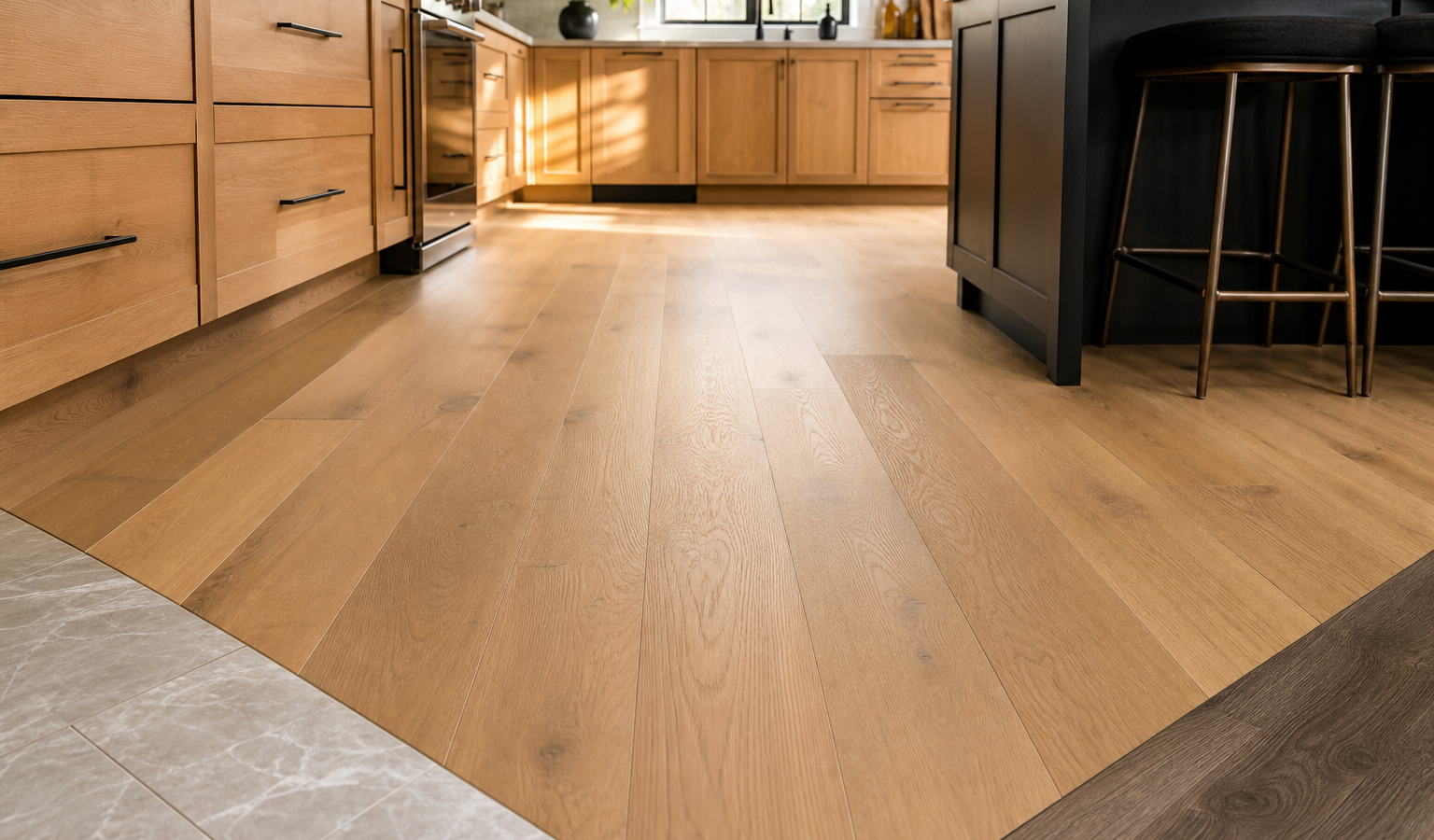
Kitchen floors take more abuse than any other in the house – spills, dropped pans, standing for hours, and constant foot traffic. When homeowners shop for the best kitchen flooring, they usually narrow it down to luxury vinyl plank (LVP), tile, or hardwood – but the full lineup also includes engineered wood, laminate, natural stone, sheet vinyl, and cork or bamboo, and each one trades off durability, water resistance, comfort, and cost differently. The right answer depends on how you cook, whether you have kids or pets, your subfloor, and how long you plan to stay. This guide covers every mainstream option in detail, compares them head to head, and matches each to the kitchens it fits best.
Quick verdict
If you want waterproof, comfortable, and affordable, LVP is the value pick for most kitchens. If you want maximum durability and heat resistance, porcelain tile wins – at the cost of comfort. If you want warmth and resale appeal and can baby it a little, hardwood or engineered wood is the classic choice. Laminate, stone, sheet vinyl, cork, and bamboo each solve a narrower need, covered below.
Kitchen flooring materials compared at a glance
A premium LVP and an entry-grade hardwood can cost about the same installed, so feel, water resistance, and durability decide it more than the sticker price. For a full cost breakdown, see the kitchen flooring cost guide.
| Material | Installed cost/sq ft (2026) | Water resistance | Comfort underfoot | Typical lifespan | DIY difficulty |
|---|---|---|---|---|---|
| Luxury vinyl plank (LVP) | $4 – $16 | Waterproof | Warm, soft | 15-25 years | Easy |
| Porcelain / ceramic tile | $10 – $50 | Waterproof | Hard, cold | 50+ years | Difficult |
| Solid hardwood | $11 – $25 | Vulnerable | Warm | 30-100 years (refinishable) | Moderate |
| Engineered wood | $6 – $18 | Moderate | Warm | 20-40 years | Moderate |
| Laminate | $3 – $10 | Water-resistant (some waterproof) | Moderate | 10-25 years | Easy |
| Natural stone | $15 – $50+ | Waterproof but porous | Very hard, cold | 50-100+ years | Difficult |
| Sheet vinyl | $2 – $8 | Waterproof | Soft | 10-20 years | Moderate |
| Cork / bamboo | $5 – $14 | Water-resistant when sealed | Soft, warm | 10-25 years | Moderate |
Contractor insight
“In a busy family kitchen I steer most people to LVP – it’s waterproof, forgiving on dropped dishes, and warm to stand on. Tile is tougher and takes heat, but it’s cold and unforgiving, and a dropped glass shatters every time. Whatever you pick, get the subfloor flat first – a pricier floor over a bad subfloor fails faster than a cheap one over a good subfloor.” – Marcus Hale, licensed GC
Kitchen flooring materials, one by one
Every material below is a legitimate kitchen floor somewhere – the differences show up in day-to-day comfort, how it handles a spill or a dropped pan, and what it costs to install and maintain.
Luxury vinyl plank (LVP)
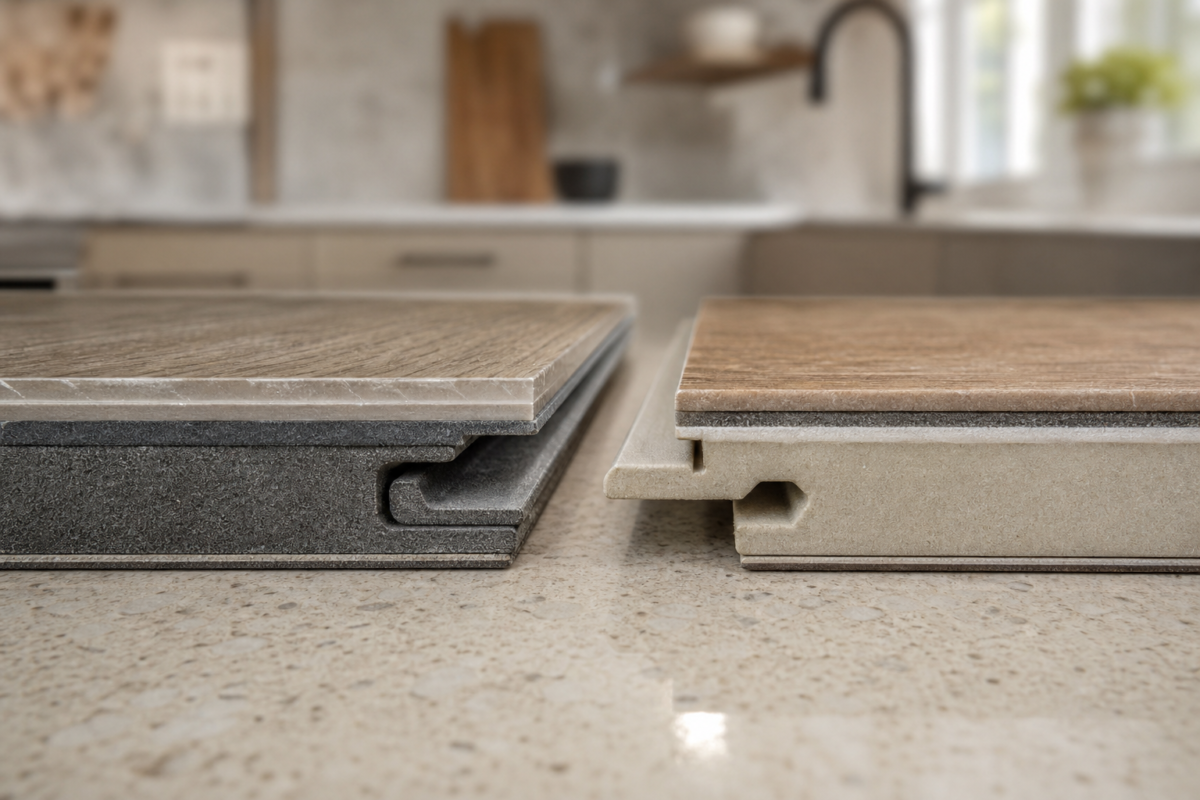
LVP is fully waterproof, warm and slightly cushioned underfoot, and the easiest kitchen floor to install – click-lock planks often float over an existing floor, and many DIYers finish a small kitchen in a weekend. Look for a rigid SPC core for the best dimensional stability, and a wear layer of at least 12-20 mil to resist scuffs from chair legs and pet claws. Its weak spot: deep gouges from a dropped cast-iron pan can’t be sanded out – you replace the plank. Installed cost runs $4-$16 per square foot, and lifespan is 15-25 years.
Porcelain and ceramic tile
Porcelain tile is the most durable mainstream option, often lasting 50 years or more, and it shrugs off water, heat, and scratches. Its tradeoffs are comfort and installation: it’s hard and cold underfoot, a dropped glass breaks every time, and a proper install needs a flat subfloor, thinset mortar, and sealed grout lines. Choose porcelain over ceramic – it’s denser and less porous – and pick a matte or textured finish with an R10+ slip rating rather than high-gloss, which turns slick when wet. Large-format tile (12×24 inches or bigger) reduces grout lines and reads as more upscale. Installed cost runs $10-$50 per square foot depending on tile grade, size, and pattern complexity.
Hardwood and engineered wood
Solid hardwood is the warmest, most classic kitchen floor and the one buyers respond to most at resale – it can be refinished four to six times over a lifespan that often exceeds 50 years. Standing water is its real enemy, so it asks for prompt spill cleanup. Engineered wood swaps the solid-plank construction for a real hardwood veneer over a plywood core, which makes it more dimensionally stable and, unlike solid hardwood, usable over concrete slabs and most radiant heat systems (check the manufacturer’s temperature limit). Solid hardwood installs for $11-$25 per square foot; engineered runs $6-$18 and installs faster since many products click together like laminate.
Laminate
Laminate uses a photographic wood- or stone-look layer under a hard-wearing resin coating, and modern versions are convincing enough to fool most guests. Standard laminate is only water-resistant – moisture at a seam can swell the core – but newer rigid-core, waterproof laminates close that gap and perform closer to LVP. It’s a floating, DIY-friendly install, comfortable underfoot, and the cheapest true wood-look option at $3-$10 per square foot installed. Look for an AC3 or AC4 rating for kitchen-level traffic; like LVP, damaged boards get replaced rather than repaired.
Natural stone
Granite, slate, marble, and travertine are the luxury outlier: durable and visually one-of-a-kind, but expensive, heavy, and high-maintenance. Stone is porous and needs periodic sealing – softer stones like marble and travertine roughly once a year – and acidic spills from wine or citrus can etch the surface if left too long. It’s also the coldest, hardest material underfoot of any on this list, which is why designers pair it with radiant floor heat. Installed cost runs $15-$50 or more per square foot, and installation requires a professional given the weight and cutting involved.
Sheet vinyl
Sheet vinyl is the budget waterproof option: large rolls create a nearly seamless surface, so there’s no grout line or plank seam for water to find. It’s soft underfoot, the cheapest fully waterproof material at $2-$8 per square foot installed, and a smart pick for a rental or a fast, low-cost refresh. The tradeoff is durability and prestige – it tears or gouges under a dragged appliance and doesn’t carry the same resale weight as tile, hardwood, or LVP. A full sheet install is fiddly enough that most homeowners hire it out.
Cork and bamboo
Cork and bamboo appeal to eco-conscious homeowners who still want warmth underfoot. Cork is naturally cushioned, sound-dampening, and mildly antimicrobial, but it needs a polyurethane sealant renewed every three to five years, or it stains and scratches easily. Strand-woven bamboo is harder than most hardwood species and renews faster as a crop, but it shares hardwood’s vulnerability to standing water. Both run $5-$14 per square foot installed and read as a distinctive choice – a smaller resale market may not recognize their premium the way it does for hardwood.
Waterproof vs. water-resistant, and which floor is most durable
A kitchen is a wet room in disguise, so water resistance matters most after budget. Sheet vinyl, LVP, and porcelain or ceramic tile are fully waterproof at the surface, though grout lines still need sealing. Laminate and cork are water-resistant at best – fine for splashes wiped up promptly, but vulnerable to a standing puddle overnight. Solid hardwood and bamboo are the most vulnerable, since water swells and cups the boards; engineered wood does better thanks to its plywood core. Durability tracks the same order: tile and stone lead at 50-plus years, hardwood follows at 30-plus (refinishable), and the rest round out the field at 10-25 years depending on wear-layer thickness and care.
Best flooring for specific kitchen situations
There’s no single best material – only a best material for your household and floor plan. Here’s how the options sort by the questions homeowners ask most.
Busy families and homes with pets
LVP with a rigid SPC core is the top pick: waterproof against spilled milk and pet accidents, forgiving of dropped dishes, and warm enough for kids to sit on. Choose a textured, low-gloss finish for grip under wet paws, and a wear layer of at least 20 mil for large or multiple dogs. Tile is nearly as tough and handles muddy paws well, but grout can trap pet accidents unless sealed regularly. Solid hardwood is the riskiest choice here unless you’re diligent about wiping up spills and trimming pet nails.
Homes with radiant floor heating
Tile and natural stone are the classic radiant-heat partners – both conduct and hold heat evenly, which also offsets their cold-underfoot downside. Engineered wood works with most radiant systems too, within the manufacturer’s temperature limit (commonly around 80-85 degrees F). LVP and rigid-core laminate can usually run over radiant heat within similar limits – confirm with the specific product, since excess heat can soften adhesives. Solid hardwood and cork are generally not recommended over radiant heat.
Small kitchens
Large-format porcelain tile or wide-plank LVP, laid diagonally or running the long way through the room, visually stretches a small footprint by minimizing grout lines and seams. A lighter, matte finish reflects more light than a dark or glossy one. Carrying the same flooring into an adjoining dining or living area removes a sightline break that makes galley kitchens feel boxed in, and plays well with an open kitchen layout and work triangle. See the small kitchen remodel cost guide for tight-footprint budgeting.
Maximizing resale value
Solid or engineered hardwood consistently returns the most buyer appeal, especially flowing continuously into adjacent living space – agents point to it as a finish buyers actively search for by name. Large-format porcelain tile is a strong second, particularly in warmer-climate markets. LVP is now widely accepted as a like-for-like upgrade in mid-range homes and rarely hurts a sale, but doesn’t carry the same premium as real wood in an appraisal. See kitchen remodel ROI for what recoups its cost at closing.
Installation and subfloor considerations
Long-term performance hinges on what’s under the new floor as much as the material itself. Budget 2 to 5 days for a kitchen floor, with tile, stone, and nail-down hardwood at the longer end for setting and curing time. Buy about 8-10% extra material for cuts and waste.
Subfloor prep matters more than the material
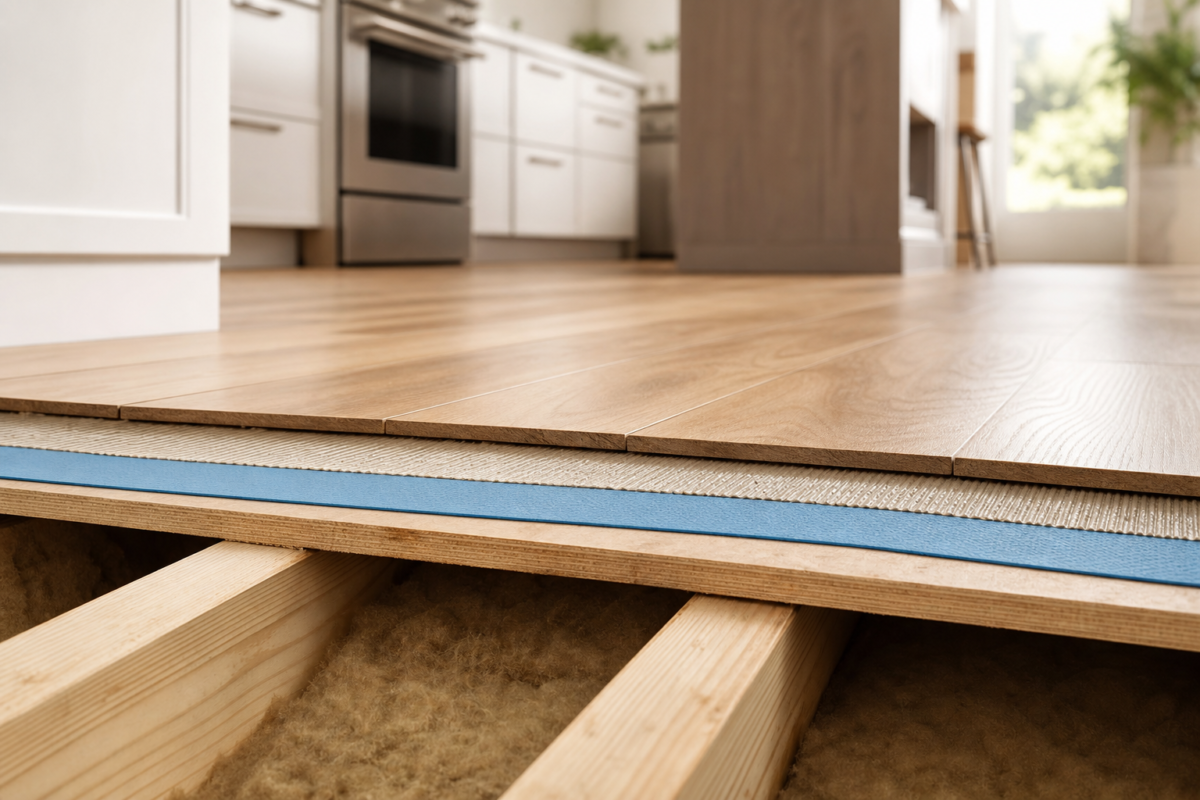
Rigid materials like tile and stone need a subfloor flat to within about 3/16 inch over 10 feet, or lippage and cracked grout follow within a year or two, typically fixed with a self-leveling compound. Resilient floors like LVP and laminate are more forgiving but still telegraph major dips through the surface over time. Concrete slabs need a moisture test before any glue-down installation, since trapped moisture vapor can lift adhesive from underneath even when the surface looks dry.
DIY vs. hiring a pro
Click-lock LVP and laminate are the most DIY-friendly kitchen floors, since they float over the existing surface without nails or adhesive. Tile, natural stone, glue-down sheet vinyl, and nail-down hardwood are best left to a licensed installer, both for the specialized tools and because many manufacturers void the warranty on a self-installed waterproofing membrane. If your home was built before 1980 and still has its original vinyl flooring, have it tested for asbestos before demolition.
- Subfloor is flat, dry, and structurally sound
- Pre-1980 flooring tested for asbestos before removal
- Moisture barrier or vapor test completed over concrete slabs
- Transition strips planned at doorways and height changes
- 8-10% extra material ordered for cuts and waste
- Appliance clearances (especially the dishwasher) rechecked against new floor height
Maintenance: keeping each floor looking new
Upkeep is where the cheaper materials sometimes catch up to the pricier ones over a decade of ownership. LVP and laminate just need regular sweeping and a damp mop; skip steam mops and wax, since heat and moisture can damage the seams. Tile and stone need grout and stone resealed periodically (grout every 1-2 years, porous stone annually) with a pH-neutral cleaner, since vinegar etches natural stone over time. Hardwood wants a dry or barely-damp mop and a recoat every 7-10 years before the finish wears through. Cork needs its sealant refreshed every 3-5 years, and sheet vinyl is the simplest of all – soap, water, and no ammonia-based cleaners.
The bottom line
There’s no universal winner – there’s a winner for your kitchen. LVP is the value default at $4-$16 per square foot installed, porcelain tile the toughest at $10-$50, and hardwood the warmest and most valued at resale at $11-$25. Engineered wood, laminate, stone, sheet vinyl, and cork or bamboo each fill a narrower niche – radiant-heat compatibility, rock-bottom budget, luxury looks, or sustainability. Match the floor to how you cook and live, then fit it into your overall kitchen remodel budget. For most family kitchens, waterproof and comfortable wins – and that’s LVP.
FAQ: choosing the best kitchen flooring
Your next move
You know the number. What are you deciding next?
Most kitchen remodels take 6-12 weeks of construction - plus the planning nobody counts. Here's the honest week-by-week…
Continue →A kitchen backsplash costs $500 to $1,700 installed in 2026, about $10-$50 per square foot. See the price…
Continue →New kitchen flooring costs $800 to $5,000 installed for a typical kitchen. Here's the 2026 price per square…
Continue →Frequently asked
What is the best flooring for a kitchen?
For most homes, luxury vinyl plank (LVP) – waterproof, warm underfoot, affordable at $4-$16 per square foot installed, and DIY-friendly. Tile is more durable and hardwood adds the most resale value, but LVP is the best all-round value for how most families live.
Is vinyl plank or tile better for a kitchen?
LVP is warmer, softer, cheaper, and easier to install; tile is more durable and heat-resistant but hard and cold. For family kitchens, LVP usually wins; for serious cooks or homes with radiant heat, tile is the stronger fit.
Is hardwood a good kitchen floor?
Yes, for warmth and resale value, and it can be refinished several times over a 50-plus year lifespan. Its weakness is standing water, so it suits homeowners who wipe up spills promptly – engineered wood is a more forgiving alternative with better moisture stability.
What kitchen flooring works best with radiant heat?
Tile and natural stone are the classic choices since they conduct and retain heat evenly. Engineered wood and some rigid-core LVP or laminate also work within the manufacturer’s temperature limit, but solid hardwood and cork generally are not recommended.
What is the most durable kitchen floor?
Porcelain tile and natural stone, which last 50 years or more and resist water, heat, and scratches. Solid hardwood is next at 30-plus years, followed by LVP, engineered wood, laminate, and bamboo in the 15-40 year range.

Installed per-square-foot ranges are 2026 national figures (material plus labor); species, tile size, and subfloor prep will move your number.