Kitchen Remodel ROI in 2026: What You’ll Actually Recoup
The return on a kitchen remodel depends far more on scope than on finishes. Here's the 2026 ROI data - minor vs. major vs. upscale - which upgrades pay you back, and the neighborhood rule that decides whether your money comes home.

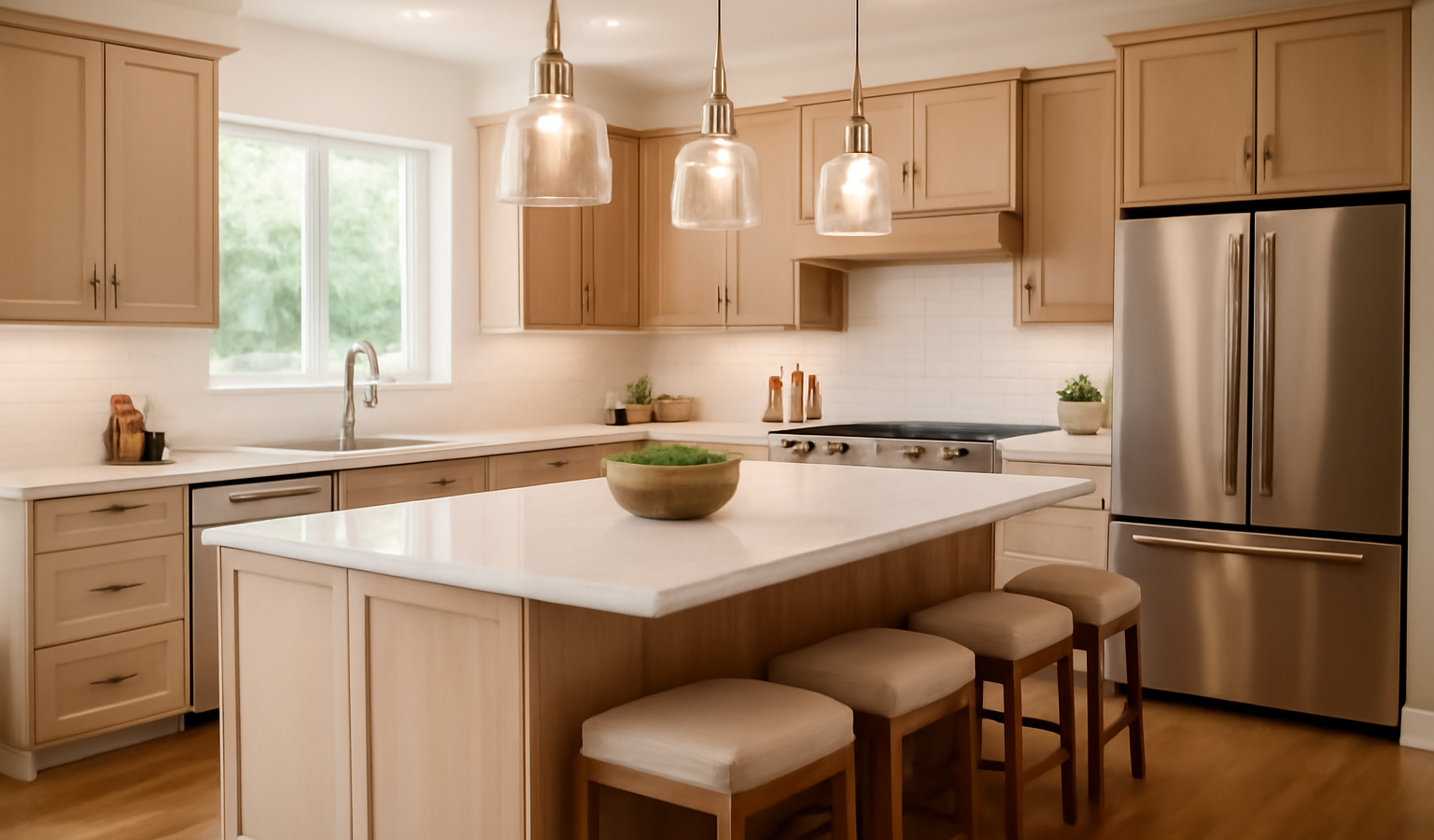
Before you spend $40,000 on a kitchen, it’s worth asking what you’ll get back. The kitchen remodel ROI – the share of your cost you recoup in added home value – is one of the best-tracked numbers in home improvement, and the 2026 data holds a surprise: a modest, cosmetic remodel returns more than a lavish one. A minor kitchen remodel recoups roughly 113% of its cost at resale nationally, while a major upscale renovation returns closer to 36%. This guide breaks down the return on investment by scope, shows which specific upgrades pay you back, and explains the neighborhood rule that ultimately decides whether your money comes home – whether you’re remodeling to sell or planning to stay put for years.
Kitchen remodel ROI by scope in 2026
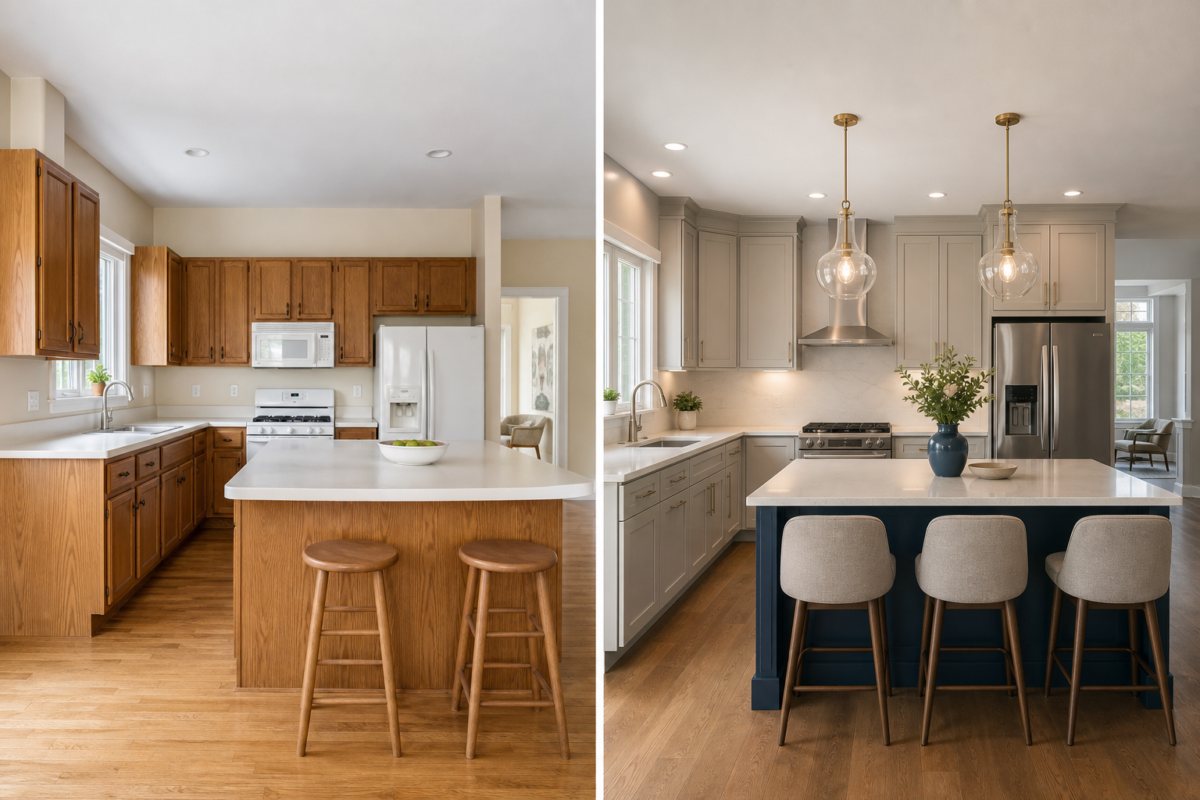
The single biggest factor in your return isn’t the tile or the brand of appliance – it’s how much you spend. Cost vs. Value-style research breaks kitchen projects into three standard tiers, and the gap between them is the whole story of kitchen remodel ROI:
| Remodel scope | Average cost | Value added | ROI (recouped) |
|---|---|---|---|
| Minor remodel | $28,458 | $32,141 | ~113% |
| Major – midrange | $82,793 | $42,156 | ~51% |
| Major – upscale | $164,104 | $58,592 | ~36% |
Read that again: the minor remodel is the only tier that returns more than it costs. Spend three times as much on a major midrange remodel and the percentage you recoup falls by more than half. Push into the upscale tier and it falls again. The added value keeps rising in dollar terms as scope grows, but never fast enough to keep pace with kitchen remodel cost.
What counts as a ‘minor’ remodel?
The high-ROI minor remodel isn’t a gut job. In the standard Cost vs. Value definition it means keeping the existing cabinet boxes and replacing the door fronts and hardware, installing new mid-range appliances, replacing the sink and faucet, swapping in new counters, repainting trim and walls, and replacing the flooring. In other words: everything a buyer sees changes, but the expensive structural bones – plumbing runs, wall placement, electrical panels – stay put. That’s why the cost stays near $28,000 while the visual transformation is nearly total.
Why minor and midrange remodels recoup more than upscale ones
The mechanics come down to two curves that don’t move together. Home value in a given market has a ceiling set by comparable sales, so the dollars a kitchen can add are roughly fixed no matter how much you pour into it. Cost, meanwhile, climbs in a straight line – and climbs faster once you cross into semi-custom cabinetry, natural stone, and layout changes that require moving plumbing or walls. A minor remodel stays entirely below that value ceiling, so nearly every dollar spent shows up as a dollar (or more) of added value. A major upscale remodel blows well past what the neighborhood will pay for, so the last $80,000 to $100,000 buys enjoyment for the current owner but little at resale. A midrange major remodel lands in between: it adds more real function than a minor refresh but hasn’t yet crossed fully into diminishing returns.
Contractor’s take
“Buyers pay neighborhood prices, not renovation prices. I’ve watched people put $120,000 into a kitchen in a $400,000 neighborhood and get almost none of it back, because the house simply can’t sell for what a $600,000 house sells for. The market has a ceiling, and your kitchen can’t lift the whole house past it.” – Marcus Hale, licensed GC
Which upgrades add the most resale value
Within any budget, some dollars come back better than others. Ranked by resale return:
| Upgrade | Typical cost | ROI |
|---|---|---|
| Fresh paint + new hardware | $500-$1,500 | ~90% |
| Cabinet refacing or repainting | $8,000-$14,000 | ~80-96% |
| New countertops (quartz/granite) | $3,000-$8,000 | ~70% |
| Tile backsplash | $1,000-$3,000 | ~50-70% |
| Stainless appliance package | $2,100-$5,400 | ~75% |
The pattern is clear: cosmetic, high-visibility upgrades win. Cabinet refacing or a professional cabinet paint job rather than full replacement, updated countertops, a new tile backsplash, and a matched stainless suite deliver most of a full remodel’s visual impact for a fraction of the cost. A combined cosmetic refresh of roughly $5,000 to $13,000 delivers about 75% of a full $50,000 remodel’s visual effect – at a far better return per dollar.
Resale-value upgrades vs. personal-enjoyment upgrades
Not every dollar you spend is chasing resale value, and it’s worth being honest about which is which before you sign a contract. Upgrades that reliably add resale value share three traits: buyers recognize them at a glance, they read as functional rather than indulgent, and they cost less than the visual impact suggests.
Personal-enjoyment upgrades are a different category entirely – great to live with, poor at returning their cost. Fully custom cabinetry over semi-custom, marble over quartz or granite, a pot filler, a built-in espresso machine, a wine fridge, commercial-grade ranges, and heated floors rarely return more than a fraction of what they cost. Install these because you want them and will enjoy them daily – not as an investment. For a full breakdown of where to spend and where to hold back, see Splurge vs. Save. For resale, a clean mid-range kitchen beats a half-finished high-end one every time.
The neighborhood ceiling: how to avoid over-improving
The 110-120% rule
Here’s the rule that governs every kitchen ROI decision: your finished home shouldn’t exceed 110-120% of the median comparable sale in your area. In a neighborhood where homes sell around $400,000, a $100,000 kitchen won’t produce a $480,000 sale – the home tops out closer to $430,000-$450,000, and the rest of your spend evaporates. This is over-improving for the neighborhood, and it’s the single most common way homeowners destroy their own ROI: the kitchen itself might be excellent, but the house around it can’t carry the price. Before setting a budget, look at what recently updated homes actually sell for on your street, and size the remodel so the finished house still fits the block.
Real-world example: same kitchen, two budgets
Picture a dated but structurally sound kitchen in a $400,000 neighborhood. Option A is a $28,000 minor remodel: refaced cabinets, new quartz counters, a tile backsplash, mid-range stainless appliances, fresh paint, and new flooring. It adds around $32,000 in value and shows beautifully. Option B is a $120,000 gut with fully custom cabinetry and a moved wall; it adds maybe $50,000 to $55,000, but the home still can’t clear the neighborhood ceiling, so most of the extra $92,000 spent over Option A is simply gone. Same kitchen footprint, wildly different returns – it comes down almost entirely to scope matching the market.
What else changes your kitchen’s ROI
Regional variation
National averages hide a wide spread. Minor kitchen remodels recoup roughly 75% to 125% depending on the market, and the strongest returns cluster in high-demand coastal and West Coast metros, where inventory is tight and buyers compete for move-in-ready homes – some of those markets report returns well above 100%, occasionally approaching 160% in the hottest pockets. Slower-growth markets in the Midwest and interior South tend to land nearer 75-90%. Property type matters too: condos and townhomes tend to see lower kitchen ROI than single-family houses, since a condo’s value is capped more tightly by the building’s overall comps. Treat every national figure as a guide, not a guarantee, and check recent comparable sales in your own zip code before finalizing a budget.
Remodeling for resale vs. remodeling to stay
Selling soon? Do a light refresh
A light cosmetic update – $5,000 to $10,000 in paint, hardware, counters, and a backsplash – is almost always worth doing before you list, because it helps the kitchen photograph and show as move-in ready without tying up months of time. A full major remodel is usually not worth it right before selling: you won’t recoup it, buyers often prefer to choose their own finishes, and a major job locks the kitchen out of use for 3 to 5 months while you’re trying to get the house on the market.
Staying long-term? Optimize for daily use
If you’re not selling anytime soon, ROI shouldn’t be the only number that matters. The real return on a kitchen you’ll use for the next decade is measured in cooking, hosting, and comfort as much as resale dollars. That said, the two goals rarely conflict: a well-planned layout that respects the existing kitchen work triangle, good storage, and durable, timeless materials serve you well for years and hold resale value better than a trendy, highly personalized design a future buyer would want to redo. The households that come out ahead financially usually picked finishes they’d be happy to live with for a decade, not the ones who chased the fastest payback.
How long a kitchen remodel holds its value
A kitchen’s finishes read as current for roughly 10 to 15 years before styles and wear begin to show. That timeline is central to ROI: the best-performing remodel is one you do once, to enjoy for a decade, recouping value gradually through daily use and then capturing the resale bump when you finally sell. Remodeling every few years to chase trends is where returns disappear; remodeling once, well, in durable and neutral finishes is where they hold.
How to remodel a kitchen for maximum ROI
Choose neutral, timeless finishes
The single easiest way to protect your ROI is to pick finishes the next buyer won’t feel compelled to rip out. White, greige, and soft neutral cabinet colors, natural-toned quartz or granite countertops, and classic subway or simple geometric backsplash tile consistently outsell bold, trend-driven choices at resale, even when the trendy option looked stunning in the showroom. Save the bold color, the statement tile, or the unusual hardware finish for a piece that’s cheap and easy to swap later – a light fixture, a rug, open shelving styling – rather than the counters or cabinets, which are expensive to change.
Design for function, not flash
Buyers reward a kitchen that works: enough counter space near the range, storage that makes sense, good task lighting, and a layout that doesn’t force people to collide at the sink. None of that requires a moved wall or a six-figure budget. Keeping the existing footprint and plumbing locations intact is one of the most reliable ROI moves available, since relocating plumbing and load-bearing walls adds cost that almost never shows up as added value at resale.
Don’t over-customize
Highly personalized choices – a home espresso bar built for one specific machine, cabinetry sized around a particular collection, an oversized professional range in a modest kitchen – narrow your buyer pool even when the components are well made. The safer play is a kitchen that reads as high-quality and current to the widest range of tastes, with personal touches layered in through decor rather than permanent construction.
- Match the scope to your neighborhood – don’t build a $600,000 kitchen on a $400,000 street.
- Reface or repaint cabinets instead of replacing when the boxes are sound – up to 96% return.
- Spend on high-visibility upgrades first: paint, hardware, counters, backsplash, appliances.
- Choose mid-range, neutral finishes that appeal to the widest range of buyers.
- Keep the existing layout and plumbing locations – moving walls adds cost that rarely returns.
- Avoid highly personalized, hard-to-undo choices that narrow your future buyer pool.
- If selling soon, do a $5,000-$10,000 cosmetic refresh, not a full remodel.
How kitchen ROI compares to other home improvements
Among interior projects, a minor kitchen remodel is one of the highest-returning improvements you can make – on par with a minor bathroom update and well ahead of most room additions, which typically recoup a smaller share of their cost. The reason is the same throughout real estate: cosmetic, high-visibility upgrades in the rooms buyers care most about return better than large structural spends elsewhere in the house. If you’re deciding where to put a limited home-improvement budget, a modest kitchen refresh is usually the strongest single play for resale.
The bottom line
A minor kitchen remodel recoups around 113% of its cost in 2026, a major midrange remodel about 51%, and a major upscale one near 36%. The lesson isn’t to avoid remodeling – it’s to match the scope to your home and neighborhood, spend on the upgrades buyers reward, choose neutral and functional finishes over highly customized ones, and remember the best return comes from a kitchen you enjoy for years, not one you gut before you sell.
Your next move
You know the number. What are you deciding next?
Quartz vs. granite: the two most-chosen kitchen countertops compared on 2026 cost, durability, maintenance, heat, and looks -…
Continue →Luxury vinyl, tile, or hardwood? The three most-chosen kitchen floors compared on 2026 cost, water resistance, comfort, and…
Continue →Everything you need to plan a kitchen remodel in 2026 - budget, layout, cabinets, countertops, appliances, timeline, hiring,…
Continue →Frequently asked
What is the ROI on a kitchen remodel in 2026?
A minor kitchen remodel recoups about 113% of its cost nationally, a major midrange remodel about 51%, and a major upscale remodel around 36%. The less you spend relative to your home’s value, the higher the percentage you recoup.
Why does a minor kitchen remodel have a higher ROI than a major one?
Because buyers pay neighborhood prices, not renovation prices. A minor remodel keeps costs low while delivering an obvious visual change, so the added value can match or exceed the cost. A major remodel adds more dollars of value but never enough to keep pace with its much higher price, since a neighborhood’s comparable sales cap how much any single house can be worth.
Which kitchen upgrades add the most resale value?
High-visibility, cost-effective ones: fresh paint and hardware (~90%), cabinet refacing or repainting (~80-96%), new quartz or granite countertops (~70%), a tile backsplash (~50-70%), and a stainless appliance package (~75%). Highly custom or luxury-only touches like marble, pot fillers, and built-in espresso machines rarely return their cost.
Should I remodel my kitchen before selling?
Do a light $5,000-$10,000 cosmetic update – it helps the kitchen show and photograph well. Skip a full major remodel right before selling: you won’t recoup it, buyers often want to choose their own finishes, and it locks the kitchen out of use for 3-5 months you don’t have to spare during a sale.
How much value does a new kitchen add to a house?
It varies by scope and neighborhood. A minor remodel around $28,000 adds roughly $32,000 in value nationally, but your home shouldn’t exceed 110-120% of the median comparable sale in your area, which caps how much any kitchen – no matter how well done – can add.

Recoup percentages reflect 2026 Cost vs. Value-style national data; returns vary widely by region and by how your finished home compares to others in your neighborhood.