Kitchen Remodel: Where to Splurge and Where to Save in 2026
A great kitchen isn't about spending the most - it's about spending in the right places. Here's where to splurge and where to save in a 2026 kitchen remodel, item by item, so every dollar lands where you'll feel it.

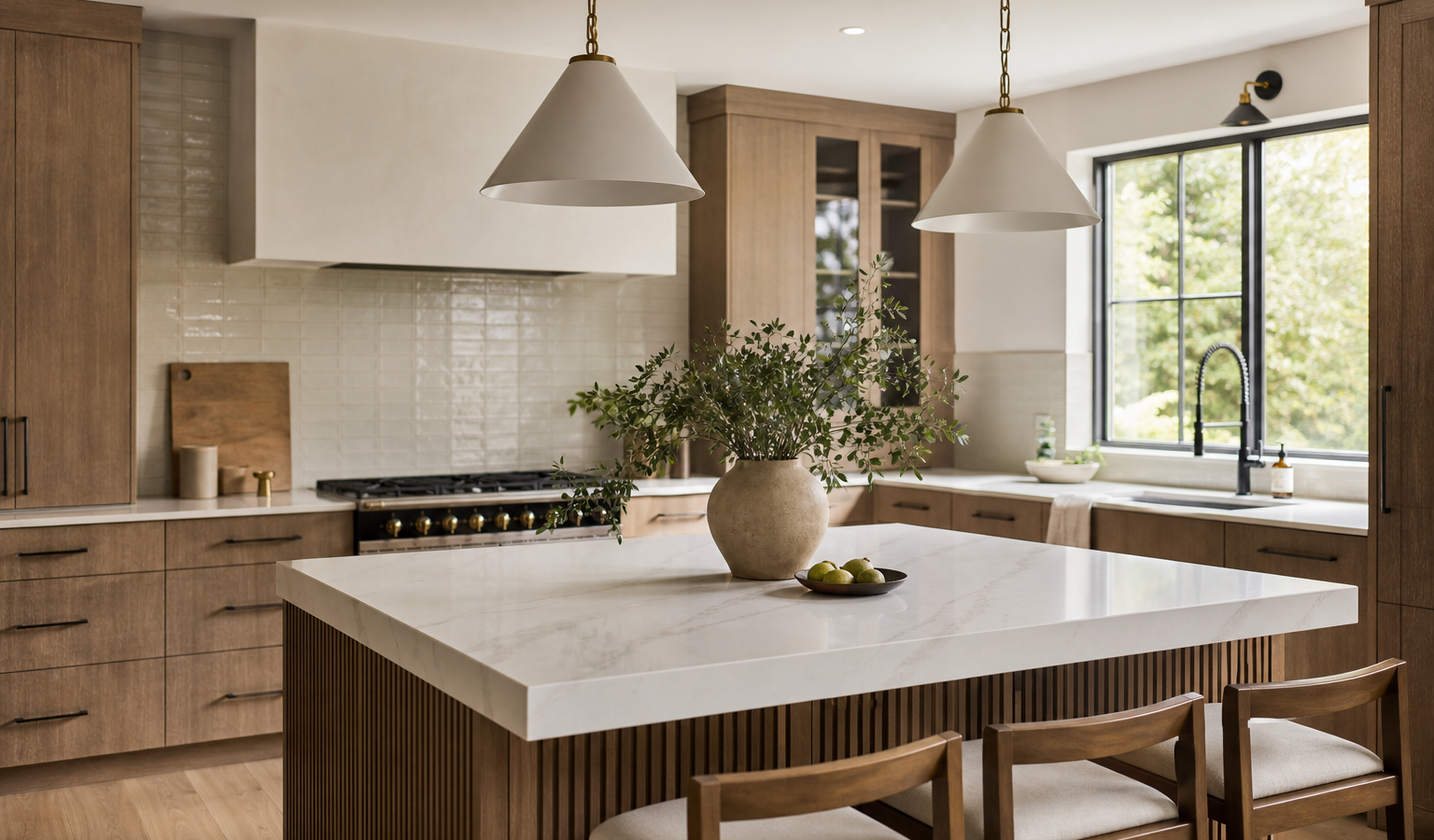
Two kitchens can cost exactly the same and still feel worlds apart, because the real kitchen remodel splurge or save decision isn’t about your total budget – it’s about where inside that budget the money lands. One owner spends on what she touches every day; the other spends on whatever a magazine told him to buy. The art of a smart remodel is knowing where to splurge and where to save: pay up for what you use hardest and what’s expensive to change later, and economize on what’s easy to swap or that almost nobody notices. This guide breaks the decision down category by category – cabinets, countertops, appliances, the faucet and fixtures, backsplash, flooring, lighting, hardware, and the sink – for a 2026 kitchen, so every dollar lands somewhere you’ll actually feel it.
The one rule that decides everything
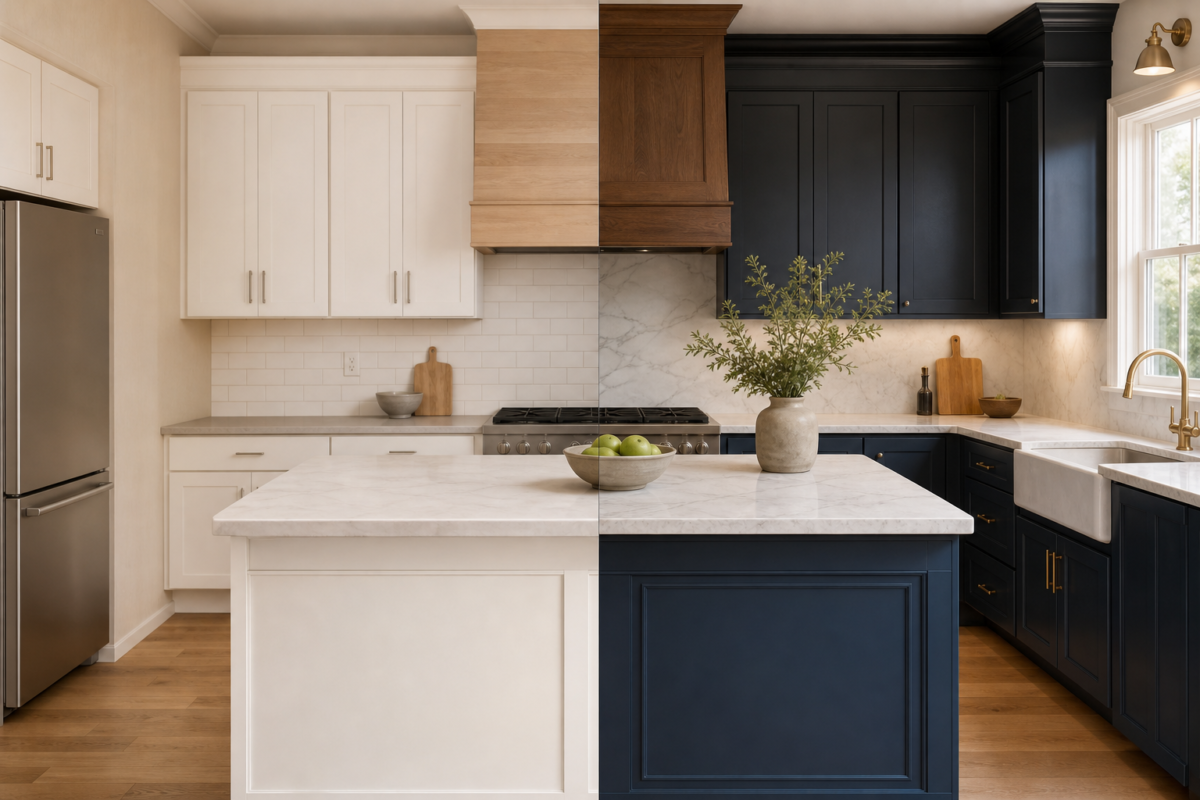
Before any list, there’s a single principle every designer and contractor agrees on: put your money where you use the kitchen. A serious home cook should splurge on the range and ventilation; a busy family should splurge on a quiet dishwasher and durable, wipeable surfaces; someone who entertains should spend on the island and lighting. Splurge on your habits, save on everyone else’s – that’s how a fixed budget produces a kitchen that feels custom to you.
Contractor’s take
“I tell every client the same thing: spend on what’s hard to change and what you touch daily – cabinet boxes, the faucet, the range. A light fixture or backsplash tile you can swap in a weekend five years from now, so don’t blow the budget there.” – Marcus Hale, licensed GC
Where to splurge, category by category
These are the categories worth stretching for. Each one is either touched daily, hard to redo without ripping into walls or plumbing, or the single element that anchors how the whole room reads.
Cabinet boxes and soft-close hardware
Cabinets are the bones of a kitchen and the most expensive thing to redo, so this is the place to buy quality. Splurge on plywood boxes over particle board (typically $8,000-$18,000 more across a full semi-custom kitchen), soft-close drawers and doors – now an expected feature for resale, not a luxury – and full-extension drawers instead of low cabinets with fixed shelves for better ergonomics. You can save on the door style and finish, but the boxes and mechanisms are forever. See the kitchen cabinet cost guide for tiers.
The appliance you use most
Don’t spread appliance money evenly – concentrate it. A serious cook should splurge on the range or cooktop ($3,500-$9,000 for a pro-style unit, and it outlasts a refrigerator) and real ventilation; a busy family should splurge on a quiet, reliable dishwasher ($900-$1,800 for a genuinely quiet, long-warranty model). Buy quality where you cook hardest and go mid-range on the rest. The kitchen appliance cost guide breaks down every tier.
A focal countertop
You don’t need premium stone on every inch – but if one surface is the star, make it count. Splurge on a beautiful quartz, quartzite, or stone island top ($70-$120 per square foot installed) that anchors the room, and pair it with a more affordable perimeter. A single statement surface reads as high-end far more convincingly than mid-grade stone spread everywhere.
A quality faucet and fixtures
You touch the faucet dozens of times a day, and a cheap one feels cheap every time. A solid pull-down or touchless faucet from a reputable brand ($250-$550) is a small splurge with an outsized daily payoff – and replacing a failed $60 bargain faucet twice costs more than buying well once. Cabinet hinges and drawer slides deserve the same logic: they’re fixtures you operate constantly, not decor. See best kitchen faucets 2026 for current picks.
Porcelain flooring and real ventilation
Two quiet splurges that pay off for years: porcelain floor tile ($5-$12 per square foot installed), which resists chipping and cracking far better than ceramic, and a vented range hood ($600-$2,500 depending on CFM and duct run) that actually exhausts outside rather than recirculating through a charcoal filter. Neither is glamorous, but both are hard to upgrade later and you feel them daily.
Where to save, category by category
These are the categories where spending more buys you very little most people can actually perceive – or where a five-minute future swap makes overspending now pointless.
Countertop grade and material
Countertops are where the biggest easy savings live. Choose a lower-grade granite (grade 2 at $40-$60 per square foot rather than grade 5 at $90-$150) or a stone-look laminate ($20-$35 per square foot) that mimics natural stone at a fraction of the cost – most people genuinely can’t tell the difference from a few feet away. Reserve the premium slab for a small focal area if you want it. Compare options in the kitchen countertop cost guide.
Cabinet material (not the boxes)
Splurge on box construction, but save on the visible material: a quality veneer next to solid wood is nearly indistinguishable to most people and typically runs 15-25 percent less. Skip fancy factory drawer inserts you can add cheaply later, and avoid pricey corner solutions like elaborate lazy Susans if a simple shelf will do the job.
Lighting fixtures
Treat decorative lighting as replaceable jewelry. A statement pendant is easy and cheap to swap in five years – most run $40-$150 to replace and take under an hour – so there’s no need to overspend now. Choose an affordable fixture you love today and update it with your taste later. The wiring is the permanent part; the fixture isn’t.
Backsplash tile
Save on the field tile and, if you want a decorative accent, space the pricey pieces out rather than tiling the whole wall in them. A classic ceramic subway backsplash ($8-$15 per square foot installed) costs a fraction of stone or glass mosaic ($25-$45 per square foot) and never looks dated. See the kitchen backsplash cost guide.
Hardware and the sink
Cabinet knobs and pulls are pure jewelry: $3-$15 apiece buys hardware that looks and feels solid, versus $25-$60 for a designer brand doing the exact same job. Swapping them later is a 20-minute project with a drill, so there’s no reason to spend big now. The sink follows the same logic – a standard 16-gauge stainless undermount sink ($200-$400) performs identically at the faucet and in cleanup to a $1,200 fireclay farmhouse sink unless a farmhouse profile is core to the look you’re after. Combined, what you save on hardware and the sink alone can fund most of the faucet splurge above.
Splurge vs. save at a glance
| Item | Splurge or save | Why |
|---|---|---|
| Cabinet boxes & soft-close | Splurge | Permanent, expensive to redo |
| Cabinet door material | Save | Veneer reads like solid wood |
| Cabinet knobs & pulls | Save | A 20-minute future swap |
| The appliance you use most | Splurge | Daily use, hard to upgrade |
| Panel-ready / extra appliances | Save | Nice-to-have, not need |
| Focal countertop | Splurge | Anchors the room |
| Perimeter countertop | Save | Lower-grade or laminate hides well |
| Faucet | Splurge | Touched dozens of times a day |
| Sink | Save | Standard stainless performs the same |
| Porcelain flooring | Splurge | Durable, hard to redo |
| Lighting fixtures | Save | Cheap and easy to swap later |
| Backsplash field tile | Save | Ceramic subway is timeless and cheap |
| Range ventilation | Splurge | Real venting you feel daily |
The high-low mixing strategy
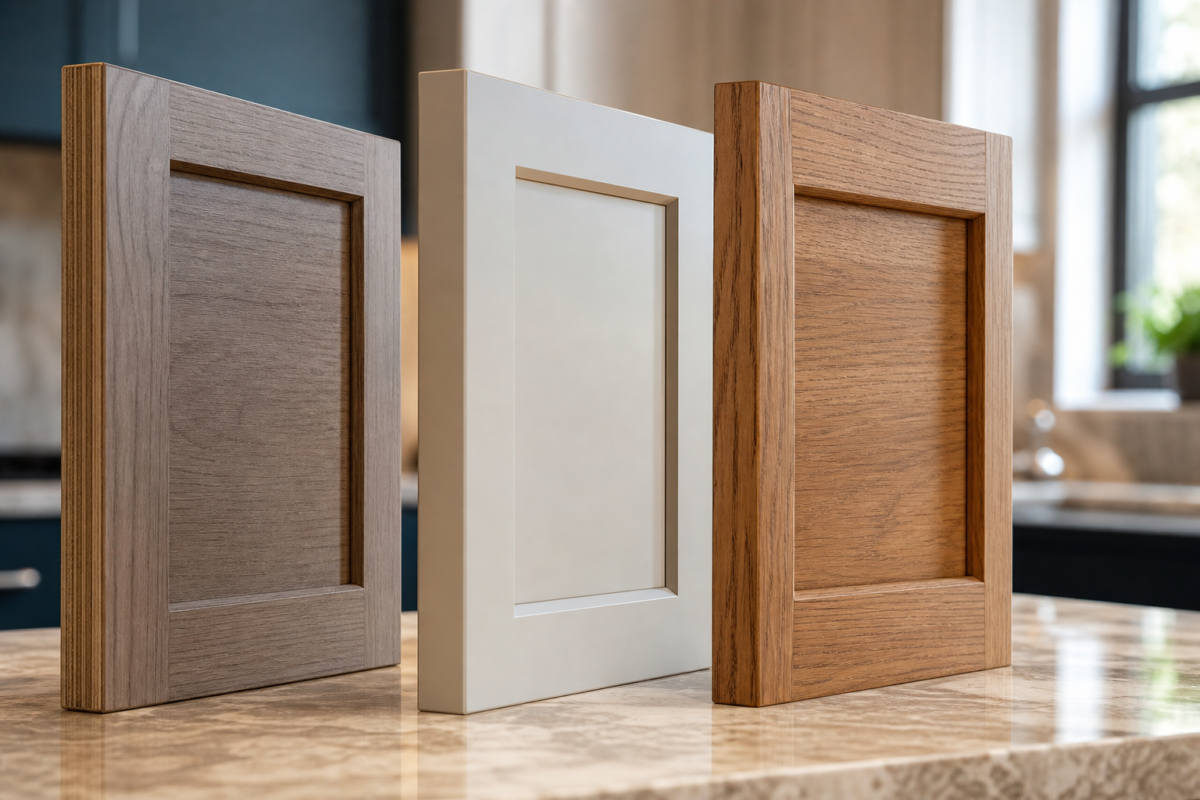
Interior designers call this the high-low mix: deliberately pairing one splurge item next to a save item in the same sightline, so the splurge does the visual work while the save item quietly carries its own weight. A kitchen that’s all mid-grade everything reads as mid-grade everywhere; a kitchen with a few real splurges next to confident saves reads as expensive throughout, because your eye lands on the splurge first and assumes the rest matches it.
- Splurge on the faucet, save on the sink beneath it
- Splurge on cabinet boxes and soft-close hardware, save on the door style and the knobs and pulls
- Splurge on a focal stone island top, save on a laminate or lower-grade stone perimeter
- Splurge on porcelain floor tile, save on the pendant lights above it
- Splurge on real range ventilation, save on a ceramic subway backsplash behind it
- Splurge on the dishwasher if you have a family, save on a second oven or a wine fridge
The pattern repeats: splurge on the thing that’s structural, permanent, or touched daily; save on the thing right next to it that’s decorative, replaceable, or rarely used. Do this five or six times across a kitchen and the whole room feels considered rather than priced by committee.
How to split a kitchen budget
As a rough starting point, cabinets take the largest share of a kitchen budget (around a third), followed by labor, then appliances and countertops. Within that, apply the splurge-vs-save logic: buy the cabinet boxes and your key appliance well, economize on the door material and the extra appliances, put stone where it shows and laminate where it doesn’t. For the full breakdown of how the money divides, see the kitchen remodel cost guide, and remember that scope – not finishes – drives your remodel ROI.
What changes the right split for you
A real-world $30,000 split
Picture a $30,000 mid-range remodel. A smart split might put roughly $10,000 into quality semi-custom cabinet boxes with soft-close hardware, $5,000 into the one appliance you use hardest plus mid-range on the rest, $4,000 into a focal quartz island top with laminate or lower-grade stone on the perimeter, $600 into an excellent faucet, $300 into a standard stainless sink, roughly $200 into simple, solid cabinet hardware, and the balance into porcelain flooring, a ceramic subway backsplash, real range ventilation, and affordable lighting you can upgrade later. That’s the same $30,000 as a kitchen full of even, mid-grade everything – but it feels custom, because the money went where it shows and where you touch it every day.
How long you’ll stay – and which splurges actually pay off
The splurge-vs-save line shifts with your time horizon: the same $30,000 kitchen should be assembled differently for two years than for twenty.
Selling within 1-3 years
Save aggressively on personal-taste items, and splurge only on the handful that appraise well and appeal broadly: refreshed cabinets, a mid-grade quartz or granite countertop, a clean faucet, and neutral, durable flooring. Skip the pro-style range, the pot filler, and any bold finish. See the kitchen remodel ROI guide for what actually recoups value at sale.
Staying 5-10 years
This is the sweet spot for the splurge list above: you’ll use the range, the faucet, and the flooring daily for long enough to justify paying up, but a $6,000 built-in refrigerator panel may not pay for itself if there’s any chance you’ll move first.
This is your forever kitchen
Go all-in on the splurges that match how you actually cook, and worry less about resale-neutral choices. If a pot filler or a panel-ready refrigerator genuinely makes your daily routine better, buy it – you get the payoff for the next twenty years, not a future buyer.
Across all three horizons, a few splurges consistently earn their keep: quality cabinet boxes, the appliance you use most, a good faucet, durable flooring, and real ventilation. A few consistently don’t: pot fillers, panel-ready fronts, premium designer sinks, and ultra-trendy finishes that date within a few years.
Splurge vs. save by how you cook
The right split changes with the household – the same $30,000 should land in different places depending on who’s using the kitchen:
The serious cook
Splurge on the range or cooktop, real vented ventilation, and a durable work surface; save on the dishwasher, lighting, and backsplash. Your money belongs at the stove, where you spend your time.
The busy family
Splurge on a quiet, reliable dishwasher, tough wipeable counters, and soft-close everything; go mid-range on the stove if you cook simply, and skip the showpiece extras. Durability and low maintenance win here.
The entertainer
Splurge on the island – size, seating, and a focal stone top – and on layered lighting; save on the second oven and premium small appliances. Spend where guests gather and the kitchen performs.
The bottom line
There’s no universal list of what to splurge on – there’s a list for your kitchen. Spend on what you use daily and what’s expensive to change later: cabinet boxes, your key appliance, a quality faucet, durable flooring, and real ventilation. Save on what’s easy to swap or hard to notice: countertop grade, cabinet door material, hardware, lighting fixtures, field tile, the sink, and showpiece extras. Get that split right and a mid-range budget produces a kitchen that feels far more expensive than it was.
Your next move
You know the number. What are you deciding next?
Quartz vs. granite: the two most-chosen kitchen countertops compared on 2026 cost, durability, maintenance, heat, and looks -…
Continue →Luxury vinyl, tile, or hardwood? The three most-chosen kitchen floors compared on 2026 cost, water resistance, comfort, and…
Continue →Everything you need to plan a kitchen remodel in 2026 - budget, layout, cabinets, countertops, appliances, timeline, hiring,…
Continue →Frequently asked
Where should I splurge in a kitchen remodel?
Splurge on what you use daily and what’s expensive to change later: quality cabinet boxes with soft-close hardware, the appliance you use most (range for cooks, dishwasher for families), a good faucet, durable porcelain flooring, and real range ventilation.
Where can I save in a kitchen remodel?
Save on cabinet door material (veneer reads like solid wood), cabinet hardware (a 20-minute future swap), countertop grade (a lower-grade granite or stone-look laminate), lighting fixtures, the sink, field backsplash tile, and showpiece extras like panel-ready appliances and pot fillers.
Are soft-close cabinets worth it?
Yes. Soft-close drawers and doors have gone from a luxury to an expected feature for both daily convenience and resale, and because they’re built into the cabinet, they’re not something you can easily add later – making them a worthwhile splurge.
Is it worth splurging on countertops?
On a focal surface, yes – a statement island top anchors the room. But you don’t need premium stone everywhere; a lower-grade granite or a stone-look laminate on the perimeter looks nearly identical to most people and saves significantly.
What is not worth the money in a kitchen remodel?
Showpiece extras that rarely earn their cost: panel-ready appliances, pot fillers, premium designer sinks, elaborate corner cabinet mechanisms, and overly trendy finishes that date quickly. Put that money into the splurges you’ll actually use.

Recommendations synthesize designer and contractor guidance and typical 2026 pricing; the right split always depends on how you personally use your kitchen.