How Much Does a Kitchen Remodel Cost in 2026?
The national average lands near $42,000 - but the honest answer is a range, and it's decided by three things you control. Here's exactly where the money goes in a 2026 kitchen remodel.

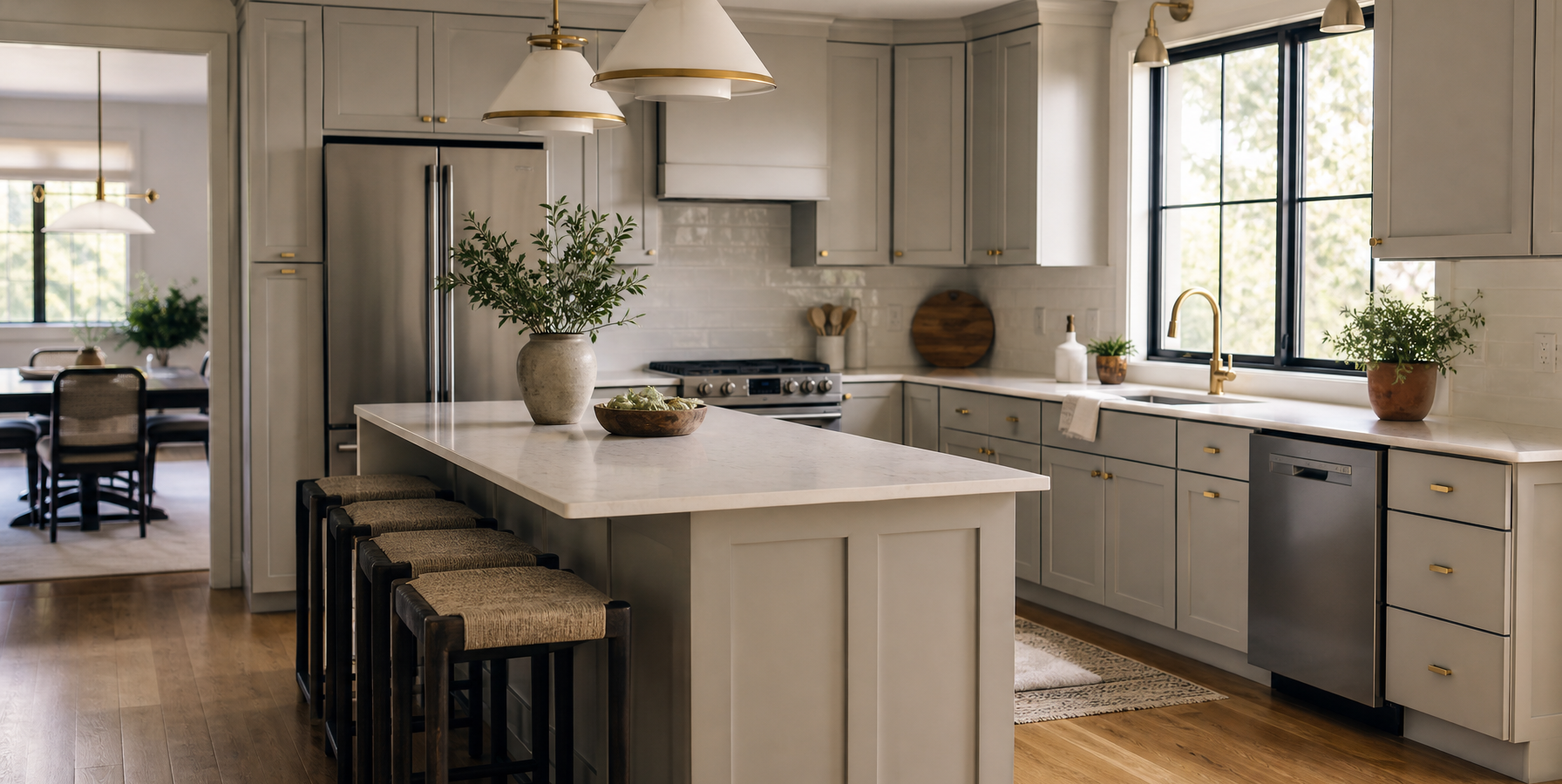
A kitchen remodel is the single most-requested renovation in America – and one of the most expensive. In 2026, kitchen remodel cost runs from about $18,000 to $120,000, with most homeowners landing near the $42,000 national average. That’s a wide band on purpose: a cosmetic refresh and a full gut renovation are barely the same project. What decides where you fall isn’t luck – it’s three levers you control: the size of the kitchen, the grade of materials you choose, and whether you move any walls, plumbing, or electrical. This guide breaks the number down line by line, shows what the same kitchen costs at three budget levels and four project tiers, and flags the decisions that quietly move the total by five figures.
Average kitchen remodel cost in 2026
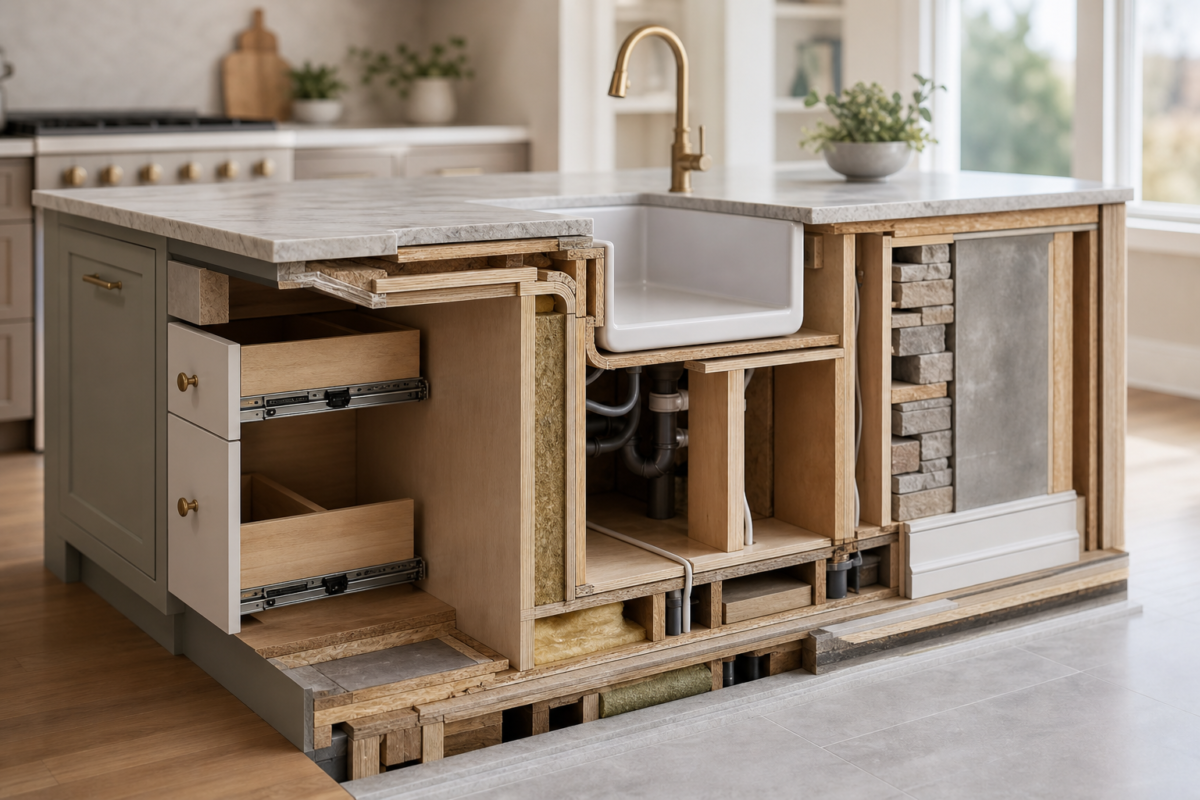
Across the country, the average kitchen remodel cost lands around $42,000, though the true middle of the market – what most homeowners actually spend – falls between $25,000 and $65,000. The full national range stretches from about $18,000 for a light cosmetic update to $120,000 or more for a high-end gut with a changed layout. Averages can mislead because the distribution is lopsided: far more homeowners do a $30,000-$50,000 remodel than a $100,000 one, which pulls the true median a bit below the headline average. Before setting a number, map cost against the rest of the project timeline and planning process so the budget and the schedule move together.
Where the money goes
Cabinets are almost always the largest single line – 25 to 35% of the total – followed by labor, countertops, and appliances. Here’s the same 200-square-foot kitchen priced at three levels, installed:
| Component | Budget | Mid-range | High-end |
|---|---|---|---|
| Cabinets | $5,000 | $14,000 | $32,000 |
| Countertops | $2,000 | $5,500 | $14,000 |
| Appliances | $3,000 | $8,000 | $20,000 |
| Flooring | $1,500 | $4,000 | $9,000 |
| Labor & install | $4,000 | $12,000 | $28,000 |
| Plumbing / electrical | $1,500 | $4,500 | $12,000 |
| Total | $18k-$28k | $40k-$65k | $80k-$120k+ |
Notice how each tier roughly triples. Moving from budget to mid-range usually means semi-custom cabinets and quartz counters; moving to high-end means custom cabinetry, stone, pro appliances, and often a changed layout. See the biggest line in detail in the Kitchen Cabinet Cost guide and the Kitchen Countertop Cost breakdown.
Contractor’s take
“The number people forget is the 10 to 20% contingency. On a kitchen you can’t fully see behind the walls until demo – old wiring, hidden water damage, unlevel floors. Budget for it and you’ll rarely be surprised.” – Marcus Hale, licensed GC
Full kitchen remodel cost breakdown by category
Beyond the big four (cabinets, labor, appliances, countertops), a realistic budget needs a line for every category that touches the room. Here’s how a typical $45,000 mid-range project splits across all nine categories, based on industry-standard allocation ratios:
| Category | % of budget | Typical cost (at $45k project) |
|---|---|---|
| Cabinets | 30% | $13,500 |
| Labor / installation | 20% | $9,000 |
| Appliances | 14% | $6,300 |
| Countertops | 10% | $4,500 |
| Flooring | 7% | $3,150 |
| Lighting | 5% | $2,250 |
| Plumbing fixtures | 5% | $2,250 |
| Permits & design fees | 5% | $2,250 |
| Backsplash | 4% | $1,800 |
Scale those percentages to your own target total and you have a working budget before you collect a single bid. For deeper dives on the categories that vary the most, see Kitchen Appliance Cost, Kitchen Flooring Cost, and the cabinet and countertop guides linked above.
Kitchen remodel cost by size
Bigger kitchens cost more in materials, but smaller kitchens cost more per square foot because fixed costs – appliances, permits, labor setup – don’t shrink with the room. Roughly:
| Kitchen size | Typical remodel cost |
|---|---|
| Small (under 100 sq ft) | $12,000-$30,000 |
| Medium (100-200 sq ft) | $25,000-$65,000 |
| Large (200+ sq ft) | $60,000-$120,000+ |
If your kitchen is on the compact side, the Small Kitchen Remodel Cost guide has size-specific numbers.
Kitchen remodel cost by project level
Industry cost guides typically split kitchen projects into four tiers rather than three. The names matter less than what’s actually included at each level – use this table to see where your wish list realistically lands:
| Project level | Typical cost | Cost per sq ft | What’s included |
|---|---|---|---|
| Minor | $15,000-$25,000 | $150-$200 | Cabinet fronts or paint, new counters and backsplash, layout unchanged |
| Midrange | $40,000-$70,000 | $250-$350 | Semi-custom cabinets, quartz or granite, mid-tier appliances, layout mostly kept |
| Major | $70,000-$100,000 | $350-$450 | Custom cabinetry, premium stone, high-end appliances, minor layout change |
| Upscale | $100,000-$150,000+ | $450-$650+ | Full custom everything, luxury finishes, pro-grade appliances, structural changes |
Most homeowners land in the minor-to-midrange band. Jumping to major or upscale almost always means either premium materials across the board or a structural change – not just nicer versions of the same finishes.
Cost by scope: refresh, remodel, or gut
Scope matters more than any single finish. A cosmetic refresh that keeps the layout is a fraction of a full gut that moves walls and plumbing.
| Scope | Cost | What it means |
|---|---|---|
| Cosmetic refresh | $18k-$28k | Reface or stock cabinets, new counters, keep the layout |
| Mid-range remodel | $40k-$65k | Semi-custom cabinets, quartz, new appliances, minor changes |
| High-end gut | $80k-$120k+ | Custom everything, moved walls and plumbing |
Think of scope and project level as two views of the same decision: scope describes what physically happens (do walls move?), while project level describes the finish quality within that scope. A cosmetic refresh is almost always a minor project. A high-end gut is almost always major or upscale. The mid-range remodel is where the two views diverge most, since you can do a midrange-level remodel that keeps the layout, or spend the same money on major-level finishes in a smaller footprint.
What changes the price
Two kitchens with identical square footage can differ by $50,000. These are the factors doing the work, ranked by how much they move the total:
Labor vs. materials
Labor runs 20 to 35% of a kitchen budget and rises fast when trades stack up – a moved sink pulls in a plumber, new circuits an electrician, a relocated wall a framer and inspector. On a typical $45,000 project, that puts labor around $9,000-$15,000, with the remaining $30,000-$36,000 going to materials and fixtures. Materials are where your taste shows and where the range is widest – a laminate counter and a slab of exotic quartzite can differ by $10,000 in the same footprint. The single biggest way to control both is to keep the existing layout, which keeps the priciest trades out of the job.
Kitchen remodel cost per square foot
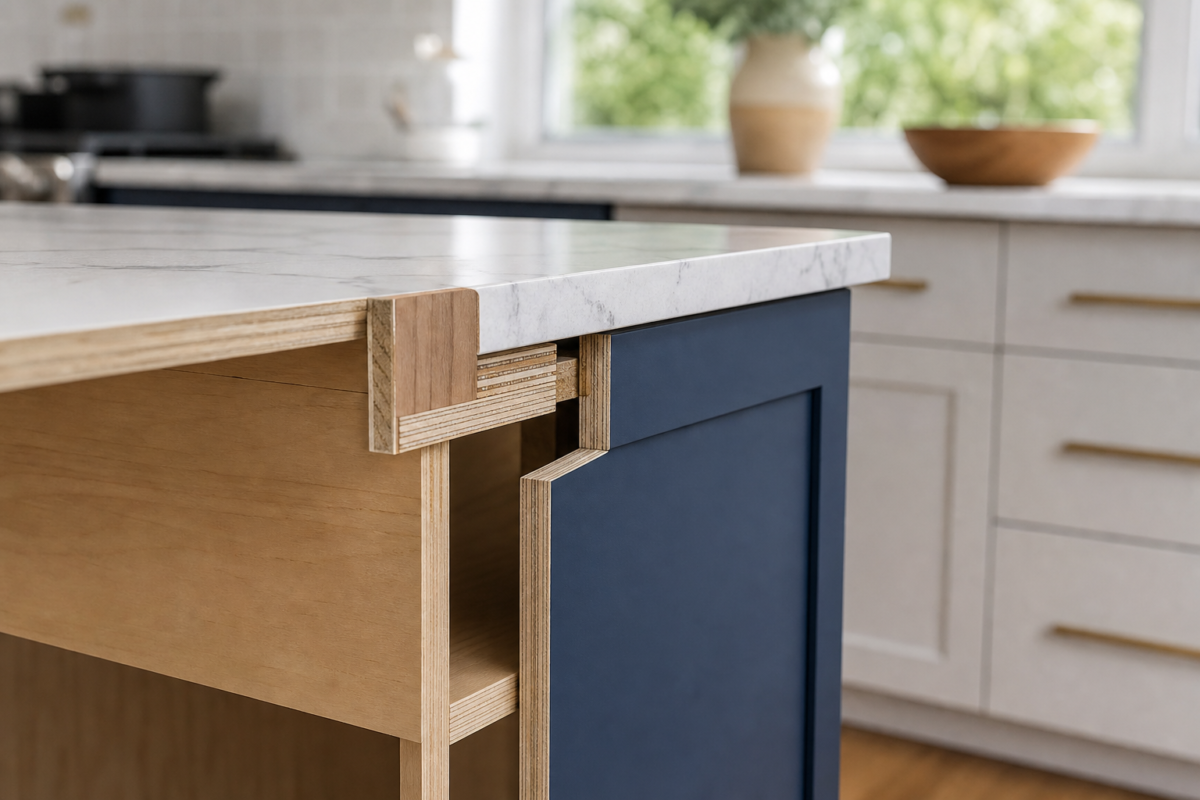
Per-square-foot pricing is the fastest way to sanity-check a bid. In 2026, installed kitchen remodel cost runs roughly $150 to $550 per square foot depending on finish level. Multiply your kitchen’s square footage by the tier below to get a ballpark before you collect quotes:
| Kitchen size | Budget ($150/sq ft) | Mid-range ($300/sq ft) | High-end ($550/sq ft) |
|---|---|---|---|
| 100 sq ft | $15,000 | $30,000 | $55,000 |
| 150 sq ft | $22,500 | $45,000 | $82,500 |
| 200 sq ft | $30,000 | $60,000 | $110,000 |
| 300 sq ft | $45,000 | $90,000 | $165,000 |
Per-square-foot figures include cabinets, counters, appliances, flooring, and labor for a standard remodel. They exclude major structural changes, which add cost independent of square footage.
Hidden costs and contingency planning
Every line-item table above assumes a job that goes to plan. Kitchens rarely do, because so much of the work happens behind surfaces nobody has looked at in decades. Build these five items into the budget from day one rather than treating them as surprises:
- Contingency – 10 to 20% for surprises found during demo.
- Permits – $500 to $1,500 when you move plumbing, electrical, or walls.
- Disposal and delivery – dumpster and haul-away of the old kitchen.
- Temporary kitchen – eating out and a makeshift setup for 6 to 12 weeks.
- Countertop template gap – the 1 to 3 week wait after cabinets are set.
How to lower the total cost
You don’t cut a kitchen budget by buying worse things – you cut it by keeping the expensive stuff where it is:
- Keep the footprint – leaving sinks, gas, and walls in place avoids the priciest trades.
- Reface cabinets instead of replacing when the boxes are sound.
- Splurge on one focal point and keep everything around it mid-range.
- Order everything before demo so trades never stand idle.
For a full playbook of specific swaps and where to spend versus save, see our Budget Kitchen Remodel Ideas guide.
Is a kitchen remodel worth it?
A mid-range kitchen remodel recoups roughly 70% or more of its cost at resale nationally, and a minor remodel can return over 100% – while the daily gain in a room you use constantly is the larger return. The key is matching scope to your home; see the full Kitchen Remodel ROI data before you set a budget.
The bottom line
Budget honestly for the kitchen you’ll actually use, hold back a contingency, and spend where you touch things every day – cabinets, counters, and the sink. A budget refresh runs $18k-$28k, a mid-range remodel $40k-$65k, and a high-end gut $80k-$120k or more. Get the scope right for your home and a kitchen remodel returns roughly 70% at resale while quietly improving every morning in between.
What each budget tier includes
It helps to know what your money actually buys at each level. A budget kitchen ($18k-$28k) means stock or refaced cabinets, laminate or entry-level quartz counters, a basic appliance package, resilient flooring, and the existing layout untouched. A mid-range kitchen ($40k-$65k) steps up to semi-custom cabinets, quartz or granite counters, a matched stainless appliance suite, better flooring, and minor tweaks. A high-end kitchen ($80k-$120k+) means custom cabinetry, premium stone, pro-grade appliances, and structural changes like a moved wall or relocated plumbing. Knowing which tier you’re aiming for turns a vague wish into a real plan.
Kitchen remodel cost by region
Where you live moves the number as much as what you choose. Labor and materials run highest in coastal metros and lowest across the South and Midwest. As a rough guide, a mid-range remodel that costs $45,000 nationally might run $60,000 or more in San Francisco, New York, or Boston, and closer to $35,000 in parts of the South. Get at least three local bids before you set a final budget – your metro is one of the biggest variables you can’t control, and national averages only get you in the ballpark.
Regional swings come mostly from two places: skilled-trade wages and permit or inspection fees, which are set locally and don’t track material prices at all. A homeowner in a high-cost metro can partly offset this by leaning harder on the layout-preserving moves in the savings section below, since labor is the cost driver most inflated by geography.
Kitchen refresh vs. remodel vs. renovation
The words matter because each signals a very different cost. A refresh keeps everything in place and updates surfaces – paint, hardware, counters, backsplash – for $2,000 to $10,000. A remodel replaces cabinets, counters, and appliances in the same layout for $25,000 to $65,000. A renovation or gut changes the layout, moves plumbing, and often opens walls, running $80,000 and up. Knowing which one you actually need is the single fastest way to a realistic budget – and most homeowners need less than they think.
How to finance a kitchen remodel
Most homeowners fund a kitchen remodel with savings, a home equity line of credit (HELOC), a home equity loan, or a personal loan. A HELOC is popular because it lets you draw as bills come due and usually carries a lower rate than a personal loan, though it uses your home as collateral. Whatever you choose, borrow against the realistic project cost plus contingency – not the optimistic quote – so a surprise behind the walls doesn’t stall the job halfway through.
A realistic budgeting method
Rather than starting from a wish list, start from your total and work backward. Assign roughly a third to cabinets, a quarter to labor, and the rest across countertops, appliances, flooring, and finishes – then hold 10 to 20% aside. When a choice pushes one category over, cut from another instead of raising the total. This discipline prevents the slow creep that quietly turns a $45,000 remodel into a $70,000 one, and it’s exactly how contractors keep a job on budget.
Your next move
You know the number. What are you deciding next?
Quartz vs. granite: the two most-chosen kitchen countertops compared on 2026 cost, durability, maintenance, heat, and looks -…
Continue →Luxury vinyl, tile, or hardwood? The three most-chosen kitchen floors compared on 2026 cost, water resistance, comfort, and…
Continue →Everything you need to plan a kitchen remodel in 2026 - budget, layout, cabinets, countertops, appliances, timeline, hiring,…
Continue →Frequently asked
How much does a kitchen remodel cost in 2026?
Between $18,000 and $120,000, with a national average near $42,000. A cosmetic refresh runs $18k-$28k, a mid-range remodel $40k-$65k, and a high-end gut $80k-$120k or more.
What is the most expensive part of a kitchen remodel?
Cabinets, at 25 to 35% of the total – the single largest line item, ahead of labor, countertops, and appliances. Custom cabinetry alone can exceed the entire budget of a stock-cabinet refresh.
How much does a kitchen remodel cost per square foot?
Roughly $150 to $550 per square foot installed in 2026, depending on finish level. Budget kitchens run near $150/sq ft, mid-range around $300, and high-end $550 or more.
Can I remodel a kitchen for under $20,000?
Yes – by keeping the layout, refacing rather than replacing cabinets, choosing laminate or entry-level quartz, and doing paint and hardware yourself. The savings come from avoiding structural, plumbing, and electrical changes.
How long does a kitchen remodel take?
About 6 to 12 weeks of construction for a typical kitchen, plus several weeks of planning and ordering. Custom cabinets and countertop fabrication are the most common causes of delay.

Cost ranges are 2026 national mid-market estimates compiled from remodeler bid data and contractor surveys; your metro, kitchen size, and scope will move the number.