Budget Bathroom Remodel: 2026 Ideas and Money-Saving Tips
How to make a bathroom look like a $20,000 renovation on a $5,000 budget, with 2026 prices and pro-approved money-saving moves.

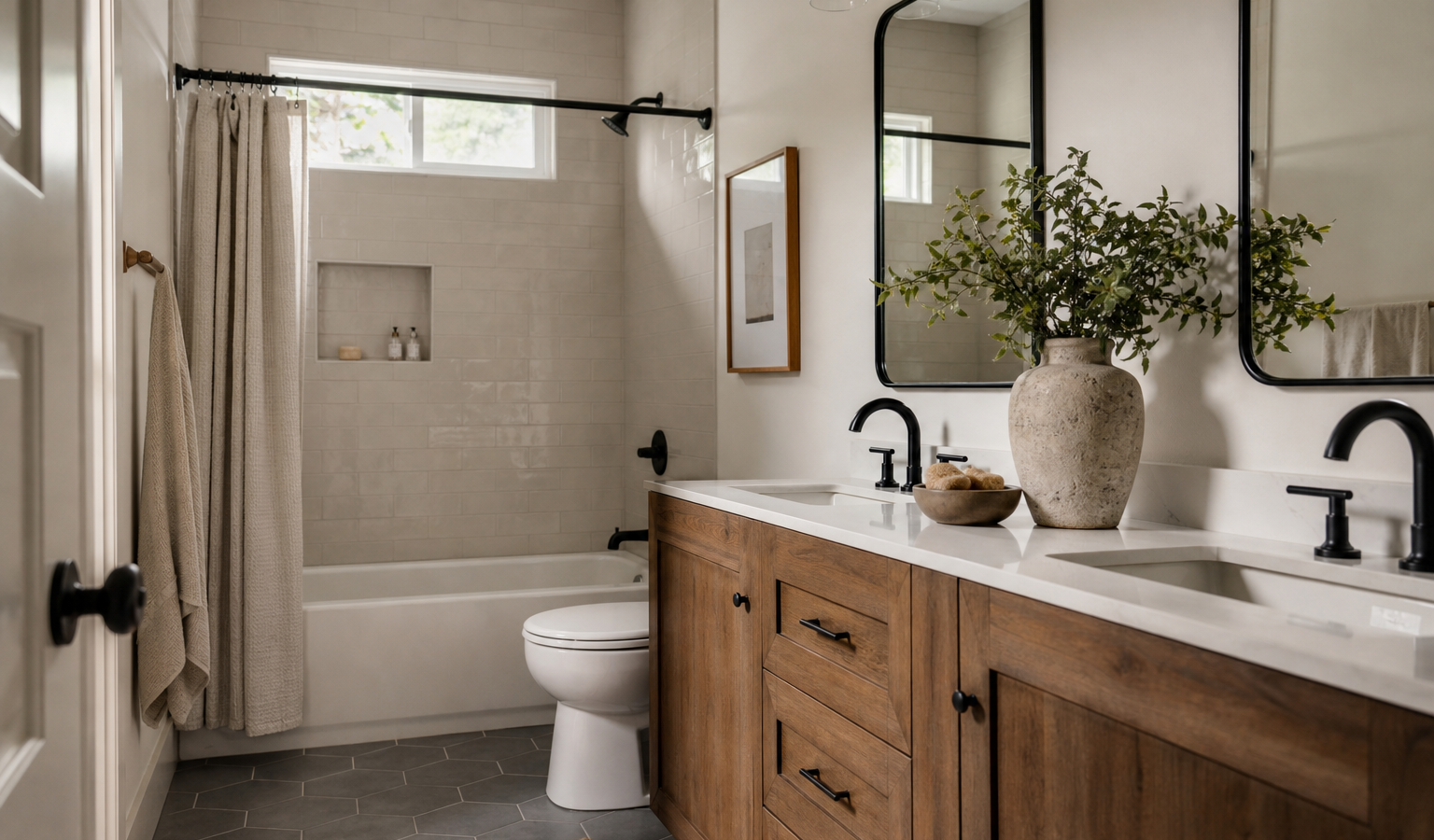
A budget bathroom remodel can transform a tired, dated room for $2,500 to $10,000 by refreshing rather than gutting: new paint, updated lighting and hardware, a refinished tub, and smart material swaps that mimic expensive finishes for a fraction of the price. The secret is deciding what to keep, what to refinish, and what to replace, then spending your limited dollars only where they show. Done well, a $5,000 refresh can read like a $20,000 renovation in photos and in person.
This guide covers exactly where to save and where to splurge, the refinishing tricks that replace costly demolition, the cheap materials that fool the eye, the jobs worth doing yourself, and the ones you should never touch. Every figure is current 2026 US pricing so you can build a realistic plan around whatever budget you have.
Key takeaways
- A budget bathroom refresh runs $2,500 to $10,000; a DIY-heavy version can land at $3,000 to $8,000.
- Refinishing a tub ($350 to $600) instead of replacing it saves thousands and a week of work.
- Keep the layout. Moving plumbing is the fastest way to blow a tight budget.
- Save on surfaces (paint, peel-and-stick, LVP) and splurge on the toilet, faucet, and exhaust fan.
- Never DIY plumbing, electrical, or shower waterproofing; the failures cost far more than the savings.
How much does a budget bathroom remodel cost?
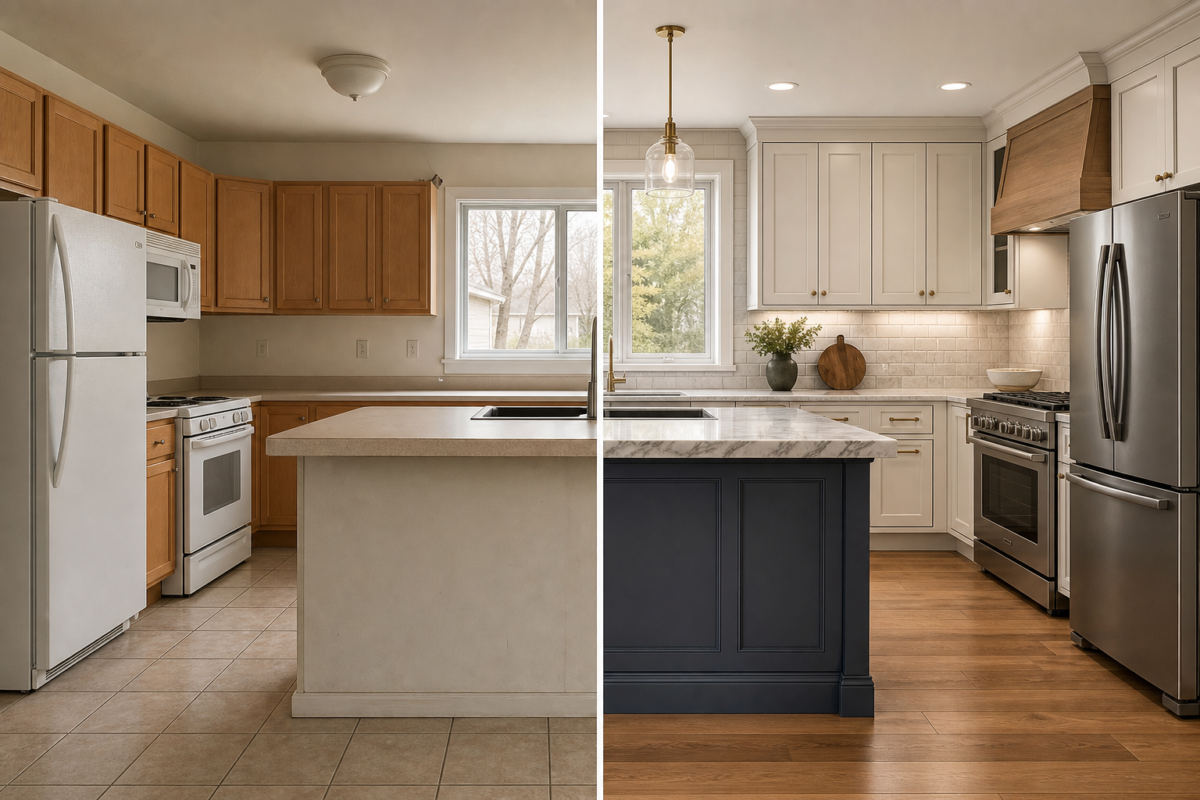
A budget bathroom remodel costs $2,500 to $10,000 in 2026 for a cosmetic-to-light refresh, while a DIY-forward project that keeps the layout can come in between $3,000 and $8,000. The biggest cost driver is whether you keep or move the plumbing; leaving the toilet, sink, and shower where they are saves thousands.
| Budget level | 2026 cost | What you get |
|---|---|---|
| Light refresh | $2,500 – $5,000 | Paint, lighting, hardware, mirror, faucet, refinished tub |
| Mid budget | $5,000 – $10,000 | Above plus new vanity, LVP flooring, peel-and-stick or new tile |
| DIY-heavy | $3,000 – $8,000 | Owner does paint, hardware, flooring; pro handles plumbing and tile |
For the full-scope picture and where a budget job sits against a gut remodel, see our bathroom remodel cost guide, and check which of these moves actually pay back in our bathroom remodel ROI guide.
Where to save and where to splurge
Save on everything cosmetic that is easy to change later, and splurge only on the three things you use hard every day: the toilet, the faucet, and the exhaust fan. A cheap faucet drips within a year and a weak fan invites mold, so those are false economies, while paint and hardware are low-risk places to cut.
The logic behind this split is simple: a cosmetic choice you regret can be redone for a few hundred dollars, but a mechanical failure behind the wall means tearing out the finished work to reach it. So the question for every line item is not “is this cheap?” but “what does it cost me if it fails?” Paint fails cheaply; a shower valve fails expensively. Spend accordingly, and you will get a bathroom that both looks good now and holds up for the decade after the remodel.
Proper ventilation is the one invisible upgrade worth paying for: a quality fan sized to the room prevents the moisture damage and mold that the EPA links to poor bathroom airflow. A high-efficiency WaterSense toilet and faucet also cost little more than builder-grade and lower your water bill. Everything else on the save side can be upgraded later without tearing anything out.
Refinish instead of replace
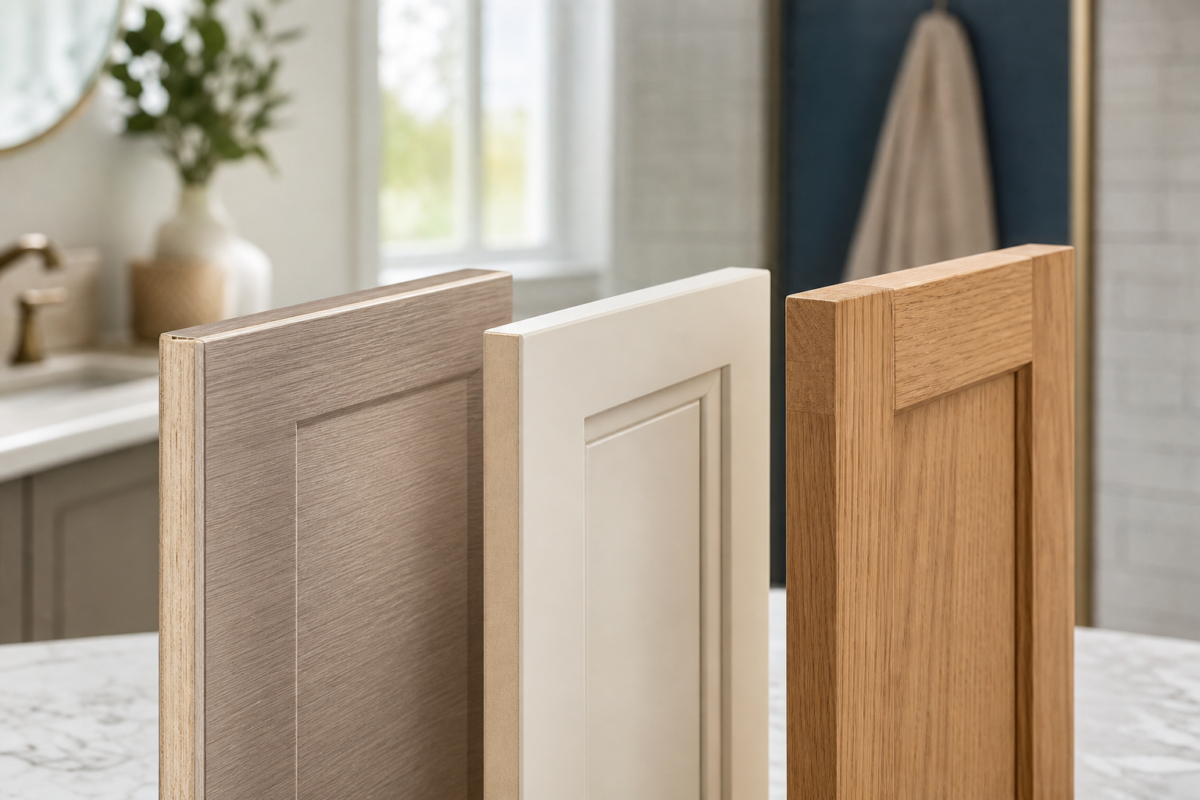
Refinishing is the single biggest budget lever in a bathroom, because it skips demolition, disposal, and new-material costs entirely. A worn tub that would cost $1,500 to $4,000 to replace can be professionally reglazed for roughly $350 to $600 and look new for years.
Tub and tile reglazing
Reglazing (also called refinishing) sprays a new bonded coating over a sound but ugly tub, sink, or tile wall. It works on porcelain, fiberglass, and ceramic, and a pro job lasts 8 to 15 years with proper care. Avoid abrasive cleaners afterward and use a mat with suction cups sparingly, since both can dull or lift the finish early. You can reglaze dated tile instead of ripping it out, which avoids opening walls and the waterproofing rework that follows.
Paint the vanity, not replace it
A structurally sound vanity does not need replacing; new paint and hardware can modernize it for under $100 even on a double vanity. Scuff-sand, prime, and use a durable enamel. The same logic applies to a dated medicine cabinet or linen cabinet. Our bathroom vanity guide shows which styles are worth keeping and refreshing versus swapping out.
Cheap material swaps that look expensive
The right budget materials imitate premium finishes closely enough that most people cannot tell the difference, especially luxury vinyl plank that mimics stone or wood for a few dollars a square foot. Match the look you want to the cheapest material that convincingly delivers it.
| Material | 2026 cost | Looks like |
|---|---|---|
| Peel-and-stick tile | $0.20 – $2 / sq ft | Ceramic or cement tile |
| Laminate flooring | $2 – $3 / sq ft | Hardwood |
| Luxury vinyl plank (LVP) | $2 – $5 / sq ft | Wood or stone, waterproof |
| Engineered wood | $4 – $7 / sq ft | Solid hardwood |
| Fiberglass shower panels | $611 – $811 | Tiled surround |
| Acrylic shower panels | $1,100 – $1,360 | Tiled surround |
LVP is the budget favorite because it is fully waterproof, warm underfoot, and installs over most existing floors. For a deeper comparison of durability and grip, see our bathroom flooring options. Pair any of these with a well-chosen wall color from our bathroom paint colors guide and the room reads custom.
Acrylic and fiberglass shower surround panels deserve a closer look if your tile is failing. At $611 to $1,360 installed, a one-piece or multi-panel surround costs a fraction of a custom tile shower, installs in a day, and has no grout to scrub or reseal. It will not fool a design purist up close, but in a secondary or guest bath it is a durable, waterproof, low-maintenance choice that frees your budget for the rooms that matter more. Keep the tiled look for the primary bath if you can, and use panels where function beats show.
Budget bathroom remodel ideas you can do yourself
The highest-impact budget bathroom remodel ideas are also the most DIY-friendly: paint the walls, swap the hardware and faucet, update the light fixture, frame the builder mirror, and lay peel-and-stick tile or LVP. None require a permit or a trade license, and together they can remake a room for a weekend of work and a few hundred dollars.
Frame the builder-grade mirror
A plain frameless builder mirror instantly looks custom with a stick-on frame kit or trim, usually under $400 and often far less. See our bathroom mirror guide for proportions and placement so the upgrade looks intentional, not pasted on.
Refresh caulk, grout, and hardware
Nothing ages a bathroom like cracked caulk and grimy grout. Re-caulking the tub and re-whitening or re-coloring the grout is a few dollars of material and makes everything look clean and cared-for. Swap towel bars, the robe hook, the toilet lever, and cabinet pulls in one coordinated finish for an instant facelift.
Update lighting for a modern look
Swapping a dated flush-mount or a Hollywood-strip fixture for a modern vanity light or a pair of sconces is one of the cheapest ways to change the whole mood of a room. A like-for-like fixture swap that reuses the existing electrical box is a safe DIY job, often $75 to $300 for the fixture. Add a dimmer and switch to warm 2700K to 3000K LED bulbs for flattering light. If the swap requires a new box or added circuit, hand that part to an electrician.
What you should never DIY
Never DIY plumbing, electrical, or shower waterproofing, because a hidden failure in any of the three causes damage that dwarfs the money you saved. A leaking supply line, a miswired GFCI, or a bad shower membrane can cost thousands in rot, mold, and repairs, so hire licensed pros for exactly those tasks and keep the DIY to surfaces.
Contractor’s take
The budget jobs that go wrong are almost always the ones where someone tried to save money on waterproofing or moved a drain to DIY a new layout. Paint whatever you want, swap every fixture, lay your own vinyl, I am all for it. But pay a pro for the shower pan and the plumbing connections. I have torn out $800 of DIY tile work to fix a $200 waterproofing shortcut that rotted a subfloor. The cheap part is never the part that fails expensively.
- Keep the plumbing layout exactly where it is.
- Reglaze the tub and dated tile instead of demolishing.
- Paint the vanity and swap hardware rather than buying new.
- Use LVP or peel-and-stick to mimic stone and wood cheaply.
- Splurge on the faucet, toilet, and exhaust fan only.
- Shop clearance, salvage, and holiday sales for fixtures.
- Set aside a 10 to 20 percent contingency for hidden issues.
- Hire licensed pros for plumbing, electrical, and waterproofing.
How to stretch a tight bathroom budget
Stretch a tight budget by sequencing the work, shopping strategically, and protecting a contingency so one surprise does not sink the whole project. Set aside 10 to 20 percent for hidden costs like a soft subfloor, and hunt discount retailers, salvage yards, clearance sections, and holiday sales (Black Friday and end-of-season) for fixtures and tile.
If funds are very tight, phase the project: do the demolition-free cosmetic work now and save plumbing-dependent changes for later. A powder room remodel proves how far a small budget goes in a small room, where premium materials cover little area. Always collect multiple quotes for the pro portions so you are not overpaying on the work you cannot do yourself.
One more stretch tactic: buy floor models, open-box, and discontinued vanities, mirrors, and fixtures. Showrooms and big-box stores clear these at 30 to 60 percent off, and a discontinued faucet works exactly as well as a current one. The same goes for tile overstock and remnant stone, which is often enough for a small vanity top or a shower niche. A little patience and flexibility on exact style can shave hundreds to thousands off the finished room without compromising quality.
Your next move
You know the number. What are you deciding next?
Walk-in tub cost in 2026: $5,000 to $20,000 installed. Compare tub types, features, and the real Medicare coverage…
Continue →Bathroom remodel financing explained: compare home equity loans, HELOCs, cash-out refi, personal loans, and 0% cards with 2026…
Continue →Steam shower cost runs $3,000 to $10,000 installed in 2026. See prices by generator size, enclosure, and prefab…
Continue →Frequently asked
How can I remodel my bathroom cheaply?
Keep the layout, refinish instead of replacing (reglaze the tub, paint the vanity), use budget materials like LVP and peel-and-stick tile, and do the paint, hardware, and fixture swaps yourself. Hire pros only for plumbing, electrical, and waterproofing. Expect $2,500 to $10,000 for a cosmetic refresh.
Is it cheaper to refinish or replace a bathtub?
Refinishing is far cheaper. Reglazing a tub costs about $350 to $600 versus $1,500 to $4,000 to replace one, and it avoids demolition and disposal. Refinishing makes sense whenever the tub is structurally sound but stained or scratched.
What should I not cut corners on in a budget remodel?
Never skimp on the faucet, the toilet, shower waterproofing, or the exhaust fan. A cheap faucet fails fast, poor waterproofing causes rot, and a weak fan invites mold. These are the places where saving money costs more later.
What is the cheapest bathroom flooring?
Peel-and-stick vinyl tile is cheapest at $0.20 to $2 per square foot, followed by laminate at $2 to $3. Luxury vinyl plank at $2 to $5 is the best value because it is waterproof, durable, and installs over most existing floors.
Can I remodel a bathroom myself?
You can do the cosmetic work, painting, hardware, fixtures, mirror framing, caulk, grout, and vinyl flooring, which covers most of a budget refresh. Leave plumbing, electrical, and shower waterproofing to licensed pros to avoid costly failures.

2026 US cost ranges compiled from remodeling and refinishing cost data; material prices are national averages.