Walk-In Tub Cost in 2026: Prices, Types, and Medicare Facts
What a walk-in tub really costs in 2026, by type and installed, plus the Medicare truth and how to avoid overpaying.

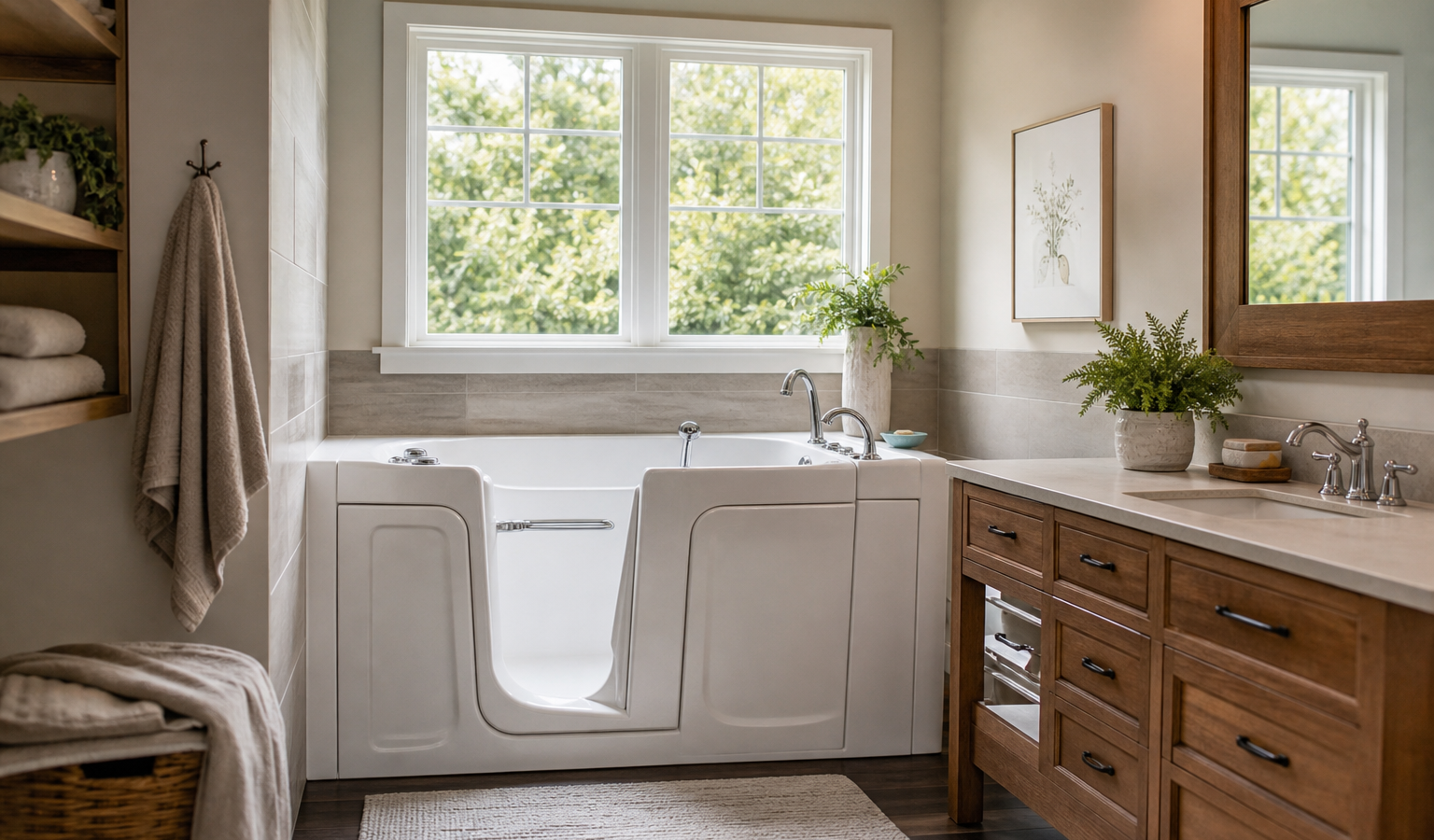
Walk-in tub cost runs $2,000 to $10,000 for the tub itself and $5,000 to $20,000 fully installed in 2026, with most homeowners paying $7,000 to $10,000 for a mid-range hydrotherapy model with professional installation. Price depends on the tub type, the jets and features you choose, and how much plumbing or electrical work your bathroom needs. This guide breaks down every cost, compares the tub types, and explains the Medicare reality so you can budget accurately before a single salesperson knocks.
Walk-in tubs let you step over a low threshold instead of climbing over a high tub wall, then seal a watertight door and bathe seated. For older adults and anyone with limited mobility, that can mean the difference between bathing safely at home and not. The CDC data on older-adult falls reports that falls are the leading cause of injury among adults 65 and older, and the bathroom is one of the most common places they happen, which is what drives demand for these tubs. For how a walk-in tub fits a broader accessible renovation, see our aging-in-place bathroom guide.
Key takeaways
- Walk-in tubs cost $2,000 to $10,000 for the unit and $5,000 to $20,000 installed.
- Most homeowners spend $7,000 to $10,000 for a mid-range hydrotherapy tub, professionally installed.
- Installation alone adds $1,500 to $5,000+ depending on plumbing and electrical upgrades.
- Original Medicare generally does not cover walk-in tubs; some Medicare Advantage plans may help.
- Key features: low threshold, inward or outward door, fast fill and drain, grab bars, and anti-slip surfaces.
How much does a walk-in tub cost in 2026?
A walk-in tub costs $2,000 to $10,000 for the tub and $5,000 to $20,000 installed, with the national average landing around $7,000 to $10,000 for a mid-range model. Basic soaker tubs sit at the low end; hydrotherapy, air-jet, and bariatric models push toward the top.
The table shows typical 2026 pricing by tub type, unit-only and installed. Installed figures assume a standard replacement of an existing tub without major layout changes.
| Tub type | Unit price | Installed price | Best for |
|---|---|---|---|
| Soaker (no jets) | $2,000 – $5,000 | $5,000 – $8,000 | Simple, budget-friendly |
| Air / bubble jets | $3,500 – $7,000 | $6,500 – $11,000 | Gentle massage |
| Hydrotherapy (water jets) | $5,000 – $8,500 | $8,000 – $14,000 | Pain relief, arthritis |
| Combo (air + water) | $6,000 – $10,000 | $9,000 – $16,000 | Full therapy experience |
| Bariatric (wide) | $5,000 – $10,000 | $8,000 – $17,000 | Higher weight capacity |
| Wheelchair-accessible | $7,000 – $12,000 | $10,000 – $20,000 | Transfer or caregiver assist |
For comparison with other bathing options, our bathtub types guide and freestanding tub cost articles cover standard tubs, and the whole project sits inside a typical bathroom remodel budget.
What walk-in tub installation includes
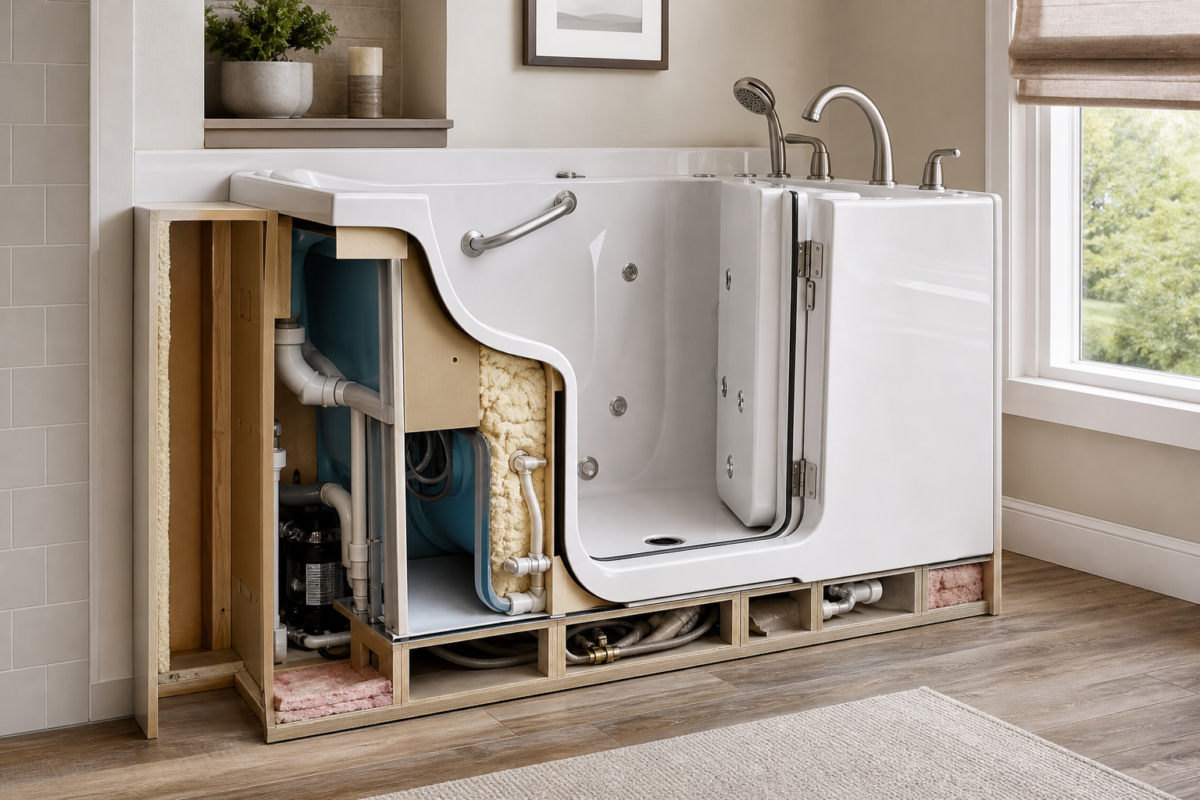
Walk-in tub installation costs $1,500 to $5,000 on top of the tub and covers removing the old tub, setting and sealing the new one, connecting plumbing, and often upgrading the water heater and adding a dedicated electrical circuit. Complex jobs with layout or plumbing changes cost more.
Standard install
A straight swap, removing a standard tub and dropping a walk-in into the same footprint, is the cheapest path, usually $1,500 to $3,000 in labor. The tub connects to existing supply and drain lines, and a day or two of work gets it done.
Upgrades that add cost
Walk-in tubs hold more water than a standard tub, so a larger or on-demand water heater (often $1,000 to $3,000) is a common add-on; nobody wants to run out of hot water mid-fill. Hydrotherapy and heated-seat models need a dedicated GFCI circuit, adding $300 to $1,200 for an electrician. Reframing, flooring, or moving plumbing can add thousands more.
Because walk-in tubs are often taller and narrower than the tub they replace, the installer may need to adjust the surrounding wall, add tile or a surround panel, and reroute the overflow and drain to match the new door and seat position. In older homes, upgrading corroded supply lines or a failing shutoff valve during the swap is money well spent while the wall is already open. Ask for an itemized quote so you can see exactly which of these line items apply to your bathroom rather than accepting a single bundled number.
Walk-in tub types and features that affect price
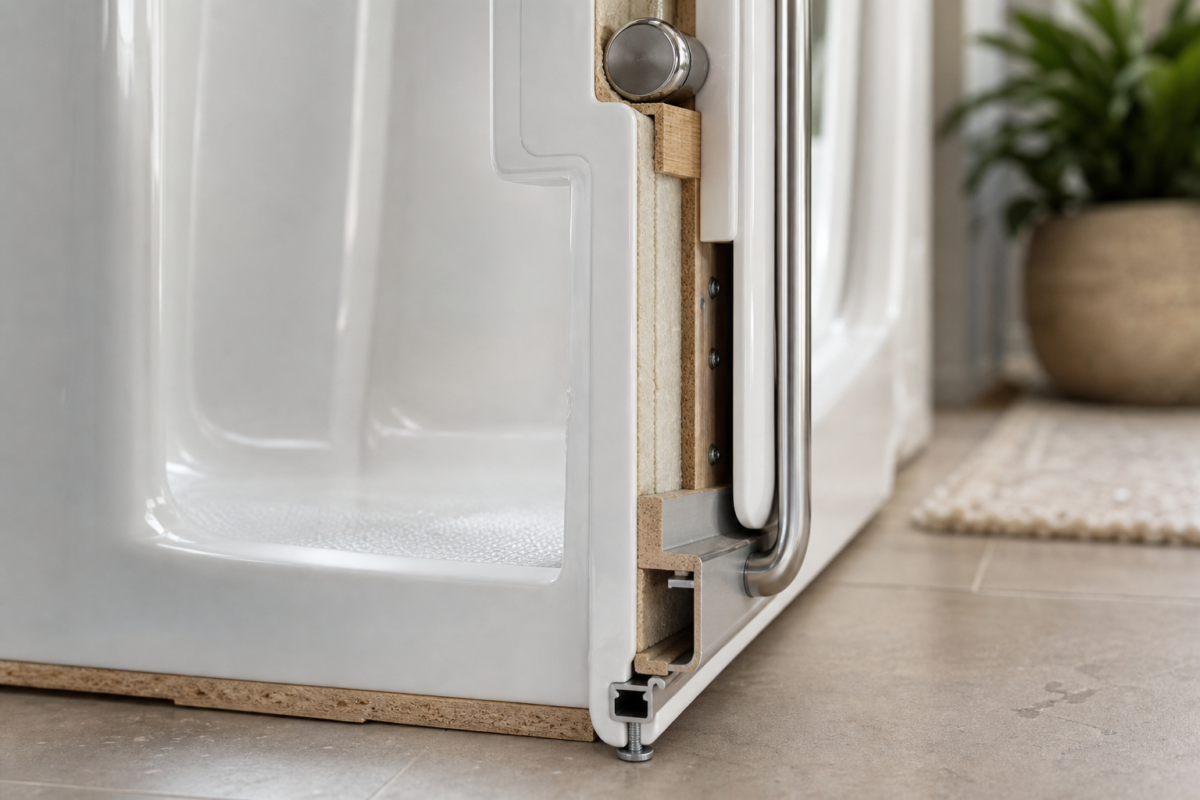
The biggest price drivers are the therapy system (soaker, air, water, or combo), the door configuration, and convenience features like fast fill-and-drain, heated seats, and chromotherapy. Each step up in capability adds several hundred to a few thousand dollars.
Door direction
Inward-swinging doors cost less and seal well but take up interior space and require you to make room as the water drains. Outward-swinging doors are easier for larger users and wheelchair transfers but cost more and need clearance outside the tub.
Fill and drain speed
Because you sit in the tub while it fills and drains, speed matters for comfort. Standard units fill in 6 to 15 minutes and drain in 2 to 3; fast-drain systems cut that to under 80 seconds and are worth the upcharge for anyone who chills easily. An in-line water heater built into the tub keeps the water warm during a long soak, another feature worth considering for therapeutic use.
Comfort and safety extras
Heated backrests and seats, chromotherapy lighting, aromatherapy, built-in grab bars, textured anti-slip floors, and handheld showers all add cost but improve the daily experience and safety. Prioritize the safety features; treat the spa extras as optional.
Does Medicare or insurance cover walk-in tub cost?
Original Medicare (Parts A and B) generally does not cover walk-in tubs because they are not classified as durable medical equipment for home use. Some Medicare Advantage (Part C) plans offer limited home-safety benefits, and Medicaid waivers, VA benefits, and medical tax deductions may help in specific cases.
Do not take a sales rep claim of “Medicare approved” at face value. Confirm coverage directly through Medicare.gov or your plan administrator before signing. If a tub is medically necessary and prescribed by a doctor, the portion of the cost above any added home value may qualify as a deductible medical expense; a tax professional can advise. Veterans may access grants such as HISA, and some states offer Medicaid home and community-based services waivers that cover accessibility modifications.
Ways to reduce the cost
Beyond insurance, look at manufacturer financing, nonprofit aging-in-place grants, and local Area Agency on Aging programs. Getting three itemized quotes is the single most effective way to avoid overpaying, since this is a market with wide price spreads and aggressive sales tactics. Some homeowners also find that having a local licensed plumber install a tub they purchased separately costs far less than a turnkey national package, though you then coordinate the warranty yourself. If a household member qualifies, long-term care insurance policies occasionally reimburse home modifications that support independent living, so it is worth reading your policy or asking your agent before you rule out any help.
Walk-in tub vs. walk-in shower
A walk-in tub is better for soaking, hydrotherapy, and users who want to bathe seated; a walk-in or curbless shower is better for easy roll-in access, faster use, and lower cost. Many accessible bathrooms end up with a curbless shower rather than a tub for that reason.
Walk-in tubs require you to sit and wait while the tub fills and drains, which some users find cold and slow. A walk-in shower or a shower versus bathtub comparison is worth running if the primary goal is fall prevention rather than therapeutic soaking. For wheelchair users, a zero-threshold roll-in shower is often the more practical and less expensive choice. The tub wins when hot-water therapy for arthritis, circulation, or muscle pain is the priority. If your bathroom has room, some homeowners install both a compact walk-in tub and a separate accessible shower, covering therapeutic soaking and quick, safe daily washing without compromise. Think about who will use the bathroom over the next ten years, not just today, since mobility needs tend to increase and a thoughtful layout now can save a second renovation later.
Is a walk-in tub worth it?
A walk-in tub is worth it when safe, independent bathing at home is the goal and the user values soaking or hydrotherapy; it is less compelling purely as a resale upgrade, since it appeals to a narrow set of buyers. Weigh the daily safety and comfort benefit against the cost and the narrow buyer pool.
- You or a family member struggles to step over a standard tub wall.
- Hydrotherapy would help with arthritis, circulation, or chronic pain.
- You plan to age in place and want to stay in your home longer.
- You can budget $7,000 to $14,000 installed for a quality unit.
- You understand it may not add dollar-for-dollar resale value.
- You have confirmed any insurance or benefit help in writing first.
Walk-in tub brands, warranties, and lifespan
Major walk-in tub brands include Kohler, American Standard, Safe Step, Ella, Jacuzzi, and Boca, with prices ranging from mid-market to premium. A quality tub lasts 10 to 20 years, and the warranty, especially on the door seal and the shell, is as important as the sticker price.
What separates the brands
Premium names like Kohler and American Standard are sold through plumbing suppliers and certified installers and tend to carry strong lifetime warranties on the tub shell and door seal. Direct-to-consumer brands such as Safe Step and Boca bundle the tub and installation into one pitched price, which can be convenient but also where the biggest markups hide. Ella and Jacuzzi sit in between and are known for hydrotherapy performance. Across all of them, the door gasket is the component most likely to need service, so confirm it is covered and that local technicians can get parts.
Reading the warranty
Look for a lifetime warranty on the door seal and shell, and separate coverage on pumps, blowers, and heaters (often 1 to 5 years). A tub with a short seal warranty is a red flag, because a failed door seal is the one leak that can flood your bathroom. Get the warranty terms in writing before you sign, not as a verbal promise during the sales visit.
Factor in operating cost too. Hydrotherapy and air systems draw electricity, heated seats add a small load, and the extra hot water raises your water-heating bill modestly. None of this is dramatic, but it belongs in an honest long-term budget alongside the purchase price.
Contractor’s take
The two upgrades I never let a walk-in tub client skip are the fast-drain system and a bigger or on-demand water heater. You are sitting in that tub while it fills and empties, and a standard drain that takes three minutes feels like forever when you are wet and cold. I also warn people about the pressure sales world around these tubs: the same unit I can install for 9,000 dollars gets quoted at 18,000 by the national pitch outfits. Get three itemized bids, verify any Medicare claim yourself, and never sign a same-day contract. A well-chosen tub installed by a local licensed plumber is a genuine quality-of-life upgrade; an overpriced one bought under pressure is not.
Your next move
You know the number. What are you deciding next?
Compare bathtub types, alcove, drop-in, freestanding, corner, and undermount, with sizes, materials, and 2026 costs to pick the…
Continue →Freestanding tub cost runs $1,300 to $8,000 installed in 2026. See prices by material, full installation breakdown, and…
Continue →Bathroom remodel financing explained: compare home equity loans, HELOCs, cash-out refi, personal loans, and 0% cards with 2026…
Continue →Frequently asked
How much does a walk-in tub cost installed?
Expect $5,000 to $20,000 installed in 2026, with most homeowners paying $7,000 to $10,000 for a mid-range hydrotherapy model. A basic soaker in a straight swap can be as low as $5,000; a wheelchair-accessible unit with upgrades can reach $20,000.
Does Medicare pay for a walk-in tub?
Original Medicare generally does not, because walk-in tubs are not considered durable medical equipment for the home. Some Medicare Advantage plans, Medicaid waivers, and VA benefits may help. Always confirm coverage in writing before buying.
How long does a walk-in tub take to fill and drain?
Standard units fill in 6 to 15 minutes and drain in 2 to 3 minutes. Fast fill-and-drain upgrades cut draining to under 80 seconds, which is worth it since you sit in the tub the whole time.
Do walk-in tubs add value to a home?
They add strong daily-use and safety value but limited resale value, since they appeal mainly to older or mobility-limited buyers. Treat a walk-in tub as a quality-of-life purchase, not an investment.
Do walk-in tubs use more water than regular tubs?
Yes. Because you fill them while seated and they are deeper, they hold more water, often 40 to 80 gallons. That is why a larger or on-demand water heater is a common and recommended add-on.

Price ranges reflect 2026 US unit and installed costs; confirm insurance coverage with your plan directly.