Walk-In Shower Cost in 2026: Full Price Breakdown by Size and Type
Real 2026 US pricing for a walk-in shower by size, prefab vs custom, labor, and accessible upgrades, plus proven ways to save.

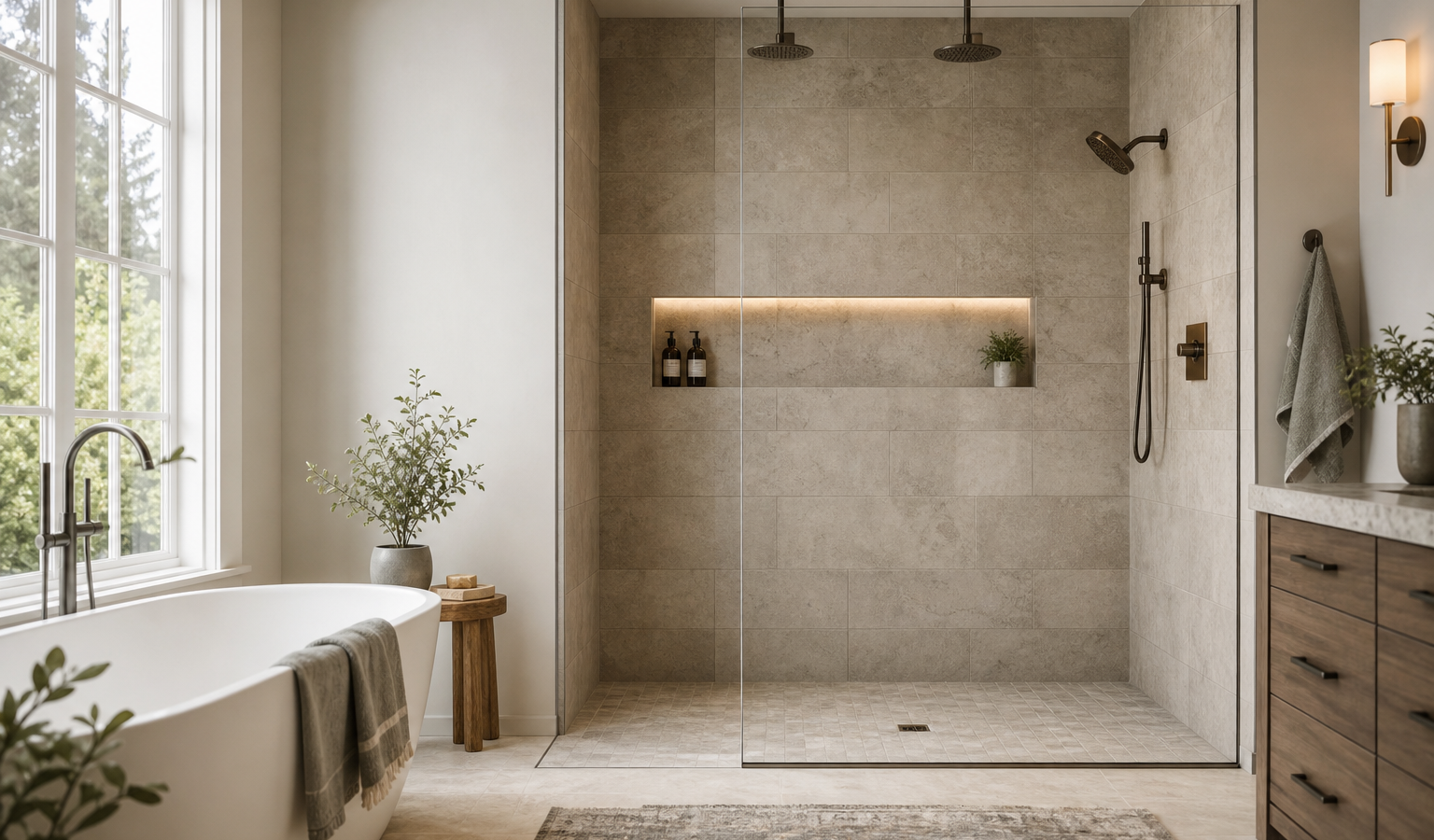
A walk-in shower cost in 2026 averages about $9,000 installed, with most US homeowners spending between $6,000 and $12,000 depending on size, materials, and whether you buy a prefabricated kit or commission a fully tiled custom build. A budget prefab unit can land near $2,000, while a large curbless walk-in shower with frameless glass and premium tile can push past $15,000. This guide breaks down real 2026 pricing by size and type, shows where your money actually goes, and gives you contractor-tested ways to control the final number before you sign a contract.
Key takeaways
- The national average walk-in shower cost is roughly $9,000, with a common range of $6,000 to $12,000 installed.
- Prefab acrylic and fiberglass kits run $700 to $3,000; fully custom tiled showers run $4,200 to $8,500 before glass and upgrades.
- Size is the single biggest driver: a 32×32 shower can cost half of a 48×60 walk-in with the same finishes.
- Labor is only 8 to 15 percent of a prefab job but climbs sharply once tile, waterproofing, and frameless glass enter the picture.
- Curbless and ADA-friendly features add $75 to $1,900, and a tub-to-shower conversion runs $1,200 to $8,000.
How Much Does a Walk-In Shower Cost in 2026?
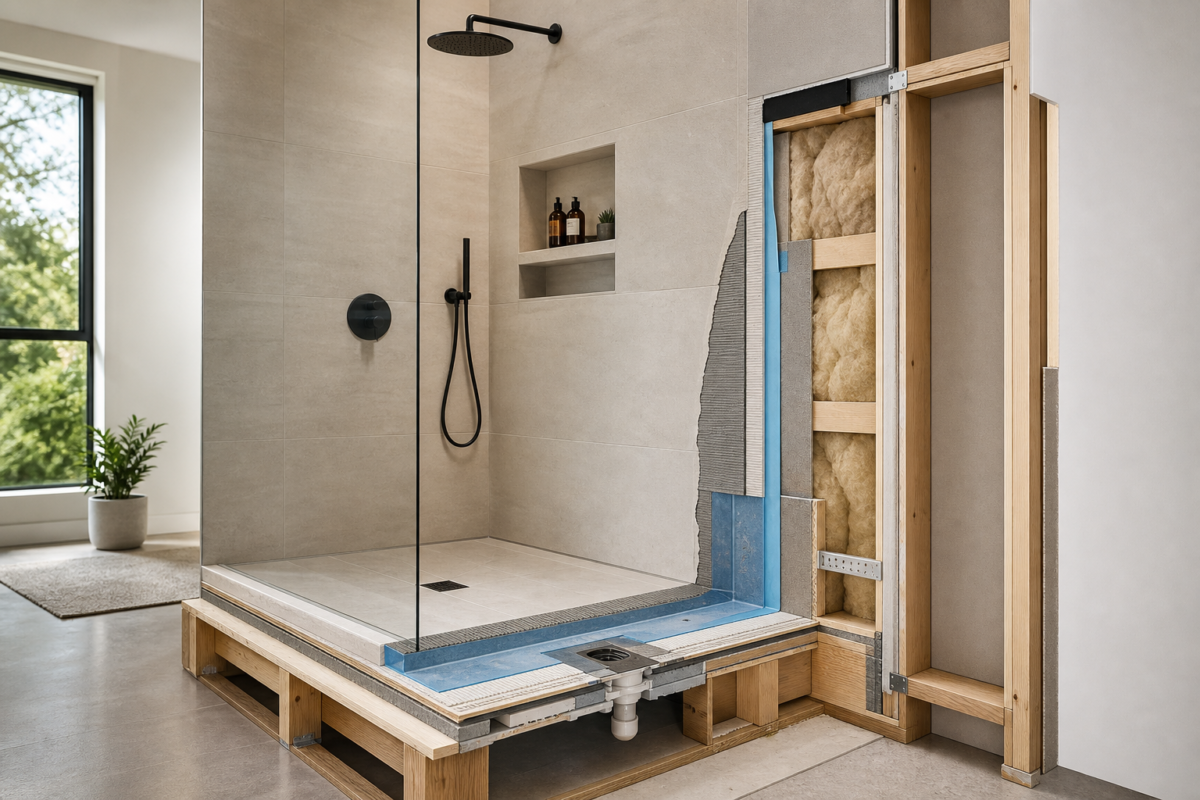
A walk-in shower cost in 2026 is about $9,000 on average, and most projects fall between $6,000 and $12,000 once labor, waterproofing, and a glass panel are included. That single number hides a wide spread, so it helps to think in tiers rather than one figure.
Basic installations that reuse existing plumbing and drop in a prefabricated pan and walls typically run $2,000 to $5,000. Mid-range projects, where a contractor tiles the walls, sets a custom pan, and installs a semi-frameless enclosure, usually land between $5,000 and $10,000. Luxury walk-in showers with imported tile, frameless glass, body sprays, and a bench routinely reach $10,000 to $15,000 or more. Because materials make up the large majority of the bill, your finish selections move the price far more than your zip code does.
National average and typical range
Industry data for 2026 clusters the national average between roughly $7,500 and $9,000, with a typical band of about $3,170 to $11,495. The variation comes down to three levers: the footprint of the shower, the material palette, and how much demolition and plumbing rerouting the job requires. If you are budgeting a full room around this, our remodel cost and return-on-investment pages give you the surrounding numbers so the shower does not blow up the whole plan.
Walk-In Shower Cost by Size
Expect to pay $3,000 to $5,000 for a small walk-in shower, around $7,000 for a standard size, and $9,000 to $12,000-plus for a large enclosure. Square footage drives tile quantity, pan size, glass area, and labor hours all at once, which is why size is the first thing an estimator asks about.
| Shower size | Typical dimensions | Prefab kit | Custom tiled |
|---|---|---|---|
| Small | 32×32 to 34×36 in | $1,000 – $3,000 | $3,000 – $5,000 |
| Standard | 36×36 to 36×48 in | $1,800 – $3,500 | $5,000 – $8,000 |
| Large | 48×60 in and up | $2,800 – $4,500 | $9,000 – $12,000+ |
| Walk-in / curbless | 60×60 in and up | Rarely prefab | $10,000 – $16,000+ |
Small and standard walk-in showers
A compact 32×32 or 34×36 shower is the value sweet spot for most guest and hall bathrooms. Because there is less tile, less glass, and a smaller pan, both the material and labor sides shrink. A standard 36×48 footprint gives you far more comfortable elbow room and a place for a niche or bench without a dramatic jump in price, which is why it is the most common size US remodelers install.
Large and curbless walk-in showers
Large 48×60 and 60×60 showers, especially curbless designs with a linear drain, carry the highest walk-in shower cost because they demand more waterproofing, a properly sloped pan, and often a wider frameless glass panel. Curbless entries also require the subfloor to be recessed so water drains correctly, which adds framing and labor. The payoff is a spa-like, aging-in-place shower that many buyers now expect in a primary bathroom.
Prefab vs Custom Walk-In Shower Cost
A prefabricated walk-in shower costs $700 to $3,000 for the unit, while a fully custom tiled shower costs $4,200 to $8,500 before glass and upgrades. The choice is the biggest fork in your budget, so it is worth understanding what each path really buys you.
Prefabricated acrylic and fiberglass kits
Prefab kits use molded acrylic or fiberglass panels and a matching pan. Acrylic inserts run $500 to $2,000 and fiberglass $400 to $2,000 for the materials, and they install quickly because there is no tile-setting or grouting. They are non-porous, easy to clean, and forgiving for a budget-minded remodel. The trade-off is a more utilitarian look and limited sizing, since you are locked into the manufacturer dimensions.
Custom tiled showers
Custom tiled showers give you unlimited layout, niche, bench, and material freedom, but every one of those choices adds labor. Tile itself ranges from $2 to $17 per square foot for the material and $3 to $15 per square foot to install, while natural marble tile can hit $10 to $35 per square foot. A tile shower must be waterproofed correctly behind the surface, and following recognized methods such as those published by the Tile Council of North America is what separates a shower that lasts 25 years from one that leaks in three.
What Drives Walk-In Shower Cost the Most?
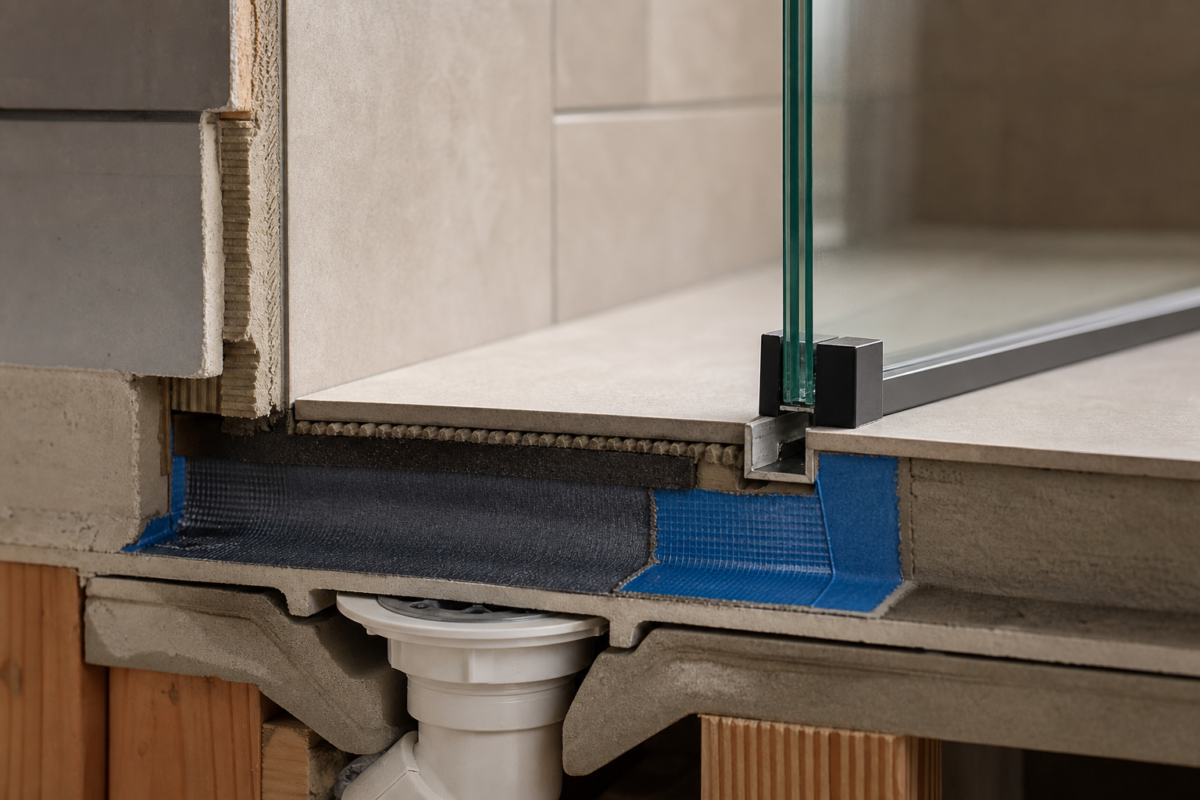
Materials drive walk-in shower cost the most, accounting for roughly 85 to 92 percent of a typical project, followed by plumbing rerouting, glass type, and any structural or accessibility work. The bars below show where dollars concentrate on a mid-range tiled shower.
Glass is the most underestimated line item. A basic sliding or semi-frameless door runs $550 to $1,400, while a true frameless panel with thick low-iron glass can add far more. Moving the drain or valve triggers plumbing labor of $600 to $1,600, and a permit adds $250 to $500 in most jurisdictions.
Labor and Installation Costs
Labor on a walk-in shower ranges from about $400 to $2,000 for the general bathroom contractor, plus separate trade costs for plumbing, tiling, and any electrical. On a prefab job labor is a small slice, but on a custom tile build it can equal the materials.
Plumbing, tiling, and electrical
A plumber charges $45 to $200 per hour and typically $600 to $1,600 to set the valve, drain, and supply lines for a shower. A tile setter charges $30 to $120 per hour or $3 to $15 per square foot installed, and complex patterns like herringbone or mosaic accent bands cost more. If you add a light, exhaust upgrade, or heated element, an electrician runs $50 to $100 per hour. Sequencing these trades correctly is what keeps a project on schedule; our remodel timeline guide explains how the phases stack so you are not paying crews to wait on each other.
Demolition, waterproofing, and permits
Tearing out an old shower or tub runs $50 to $100 per fixture plus about $250 for debris removal, and removing a non-load-bearing wall to enlarge the space adds $300 to $1,000. Waterproofing with a sheet membrane costs $500 to $1,000, while liquid membrane runs $50 to $800. None of these are optional line items you should cut, because they protect the framing behind your finished walls.
Curbless and Accessible Walk-In Shower Cost
Accessibility upgrades add $75 to $1,900 to a walk-in shower cost, and a fully curbless, roll-in design sits at the top of that range because of the framing and drainage work involved. These features are increasingly popular for aging-in-place remodels and universal design.
Common additions include grab bars at $100 to $500 installed, a fold-down or built-in bench, a handheld sprayer, and a curbless entry with a linear drain. A curbless shower requires the floor to slope toward the drain and often a recessed subfloor, which is why the labor premium exists. Pairing a low-flow, EPA WaterSense-labeled showerhead with these features keeps water use down without sacrificing the experience, and it is a small line item that pays off on utility bills. If you are still weighing whether to keep a tub at all, our shower vs bathtub comparison walks through the resale and lifestyle trade-offs.
Tub-to-Shower Conversion Cost
Converting a bathtub to a walk-in shower costs $1,200 to $8,000, depending on whether you reuse the existing footprint and plumbing or expand and reroute them. It is often cheaper than a from-scratch build because the wet wall and drain location already exist.
The low end covers a straightforward swap where a prefab shower drops into the old tub alcove. Costs climb when you widen the opening, move the drain from a tub position to a center or linear location, or upgrade to a full tile surround with frameless glass. Many homeowners find the conversion is the single highest-impact change in a bathroom refresh, particularly in a primary suite where a second tub elsewhere in the home already covers resale concerns.
How to Save on Your Walk-In Shower Cost
The fastest way to lower a walk-in shower cost is to keep the existing footprint and plumbing, choose a mid-priced tile, and reserve frameless glass for where it shows. Small decisions compound into thousands of dollars saved without a cheap-looking result.
- Keep the drain and valve where they are to avoid $600 to $1,600 in plumbing rerouting.
- Choose a porcelain tile in the $3 to $8 per square foot range and spend on a single accent band instead of covering every wall.
- Use a semi-frameless enclosure rather than full frameless glass to save several hundred dollars.
- Buy a manufactured shower pan ($250 to $400) instead of a custom mud-set pan (about $2,500) unless you need a specific size.
- Get three itemized bids and compare line by line, not just the bottom number.
- Bundle the shower with other bathroom work so demolition and permit costs are shared.
Fixtures are another quiet lever. A quality valve trim and showerhead can be found at many price points, and choosing wisely here mirrors the approach in our best faucets roundup, where performance and finish matter more than brand prestige.
Contractor’s take
The mistake I see most is homeowners spending on visible upgrades and cutting the invisible ones. Never value-engineer the waterproofing membrane, the pre-slope under the pan, or the pan liner to save a few hundred dollars. Those are the layers that fail silently and cost $10,000 in rot repair later. Spend your splurge budget on glass and tile that you can see, and let a licensed pro handle everything behind the wall to code.
Your next move
You know the number. What are you deciding next?
Walk-in tub cost in 2026: $5,000 to $20,000 installed. Compare tub types, features, and the real Medicare coverage…
Continue →Bathroom remodel financing explained: compare home equity loans, HELOCs, cash-out refi, personal loans, and 0% cards with 2026…
Continue →Steam shower cost runs $3,000 to $10,000 installed in 2026. See prices by generator size, enclosure, and prefab…
Continue →Frequently asked
Is a walk-in shower cheaper than a bathtub?
A basic prefab walk-in shower can be cheaper than a new tub-and-surround, but a fully tiled custom shower usually costs more than a standard alcove tub. The gap comes from tile labor, waterproofing, and glass rather than the fixture itself.
How long does it take to install a walk-in shower?
A prefab kit swap takes 2 to 3 days, while a custom tiled shower usually runs 1 to 2 weeks once you account for demolition, waterproofing cure time, tile setting, grouting, and glass measurement and install. Glass is often ordered after tiling, adding a week for fabrication.
Do I need a permit for a walk-in shower?
Most jurisdictions require a permit when plumbing is moved or new waterproofing is installed, typically costing $250 to $500. Reusing the exact existing plumbing for a simple prefab swap sometimes does not, but always confirm with your local building department.
What is the most durable walk-in shower material?
Porcelain tile with a properly installed waterproof membrane is the most durable and lowest-maintenance long-term choice. Acrylic is a close second for ease of cleaning, while natural stone is beautiful but needs periodic sealing and is more prone to etching.
Does a walk-in shower add home value?
Yes. Updated showers, especially curbless and frameless-glass designs in the primary bathroom, are among the features buyers now expect and can improve resale appeal, though returns vary by market and how the rest of the bathroom presents.

Figures reflect 2026 US national averages compiled from Angi, Modernize, and This Old House cost data.