Steam Shower Cost and Buyer’s Guide for 2026
What a steam shower really costs in 2026, broken down by generator, enclosure, and install, plus sizing and running costs.

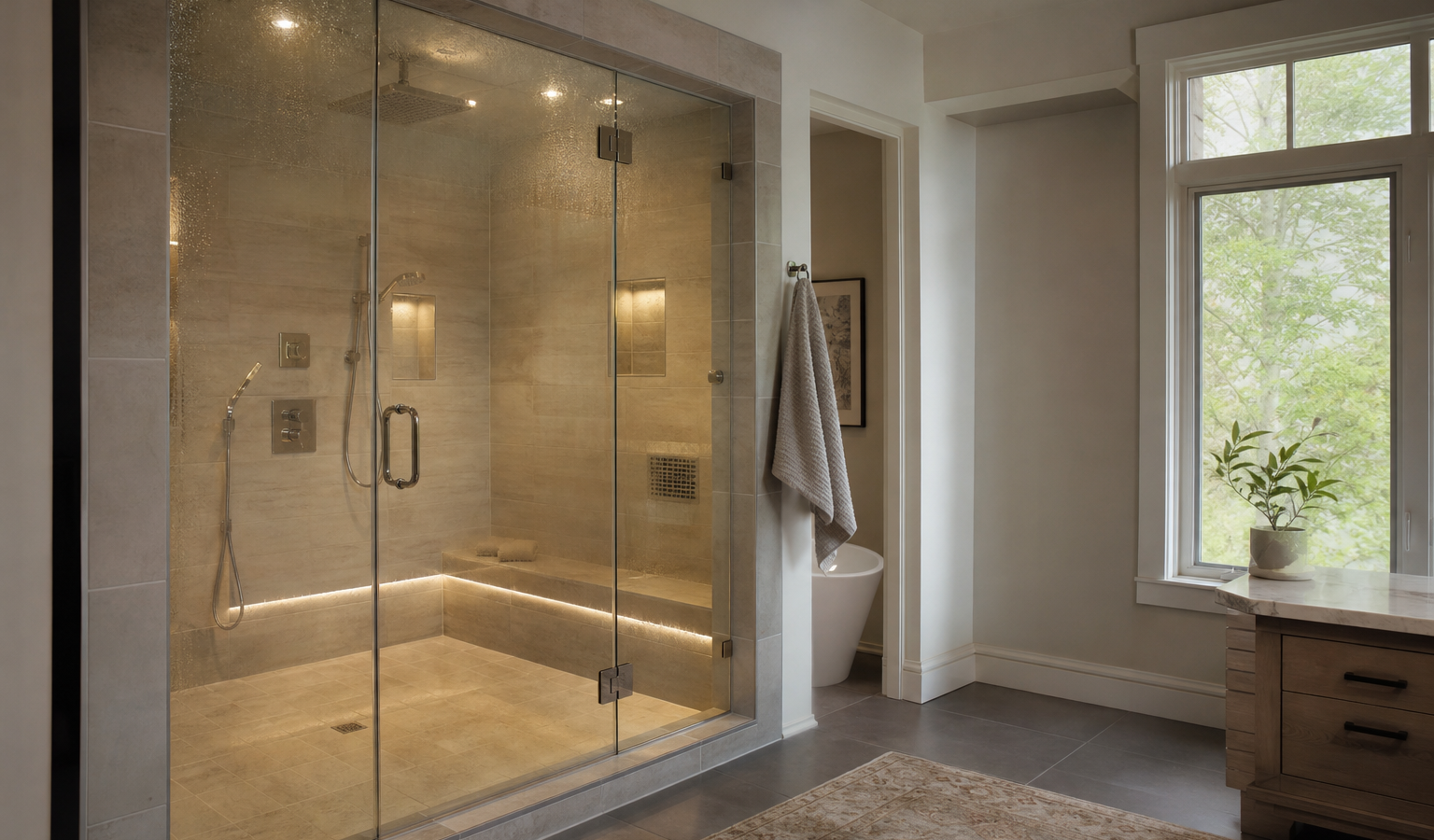
Steam shower cost ranges from $3,000 to $10,000 installed in 2026 for most projects, with simple prefab inserts near the low end and fully custom tiled steam rooms climbing to $16,500 or more. The price hinges on three things: the steam generator you choose, whether you build custom or drop in a prefab unit, and how much waterproofing and tile the enclosure needs. This guide breaks down steam shower cost by component, explains how to size the generator, and shows where the money goes so you can build the right system for your bathroom and budget.
Key takeaways
- A typical steam shower costs $3,000 to $10,000 installed; custom tiled builds run $4,000 to $16,500.
- The steam generator alone is $800 to $4,000, sized roughly at 1 kW per 50 cubic feet of enclosure.
- Converting an existing shower costs $2,300 to $11,700; a prefab insert runs $2,900 to $6,800.
- Every surface, including the ceiling, must be fully waterproofed and the enclosure sealed top to bottom.
- A 20 to 30 minute steam session costs only about $0.35 to $0.70 in energy and water.
How much does a steam shower cost in 2026?
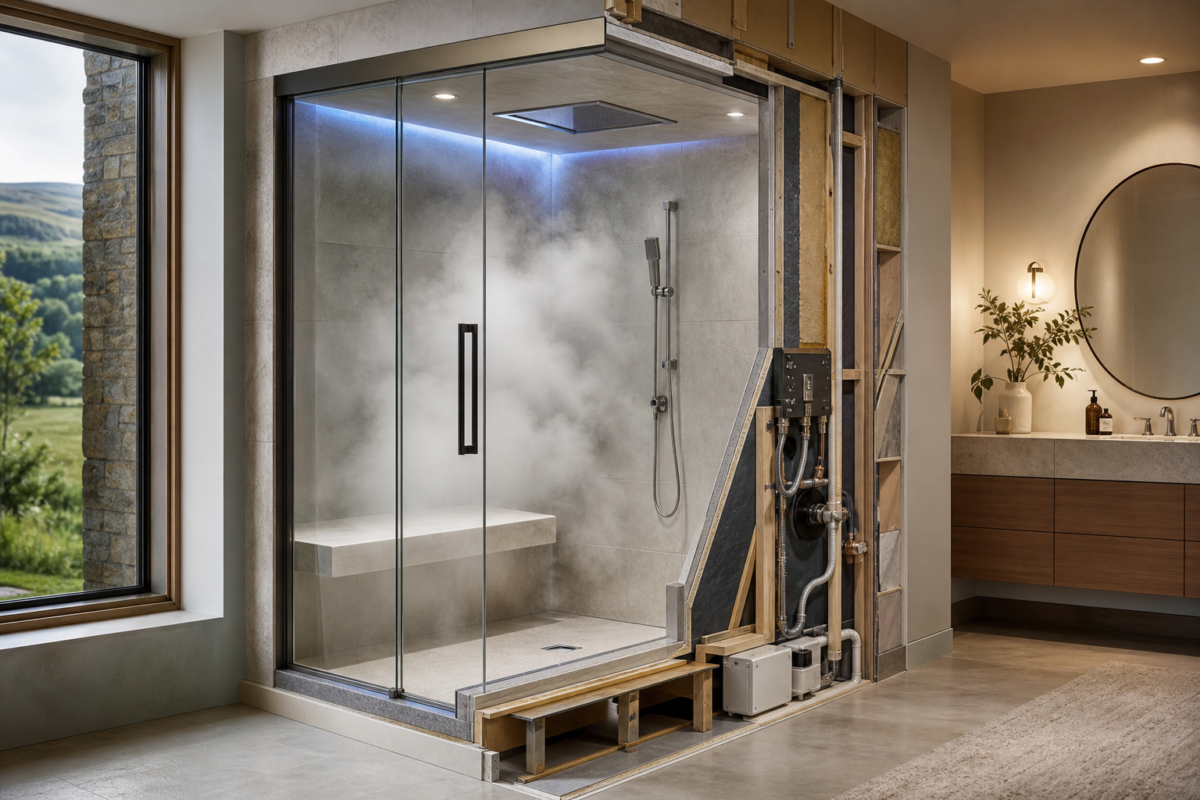
A steam shower costs $3,000 to $10,000 installed on average in 2026, though the full range spans from about $1,400 for the simplest add-on to $30,000 for a large custom steam room with premium finishes. The single biggest cost driver is whether you build a custom tiled enclosure or install a prefab unit, followed by the generator size your space requires.
The table below shows typical installed costs by project type so you can place your plan quickly. A conversion of an existing shower is the most common path because it reuses the existing drain and framing.
| Project type | Installed cost | Best for |
|---|---|---|
| Prefab steam shower insert | $2,900 – $6,800 | New builds, simple installs |
| Convert existing shower to steam | $2,300 – $11,700 | Most remodels |
| Custom tiled steam shower | $4,000 – $16,500 | Primary suites, luxury baths |
| Large custom steam room | $15,000 – $30,000 | Spa-level projects |
A steam shower is one of the highest-impact upgrades in a high-end bath; see how it fits the bigger picture in our luxury bathroom upgrades guide, and ground the surrounding scope with our bathroom remodel cost breakdown.
Steam shower cost by component
The steam shower cost breaks into the generator, the enclosure and glass, the tile and waterproofing, and the controls. Knowing each piece lets you spend where it matters and trim where it does not. The generator and the sealed glass enclosure are the two components you should never cut, because a failure in either ruins the experience.
| Component | Cost range | Notes |
|---|---|---|
| Steam generator | $800 – $4,000 | Sized to enclosure volume |
| Glass enclosure and door | $800 – $3,600 | Must seal to the ceiling |
| Tile and waterproofing | $800 – $3,000 | $7 – $25 per sq ft |
| Digital controls | $150 – $1,800 | Basic to touchscreen |
| Installation labor | $1,200 – $4,400 | Plumbing and electrical |
| Protective glass coating | $250 – $1,300 | Optional, eases cleaning |
How to size a steam generator
Size the steam generator to the volume of the enclosure, using a baseline of roughly 1 kW per 50 cubic feet, then add capacity for anything that bleeds heat. Most residential steam showers use a 7 to 12 kW generator, costing $800 to $4,000. Undersize it and the room never reaches a true steam; oversize it and you waste energy and money.
What increases the generator size you need
Calculate the cubic footage (length x width x height), then adjust up for each heat-loss factor. Every exterior wall adds roughly 10 percent, and so do a glass-heavy enclosure, a ceiling above 8 feet, a window, and cold stone like marble that absorbs heat. A 4-by-4-foot shower with an 8-foot ceiling is 128 cubic feet, which points to a 7 kW unit in a well-insulated interior wall, stepping up to 9 or 10 kW with an exterior wall and stone walls. Most manufacturers publish a sizing chart; follow it, because the generator’s electrical and plumbing rough-in are hard to change later.
Prefab vs custom steam showers
A prefab steam shower is cheaper and faster, while a custom tiled steam shower costs more but fits any space and finish. Prefab units ($2,900 to $6,800 installed) arrive as sealed acrylic enclosures with the generator and controls engineered to match, so there is little guesswork and no waterproofing to fail. The tradeoff is limited sizes and a utilitarian look.
A custom steam shower ($4,000 to $16,500) lets you tile the walls and ceiling, add a bench, and match the rest of your bathroom, but it demands flawless waterproofing on every surface and a correctly sized, sealed glass enclosure. For the glass itself, our frameless glass shower doors guide explains the sealing and transom details a steam enclosure specifically requires.
Timeline and what the install involves
A prefab steam shower can be set in 2 to 3 days once plumbing and a dedicated electrical circuit are in place. A custom tiled steam shower takes longer, typically 5 to 10 working days, because the waterproofing has to cure and be flood-tested before any tile goes up, and the tile and grout then need time to set and seal. The generator requires its own 240-volt circuit in most sizes, so an electrician is part of every true steam install. Build that lead time into your overall bathroom schedule rather than treating steam as a last-minute add-on.
Converting an existing shower to steam
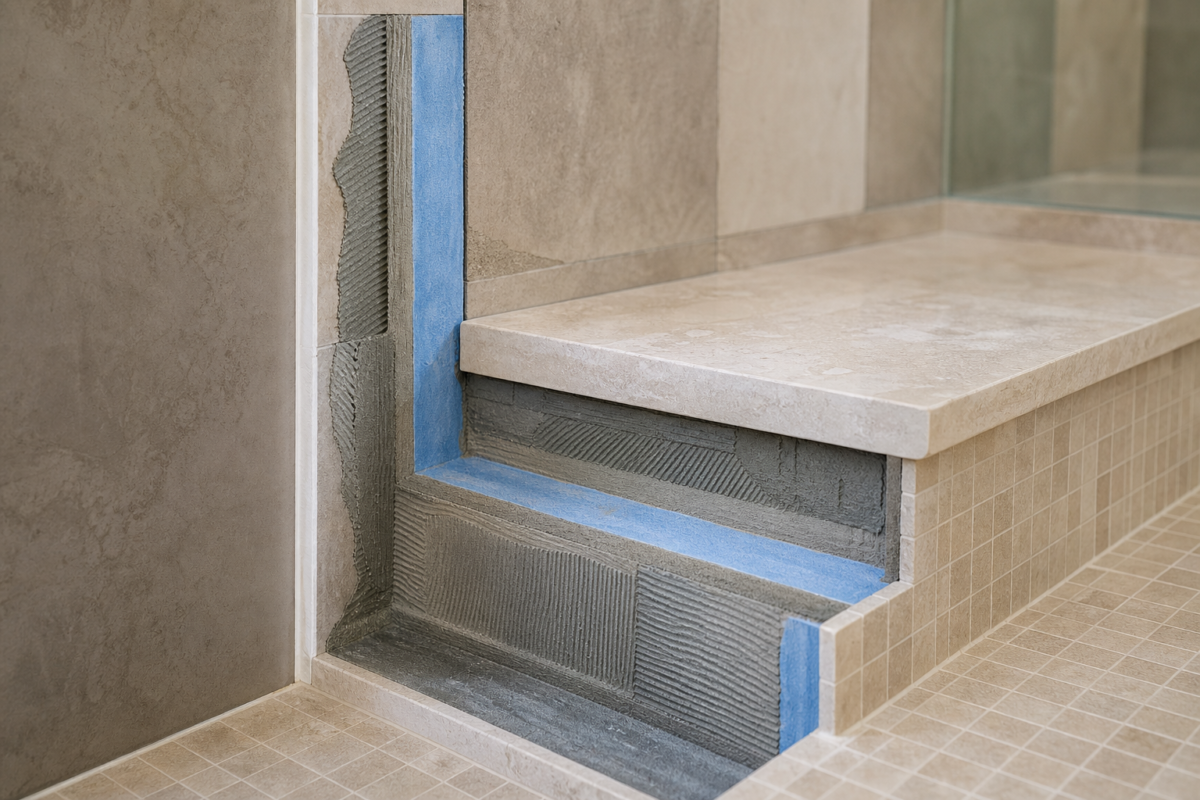
Converting an existing shower to steam costs $2,300 to $11,700 and is the most common route, but it is only straightforward if the shower can be fully sealed. The enclosure must run to a solid, sloped ceiling no higher than about 8 feet and close completely with a sealed glass door and a transom panel, so an open or half-wall walk-in usually cannot become a steam shower without rebuilding the top.
The conversion adds a generator (installed in a nearby dry closet, vanity, or attic within 25 feet), a steam head low on the wall, digital controls, and a vapor-proof light. If your current enclosure already has a ceiling and full-height glass, the cost lands at the low end. Compare it against building new in our walk-in shower cost guide.
Enclosure, ceiling, and waterproofing requirements
A steam shower must be a fully sealed, fully waterproofed box, and this is where steam differs most from a regular shower. Every surface, including the ceiling, needs a continuous waterproof membrane, because steam penetrates far more aggressively than splashing water. The ceiling should slope 1 to 2 inches per foot so condensation runs down the wall instead of dripping on your head.
The glass enclosure has to reach the ceiling and seal at every edge, usually with a transom panel above the door and a vapor-tight sweep at the bottom. Use porcelain or sealed stone rather than porous materials, keep a recessed shelf or a built-in bench, and plan a vapor-proof fixture for light. A well-placed recessed shower niche keeps the enclosure clean; our shower niche guide covers waterproofing one inside a steam wall.
Optional features and upgrades
Steam shower upgrades add comfort rather than performance, and they range from a $100 bench to a $1,800 touchscreen. The most popular additions are chromotherapy LED lighting, an aromatherapy pump that scents the steam ($750 to $950), a moisture-rated sound system ($500 to $850), and a touchscreen controller that saves presets. A built-in seat ($100 to $600) is the one near-essential, since the point of steam is to sit and relax.
Pairing a steam shower with radiant heated floors makes the whole room feel like a spa and keeps the floor from feeling cold when you step out. Our heated bathroom floor cost guide covers that add-on, which is best installed during the same tile job.
Running costs and energy use
A steam shower is surprisingly cheap to run, costing about $0.35 to $0.70 per 20-to-30-minute session in combined energy and water. A single session uses only about 2 to 2.5 gallons of water, a small fraction of a normal shower, and the generator heats up in roughly 10 minutes from a cold start. Over a year of regular use, the operating cost is modest compared with the installation.
Because steam uses so little water, it is one of the more efficient wellness upgrades; the EPA WaterSense program notes that heating water is a major share of home energy, so the short heat-up and low volume keep costs down. Insulating exterior walls and choosing an efficient generator further trims the running cost. For energy-smart fixtures throughout the bath, ENERGY STAR is a reliable reference.
Contractor’s take
The steam showers that fail are almost always the ones where someone treated it like a regular shower and skipped the ceiling membrane or left the glass short of the ceiling. Steam finds every gap. I always run the waterproofing up and across the ceiling, slope it toward the wall, and spec a transom so the box actually seals. And put the generator somewhere you can reach it: a unit buried in a wall cavity is a nightmare the day it needs service. Budget access, not just the box.
Is a steam shower worth it?
A steam shower is worth it if you shower daily and value the wellness benefits, and it adds tangible resale appeal in higher-end homes. Beyond the relaxation, steam helps with congestion, muscle recovery, and skin, which is why the feature keeps appearing on buyer wish lists. Homes with spa features like steam often command a premium over comparable listings without them.
The honest caveat is that a steam shower returns more in enjoyment than in dollars, so build it because you will use it. A good test is how often you take long, hot showers now: daily users get their money’s worth, while occasional bathers rarely do. If resale is the priority, weigh it against simpler upgrades in our bathroom remodel ROI guide, which shows where renovation dollars recoup best. Either way, treat steam as a feature you buy for the next decade of mornings, not as a line item you expect to earn back at closing.
Your next move
You know the number. What are you deciding next?
Walk-in tub cost in 2026: $5,000 to $20,000 installed. Compare tub types, features, and the real Medicare coverage…
Continue →Bathroom remodel financing explained: compare home equity loans, HELOCs, cash-out refi, personal loans, and 0% cards with 2026…
Continue →Luxury bathroom upgrades cost $30,000 to $75,000 in 2026. See the features, real prices, and tradeoffs worth the…
Continue →Frequently asked
Steam shower cost FAQs
How much does it cost to add steam to an existing shower?
Converting an existing shower to steam costs $2,300 to $11,700. The price depends on whether the enclosure already has a solid, sloped ceiling and full-height glass that can be sealed. If it does, you are mainly adding a generator, steam head, and controls at the low end of that range.
What size steam generator do I need?
Start with about 1 kW per 50 cubic feet of enclosure, then add capacity for exterior walls, tall or glass-heavy enclosures, windows, and stone surfaces. Most home steam showers use a 7 to 12 kW generator. Always confirm against the manufacturer’s sizing chart.
Are steam showers expensive to run?
No. A 20-to-30-minute steam session costs roughly $0.35 to $0.70 in energy and water and uses only 2 to 2.5 gallons. The generator heats up in about 10 minutes, so even daily use adds little to monthly utility bills.
Can any shower be converted to a steam shower?
No. The enclosure must seal completely, with a solid ceiling no higher than about 8 feet and a full-height glass door with a transom. Open walk-in showers and those with half walls usually need the top rebuilt before they can hold steam, which raises the cost.
Do steam showers cause mold?
Not if built and ventilated correctly. Full waterproofing, a sloped ceiling, sealed glass, and a bathroom exhaust fan that runs after each session keep moisture controlled. Wiping down the glass and leaving the door open to dry between uses prevents the buildup that leads to mold.

Figures reflect 2026 US installed pricing from contractor and manufacturer data; generator sizing varies by enclosure volume.