Frameless Glass Shower Doors: 2026 Cost and Buying Guide
What frameless glass shower doors cost in 2026, how to spec glass and hardware, and whether the premium look is worth it.

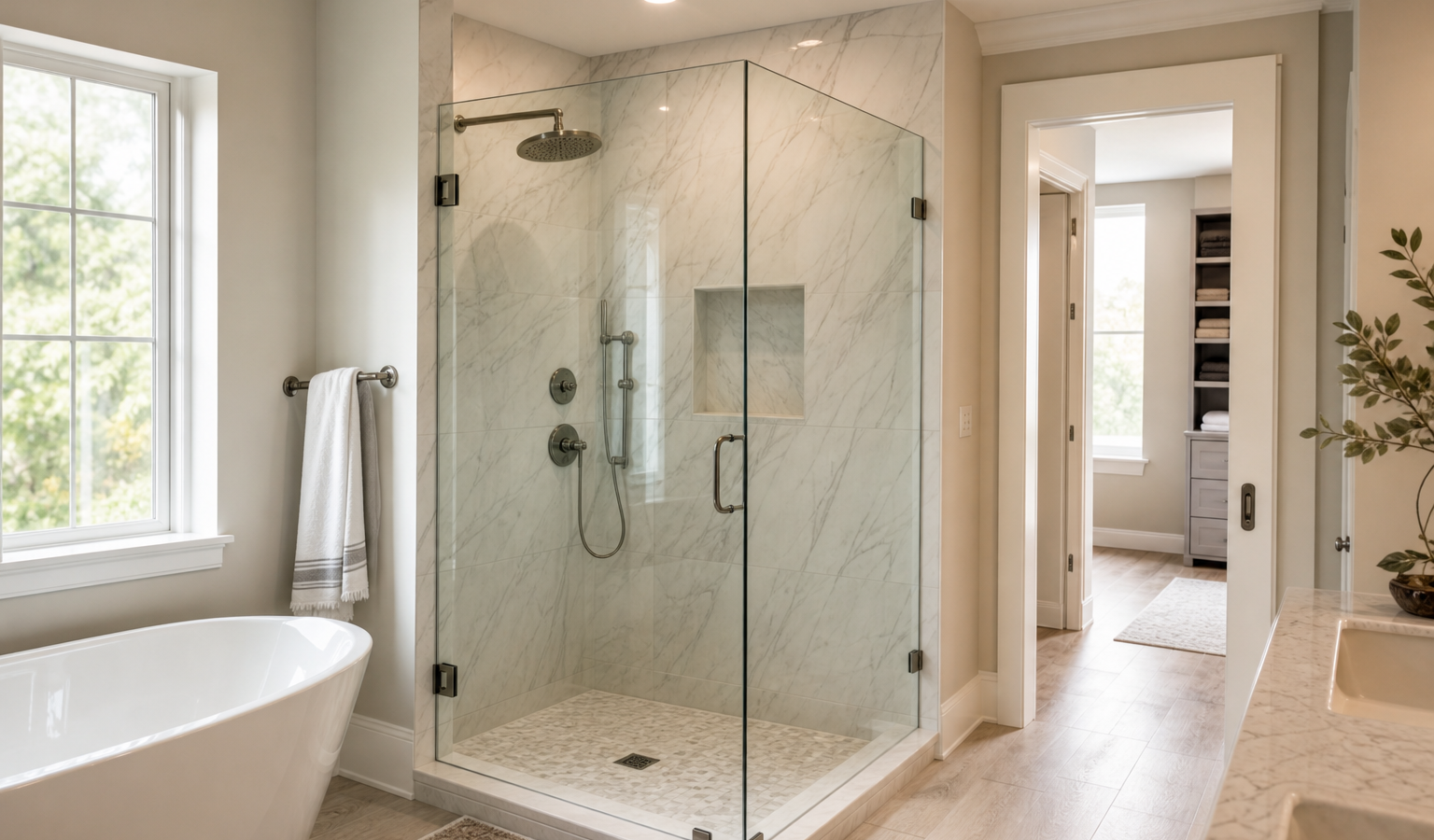
Nothing signals a modern, high-end bathroom quite like frameless glass shower doors. With no bulky metal frame to interrupt the sightline, they make a shower feel larger, put your tile work on full display, and give even a compact remodel a custom, spa-like finish. That clean look is not just aesthetic, though. Behind it sit real decisions about glass thickness, hardware, coatings, and installation that shape both the price you pay and how well the enclosure performs over the next 20 years.
This guide breaks down 2026 US pricing, the trade-offs between frameless, semi-frameless, and framed enclosures, and how to spec a door that stays leak-free and streak-free. If you are still weighing the whole shower footprint, see our walk-in shower cost breakdown and the broader bathroom remodel cost guide before you lock in a glass budget.
Key takeaways
- Expect $900 to $2,500 installed in 2026, with a national average near $1,400; custom enclosures reach $3,500.
- Frameless doors use self-supporting 3/8-inch or 1/2-inch tempered glass with no metal frame, only clamps and hinges.
- All shower glass must be tempered safety glass under CPSC rules; the 1/2-inch upgrade adds a heavier, quieter feel for about $300.
- Protective coatings like Diamon-Fusion or EnduroShield (about $200) keep glass clear and cut cleaning time dramatically.
- Frameless glass is measured after tile is set, so budget a 2 to 5 week lead time from template to installation.
How much do frameless glass shower doors cost in 2026?
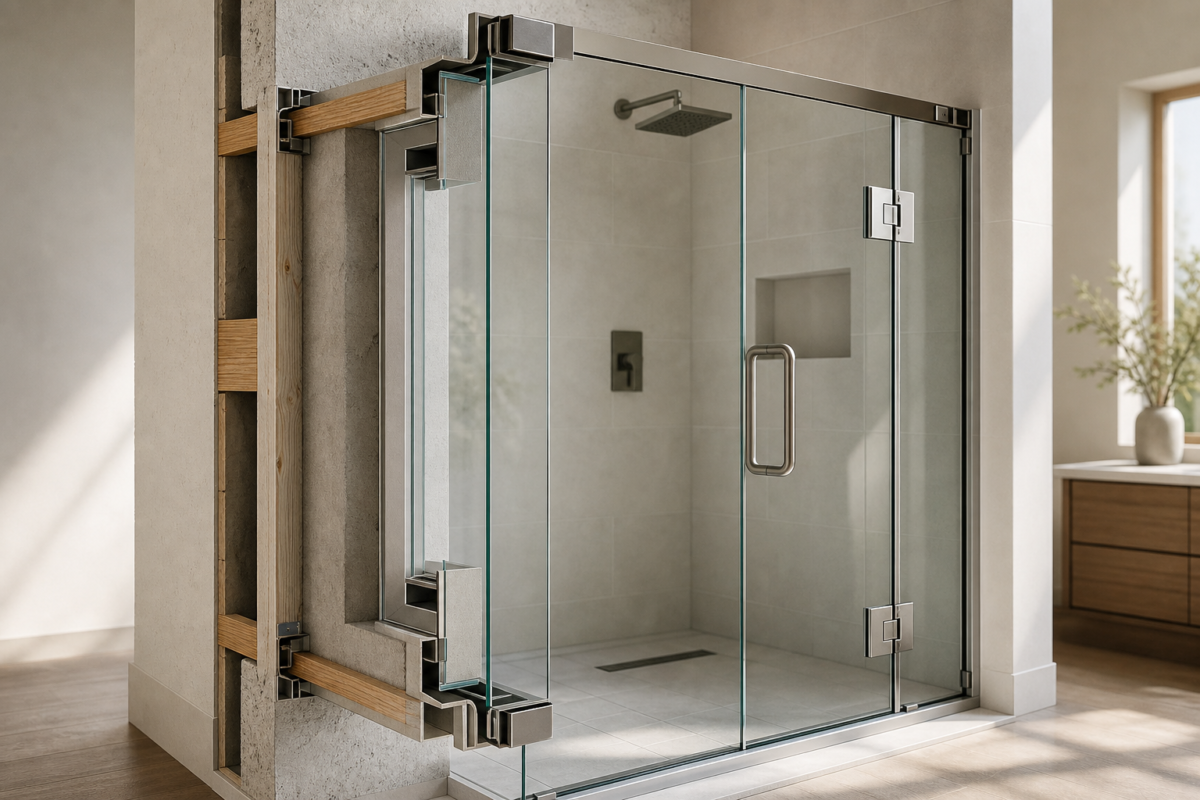
Most homeowners spend $900 to $2,500 installed for frameless glass shower doors in 2026, with a national average around $1,400. A simple single door lands near $700 to $1,200, while oversized, neo-angle, or fully custom enclosures run $2,000 to $3,500 or more. Glass itself is priced by the square foot, roughly $35 to $70 for frameless-grade tempered panels, and labor adds $200 to $600 for a standard job.
The single biggest variable is configuration. A lone fixed panel over a walk-in opening is the cheapest frameless look, while a hinged door paired with a return panel, a bypass slider spanning a tub, or a corner neo-angle unit each add glass area, hardware, and template complexity. The table below shows realistic 2026 installed ranges by configuration.
| Configuration | Typical opening | Installed cost (2026) | Best for |
|---|---|---|---|
| Single fixed panel | 30 – 42 in | $900 – $1,500 | Curbless and walk-in openings |
| Hinged door only | 24 – 30 in | $700 – $1,500 | Alcove showers against two walls |
| Door plus return panel | 48 – 60 in | $1,400 – $2,200 | Standard corner showers |
| Sliding / bypass | 60 – 72 in | $1,200 – $2,300 | Tub-to-shower and wide openings |
| Neo-angle (corner) | 36 – 42 in | $1,800 – $3,500 | Small footprints, diagonal entry |
| Custom enclosure | Varies | $2,000 – $3,500+ | Steam showers, oversized glass |
These figures assume standard 3/8-inch clear glass and brushed nickel or chrome hardware. Upgrades to 1/2-inch glass, low-iron glass, premium finishes, or a coating each move the total toward the high end.
Frameless vs semi-frameless vs framed: which should you choose?
If budget allows and your walls and curb are square, frameless is the premium choice for looks and resale; framed is the value pick; semi-frameless splits the difference. In 2026, framed enclosures run about $250 to $1,100 installed, semi-frameless $350 to $1,400, and frameless $600 to $1,900 for stock sizes.
A framed door uses aluminum around every glass edge, which lets it rely on thinner 3/16-inch or 1/4-inch glass and tolerate walls that are slightly out of plumb. Semi-frameless trims the metal down to the perimeter and door edge, keeping some rigidity while looking lighter. True frameless removes the metal entirely, so the glass must be thick enough to support itself, the walls must be close to plumb, and every measurement has to be exact. That precision is what you are paying the premium for, and it is why frameless work belongs with an experienced glazier rather than a general handyman.
Glass thickness and safety: 3/8-inch vs 1/2-inch tempered glass
For frameless doors, 3/8-inch tempered glass is the standard and handles almost every residential opening; 1/2-inch is a comfort and acoustic upgrade, not a safety requirement. Both are strong, self-supporting, and code-compliant when tempered.
Is the 1/2-inch glass upgrade worth it?
Half-inch glass adds roughly $300 to a typical door and delivers a noticeably more substantial feel, better sound dampening, and less visible flex on very tall or wide panels. If your enclosure has a large fixed wall, panels over 36 inches wide, or an 80-inch height, the upgrade earns its cost in rigidity. For a standard 30-by-72-inch door, 3/8-inch is plenty and keeps the hardware lighter.
Why all shower glass must be tempered
US safety glazing rules under the Consumer Product Safety Commission (16 CFR 1201) require tempered safety glass in and around showers and tubs, because it shatters into small, blunt pieces instead of dangerous shards. Reputable fabricators laser-etch a small certification stamp in one corner. You can read the federal safety-glazing standard directly at cpsc.gov. Never accept a bid that quotes annealed or non-tempered glass for a shower.
Choosing a frameless door style
Match the door action to your space: hinged doors need swing clearance, sliders save floor space, and neo-angle units are built for tight corners. The right style is dictated more by your layout than by taste alone.
Fixed panel and walk-in openings
A single stationary panel with no moving door is the simplest, most affordable frameless look and pairs beautifully with a curbless shower. It relies on a generous opening and a slight floor slope to keep water inside, so it works best on longer wet-room layouts.
Hinged and pivot doors
Hinged doors mount to a wall or a fixed panel with heavy-duty clamps and swing outward. They give the widest, most watertight entry but require 24 to 30 inches of clear swing space in front of the shower, which rules them out for cramped bathrooms.
Sliding and bypass doors
Bypass doors glide on a slim top rail and never swing into the room, making them the go-to for tub-to-shower conversions and wide openings where a hinged panel would hit a vanity or toilet. Frameless sliders cost more than framed because the rollers and header must be engineered for heavy glass.
Neo-angle corner units
A neo-angle enclosure tucks a five-sided shower into a corner with a diagonal door, freeing floor space in small bathrooms. The angled geometry means more custom glass cuts, so these are among the priciest frameless configurations.
Hardware finishes and protective glass coatings
Hardware finish is where you personalize the look, and a factory-applied coating is the single best upgrade for long-term clarity. Standard chrome and brushed nickel are included in most quotes; matte black, brushed gold, and oil-rubbed bronze typically add $100 to $300 in hardware cost.
Coordinate the hinge, clamp, handle, and header finish with your shower valve and, ideally, the rest of the room. Our bathroom vanity guide covers how to keep faucet, lighting, and glass hardware finishes consistent so the room reads as one design rather than a collection of parts.
Do protective coatings pay off?
A hydrophobic coating such as Diamon-Fusion or EnduroShield runs about $200 and fills the microscopic pores in the glass so water beads and rolls off instead of leaving mineral spots. In hard-water regions it is close to essential; it cuts squeegee-and-scrub time sharply and protects the glass from etching. Coatings can be applied later, but factory application before installation is cheaper and more even.
Contractor’s take
Pay for the coating and the 1/2-inch glass before you pay for exotic hardware. Homeowners regret cloudy, hard-water-etched glass far more than they regret plain chrome clamps. And insist on a full silicone cure of 24 to 48 hours before the first shower. Rushing that step is the number one cause of early leaks I get called back for.
What drives the price of a frameless shower enclosure
Beyond configuration, five factors move a frameless quote the most. Understanding them helps you tell a fair bid from an inflated one and shows where trimming scope actually saves money.
If a bid comes in high, ask whether the walls are out of plumb (which forces custom notching), whether the glass is low-iron, and whether a coating is included. For context on how glass fits the whole project, compare it against the tile budget in our bathroom tile guide and the layout choices in our shower tile ideas roundup.
Measuring, lead times, and installation
Plan for 2 to 5 weeks from template to a usable shower, because frameless glass is cut to order after your tile is finished. There is no stock frameless door that fits a custom-tiled opening precisely.
How long does installation take?
Once the glass arrives, a two-person crew usually sets a standard door and panel in 2 to 4 hours. The silicone that seals the glass to the tile and hardware then needs 24 to 48 hours to cure fully before the shower is used, so the enclosure is not truly done the same day.
Why frameless doors are measured after tile
The fabricator templates the exact opening, plumb, and level of your finished walls and curb. Even a quarter-inch of wall lean changes the notch and clamp placement. This is also why frameless work should never be scheduled before tile and grout are complete and cured.
Keeping frameless glass clean and streak-free
The best maintenance is prevention: a quick squeegee after each shower and a coating do more than any cleaner. Wiping the glass down takes 20 seconds and stops the water spots and soap film that cause permanent etching.
For weekly cleaning, use a mild vinegar-and-water solution or a dedicated glass cleaner, never an abrasive pad that can scratch a coating. If your glass is already spotted, a specialty hard-water remover will restore clarity, but etching that has bitten into the glass surface is permanent, which is exactly why the coating is worth it up front.
Are frameless glass shower doors worth it?
For most remodels, yes: frameless glass returns roughly 60 to 70 percent of its cost at resale and is one of the details buyers and appraisers consistently notice. It reads as a custom, high-end feature even in a modest bathroom.
The upgrade makes the most sense when you have invested in tile you want to show off, when the shower is visible from the rest of the room, or when you are already opening walls for a full remodel. If the budget is tight, a semi-frameless door captures much of the look for less, and you can redirect the savings to tile or fixtures. Weigh it the same way you would any finish decision, using the trade-offs in shower vs bathtub and the standards published by the National Kitchen and Bath Association at nkba.org to keep your choices aligned with what resale rewards.
Your next move
You know the number. What are you deciding next?
Walk-in tub cost in 2026: $5,000 to $20,000 installed. Compare tub types, features, and the real Medicare coverage…
Continue →Bathroom remodel financing explained: compare home equity loans, HELOCs, cash-out refi, personal loans, and 0% cards with 2026…
Continue →Steam shower cost runs $3,000 to $10,000 installed in 2026. See prices by generator size, enclosure, and prefab…
Continue →Frequently asked
Frequently asked questions
How thick should frameless shower glass be?
Three-eighths-inch (3/8) tempered glass is the residential standard and suits almost every door. Upgrade to 1/2-inch for very tall or wide panels, or if you want a heavier, quieter feel; it adds about $300.
Do frameless shower doors leak?
Properly templated and sealed, they are highly water-resistant. Minor water can escape at the hinge side or under the door, so a slight floor slope and a full silicone cure are essential. A well-built enclosure should not leak onto the bathroom floor.
Can I install a frameless shower door myself?
It is not recommended. Frameless glass is heavy, cut to exact custom measurements, and requires precise clamp placement into studs or blocking. A mistake can crack a $1,000 panel or cause chronic leaks, so professional installation is the norm.
How long do frameless glass shower doors last?
The tempered glass itself can last 20 to 30 years or more. Hinges and seals may need service after 10 to 15 years, and swipe seals are inexpensive to replace. A protective coating extends the like-new appearance considerably.
Is low-iron glass worth the upgrade?
Low-iron (ultra-clear) glass removes the faint green tint of standard glass for about $300 and is most noticeable on thick or large panels and with light-colored tile. On a small door with darker tile, standard clear glass is usually fine.

Installed price ranges reflect 2026 US contractor and glazier data; figures are national averages and vary by region.