Heated Bathroom Floor Cost: 2026 Prices and Guide
A heated bathroom floor delivers spa-level comfort for a modest cost. Here are 2026 US prices and how to plan the install.

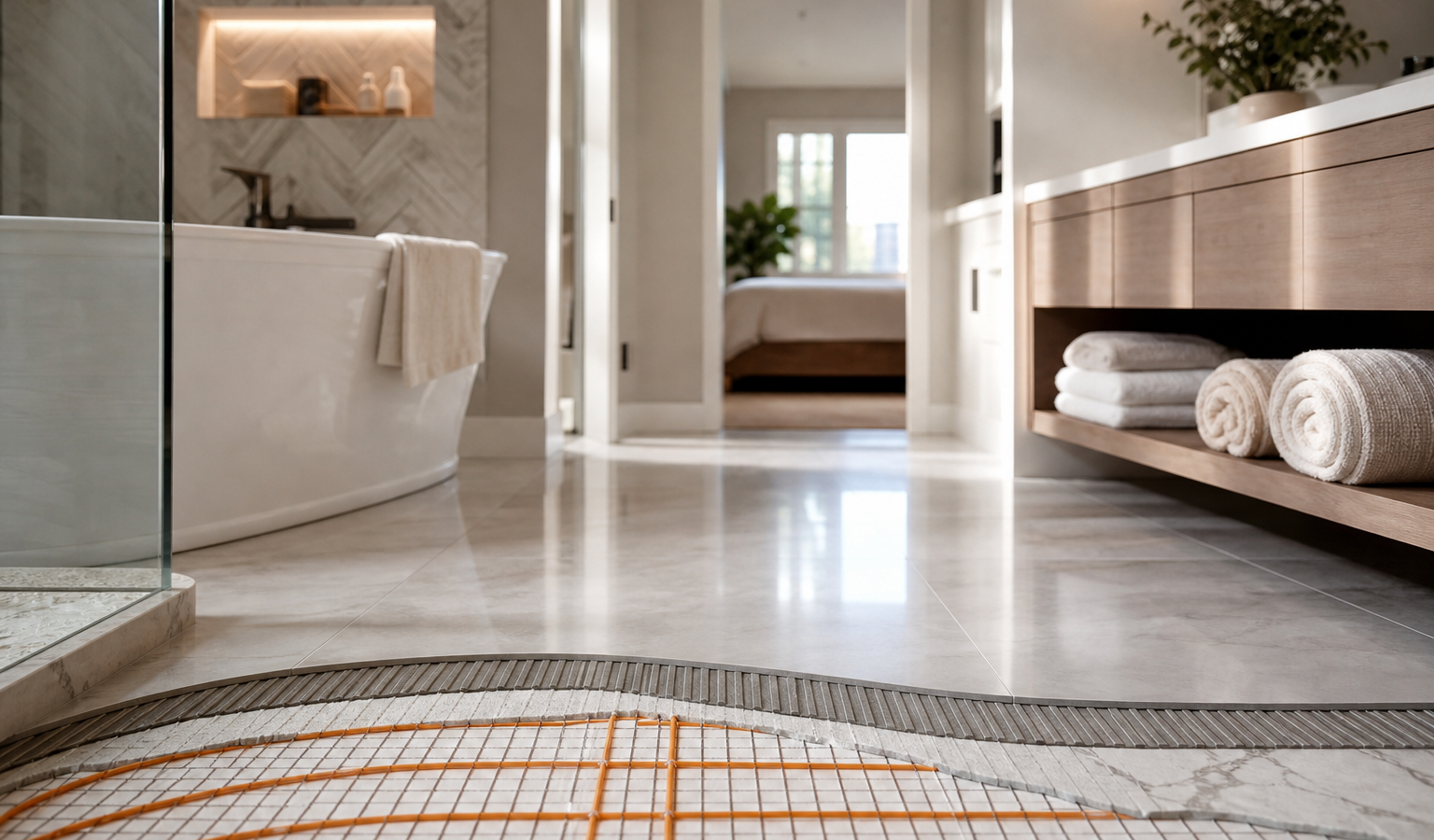
Stepping onto a warm tile floor on a cold morning is one of those small luxuries that turns a routine bathroom into a spa. A heated bathroom floor uses electric cables or hydronic tubing beneath your tile to deliver gentle, even radiant warmth from the ground up, and in 2026 it has moved from high-end custom homes into mainstream remodels. This guide breaks down real US costs per square foot, the difference between electric and hydronic systems, what installation actually involves, how much it costs to run, and whether the upgrade is worth it. If you are already tearing out a bathroom floor, adding radiant heat is far cheaper than it will ever be again, because the labor and the flooring are happening anyway.
Key takeaways
- Electric radiant heat runs $8 to $15 per square foot installed, not counting the flooring on top.
- A typical 40 to 50 square foot bath costs $500 to $2,800 total, including new tile.
- Electric systems are cheaper to install; hydronic ($7 to $17 per sq ft) is cheaper to run at whole-home scale.
- Operating cost is modest: roughly $4.50 to $10 per month for a single bathroom.
- Best paired with ceramic or porcelain tile, which stores and conducts heat efficiently.
How much does a heated bathroom floor cost in 2026?
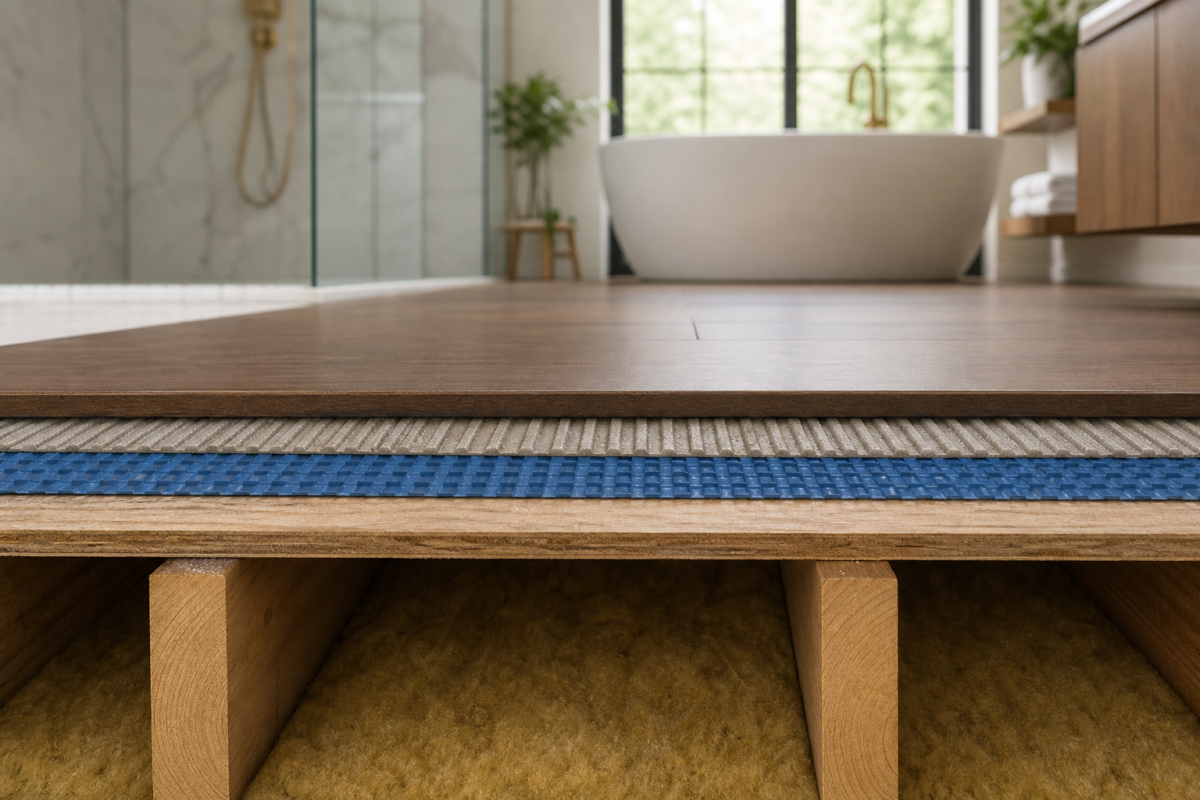
An electric heated bathroom floor costs $8 to $15 per square foot installed for the heating system alone, or $12 to $55 per square foot once you add new tile and labor. For a standard 40 to 50 square foot bathroom, expect $500 to $2,800 total, and a small 20 to 30 square foot half bath runs $250 to $1,700. The heating mat or cable itself is $10 to $12 per square foot in materials, and the rest is thermostat, electrical connection, and the flooring that goes over it.
Because the heat lives under the finished floor, the smartest time to install it is during a tear-out you are already doing. That is why radiant heat belongs in the same conversation as your flooring material selection and overall flooring cost planning: the incremental cost is small when the subfloor is already exposed. Retrofitting later means demolishing a perfectly good floor first.
| Cost component | Electric system | Hydronic system | Notes |
|---|---|---|---|
| Heating system installed | $8 – $15 / sq ft | $7 – $17 / sq ft | Excludes finish flooring |
| Materials only | $10 – $12 / sq ft | $6 – $20 / sq ft | Mat, cable, or tubing |
| Thermostat | $140 – $350 | $150 – $350 | Programmable or WiFi |
| Electrical connection | $200 – $500 | $200 – $500 | Dedicated circuit if needed |
| Typical full bath (40-50 sq ft) | $500 – $2,800 | $1,200 – $3,500 | Including new tile |
Electric versus hydronic radiant heat: which is better?
For a single bathroom, electric radiant heat is almost always the better choice; it costs less to install, is easier to retrofit, and heats up in minutes. Hydronic systems, which pump warm water through tubing, cost more up front and require a boiler or water heater connection, but they run more cheaply and make sense when heating a whole house or a very large area. The rule of thumb: one or two rooms means electric, whole-home means hydronic.
Electric systems also win on thin profile. The cable or mat adds only about an eighth of an inch to the floor height, so it rarely forces you to shave doors or build up transitions to adjacent rooms. Hydronic tubing, by contrast, sits in a thicker mortar bed and is better suited to new construction or a slab where the extra height is planned from the start. For a retrofit over an existing wood subfloor, electric is the practical answer nine times out of ten.
Electric mats versus loose cable
Electric systems come as pre-spaced mats or loose cable. Mats roll out fast over a simple rectangular floor and cost a bit more per square foot; a mat kit runs about $534 for 38 square feet. Loose cable with grip strips costs less (about $414 for the same area) and lets you route heat around toilets, vanities, and odd corners, at the price of slower installation.
Cable with an uncoupling membrane
The premium electric option embeds cable in an uncoupling and waterproofing membrane, roughly $772 for 38 square feet. It combines crack isolation and waterproofing in a single layer, which protects your tile from subfloor movement and is worth the upgrade over a wood or older subfloor. Systems draw about 210 watts for a 35 square foot bath and 300 watts for 50 square feet.
How is a heated bathroom floor installed?
Installation follows a clear sequence: prep the subfloor, lay the heating element, set a floor sensor, embed everything in self-leveling cement or thinset, install the tile, and have an electrician wire the thermostat. Most single-bathroom jobs take one to three days including tile setting and cure time. The heating layout is often DIY-friendly, but the final 120V or 240V thermostat connection should be wired by a licensed electrician to satisfy code.
The floor sensor is the part homeowners overlook; it threads between the heating runs and lets the thermostat read actual floor temperature rather than air temperature. Never cut or overlap heating cable to make it fit, and never install it under a vanity or toilet footprint where trapped heat has nowhere to go. Adding radiant heat is a natural line item on any remodel schedule, since it slots in between subfloor prep and tile.
How much does a heated bathroom floor cost to run?
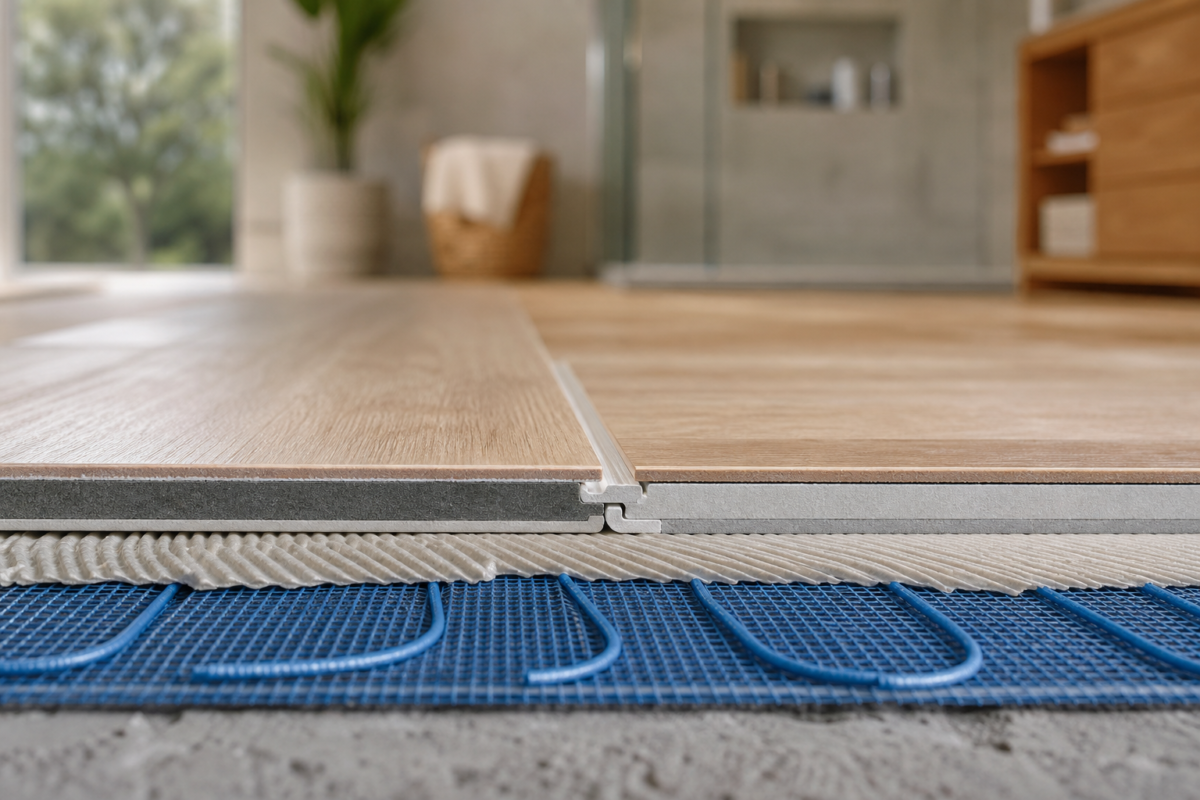
Operating a heated bathroom floor costs about $4.50 to $10 per month for a typical bath used a few hours a day. In hourly terms, a 35 square foot system draws around 210 watts and costs roughly $0.03 per hour, while a 50 square foot system near 300 watts runs about $0.05 per hour. On a programmable schedule that only warms the floor during morning and evening routines, monthly cost often lands near $4.50.
Two things keep running costs low: a programmable or WiFi thermostat, endorsed for energy savings by the ENERGY STAR program, and good insulation under the system. Warming the floor for two hours before you wake and letting it coast is far cheaper than running it around the clock. Because the numbers are small, radiant heat rarely dents the payback math in a remodel return analysis, and it is one of the comfort upgrades buyers remember at resale.
What flooring works with radiant heat?
Ceramic and porcelain tile are the best flooring for radiant heat because they conduct and store warmth efficiently and are unaffected by temperature swings. Natural stone works well too. Luxury vinyl, engineered wood, and laminate are acceptable only if the manufacturer rates them for radiant heat and you respect the maximum surface temperature, usually around 80 to 85 degrees Fahrenheit.
Solid hardwood and thick carpet are poor partners: wood can gap and cup, and carpet insulates the heat you paid for right back down into the subfloor. If you love the look of wood, choose an engineered product explicitly approved for radiant systems. Tile remains the default for a reason, and it pairs naturally with the water resistance a bathroom demands.
What factors affect heated floor cost?
The biggest cost levers are floor area, the system type you choose, whether a dedicated circuit is required, and the flooring going over the top. The bars below show how much weight each factor typically carries in a 2026 heated bathroom floor budget.
Which thermostat should you choose?
Choose a programmable thermostat with a built-in Class A GFCI and a floor sensor; a WiFi model that learns your schedule is worth the small premium. A basic non-programmable unit runs about $159, a programmable touchscreen about $259, and a WiFi model with app and voice control about $249. The GFCI is not optional in a wet room, and every quality floor-heating thermostat now includes one.
The payback on a programmable thermostat is real: scheduling the floor to warm only around your routines can cut running cost by half compared with leaving it on. Look for a model rated for the wattage of your system and, for electrical safety guidance, the standards referenced by the National Fire Protection Association that underpin the National Electrical Code. Voice and app control are conveniences, but the schedule is where the savings live.
Contractor’s take
The mistake I see most is homeowners buying a heating mat sized for the whole room, then realizing it will not fit once you subtract the vanity, toilet, and shower base. Always measure only the open, walkable floor and order the system to that number. Under-buy by a few square feet rather than over-buy, because you can never cut the cable to shorten it, and a mat that does not fit becomes an expensive paperweight.
Is a heated bathroom floor worth it?
For most homeowners doing a tile remodel anyway, a heated bathroom floor is worth it: the added cost is modest, running costs are low, and the daily comfort is something people genuinely notice. It is one of the few upgrades that improves every single morning without maintenance or fuss. Run through this checklist to decide whether it fits your project.
- You are already replacing the floor, so labor and demolition overlap.
- Your finish floor will be tile, porcelain, or radiant-rated material.
- You have panel capacity for a dedicated circuit, or your electrician can add one.
- You want low, steady running costs and will use a programmable thermostat.
- You value morning comfort and subtle resale appeal over a rock-bottom budget.
How can you save on a heated floor project?
The cheapest heated floor is the one you install during a remodel you are already funding. Beyond timing, you save by choosing loose cable over mats for oddly shaped rooms, sizing the system to only the walkable area, and doing the layout yourself while leaving the thermostat wiring to an electrician. These moves mirror the same discipline in our budget remodel strategies.
Do not economize on the membrane or the thermostat, though. A quality uncoupling membrane protects the tile you just paid for, and a programmable thermostat pays for itself in reduced running cost within a couple of years. And pairing radiant heat with the right lighting, covered in our bathroom lighting guide, is how a modest bathroom starts to feel like a genuine retreat.
Your next move
You know the number. What are you deciding next?
See 2026 curbless shower cost, how it is built, drain and slope requirements, and how to avoid leaks…
Continue →Compare bathroom tile patterns by cost, waste, and where each layout works best, with real 2026 US installed…
Continue →Walk-in tub cost in 2026: $5,000 to $20,000 installed. Compare tub types, features, and the real Medicare coverage…
Continue →Frequently asked
How much does it cost to heat a small bathroom floor?
A small 20 to 30 square foot bathroom costs $250 to $1,700 total, including new tile, for an electric system. The heating element alone is $8 to $15 per square foot installed. Running it costs only a few dollars a month.
Can I install a heated bathroom floor myself?
The heating layout is DIY-friendly for a confident homeowner, especially with a mat system. However, the final thermostat and circuit connection should be wired by a licensed electrician to meet code and pass inspection. Never cut or overlap the heating cable.
Do heated floors use a lot of electricity?
No. A typical bathroom system draws 210 to 300 watts and costs about $0.03 to $0.05 per hour, or roughly $4.50 to $10 per month with normal use. A programmable thermostat keeps that number low by heating only around your routines.
How long does a heated bathroom floor last?
Quality electric heating cable is designed to last the life of the floor, often 20 years or more, since it has no moving parts. The most likely component to need replacement is the thermostat. Proper installation without cuts or overlaps is the key to longevity.
Does a heated floor add home value?
It adds appeal more than measurable dollar value, functioning as a memorable comfort feature buyers notice in a primary bath. Because the install cost is modest when done during a remodel, the comfort-per-dollar is high. It is a splurge that reads as thoughtful rather than extravagant.

Figures reflect 2026 US electric and hydronic radiant floor pricing and manufacturer system data.