Shower Niche Guide: Sizes, Design, and Cost in 2026
Everything on shower niche sizes, placement, waterproofing, and cost, so your recessed shelf looks designed and never leaks.

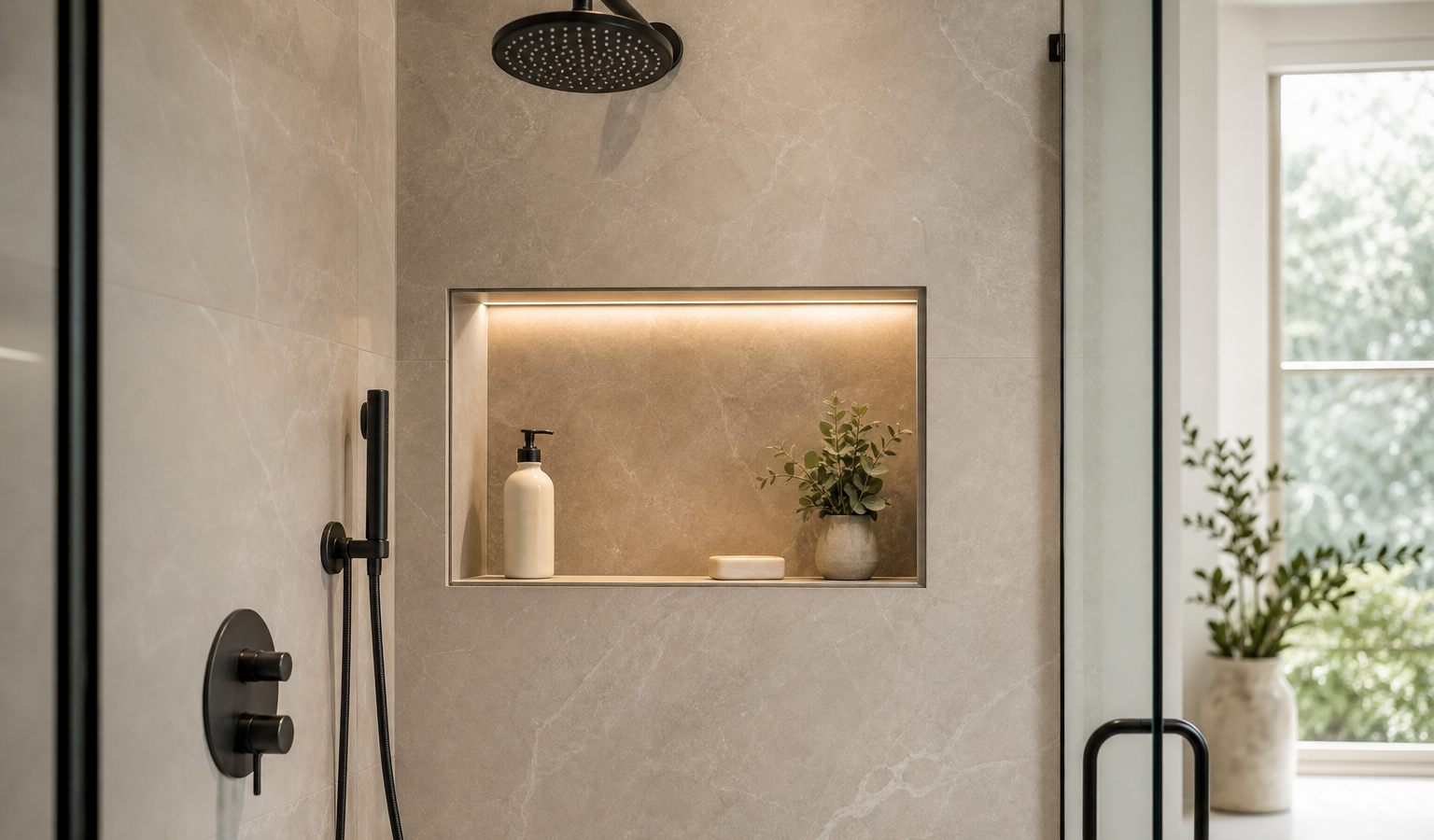
A shower niche is the recessed shelf built into a shower wall that holds your shampoo and soap without a hanging caddy, and it costs $200 to $800 installed in 2026. Done right, a shower niche looks like a designed feature and keeps bottles off the floor; done wrong, it becomes the spot where water sneaks into the wall. This guide covers standard shower niche sizes, the ideal placement height, prefab versus tiled construction, and the waterproofing details that separate a niche that lasts decades from one that leaks in a year.
Key takeaways
- A tiled shower niche costs $200 to $800 installed; a preformed insert unit alone runs $25 to $100.
- The most popular size is 12 by 24 inches; depth is about 3.5 inches to fit between standard studs.
- Place the main niche 48 to 60 inches off the floor, near the controls but out of the direct spray.
- The sill must slope down about 5 degrees so water drains out instead of pooling.
- A niche must be fully waterproofed and tied into the shower’s membrane, or it becomes a leak point.
How much does a shower niche cost in 2026?
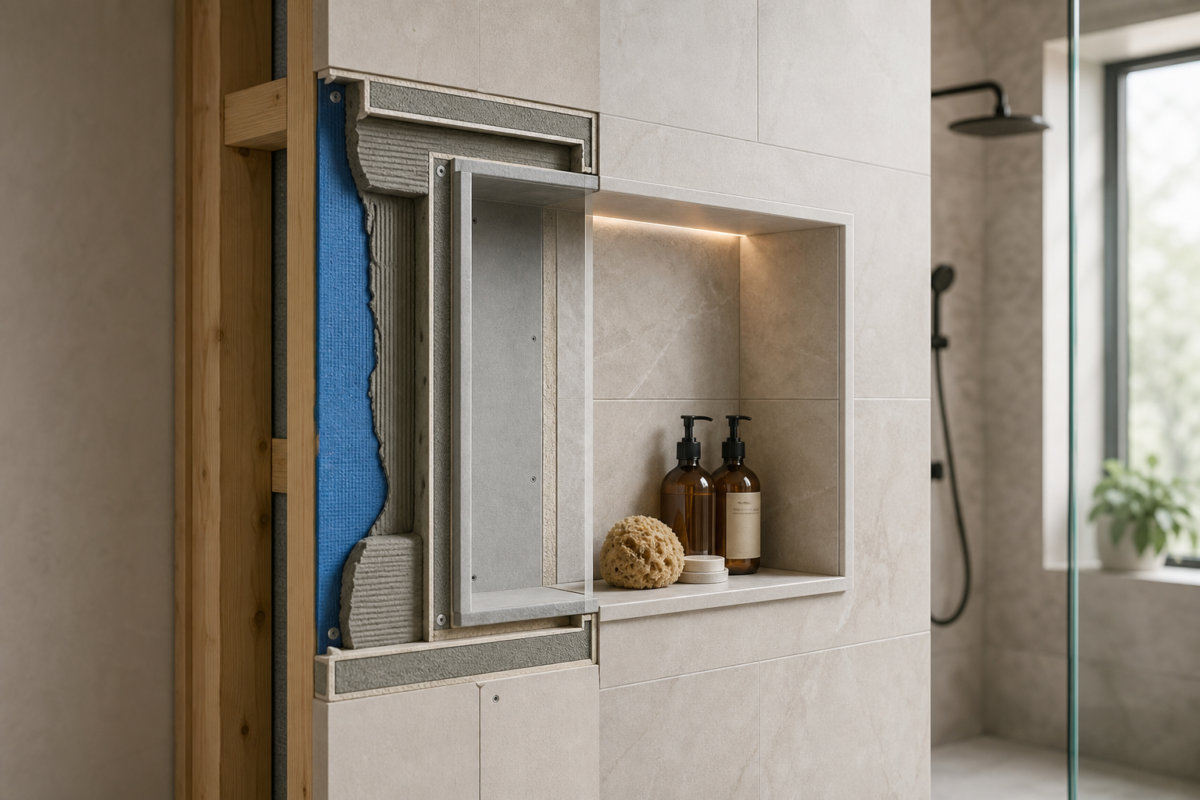
A shower niche costs $200 to $800 installed in 2026, with the final price driven by whether it is custom-tiled, how fancy the tile is, and how many niches you build. A single standard niche tiled to match the surround typically lands around $300 to $500, while a large niche with a stone slab back or accent mosaic and integrated lighting can reach $800 or more.
The table shows where the cost comes from. Most of the price is labor and tile, since the preformed waterproof box itself is inexpensive.
| Item | Cost | Notes |
|---|---|---|
| Preformed niche insert | $25 – $100 | Waterproof box (Schluter, Redblock) |
| Tile and trim | $40 – $200 | More for stone or mosaic |
| Labor (tiled, installed) | $150 – $500 | Framing, waterproofing, tile |
| Single niche, total installed | $200 – $500 | Standard tiled niche |
| Premium or multiple niches | $500 – $800+ | Slab back, LED, double niche |
A niche is usually a small line item within a larger project; see how it fits in our walk-in shower cost guide, and ground the broader budget with our bathroom remodel cost breakdown.
Standard shower niche sizes and dimensions
The most popular shower niche size is 12 by 24 inches, which holds a full row of bottles and reads as a deliberate design element rather than an afterthought. Depth is typically 3.5 inches, matching the cavity between standard 2-by-4 studs, and width is easiest at about 14 inches to fit between studs set 16 inches on center.
Going wider or taller
A niche wider than 14 inches means cutting a stud and adding a header and blocking to carry the load, which raises labor but is routine for a pro. Popular larger formats include 12 by 36 inches and a tall vertical niche of 12 by 30 inches or more for a modern look. A single deep shelf, a divided two-shelf niche, or a pair of stacked niches all work; just keep the interior dimensions sized to real bottles, around 4 to 5 inches of clear depth so pump tops fit.
Where to place a shower niche
Place the main shower niche 48 to 60 inches off the floor, roughly chest to eye level, on a wall that is easy to reach but out of the direct spray from the showerhead. The wall opposite or adjacent to the showerhead is ideal, so water does not pour straight into the opening. Keep the niche off exterior walls when you can, since cutting into insulated exterior framing invites cold spots and condensation.
If you want a lower niche for a razor or a foot rest while shaving, add a second small one around 12 to 18 inches high rather than dropping the main shelf down to an awkward, hard-to-reach position. Align the niche with your tile layout so the borders land on grout lines, not awkward cuts; a niche centered in a field of tile looks intentional, while one that fights the tile pattern looks tacked on. Our bathroom tile guide covers planning the layout so the niche falls on clean lines.
Prefab vs custom tiled niches
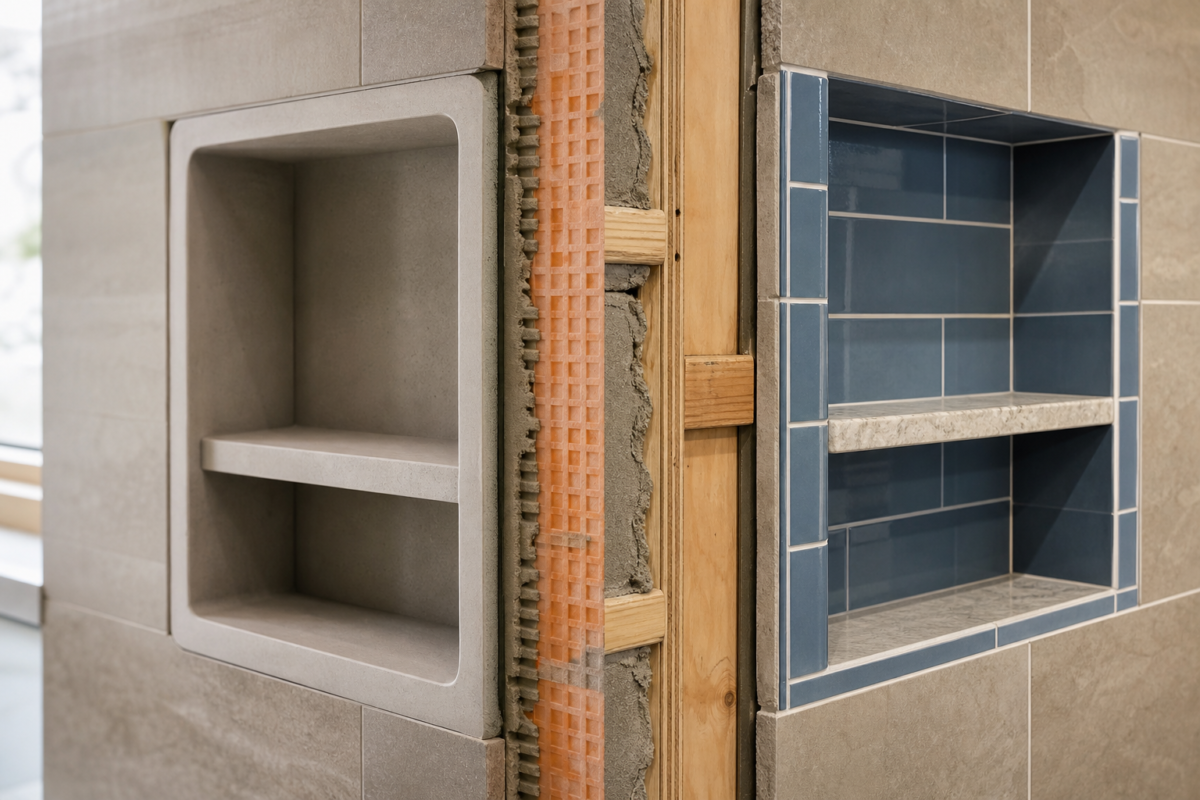
A prefab (preformed) niche is a waterproof foam or ABS box you bond into the wall, while a custom niche is framed and waterproofed on site. For most projects the prefab unit is the smarter choice: it arrives square, pre-sloped, and ready to bond to a sheet membrane, which removes the most common source of leaks. Brands like Schluter Kerdi-Niche and Redblock cost $25 to $100 and save labor.
A fully custom niche makes sense when you need a nonstandard size, a specific shape, or a seamless slab-lined interior that a stock box cannot provide. It demands more skill, because every seam and the sloped sill must be waterproofed by hand. Either way, the interior gets tiled or lined to match or contrast the surround. If you are already building a steam shower, the niche waterproofing has to meet the stricter standard covered in our steam shower cost guide.
How a niche gets installed
Installation follows the same sequence whether the niche is prefab or custom. The framer or tile setter cuts the opening between studs, adds blocking top and bottom (and a header if a stud is removed), then sets the box or builds the pocket. Next comes the waterproofing membrane, lapped onto the surrounding wall and sealed at every corner, followed by a flood or spray check before tile. Finally the interior and face are tiled, the sill is set with its outward slope, and the edges are trimmed and grouted. A single niche adds only a few hours to a tile job, which is why it is far cheaper to include during construction than to retrofit later.
Waterproofing a shower niche the right way
A shower niche is one of the most leak-prone spots in a shower, so its waterproofing must be continuous and tied into the wall membrane with no gaps. Whether prefab or custom, the niche needs a waterproof membrane across the back, sides, top, and sill, lapped and sealed to the surrounding wall system so water has no path into the framing.
The sloped sill detail
The bottom shelf, the sill, must slope down toward the shower about 5 degrees (roughly a quarter inch) so water runs out instead of pooling against the back corner. A flat or back-pitched sill traps water, degrades grout, and eventually finds a seam. The Tile Council of North America publishes the methods for these details, and following them is what keeps a niche watertight. Use a quality waterproofing and a mildew-resistant or epoxy grout at the sill, where water lingers most.
Shower niche vs built-in shelf vs caddy
A recessed niche is the cleanest built-in storage because it sits flush in the wall and never gets bumped, unlike a protruding corner shelf or a hanging caddy. A built-in corner shelf (a triangular tiled ledge) is easier to add to an existing shower and holds more, but it sticks out and can catch a shoulder. A tension or hanging caddy costs almost nothing but looks temporary and rusts.
For a remodel where the walls are already open, the recessed niche wins on looks and durability for a small added cost. In an existing tiled shower you do not want to demolish, a corner shelf or a quality caddy is the practical choice. For other ways to carve out bathroom storage, see our bathroom storage ideas guide.
Shower niche design ideas
The best shower niche designs treat the interior as a small feature wall, using contrast, material, or light to make it pop. A mosaic or contrasting tile inside a niche that otherwise matches the surround draws the eye and hides the busier look of stacked bottles. A single stone slab lining reads as the most high-end option and has no grout lines to clean.
Adding a waterproof LED strip along the top edge turns the niche into accent lighting, a small touch that feels custom. A metal trim or a pencil-tile border frames the opening and covers the tile edges cleanly, and matching that trim to your faucet and shower hardware finish ties the whole shower together. Keeping the back of the niche in the same material as the surround makes a small shower feel calmer, while a bold contrast suits a larger space that can carry the focal point. These accent touches are exactly the kind of detail that defines a high-end bath; our luxury bathroom upgrades guide covers coordinating them with the rest of the room.
Contractor’s take
I use a preformed niche on almost every job now. A hand-built niche can absolutely be watertight, but it relies on the installer nailing every seam and the slope, and that is exactly where I see leaks years later. The foam box comes pre-sloped and bonds right to the membrane. Plan the niche location before the plumber and electrician rough in, because the one place you cannot put it is where a pipe or a stud you need is already living. Locate it on the layout, not on the fly.
Is a shower niche worth it?
A shower niche is worth it for almost any shower remodel, because the added cost is small and the payoff in daily convenience and clean looks is large. For $200 to $500 you replace a rusting caddy with built-in storage that will outlast the shower, and buyers consistently notice a well-executed tiled niche as a sign of a quality, detail-oriented build.
The only time to skip it is when the walls are closed and you are not retiling, since cutting into a finished, waterproofed shower to add one rarely makes sense. If you are building new or gutting the shower anyway, add the niche while the walls are open; it is the cheapest it will ever be. Pair it with a curbless entry for a seamless, modern shower, as covered in our curbless shower guide.
Your next move
You know the number. What are you deciding next?
Walk-in tub cost in 2026: $5,000 to $20,000 installed. Compare tub types, features, and the real Medicare coverage…
Continue →Bathroom remodel financing explained: compare home equity loans, HELOCs, cash-out refi, personal loans, and 0% cards with 2026…
Continue →Steam shower cost runs $3,000 to $10,000 installed in 2026. See prices by generator size, enclosure, and prefab…
Continue →Frequently asked
Shower niche FAQs
What is the best height for a shower niche?
Place the main niche 48 to 60 inches off the floor, around chest to eye level, so it is easy to reach without bending. Add a second lower niche at 12 to 18 inches if you want a spot for a razor or to rest a foot while shaving.
How much does it cost to add a shower niche?
A tiled shower niche costs $200 to $800 installed in 2026. A standard niche tiled to match the surround runs about $300 to $500, while a larger niche with stone or mosaic accents and LED lighting can reach $800 or more. The preformed box alone is only $25 to $100.
What is the most popular shower niche size?
The 12-by-24-inch niche is the most popular, holding a row of bottles while looking intentional. Depth is typically 3.5 inches to fit between studs, and width around 14 inches avoids cutting a stud. Larger 12-by-36-inch and tall vertical niches are also common in modern designs.
Do shower niches leak?
Only when waterproofed poorly. A niche must have a continuous membrane on all surfaces tied into the wall system, plus a sill that slopes out about 5 degrees to drain. A preformed, pre-sloped niche bonded to a sheet membrane is the most reliable way to avoid leaks.
Can I add a niche to an existing shower?
Not easily. Adding a recessed niche means opening and re-waterproofing the wall, so it only makes sense during a retile or gut. For an existing shower you want to keep, a built-in corner shelf or a quality caddy is the practical alternative.

Figures reflect 2026 US installed pricing; waterproofing follows TCNA and manufacturer guidelines for recessed shower shelves.