Bathroom Storage Ideas That Work: 2026 Solutions and Costs
Space-saving bathroom storage ideas at every budget, with real 2026 US costs and pro guidance on what to build in.

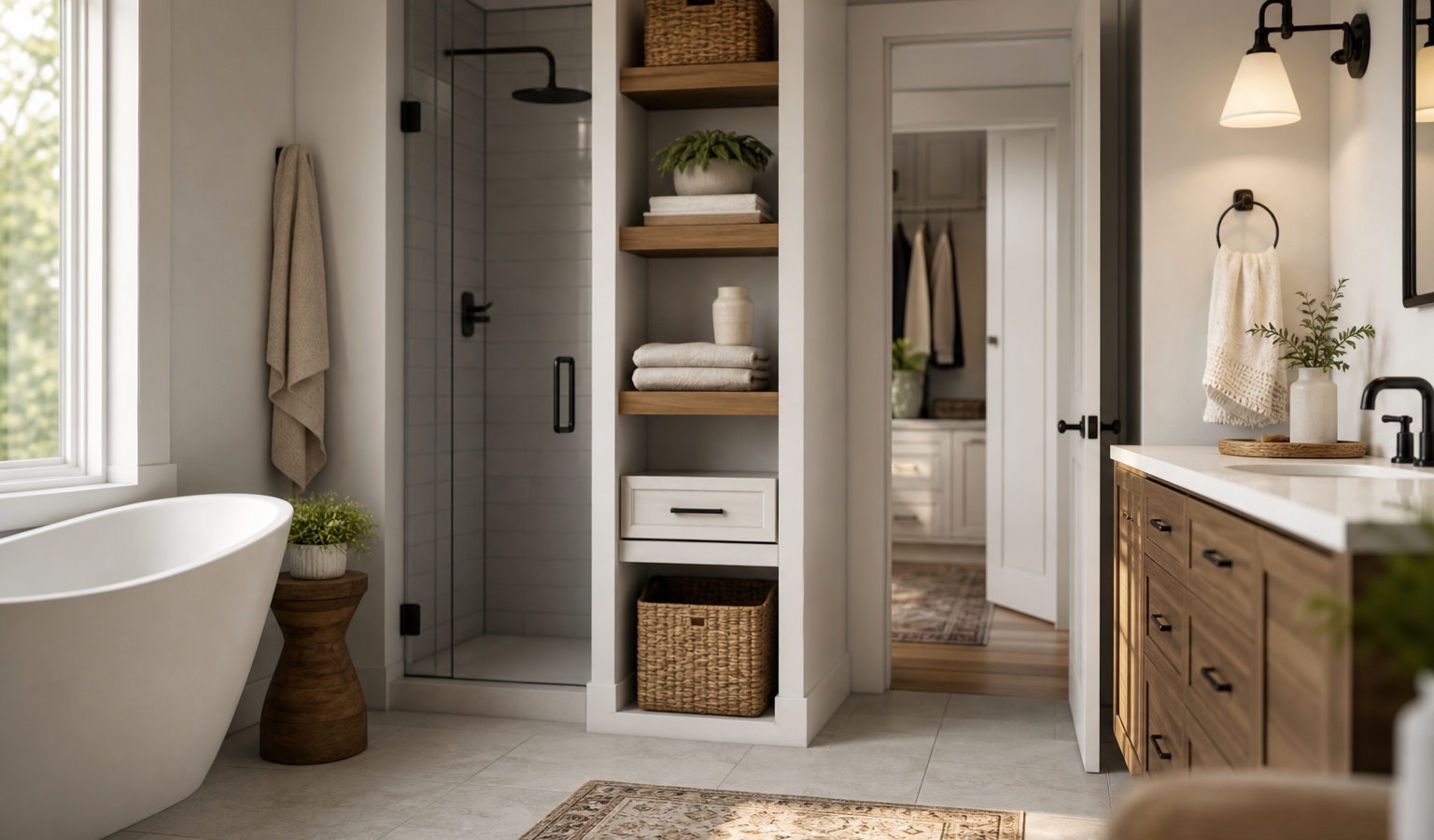
Smart bathroom storage ideas are the difference between a room that feels calm and one that feels cramped, and in 2026 you do not need a bigger bathroom to get there, just a better plan for the walls, the vanity, and the dead space around the toilet. Whether you are working with a 40-square-foot powder room or a full primary bath, the solutions below range from $15 over-door racks to $800 recessed built-ins, so you can fix the clutter at any budget and match the effort to how long you plan to stay.
The core move is always the same: get everyday items off the counter and onto vertical or enclosed storage, then reserve the countertop for the two or three things you actually use daily. Do that and even a tiny bathroom reads as organized. If a full renovation is on the table, fold these storage decisions into your bathroom remodel budget early, because recessed niches and custom vanities are far cheaper to add while walls are open.
Key takeaways
- Vertical storage over the toilet and on empty walls is the highest-value, lowest-cost fix at $15 to $150.
- Drawer-based vanities hold 30 to 40 percent more usable space than door-and-shelf cabinets.
- Recessed medicine cabinets and shower niches add storage without stealing floor space, best done during a remodel.
- Under-sink pull-outs that route around the P-trap can double the usable cabinet volume for under $70.
- Keep only daily essentials on the counter; everything else belongs in closed, labeled storage.
What are the best bathroom storage ideas for small spaces?
The best bathroom storage ideas for small spaces use vertical and enclosed space that would otherwise sit empty: over-the-toilet units, floating shelves, recessed niches, and drawer organizers. They add capacity without consuming the floor area that makes a small bathroom feel tight, and most cost under $150. The table below ranks the highest-impact solutions by cost and effort.
| Storage idea | Typical cost | Effort | Best for |
|---|---|---|---|
| Over-the-toilet unit or shelf | $60 – $150 | Easy | Extra towel and decor space |
| Floating shelves | $50 – $120 | Medium | Vertical wall storage |
| Under-sink pull-out organizer | $30 – $70 | Easy | Doubling cabinet volume |
| Vanity tray or counter caddy | $20 – $60 | Easy | Corralling daily items |
| Recessed medicine cabinet | $250 – $600 | Hard | Deep, hidden storage |
| Over-the-door organizer | $15 – $40 | Easy | Cleaning and hair tools |
| Recessed wall niche or shelving | $300 – $800 | Hard | Built-in shower or wall storage |
| Drawer-based vanity | $500 – $2,000 | Hard | Maximum enclosed storage |
Notice the jump: the top four ideas are all under $150 and do most of the decluttering work. The bigger-ticket built-ins pay off when you are already remodeling, when the same budget principles from small-kitchen remodels apply to squeezing storage out of a tight footprint.
Over-the-toilet and vertical storage ideas
Over-the-toilet storage is the single best use of dead space in a small bathroom, adding three to four shelves in a footprint that was doing nothing. Freestanding etagere units run $60 to $150 and need no wall anchoring, while wall-mounted cabinets look built-in for a similar price.
Floating shelves done right
Floating shelves cost $50 to $120 installed and turn any blank wall into storage, but they only work if they are anchored into studs or with proper drywall anchors rated for the load. Space shelves 16 to 18 inches apart for towels and 10 to 12 inches for smaller items, and style them with rolled towels and a plant so they read as decor, not clutter. Keep glass jars of cotton and swabs here so the counter stays clear.
Narrow towers and gap fillers
A 6 to 12-inch-wide storage tower slides into the gap between the vanity and the wall or toilet and delivers four to five shelves for $60 to $150. Pull-out models make the back shelves reachable. This is the classic answer for the awkward sliver of space every bathroom seems to have.
Vanity and under-sink storage ideas
The under-sink cabinet is the most wasted storage in the average bathroom, and a $30 to $70 pull-out or two-tier organizer that routes around the P-trap can roughly double its usable volume. U-shaped organizers fit around the plumbing, and stackable bins turn one tall empty space into two accessible layers.
Why drawer vanities beat door vanities
A drawer-based vanity provides 30 to 40 percent more usable storage than a door-and-shelf cabinet, because drawers bring the back of the cabinet to you instead of forcing you to reach past a front row. Full-extension, soft-close slides and a toe-kick drawer squeeze out even more. If you are replacing the vanity anyway, this is the highest-return upgrade you can make, and the same cabinetry logic that governs kitchen cabinet cost applies here: drawers cost more than doors but earn it in daily use.
Drawer dividers and inserts
Inside the drawers, $15 to $50 in dividers keeps makeup, cotton swabs, and hair accessories from becoming a jumble. Adjustable spring-loaded dividers adapt as your needs change, and a shallow top drawer with an outlet inside keeps hair tools charged and hidden.
Medicine cabinets and recessed niches
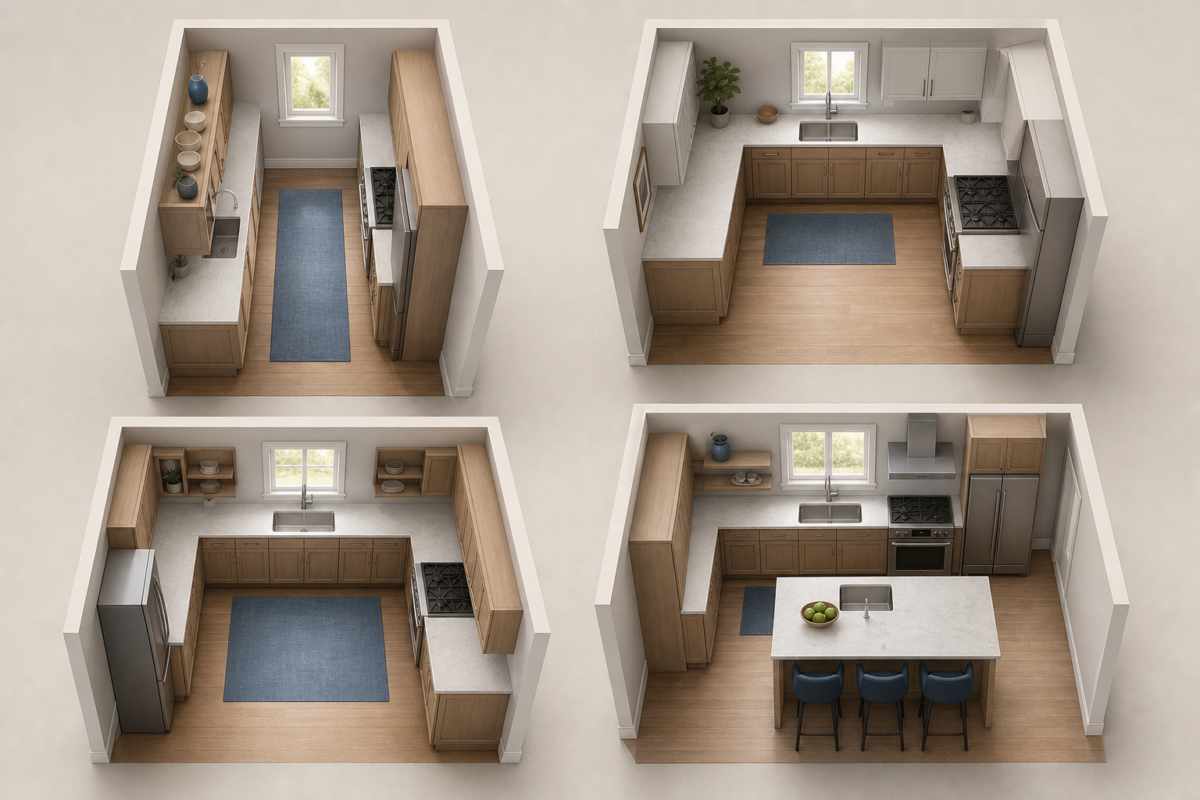
Recessed medicine cabinets and wall niches are the best way to add storage without giving up any floor or counter space, because they live inside the wall cavity between studs. A deep-profile recessed medicine cabinet holds far more than the standard 3 to 4-inch box and costs $250 to $600 with integrated lighting.
Recessing does require cutting into the wall between studs, so it is a job best done during a remodel or by a pro who can check for pipes and wiring first. Built-in wall niches and recessed shelving run $300 to $800 installed but disappear into the wall and never intrude on the room. Store medications on the upper shelves, away from steam and out of reach of children; the U.S. Food and Drug Administration recommends keeping medicines in a cool, dry place rather than a steamy shower-adjacent shelf. The factors below show where each storage type wins.
Shower and towel storage ideas
The best shower storage is a built-in tiled niche because it never rusts, falls, or clutters the walls, but a $15 to $40 tension-pole or hanging caddy solves the problem instantly in a rental. Built-in niches cost $200 and up when tiled during a remodel and should be sloped slightly for drainage.
Towels without a linen closet
When there is no linen closet, go vertical: a wall-mounted towel ladder holds four to five towels in 8 to 10 inches of floor space for $40 to $80, over-door racks hold three to four for $15 to $30, and rolled towels in a basket take about 30 percent less room than folded stacks. Hooks beat bars in tight baths because they let towels dry without needing a full arm-span of wall.
Countertop and drawer organization
The fastest way to make a bathroom look organized is to clear the countertop down to daily essentials and corral those on a single tray. A $20 to $60 vanity tray or tiered caddy in moisture-resistant bamboo, acrylic, or stainless steel groups the soap, lotion, and toothbrush cup so the surface reads intentional instead of covered.
Everything you do not use every day should move into closed storage. Behind-the-door organizers hold 10 to 15 pounds of cleaning supplies and hair tools for $15 to $40, and magnetic strips inside a medicine cabinet door catch tweezers, clippers, and bobby pins that otherwise vanish. Clear bins let you find things at a glance, which is what keeps a system in place months later.
Labeling and keeping the system in place
A storage system only works if it survives a busy week, so build in a little friction reduction. Color-coded acrylic bins with simple labels tell every family member where things go, which stops the slow drift back to counter clutter. Group by task, not by product type: a shower-day bin, a grooming bin, a first-aid bin. Risers at the back of a deep drawer or cabinet keep shorter bottles visible, and a small lazy Susan under the sink turns a dark back corner into reachable, spinnable storage for daily creams and sprays. The goal is that returning an item takes one second, because anything harder gets skipped.
Built-in vs freestanding bathroom storage
Choose built-in storage when you are already remodeling and want a clean, permanent, space-saving result, and choose freestanding storage when you rent, have a tight budget, or want flexibility. Built-ins recess into walls and add resale appeal but cost more and require construction; freestanding pieces install in minutes and move with you. The National Kitchen and Bath Association publishes clearance and storage guidelines worth checking before you commit a built-in to a tight layout.
- Renting or unsure of your stay: freestanding units, tension caddies, and over-door racks.
- Remodeling anyway: recess a medicine cabinet and shower niche while the walls are open.
- Chasing maximum capacity: replace a door vanity with a drawer-based one.
- On a $100 budget: under-sink pull-out, a vanity tray, and one over-toilet unit.
- Sharing the bathroom: a rolling cart or dedicated drawers per person prevent turf wars.
Contractor’s take
The cheapest square footage in any bathroom is inside the wall. If I am already opening drywall for plumbing or a remodel, I always add a recessed niche in the shower and a deep recessed medicine cabinet, because the labor is nearly free once the wall is open and the payoff is permanent, snag-free storage. Doing it later means cutting finished tile, which is where the real cost hides.
How much do bathroom storage ideas cost?
Bathroom storage ideas cost anywhere from $15 for an over-door rack to $2,000 for a fully fitted drawer vanity, but you can meaningfully declutter a small bathroom for $100 to $200 using pull-outs, a tray, and one vertical unit. The premium tier, recessed built-ins and custom vanities, is worth it mainly when you are remodeling.
Budget plans ($0 to $50) lean on repurposed baskets, DIY shelves, and over-door organizers. Mid-range plans ($50 to $200) buy quality over-toilet units, rolling carts, and mounted shelving. Premium plans ($200 and up) fund recessed cabinets with lighting, built-in niches, and vanity replacements. If storage is part of a broader refresh, our budget remodel ideas translate directly, and thoughtful storage is one of the upgrades that supports resale value the way our remodel ROI guide describes. Coordinating storage with the surfaces you chose in bathroom countertop materials keeps the finished room cohesive, and pros balance where to invest exactly as in splurge vs save.
Bathroom storage FAQ
Your next move
You know the number. What are you deciding next?
Walk-in tub cost in 2026: $5,000 to $20,000 installed. Compare tub types, features, and the real Medicare coverage…
Continue →Bathroom remodel financing explained: compare home equity loans, HELOCs, cash-out refi, personal loans, and 0% cards with 2026…
Continue →Steam shower cost runs $3,000 to $10,000 installed in 2026. See prices by generator size, enclosure, and prefab…
Continue →Frequently asked
How do I add storage to a small bathroom without remodeling?
Use vertical and enclosed space you already have: an over-the-toilet unit, floating shelves, an under-sink pull-out, and a counter tray. Those four solutions cost under $150 total and require no construction.
What is the best bathroom storage for a rental?
Freestanding and no-damage options are best for rentals: tension-pole shower caddies, over-door racks, rolling carts, and freestanding over-toilet etageres. They install without drilling and move with you when the lease ends.
Are drawer or door vanities better for storage?
Drawer-based vanities are better, offering 30 to 40 percent more usable space because drawers bring the contents to you instead of forcing you to reach past a front row. They cost more but are the highest-return storage upgrade in a bathroom.
How much does a recessed medicine cabinet cost?
A recessed medicine cabinet costs $250 to $600 installed with lighting, plus labor to cut into the wall between studs. It is best added during a remodel when the wall is already open to avoid patching finished surfaces.
Where should I store medications in the bathroom?
Store medications on upper shelves away from shower steam and out of children reach; humidity and heat degrade many drugs, so a cool, dry, higher cabinet is safer than a shelf near the tub.

Costs reflect 2026 US retail and installed pricing for common storage products and built-ins.