Tiled vs Prefab Shower: Cost, Durability, and Which to Choose
Craftsmanship versus convenience, with the real 2026 numbers.

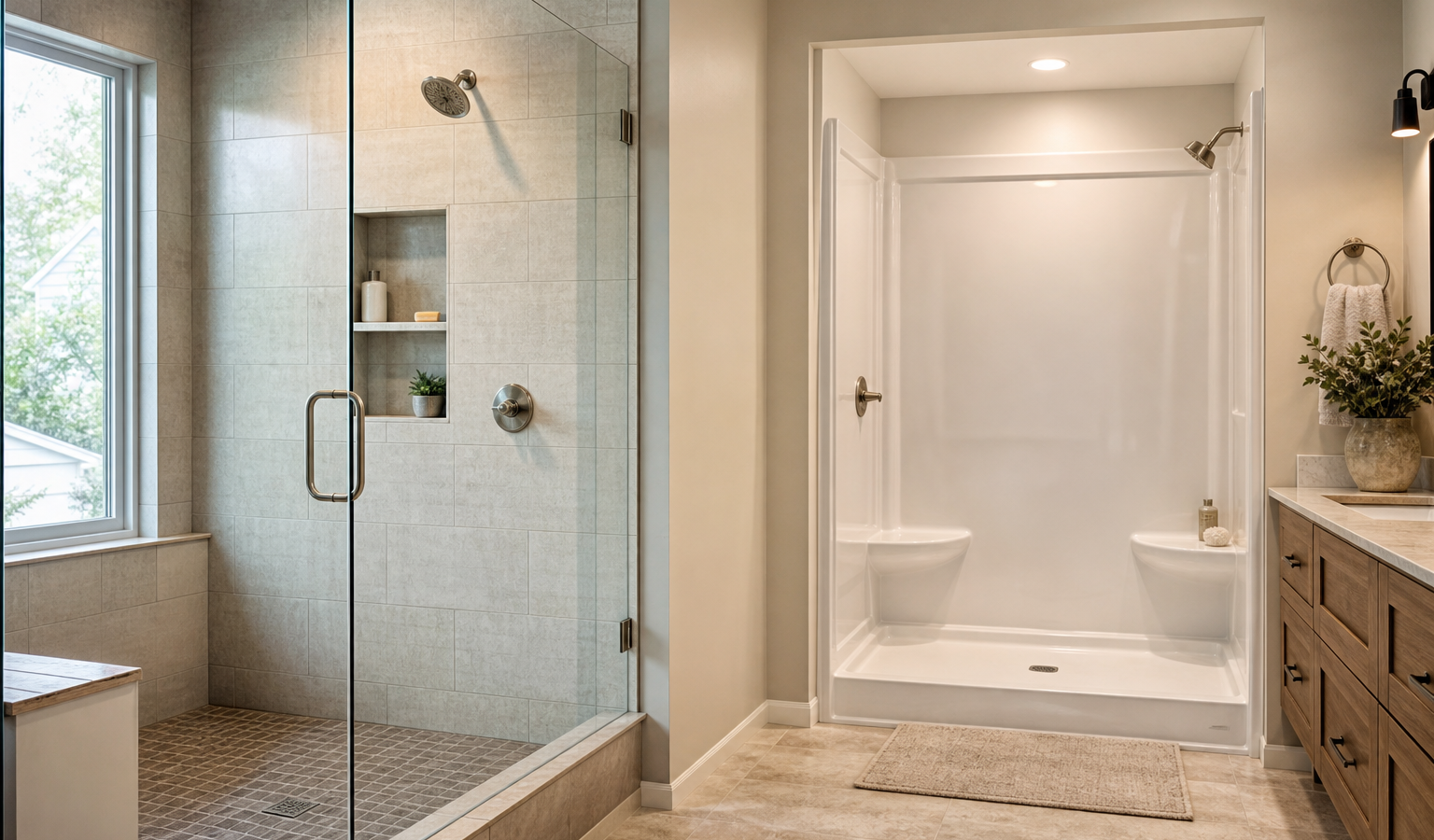
Choosing between a tiled vs prefab shower is the single decision that most shapes the cost, timeline, and look of a shower remodel. A prefab acrylic or fiberglass unit installs in a day or two for $500 to $2,500, while a custom tiled shower runs $3,000 to $15,000 and takes a week or more, but rewards you with decades of life and a high-end finish. This guide breaks down the real 2026 numbers, how each is built and waterproofed, what maintenance each demands, and which one fits your budget and resale goals.
Key takeaways
- Prefab units cost 50 to 80 percent less upfront and install in one to two days; tile costs more and takes five to ten days.
- A properly built tile shower lasts 30 to 50-plus years; acrylic and fiberglass typically last 10 to 20.
- Tile’s weak point is waterproofing behind it; prefab’s weak point is cracking or delaminating with no repair short of replacement.
- Tile wins on resale and design freedom; prefab wins on speed, price, and easy cleaning.
- Over 15 years, tile adds roughly $1,250 to $3,200 in grout and caulk upkeep that prefab avoids.
Tiled vs prefab shower: the quick answer
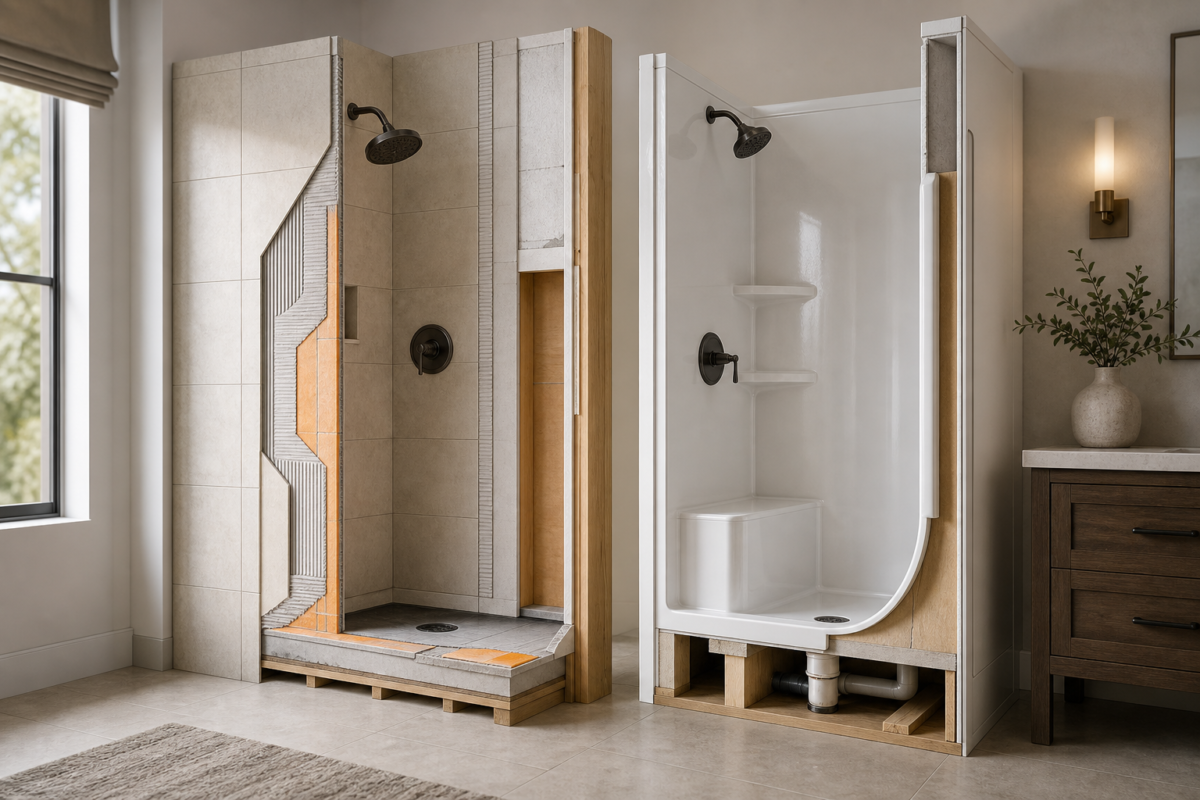
Choose a tiled shower if you want a custom look, maximum lifespan, and the best resale value, and choose a prefab shower if you want the lowest cost, the fastest installation, and the easiest cleaning. Everything else in this comparison flows from that core trade-off between craftsmanship and convenience.
A prefab (prefabricated) shower is a molded acrylic or fiberglass unit, sold as a one-piece surround or a few interlocking panels with the pan included. A tiled shower is built on site from a waterproofed substrate, a sloped pan or base, and individually set tile. Both can produce a walk-in shower, but they get there in opposite ways, one manufactured in a factory and dropped in, the other constructed layer by layer in your bathroom.
Cost compared in 2026
A prefab shower costs $500 to $2,500 installed, while a custom tiled shower runs $3,000 to $15,000 or more depending on tile choice and size. The gap comes almost entirely from labor: tile is a skilled, multi-day trade, whereas a prefab unit sets in a few hours.
| Cost element | Prefab (acrylic/fiberglass) | Tiled (ceramic/porcelain) | Tiled (natural stone) |
|---|---|---|---|
| Material | $150 – $900 | $200 – $2,000+ | $1,000 – $5,000+ |
| Labor | $200 – $1,000 | $800 – $5,000+ | $1,500 – $6,000+ |
| Total installed | $500 – $2,500 | $3,000 – $12,000 | $6,000 – $15,000+ |
| Lifespan | 10 – 20 years | 30 – 50 years | 20 – 50+ years |
Tile prices scale with the material, from about $2 per square foot for basic ceramic to $25 or more for premium porcelain and natural stone. For a full breakdown of where shower dollars go within a project, see our bathroom remodel cost guide.
Installation time and complexity
A prefab shower installs in one to two days, while a tiled shower takes five to ten days once curing and multiple trades are factored in. That timeline difference ripples through the whole project, affecting how long the bathroom is out of service and how much labor you pay for.
How a prefab unit goes in
Crews set the pan, level and secure it, attach the wall panels to the studs, connect the drain and valve, and seal the seams. There is no curing wait, so the shower is often usable within 48 hours. The main site constraint is getting a one-piece unit through doorways and hallways in existing homes, which is why multi-panel kits dominate remodels.
How a tiled shower is built
A tile shower stacks several steps: framing and backer board, a waterproofing membrane, a sloped mortar bed or preformed pan, thinset and tile, grout, then curing and sealing. Each layer must cure before the next, and the work spans tile setters, plumbers, and sometimes glass installers. This complexity is why tile costs more and why installer skill matters so much to the result.
Durability and lifespan
A correctly built tiled shower lasts 30 to 50 years, while acrylic and fiberglass units typically last 10 to 20 before they dull, crack, or delaminate. Tile is the clear winner on longevity, but only when the waterproofing beneath it is done right.
Acrylic resists chips and holds its finish longer than fiberglass, which is thinner and prone to surface crazing over time. Solid-surface panels sit between acrylic and tile, offering 20 to 30 years with a seamless look. When a prefab unit does fail, there is rarely a partial fix; the usual remedy is pulling the whole unit and starting over, whereas a tiled shower can often be repaired one failed area at a time.
Maintenance and cleaning
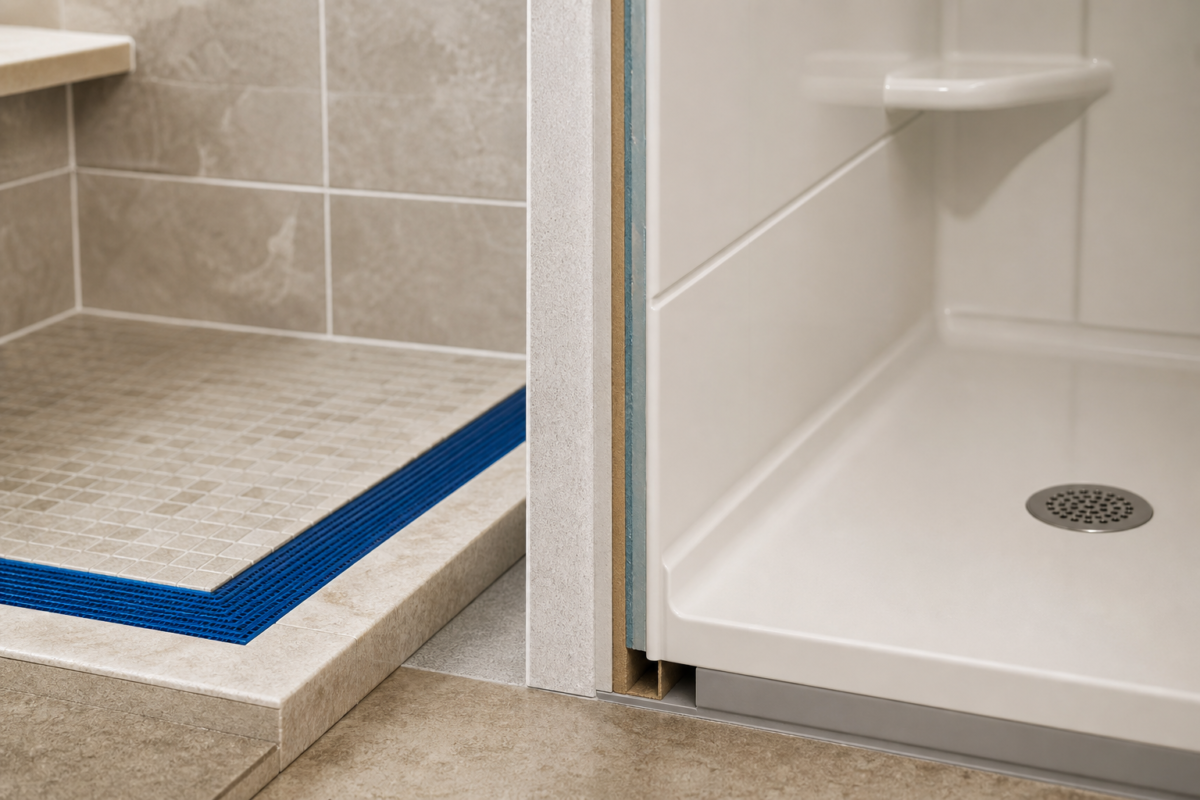
Prefab showers are far easier to maintain because their seamless surfaces have no grout to seal and wipe clean with a mild cleaner. Tile looks better but asks for ongoing grout care, which is the single biggest reason some owners choose acrylic.
Budget for grout resealing every 12 to 24 months, recaulking every one to three years ($150 to $400), and a full regrout every 8 to 15 years ($500 to $1,200). Choosing larger-format tile with fewer grout lines, or an epoxy grout, cuts this burden sharply. Our bathroom tile guide covers grout types and sealing in depth.
Design and customization
Tile offers effectively unlimited design options, while prefab units are limited to a handful of molded colors and textures. If you want a specific look, a built-in bench, a particular size, or a shelf recess, tile is the only path that can deliver it exactly.
With tile you can run any color, size, and pattern, from classic subway to large-format slabs to intricate mosaics, and integrate a shower niche, a curbless entry, or a seat sized to the user. Prefab units come in standard footprints with molded shelves, which is efficient but inflexible. If your shower has an unusual shape or you want it to read as a design centerpiece, tile is worth the premium, and pairing it with frameless glass doors amplifies the custom effect.
Waterproofing: the real failure point
Most tile shower failures come from inadequate waterproofing behind the tile, not the tile itself, because grout and tile are not waterproof on their own. A prefab unit carries its waterproofing built in, which is part of its appeal to builders and buyers who want a predictable result.
A durable tile shower depends on a continuous membrane system, whether a sheet or liquid membrane and a properly bonded pan, installed to industry standards. The Tile Council of North America publishes the assemblies that define a correct installation at tcnatile.com, and a contractor who follows them is the difference between a shower that lasts decades and one that rots the subfloor in a few years. Because the waterproofing is hidden, you cannot judge a tile shower by its surface, which is exactly why installer reputation matters more here than with any other finish.
Hybrid and mid-tier options
You are not limited to a pure tile-or-prefab choice; several hybrid approaches capture part of each one’s upside. The most common is pairing a durable prefab or preformed shower pan with tiled walls, which cuts the hardest, most leak-prone part of the job while keeping a custom look above.
Large-format porcelain wall panels are another middle path. These rigid slabs install over a waterproofed substrate with minimal grout lines, delivering a near-seamless tiled appearance with far less maintenance than small tile. They cost more than acrylic but less than full mosaic tile work, and they have grown popular in 2026 remodels that want the look of a stone slab without the weight or price. Solid-surface panels in marble-look patterns fill a similar niche, bonding seamlessly and resisting mold without any grout at all.
A preformed, pre-sloped pan under tiled walls also simplifies the trickiest step for a tile setter, the sloped mortar bed and drain, lowering both cost and the risk of a failed pan. If you like tile but worry about the waterproofing gamble, this is often the smartest compromise, and it pairs well with the layered support of bathroom grab bars for an accessible yet custom shower.
Resale value and buyer perception
Tile reads as a quality, high-end finish and supports stronger resale, while acrylic and fiberglass often read as builder-grade, especially in a primary bathroom. In upscale markets a tiled shower can be the detail that closes a sale, so it tends to recover more of its cost.
That said, a clean, modern prefab shower in a guest or secondary bath rarely hurts value and can be the smarter spend. The resale math depends on your home’s price tier and which bathroom you are remodeling, a nuance we unpack in our bathroom remodel ROI analysis. For a primary suite in a mid-to-upper home, tile usually pays; for a basement or rental bath, prefab often makes more sense. Buyers also notice condition over material, so a spotless, well-grouted tile shower or a scratch-free acrylic unit both show far better than a neglected version of the other, which is a reminder that upkeep protects whatever you spend.
Contractor’s take
The question I ask every client is how long they plan to stay and which bathroom this is. If it is the primary bath and you are staying five-plus years, tile pays for itself in enjoyment and resale, and the maintenance is minor if you seal the grout and use larger tile. If it is a guest bath, a rental, or you are selling within two years, a quality acrylic unit is the better value every time. Where people go wrong is spending tile money on a cheap install, a bad waterproofing job under beautiful tile is worse than any prefab unit, because the damage hides until the floor is soft.
Which shower should you choose?
Match the shower to your budget, timeline, and how long you will live with it. Run through this checklist to land on the right call for your bathroom.
- Choose tile for a primary bathroom you will keep five or more years and want to feel custom.
- Choose prefab for a guest bath, rental, basement, or any fast, budget-driven project.
- Choose tile if you need an odd size, a built-in bench or niche, or a curbless entry.
- Choose prefab if a one-day install and zero grout maintenance are priorities.
- Choose tile for resale in a mid-to-upper market; choose prefab for a secondary bath in any market.
- Whatever you pick, vet the installer’s waterproofing method before signing.
Frequently asked questions
Your next move
You know the number. What are you deciding next?
Walk-in tub cost in 2026: $5,000 to $20,000 installed. Compare tub types, features, and the real Medicare coverage…
Continue →Bathroom remodel financing explained: compare home equity loans, HELOCs, cash-out refi, personal loans, and 0% cards with 2026…
Continue →Steam shower cost runs $3,000 to $10,000 installed in 2026. See prices by generator size, enclosure, and prefab…
Continue →Frequently asked
Is a tiled shower worth the extra cost over prefab?
In a primary bathroom you will keep for years, usually yes: tile lasts two to three times longer and boosts resale. In a guest bath, rental, or short-term home, a quality acrylic unit delivers better value for a fraction of the cost.
How long does a prefab acrylic shower last?
A standard acrylic or fiberglass unit lasts 10 to 20 years before it dulls, scratches, or cracks. Solid-surface panels last 20 to 30 years. When a prefab unit fails, it usually has to be replaced whole rather than repaired.
Why do tile showers leak?
Almost always because of failed waterproofing behind the tile, not the tile itself. Grout and tile are not waterproof, so the hidden membrane and pan must be installed correctly. A skilled installer following industry standards is the key to a leak-free tile shower.
How much maintenance does a tile shower need?
Plan to reseal grout every one to two years, recaulk every one to three years, and regrout every 8 to 15 years. Large-format tile and epoxy grout reduce this upkeep. A prefab unit needs only routine wiping with no sealing.
Can I convert a prefab shower to tile later?
Yes, but it means removing the prefab unit entirely and rebuilding the substrate, waterproofing, and pan from scratch. Because you pay for demolition on top of the new tile install, converting later costs more than choosing tile from the start.
