Bathroom Window Privacy: Glass, Film, and Treatment Options
Keep the view out and the light in, at any budget.

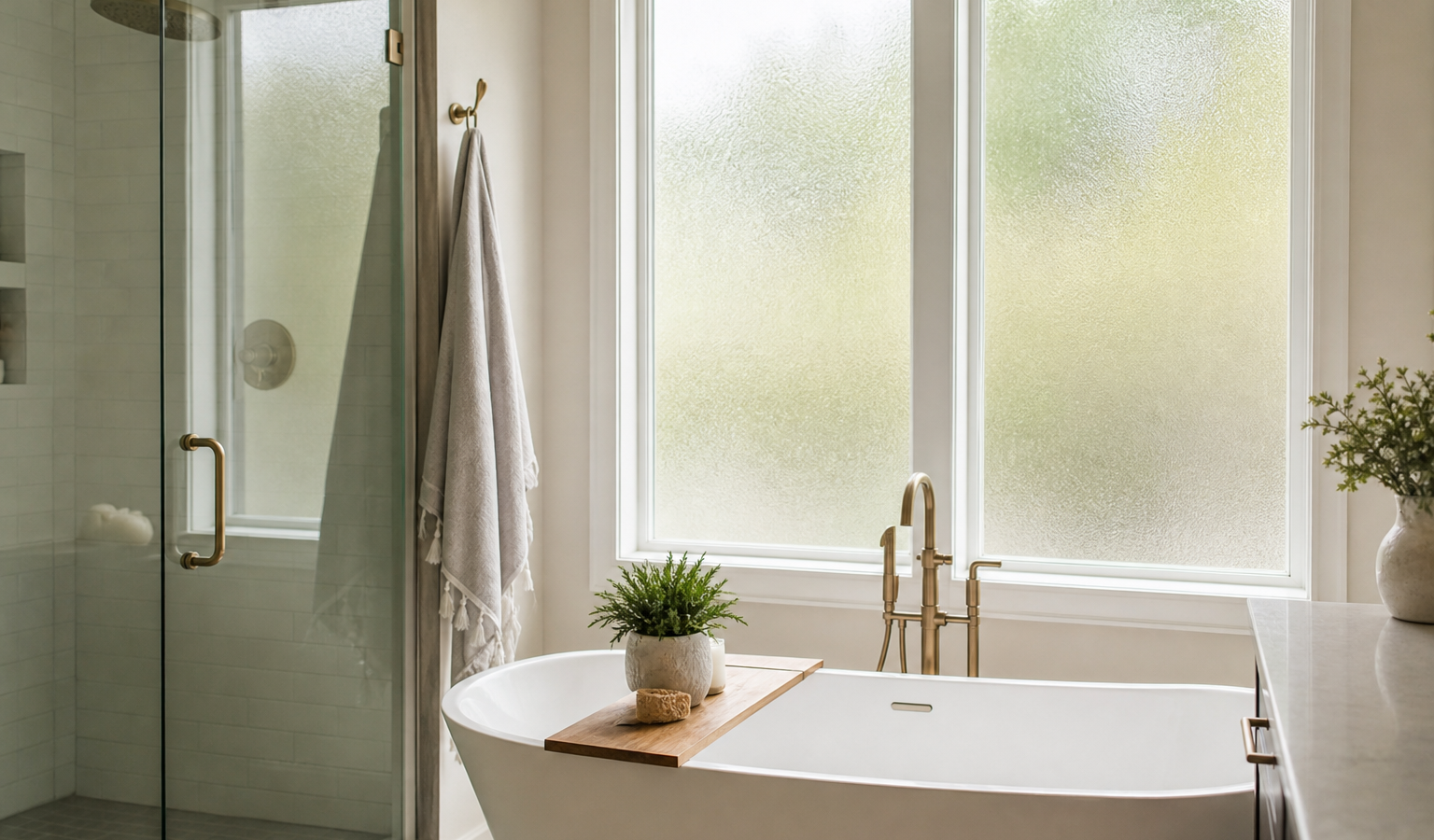
Solving bathroom window privacy means keeping the view out while letting the light in, and there are more ways to do it in 2026 than most homeowners realize. From permanent obscure glass and glass block to peel-and-stick film, moisture-proof shades, and even switchable smart glass that frosts at the tap of a button, the right choice depends on your budget, how much daylight you want, and whether you own or rent. This guide compares every option, explains obscurity ratings, and lays out real installed costs.
Key takeaways
- Privacy film is the cheapest and most renter-friendly fix, from about $5 to $25 per square foot and DIY in an afternoon.
- Obscure or acid-etched glass and fluted glass give permanent privacy while passing daylight; replacement panes run $150 to $600.
- Glass block is the most private and durable option but blocks views entirely and costs $400 to $1,000-plus per window.
- Switchable smart glass frosts on demand for $50 to $150 per square foot, a luxury splurge.
- In humid bathrooms, choose moisture-resistant treatments and keep ventilation strong to prevent mold around the window.
What makes a good bathroom window privacy solution
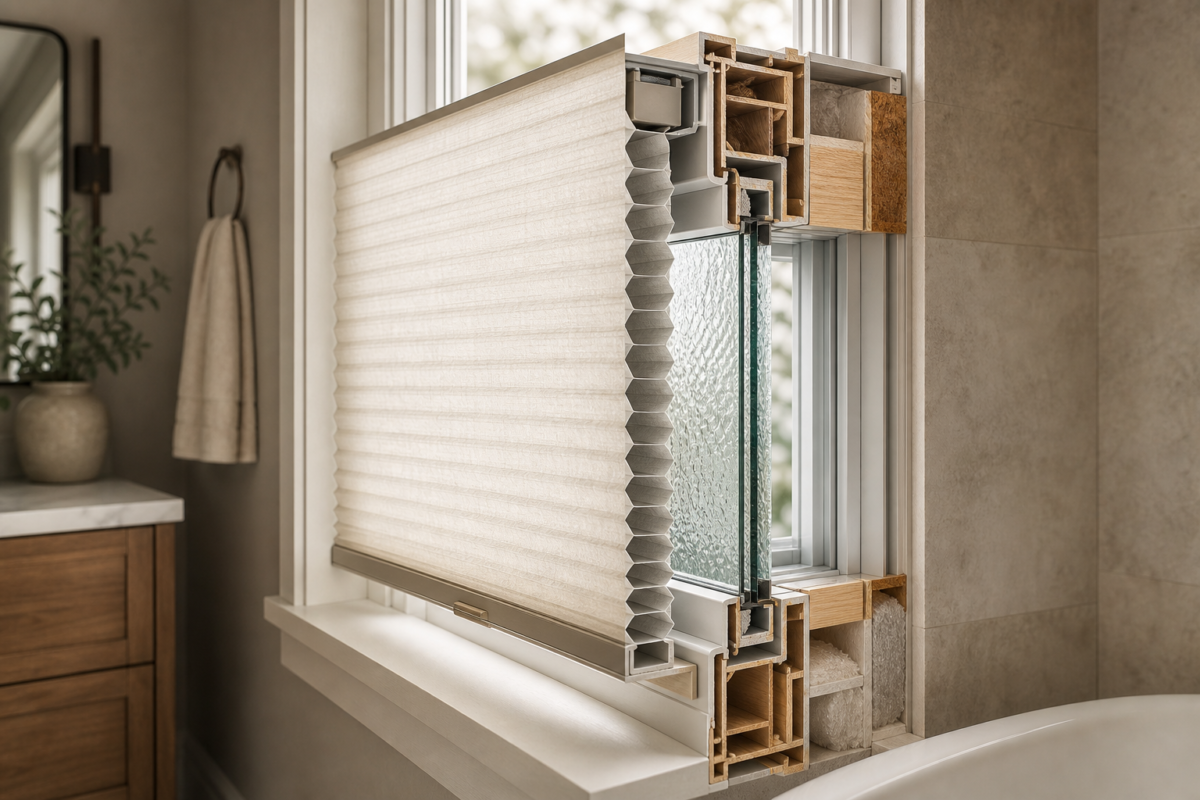
The best bathroom window privacy solution blocks sightlines without killing daylight, holds up to constant humidity, and matches how long you plan to stay. A permanent glass change suits a forever home, while film or a waterproof shade serves renters and quick updates better.
Three factors should drive your decision: how much privacy you need (a ground-floor window facing a neighbor demands more than a second-story one), how much natural light you want to keep, and your tolerance for maintenance in a wet room. Natural light is worth protecting, since it makes a bathroom feel larger and reduces reliance on bathroom lighting during the day, so the goal is almost never to black out the window but to obscure it.
Privacy glass options compared
Permanent privacy glass comes in five main forms: acid-etched (frosted), fluted or reeded, textured obscure patterns, glass block, and switchable smart glass. Each trades some combination of privacy level, light transmission, view, and cost, so match the type to what matters most in your space.
| Glass type | Privacy | Daylight | Look | Installed cost |
|---|---|---|---|---|
| Acid-etched / frosted | High | High, diffused | Soft, matte, modern | $150 – $500 per pane |
| Fluted / reeded | High | High, distorted | Vertical ribs, on-trend | $200 – $600 per pane |
| Textured obscure | Medium to high | High | Patterned (rain, bubble) | $150 – $450 per pane |
| Glass block | Highest | Medium, diffused | Thick, structural | $400 – $1,000+ per window |
| Switchable smart glass | On demand | Full when clear | Sleek, high-tech | $50 – $150 per sq ft |
Frosted and fluted glass
Acid-etched frosted glass is the classic bathroom pick: it scatters light for a bright, soft glow while completely hiding detail. Fluted (reeded) glass, with its vertical ribbed texture, has surged in popularity for its ability to distort the view while adding a tactile, design-forward element that pairs well with frameless glass shower doors for a coordinated look.
Glass block and smart glass
Glass block delivers the strongest privacy and doubles as a structural, break-resistant wall, though it passes only diffused light and offers no view or ventilation unless you add a vent unit. Switchable smart glass uses an electric charge to flip between clear and frosted instantly, a striking feature that belongs on most lists of luxury bathroom upgrades but carries a premium price and requires wiring.
Understanding obscurity ratings
Obscure glass is sold with a privacy or obscurity rating, commonly on a 1-to-5 or 1-to-10 scale, where a higher number means less you can see through it. For a bathroom, aim for the top of whatever scale the manufacturer uses, since partial obscurity that looks private by day can reveal silhouettes at night.
The practical test is the nighttime one: a lit bathroom seen from a dark yard is far more exposed than a daytime view, so err toward maximum obscurity on any window visible from a street or neighbor. Patterns like rain, bubble, and cross-reed scatter light differently, and a denser pattern reads more private. When in doubt, request a physical sample and hold it against a backlit source before ordering.
Privacy window film: the budget fix
Privacy window film is the fastest, cheapest way to make an existing clear window private, costing about $5 to $25 per square foot and installing in an afternoon with no replacement glass. Static-cling and adhesive films come in frosted, decorative, and patterned styles, making this the go-to for renters and quick refreshes.
Static-cling films apply with water and peel off cleanly, ideal if you rent or expect to change the look later, while adhesive films bond more permanently. Both obscure the view while admitting light, though most films provide less privacy at night when interior lights are on. A DIY roll for a single window can cost as little as $15 to $40, making film the best value in this entire comparison and an easy line item in a budget bathroom refresh. One caveat worth knowing: film applied to the interior of a dual-pane window on a hot, sun-facing wall can occasionally trap heat and stress the seal, so for large sunny windows choose a film rated for insulated glass or opt for an obscure pane instead.
Window treatments that handle moisture
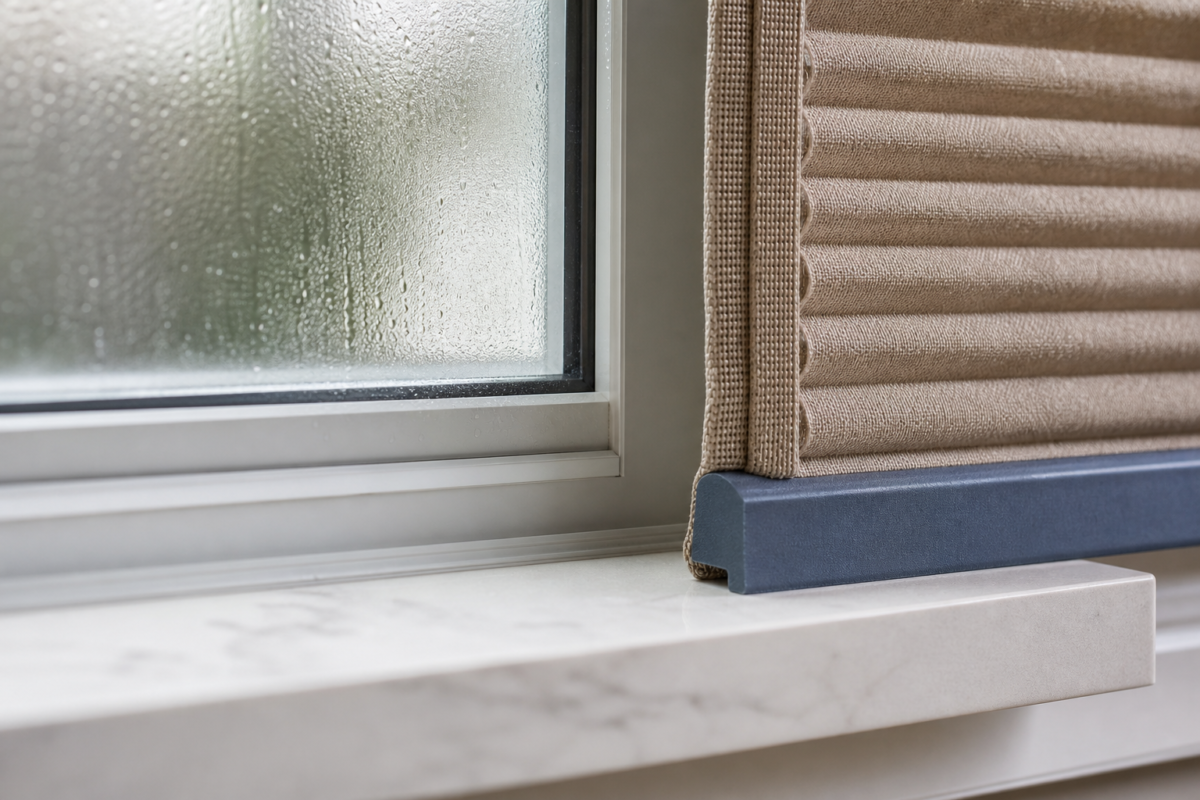
If you prefer an adjustable solution, choose moisture-resistant treatments built for wet rooms: faux-wood or vinyl shutters, waterproof roller or cellular shades, and PVC or aluminum blinds. Real wood and fabric warp, stain, and grow mildew in bathroom humidity, so material choice matters more here than in any other room.
Top-down, bottom-up cellular shades are especially clever: you lower the top to let light flood in while the bottom stays raised to block the sightline, giving you both daylight and privacy at once. Whatever you choose, strong ventilation from a well-sized bathroom exhaust fan keeps condensation off the window and extends the life of any treatment.
Windows inside the shower
A window inside a shower needs both privacy and serious waterproofing, so the frame and surrounding wall must be sealed exactly like the rest of the wet wall. Obscure glass or film handles the privacy, but the real risk is water intrusion around a window that gets soaked daily.
Use a vinyl, fiberglass, or composite window frame rather than wood, flash and seal it into the waterproofing membrane, and consider tiling the sill with a slight slope so water drains back into the shower. These are the same waterproofing principles that govern a tiled or prefab shower build, and skipping them is how a beautiful shower window becomes hidden rot. For privacy, frosted film or an obscure pane works well, and a waterproof shade mounted outside the splash zone adds nighttime coverage. A window can be a wonderful source of light in a walk-in shower as long as it is detailed correctly.
Smart window placement during a remodel
If you are remodeling and moving or adding a window, placement itself can solve privacy before any glass or treatment. High transom and clerestory windows sit above eye level, pulling in daylight and sky views while making sightlines into the room impossible.
Positioning a window high on the wall, above a vanity backsplash or near the ceiling, is one of the cleanest solutions because it needs no obscuring at all. Awning windows, which hinge at the top and open outward, add ventilation while their angle limits views in, and they can be left cracked during a shower even in light rain because the sash sheds water away from the opening. A row of small square windows set high, or a single long horizontal window above the tub, delivers a bright, gallery-like feel without ever exposing the room. Factor these choices into the early planning stages, since relocating a window is far cheaper when walls are already open, a point we stress throughout our bathroom remodel cost guidance.
What bathroom window privacy costs in 2026
Costs span from under $40 for a DIY film roll to well over $1,000 for glass block or smart glass. The right budget depends on whether you want a temporary, adjustable, or permanent solution and how large the window is.
| Solution | Typical cost | Permanence | Best for |
|---|---|---|---|
| DIY privacy film | $15 – $40 per window | Temporary to semi | Renters, quick fixes |
| Professional film | $5 – $25 per sq ft | Semi-permanent | Clean, bubble-free result |
| Obscure / frosted pane | $150 – $600 | Permanent | Forever homes |
| Moisture-proof shade/shutter | $50 – $400 | Adjustable | Light control |
| Glass block window | $400 – $1,000+ | Permanent | Maximum privacy |
| Switchable smart glass | $50 – $150 per sq ft | Permanent | Luxury, on-demand |
For most homeowners, frosted film or an obscure pane hits the sweet spot of privacy, light, and price. Save glass block and smart glass for cases where their specific strengths, structure or on-demand clarity, justify the spend.
Contractor’s take
Before anyone spends on glass, I tell them to walk outside at night with the bathroom light on and look at the window from the street and the neighbor’s yard. That five-minute test tells you exactly how much obscurity you actually need, and nine times out of ten a mid-grade frosted film solves it for forty bucks. The people who regret their choice are the ones who bought maximum glass block for a second-story window nobody can see into, or who put a clear film on a ground-floor window and discovered at night they were on display. Test first, then buy.
How to choose the right option
Work through these questions to narrow the field quickly, matching the solution to your home, budget, and daylight goals.
- Renting or on a tight budget? Start with static-cling or frosted privacy film.
- Want permanent privacy with full daylight? Choose acid-etched, fluted, or obscure glass.
- Need maximum privacy and security? Glass block is the most private and most durable.
- Want to keep an open view sometimes? Switchable smart glass or top-down/bottom-up shades.
- Is the window in the shower? Prioritize a waterproof frame and membrane sealing over everything.
- Remodeling anyway? Consider relocating the window high on the wall to solve privacy by placement.
- Humid bathroom? Reject real wood and fabric; pick faux-wood, vinyl, or waterproof shades.
Keep ventilation in mind throughout, because persistent condensation on a bathroom window feeds the mold the U.S. Environmental Protection Agency warns about, and no privacy treatment looks good framed by black mildew.
Frequently asked questions
Your next move
You know the number. What are you deciding next?
Walk-in tub cost in 2026: $5,000 to $20,000 installed. Compare tub types, features, and the real Medicare coverage…
Continue →Bathroom remodel financing explained: compare home equity loans, HELOCs, cash-out refi, personal loans, and 0% cards with 2026…
Continue →Steam shower cost runs $3,000 to $10,000 installed in 2026. See prices by generator size, enclosure, and prefab…
Continue →Frequently asked
What is the cheapest way to make a bathroom window private?
Privacy window film is the cheapest option, with DIY rolls for a single window costing $15 to $40. Static-cling frosted film applies with water, peels off cleanly, and obscures the view while still letting in daylight, making it ideal for renters.
Does privacy film work at night?
Most privacy film works best during the day and offers less privacy at night when interior lights are on and it is dark outside. For reliable nighttime privacy, pair film with a shade, or choose a denser obscure glass or glass block.
Is frosted glass or glass block better for a bathroom?
Frosted glass keeps a normal window that opens for ventilation and passes more usable light, while glass block offers maximum privacy and security but no view or airflow. Choose frosted for flexibility and glass block for a ground-floor window needing the strongest privacy.
Can I put a window in a shower?
Yes, but the frame must be a waterproof material like vinyl or composite, sealed into the shower’s waterproofing membrane, with a sloped sill that drains back into the shower. Obscure glass or film handles privacy, and proper detailing prevents hidden water damage.
How much does switchable smart glass cost?
Switchable smart glass runs about $50 to $150 per square foot installed, plus electrical wiring. It frosts instantly at the flip of a switch, giving you a clear view when private and opaque glass when not, which makes it a luxury splurge rather than a budget fix.
