Bathroom Exhaust Fan Guide: CFM Sizing and 2026 Costs
How to size, choose, and install a bathroom exhaust fan that clears humidity quietly and protects your remodel for years.

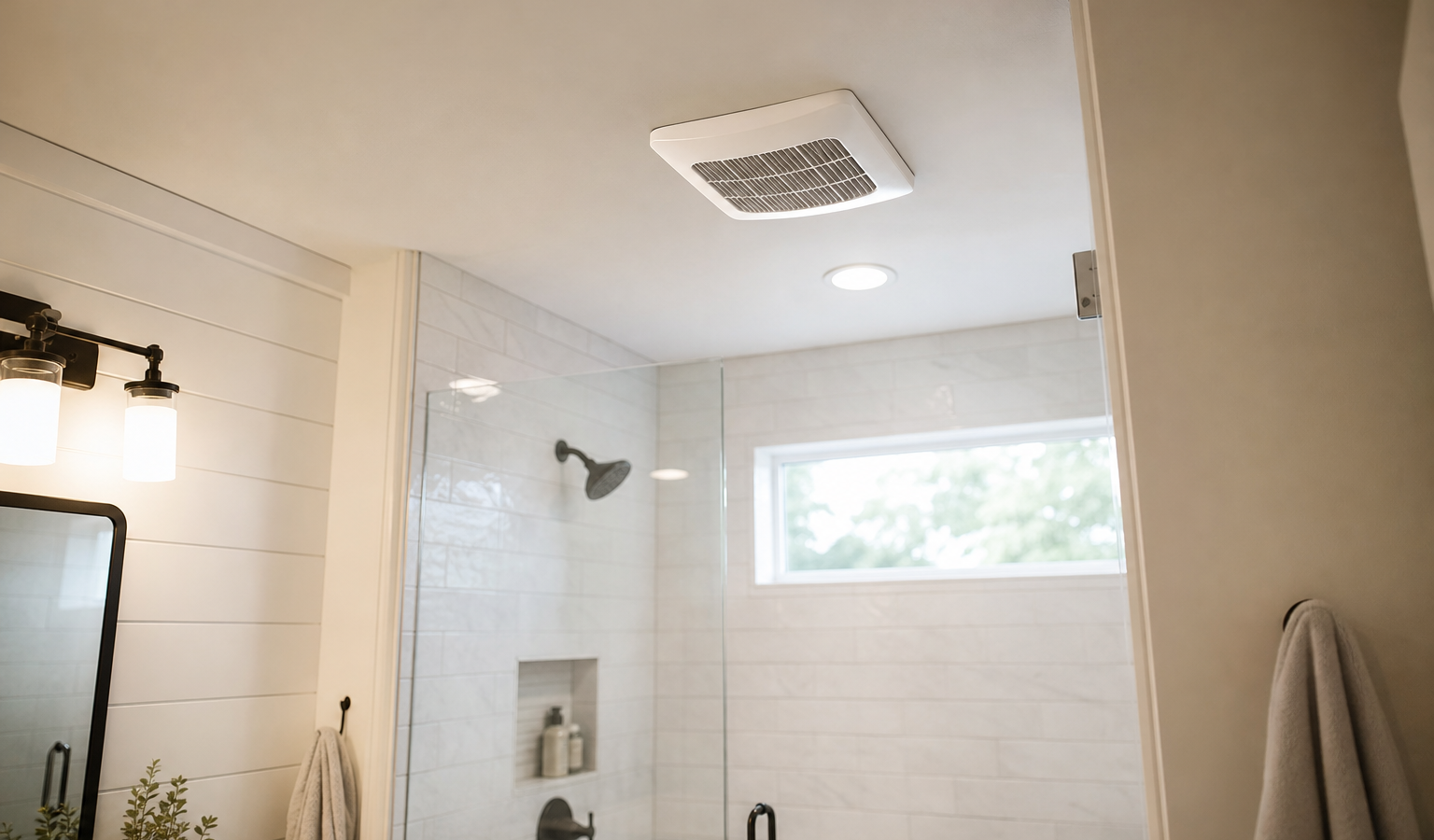
A good bathroom exhaust fan is the quiet workhorse that protects your entire renovation, pulling humid air out before it can grow mold, warp trim, and peel paint. Yet it is the fixture most homeowners size by guessing and buy by price alone. This guide fixes that: you will learn how to calculate the right CFM for your room, how quiet a fan should be, which features earn their cost, where the fan must vent, and what installation runs in 2026. Get these right and the fan disappears into the ceiling while doing its job for 15 years.
Ventilation is not optional. Moisture is the number-one enemy of a bathroom, and an undersized or missing fan quietly undoes expensive tile and paint. Whether you are replacing a noisy builder-grade unit or planning a full remodel, the numbers below tell you exactly what to buy.
Key takeaways
- Size the fan at a minimum of 1 CFM per square foot of floor area for bathrooms up to 100 sq ft; bump it up for high ceilings and extra fixtures.
- Choose a quiet fan rated 1.5 sones or less – anything higher and you will avoid using it.
- Expect to pay $150 to $550 installed for a standard fan, and $500 to $1,000+ when new ductwork or a heater is involved.
- Always vent to the outside – never into an attic, soffit, or crawlspace, where moisture causes mold and rot.
- A humidity-sensing model and an ENERGY STAR rating pay for themselves in protection and lower energy use.
How much does a bathroom exhaust fan cost in 2026?
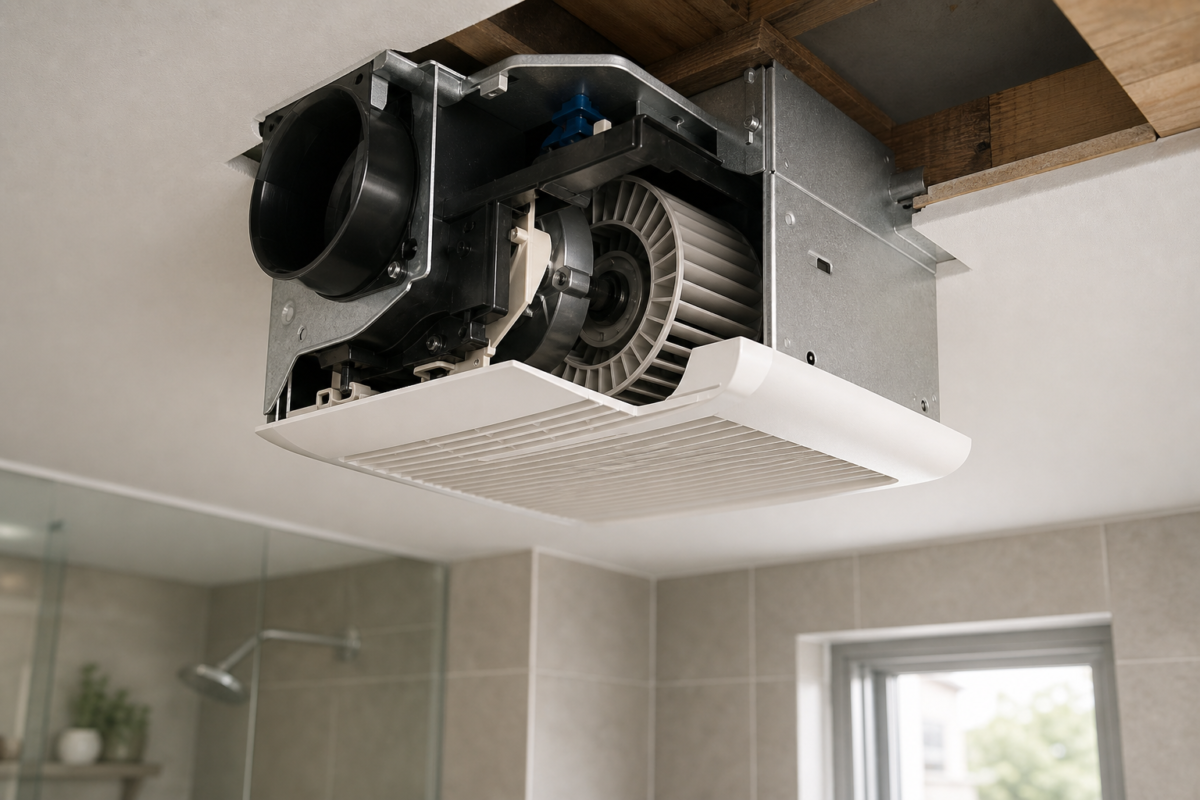
A bathroom exhaust fan costs $150 to $550 installed in 2026 for a standard replacement, with the fan itself running $30 to $250 and labor adding $100 to $300. Projects that need new ducting, a new electrical circuit, or a fan-light-heater combo climb to $500 to $1,000 or more.
The biggest cost variable is whether wiring and a duct path already exist. Swapping a fan in the same spot is quick; cutting a new roof or wall penetration and running duct is where labor adds up. If ventilation is part of a larger project, fold it into your bathroom remodel budget and small bathroom plan so the electrician and any drywall work happen in one visit.
| Scenario | Fan cost | Installed total | Notes |
|---|---|---|---|
| Same-location replacement | $30 – $150 | $150 – $350 | Reuse existing duct and wiring |
| New fan, existing duct | $50 – $200 | $250 – $500 | Add wiring or relocate switch |
| New duct run to exterior | $80 – $250 | $450 – $900 | Cut roof/wall, run insulated duct |
| Fan-light-heater combo | $120 – $400 | $500 – $1,200 | Needs dedicated circuit for heater |
What drives exhaust fan cost
What size bathroom exhaust fan do I need?
For bathrooms up to 100 square feet, size the fan at a minimum of 1 CFM per square foot of floor area – so a 60-square-foot bathroom needs at least a 60 CFM fan, and most pros round up to the next standard size (like 70 or 80 CFM). For larger rooms and those with extra fixtures, switch to the fixture method below.
The square-foot method (small and standard bathrooms)
Multiply length by width to get floor area, then match CFM at 1-to-1. An 8-by-9-foot bathroom (72 sq ft) needs about 72 CFM, so an 80 CFM fan is the right buy. If your ceilings are higher than the standard 8 feet, use the volume method instead: multiply length by width by height, then by 0.13, to get the minimum CFM. Rounding up a little is smart – a slightly oversized fan clears steam faster and runs less to do it.
The fixture method (large bathrooms over 100 sq ft)
For bathrooms larger than 100 square feet, size by fixture rather than floor area. Allow 50 CFM for each toilet, shower, and standard bathtub, and 100 CFM for a jetted tub, then add them together. A large primary bath with a toilet, a shower, and a soaking tub therefore needs roughly 150 CFM. In big or compartmentalized bathrooms, two smaller fans – one over the shower and one near the toilet – often outperform a single large unit.
| Bathroom size | Recommended CFM | Typical fan size |
|---|---|---|
| Up to 50 sq ft | 50 CFM minimum | 50 – 70 CFM |
| 50 – 80 sq ft | 1 CFM per sq ft | 70 – 90 CFM |
| 80 – 100 sq ft | 1 CFM per sq ft | 100 – 110 CFM |
| Over 100 sq ft | 50 CFM per fixture | Add per fixture or use two fans |
How quiet should a bathroom exhaust fan be?
Buy a fan rated 1.5 sones or lower for a bathroom – that is roughly the sound of a quiet refrigerator, quiet enough that you will actually run it long enough to do the job. Builder-grade fans at 3 to 4 sones are loud enough that people switch them off early, which defeats the purpose.
Sones measure loudness on a linear scale, so a 4-sone fan is genuinely twice as loud as a 2-sone one. Premium fans hit 0.3 to 1.0 sones by using larger, slower motors and better housings. If a quiet bathroom matters to you – and it should if it adjoins a bedroom – treat the sone rating as seriously as the CFM.
What exhaust fan features are worth the money?
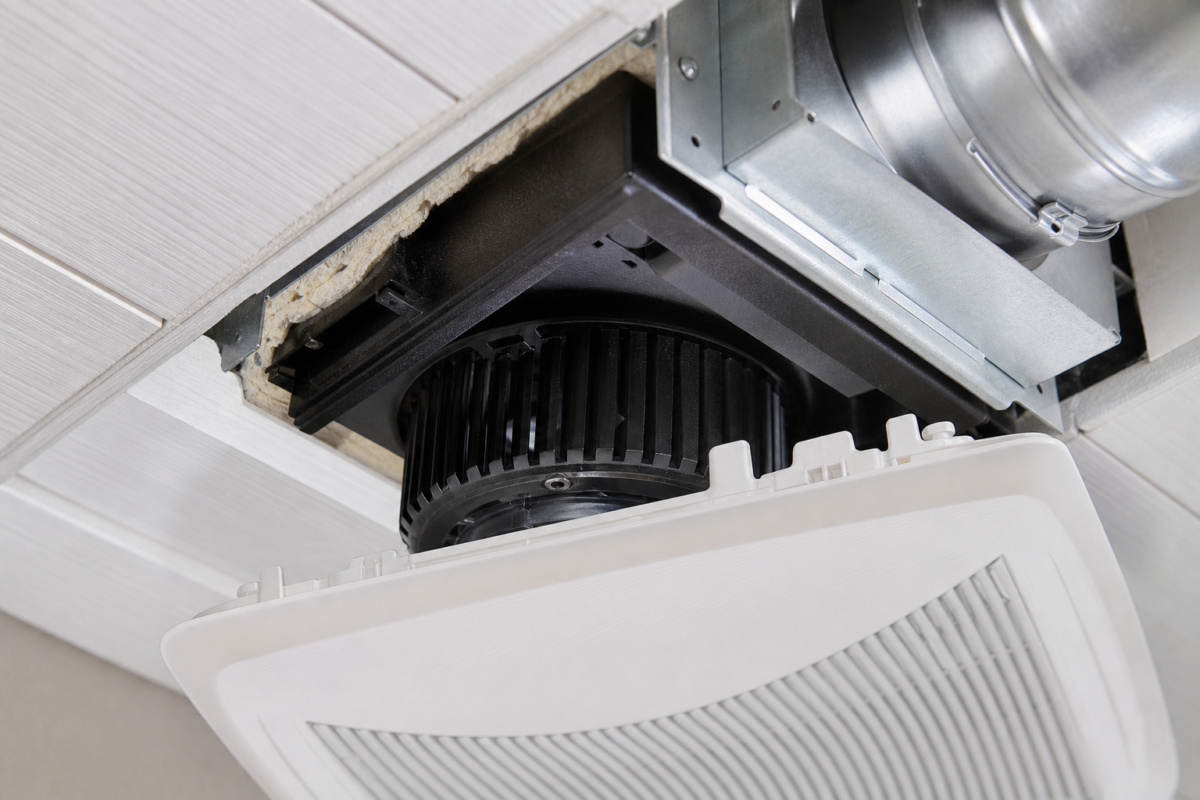
A humidity sensor is the single most valuable feature, followed by an ENERGY STAR rating and, for cold climates, an integrated heater. These turn a basic fan into a set-and-forget appliance that protects the room without you thinking about it.
Humidity and motion sensors
A humidity-sensing fan turns itself on when moisture spikes during a shower and off once the air dries, which means it works even when guests forget the switch. Motion-sensing models add convenience for the toilet. Both remove the human error that lets moisture linger and mold take hold.
Lights, heaters, and Bluetooth
Fan-light combos are handy in small bathrooms where they replace the ceiling fixture, but check the light output before relying on it as your only source – plan your overall bathroom lighting so the room is not dim. Built-in heaters add real comfort in cold climates but usually require a dedicated 20-amp circuit, which raises install cost. Bluetooth speaker models exist and are fun, though they rarely justify the premium.
Where should a bathroom exhaust fan vent?
An exhaust fan must vent to the outdoors through the roof or an exterior wall – never into an attic, soffit, or crawlspace. Dumping humid air into an enclosed space is one of the most common and damaging installation mistakes, because that moisture condenses and breeds mold and wood rot exactly where you cannot see it.
Use smooth-wall rigid or semi-rigid metal duct where possible – it moves air better and collects less lint than flexible plastic – and keep the run as short and straight as you can. Insulate any duct that passes through an unconditioned attic so warm, moist air does not condense inside it. A proper roof or wall cap with a backdraft damper keeps cold air, pests, and rain out. Good ducting protects the same flooring and finishes your fan is meant to preserve.
How long should you run a bathroom exhaust fan?
Run the fan during your shower or bath and for 15 to 20 minutes afterward to fully clear humidity – a plug-in or built-in timer switch makes this automatic. Shutting the fan off the moment you step out leaves most of the moisture in the room, where it settles into drywall, grout, and paint.
A humidity-sensing fan handles this for you by running until the air is dry. If you have a manual switch, a countdown timer (set for 20 to 30 minutes) is a cheap upgrade that guarantees the room dries out. Consistent ventilation is what keeps tile and grout looking new and prevents the musty smell that signals hidden moisture.
Can you install a bathroom exhaust fan yourself?
Replacing a fan in the same location with existing wiring and ducting is a manageable half-day DIY job; running new duct to the exterior or adding a circuit for a heater is work for a licensed electrician and is worth hiring out. The electrical connection and the roof or wall penetration are where mistakes get expensive or dangerous.
A same-spot swap involves shutting off the breaker, removing the old unit, mounting the new housing to a joist, connecting the existing duct and wiring, and testing. New installs require cutting the ceiling, framing support, running insulated duct to a proper exterior cap, and often a new switch. If you are already opening up the room for a remodel, that is the ideal time to upgrade ventilation while walls and ceilings are accessible.
Contractor’s take
The mistake I see most is a builder connecting the fan to duct that just ends in the attic. On every job I check the termination first – if it is not capped to the outside, nothing else matters. I also seal the fan housing to the drywall with caulk and use a damper at the exterior cap. That combination stops attic air leaks and backdrafts, which quietly raise heating bills and let cold air whistle in every winter.
Are ENERGY STAR exhaust fans worth it?
Yes – ENERGY STAR-certified bathroom fans use about 60 percent less energy than standard models and are typically quieter and better built, so they pay back through lower bills and longer life. The efficiency comes from higher-performing motors that move the same air with less power.
Because bathroom fans also pull conditioned air out of the house, an efficient, properly sized fan that runs only as long as needed (ideally on a humidity sensor) minimizes wasted heating and cooling. The EPA offers guidance on indoor air quality, and its ENERGY STAR program lists certified fans and, in many areas, utility rebates. Efficient ventilation is a small line item that protects a big investment.
Common bathroom exhaust fan mistakes to avoid
The costliest mistakes are undersizing the fan, buying a loud one you will not use, and venting into the attic. Each quietly allows moisture to win. Rounding down on CFM, ignoring the sone rating, and skipping insulated duct in cold climates round out the list.
- Size at 1 CFM per sq ft (or by fixture over 100 sq ft)
- Choose 1.5 sones or lower for a quiet fan
- Vent to the outside with a capped, dampered termination
- Use smooth metal duct and keep the run short
- Insulate duct through unconditioned attic space
- Add a humidity sensor or timer so it runs long enough
- Pick an ENERGY STAR model to cut energy use
Your next move
You know the number. What are you deciding next?
Walk-in tub cost in 2026: $5,000 to $20,000 installed. Compare tub types, features, and the real Medicare coverage…
Continue →Bathroom remodel financing explained: compare home equity loans, HELOCs, cash-out refi, personal loans, and 0% cards with 2026…
Continue →Steam shower cost runs $3,000 to $10,000 installed in 2026. See prices by generator size, enclosure, and prefab…
Continue →Frequently asked
What size exhaust fan for a bathroom?
For rooms up to 100 square feet, use at least 1 CFM per square foot and round up to the next standard fan size. For larger rooms, allow 50 CFM per toilet, shower, and tub (100 CFM for a jetted tub) and add them together.
Can a bathroom exhaust fan vent into the attic?
No. Venting into an attic, soffit, or crawlspace traps humid air where it condenses and causes mold and rot. Fans must vent through the roof or an exterior wall with a capped, dampered termination.
How many sones is a quiet bathroom fan?
Aim for 1.5 sones or lower. Premium fans reach 0.3 to 1.0 sones. Builder-grade fans at 3 to 4 sones are loud enough that people turn them off too early to clear the moisture.
How long should I run the bathroom fan after a shower?
Run it for 15 to 20 minutes after you finish to fully clear humidity. A timer switch or a humidity-sensing fan automates this so the room always dries out.
Do I need an electrician to replace a bathroom fan?
A like-for-like swap with existing wiring is a DIY-friendly job. Hire a licensed electrician when adding a new circuit (common for heater models), running new duct, or when the existing wiring is not up to code.

CFM and sone guidance follow HVI/industry standards; costs reflect 2026 US fan and installation ranges.