Best Bathroom Flooring Options for 2026: Costs, Pros, and Cons
Every practical bathroom flooring material ranked by cost, waterproofing, and safety, with honest pros and cons for US remodels.

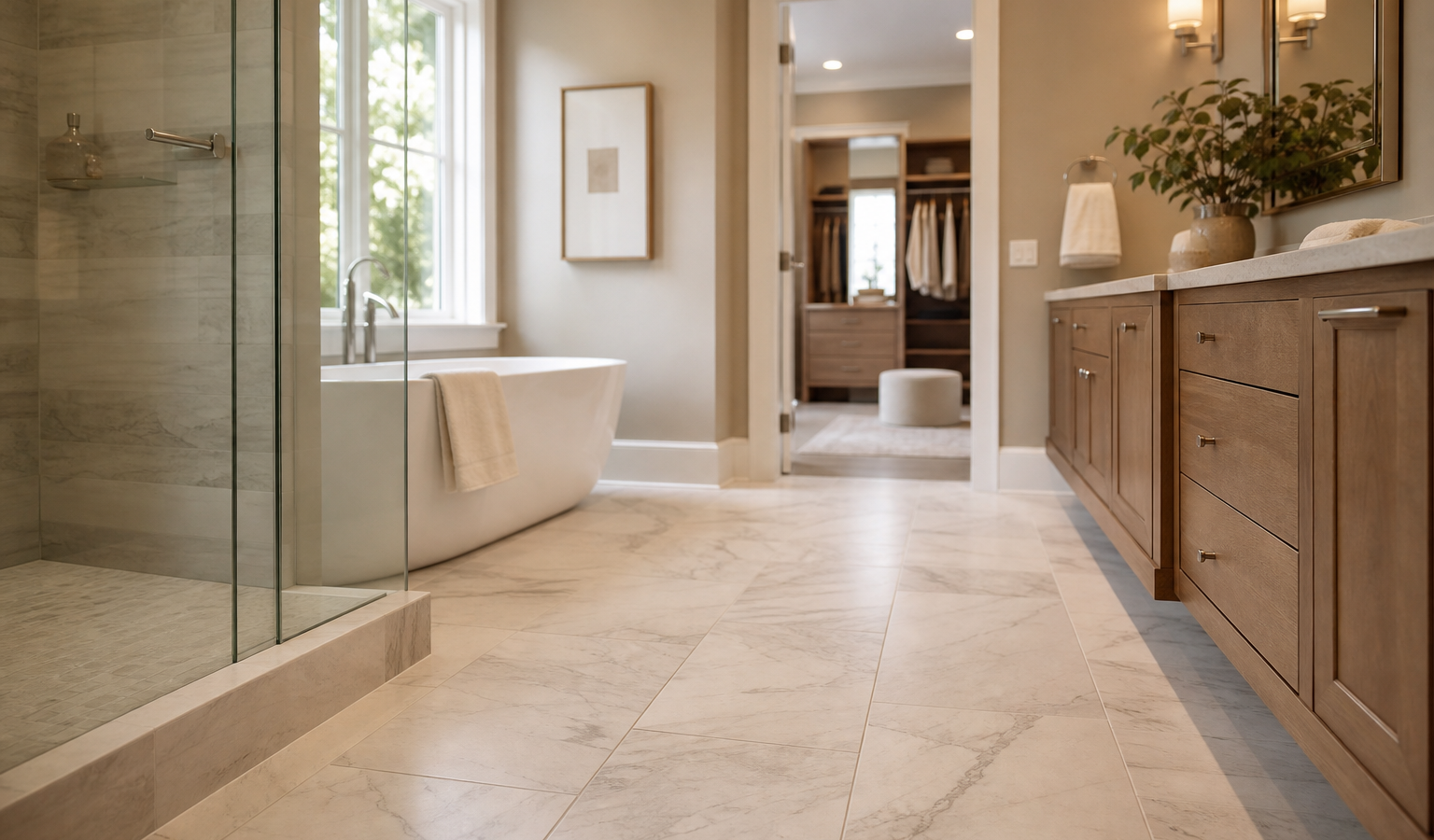
Choosing the right bathroom flooring options is one of the highest-stakes decisions in any bath remodel, because the floor has to shrug off standing water, wet feet, dropped bottles, and daily temperature swings for 15 to 25 years. Get it right and the room feels warm, safe, and effortless to clean. Get it wrong and you are looking at curling planks, mildewed grout, or a slick surface that turns a morning shower into a fall risk. This 2026 guide breaks down every practical flooring material for American bathrooms, with real installed costs, honest pros and cons, slip-resistance guidance, and the subfloor details that separate a floor that lasts from one that fails in three years.
We cover porcelain and ceramic tile, luxury vinyl plank (LVP) and rigid-core SPC, sheet vinyl, natural stone, engineered and waterproof wood-look products, laminate, epoxy, and polished concrete. For each, you will see what it costs installed per square foot in 2026, how waterproof it really is, how it feels underfoot, and who it suits best. If you are still setting a total budget for the space, pair this with our bathroom remodel cost guide before you lock in a material.
Key takeaways
- Porcelain tile and rigid-core vinyl (SPC) are the two most reliable bathroom floors in 2026, balancing waterproofing, durability, and cost.
- Expect $4 to $16 per square foot installed for luxury vinyl and $12 to $50 for tile and stone; sheet vinyl is the budget pick at $2 to $7.
- Slip resistance matters more than looks in a wet room: target a wet DCOF rating of 0.42 or higher (ANSI A137.1).
- Solid hardwood and standard laminate belong nowhere near a full bathroom; use waterproof SPC or tile instead.
- Heated floors add $8 to $15 per square foot but transform comfort on tile and stone and pay back in daily livability.
How to Choose Bathroom Flooring Options
The best bathroom flooring options are 100 percent waterproof, slip-resistant when wet, comfortable underfoot, and easy to clean, with tile and rigid-core vinyl leading the pack for most homeowners. Beyond that snapshot, five factors decide the winner for your specific room: how much moisture the floor will see, slip safety, comfort and warmth, your budget, and the style you are chasing. A powder room with no shower can tolerate materials a primary wet room never should.
Waterproofing is non-negotiable in any bathroom with a tub or shower. Water-resistant is not the same as waterproof: engineered wood resists occasional splashes but will swell if water sits in a seam, while porcelain and vinyl simply do not care. Slip resistance is the factor most buyers ignore until someone slips. Wet traction is measured as a dynamic coefficient of friction (DCOF) score; the Tile Council of North America publishes the ANSI A137.1 standard framework, and you should aim for 0.42 or higher on any floor that gets wet.
Budget deserves an honest look at installed cost, not just the sticker price of the material. Labor, subfloor prep, underlayment, waterproof membrane, and demolition often double the material number. For a room-by-room breakdown of those line items, our flooring cost guide explains how installation pricing is built, and the same logic applies to bathrooms.
Porcelain and Ceramic Tile
Porcelain tile is the gold standard for bathroom floors: it is dense, nearly waterproof, and can last 50 years or more with minimal upkeep. Ceramic is its slightly softer, cheaper cousin, ideal for budget-conscious powder rooms and secondary baths. Both come in endless looks, including convincing wood-look and marble-look planks that give you stone or timber style without the maintenance.
Porcelain tile cost and performance
Expect $12 to $50 per square foot installed for porcelain in 2026, with most mid-range projects landing around $15 to $25. Porcelain absorbs less than 0.5 percent water, so it handles standing water, steam, and daily mopping without sealing. The trade-offs are that it is cold and hard underfoot, which heated floors solve nicely, and that professional installation is a must for a lippage-free, watertight result. For layout inspiration and pattern ideas, see our bathroom tile ideas feature.
Ceramic tile cost and performance
Ceramic runs $12 to $40 per square foot installed, typically $12 to $18 for standard field tile. It is more porous than porcelain, so glazed ceramic is the smart choice for floors, and unglazed versions need periodic sealing. Ceramic chips more easily under a dropped cast-iron pan lid or heavy tool, but for a low-traffic guest bath it is a stylish, affordable performer. Choose a small-format tile or a textured surface in wet zones so the grout lines add traction.
Luxury Vinyl Plank and Rigid-Core SPC
Luxury vinyl plank is the fastest-growing bathroom floor in America because it is 100 percent waterproof, warm and quiet underfoot, and dramatically cheaper than tile at $4 to $16 per square foot installed. Rigid-core SPC (stone-plastic composite) is the version to buy for bathrooms: its dense mineral core will not swell, dent, or telegraph subfloor imperfections the way flexible glue-down vinyl can.
Why SPC beats standard LVP in wet rooms
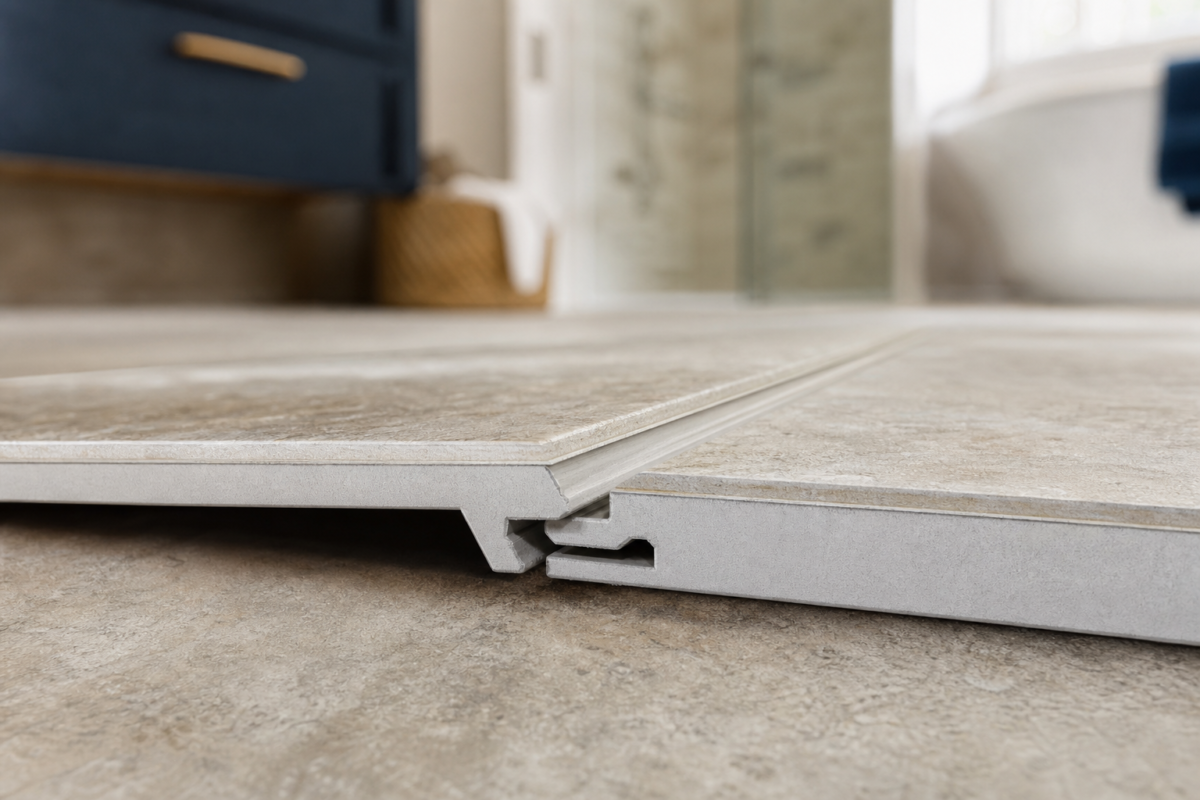
SPC planks click together over a nearly any flat subfloor, tolerate temperature swings from a steamy shower, and resist the dents that plague WPC (wood-plastic) and thin peel-and-stick vinyl. Look for a wear layer of at least 20 mil for a primary bath and an attached cork or foam pad for a softer step. Most quality SPC carries a lifetime residential and even a limited commercial warranty, which tells you how confident manufacturers are in its water performance.
Where vinyl falls short
Vinyl is a petroleum product, so it will never match the resale cachet of real stone or the exact cold-clay authenticity of porcelain, and cheaper planks can look plasticky under bright vanity lighting. It can also fade under years of direct, unshaded sunlight. That said, for the money, waterproofing, and comfort, SPC is the single best value in bathroom flooring for 2026 and the material we recommend most for busy family baths.
Sheet Vinyl Flooring
Sheet vinyl is the most affordable fully waterproof bathroom floor at $2 to $7 per square foot installed, and its seamless, roll-out installation leaves almost no joints for water to sneak through. That makes it a genuinely smart pick for rentals, laundry-adjacent baths, and tight budgets, even if it lacks the premium feel of tile or plank.
Modern sheet vinyl prints mimic wood, stone, and tile surprisingly well and feels soft and warm underfoot. The downsides are a shorter lifespan of roughly 10 to 20 years, difficulty repairing a gouge or tear (you often replace the whole sheet), and a lower resale impact. For a floor that will simply work and stay dry without a big outlay, sheet vinyl remains a rational 2026 choice, especially in secondary bathrooms.
Natural Stone Flooring
Natural stone delivers unmatched, high-end character but demands the most maintenance of any bathroom floor, running $10 to $30 per square foot installed for common options and far more for premium marble. Marble, travertine, slate, and limestone each bring a distinct look, and each is porous enough to require sealing on a regular schedule.
Marble, travertine, and slate compared
Marble is the luxury statement but etches from acidic products and shampoo spills and needs pH-neutral cleaners plus resealing every 6 to 12 months. Travertine offers a warm, honed matte finish with good natural traction but its natural pits must be filled and sealed. Slate is the most slip-resistant and durable stone for bathrooms thanks to its cleft texture, making it a favorite for curbless showers and wet rooms. Whatever you choose, honed or textured finishes beat polished stone for wet-floor safety.
Stone rewards owners who enjoy maintenance and want a floor that reads as permanent and premium. If that upkeep sounds like a chore, a porcelain look-alike gives you 90 percent of the aesthetic with none of the sealing schedule.
Engineered Wood and Waterproof Wood-Look Floors
Engineered wood can work in a low-moisture powder room but should be avoided in full wet baths, because even a plywood core will swell when water sits in a seam. If you want authentic timber warmth, expect $7 to $20 per square foot installed and commit to wiping up water immediately, using bath mats, and running an exhaust fan.
Teak is the exception among woods: its natural oils make it the most water-resistant hardwood, at $11 to $20 per square foot, and it is prized for spa-style bathrooms and shower duckboards. For most homeowners, though, the smarter move is a waterproof wood-look SPC or a wood-look porcelain plank, which delivers the grain and tone of timber with true waterproofing. If you love the wood aesthetic elsewhere in the home, our best kitchen flooring guide compares the durable wood-look products worth considering.
Laminate, Epoxy, and Concrete Options
Standard laminate has no place in a bathroom, but a handful of specialty floors, waterproof laminate, epoxy, and polished concrete, fill specific niches well. Each solves a particular problem the mainstream materials do not.
Waterproof laminate
A new generation of waterproof laminate uses a sealed HDF core and tight locking edges, and runs roughly $3 to $8 per square foot installed. It resists surface water for hours, but a standing puddle in a failed seam still risks swelling, so treat it as splash-tolerant rather than truly waterproof and reserve it for guest baths and half baths.
Epoxy and polished concrete
Epoxy flooring is fully waterproof, seamless, and stain resistant at $4 to $10 per square foot, popular for modern and industrial baths, though it needs anti-slip additives to be safe when wet and professional installation. Polished or sealed concrete suits contemporary slab-on-grade homes and pairs beautifully with radiant heat, but it is hard, cold without warming, and must be sealed to stay stain-free. Both are design-forward choices rather than default picks.
Bathroom Flooring Cost Comparison for 2026
For a typical 40-square-foot bathroom, material choice can swing your floor budget from about $200 to more than $2,000 installed. The table below compares 2026 installed costs, waterproof rating, and lifespan so you can match performance to budget at a glance.
| Flooring type | Installed cost / sq ft | Waterproof | Typical lifespan | Best for |
|---|---|---|---|---|
| Sheet vinyl | $2 – $7 | Yes | 10 – 20 yrs | Budgets, rentals, laundry baths |
| Luxury vinyl / SPC | $4 – $16 | Yes (SPC) | 20 – 30 yrs | Family and primary baths |
| Waterproof laminate | $3 – $8 | Splash only | 15 – 25 yrs | Powder and guest baths |
| Epoxy | $4 – $10 | Yes | 10 – 20 yrs | Modern, industrial baths |
| Ceramic tile | $12 – $40 | Yes (glazed) | 25 – 50 yrs | Secondary and guest baths |
| Porcelain tile | $15 – $50 | Yes | 50+ yrs | Primary wet rooms, resale |
| Engineered wood | $7 – $20 | No | 20 – 30 yrs | Powder rooms only |
| Natural stone | $10 – $30+ | With sealing | 50+ yrs | Luxury, high-end resale |
These figures include labor, underlayment, and standard prep but not extensive subfloor repair, a waterproof membrane, or heated-floor systems, so carry a 10 to 15 percent contingency for surprises hidden under an old floor.
Installation, Slip Resistance, and Safety
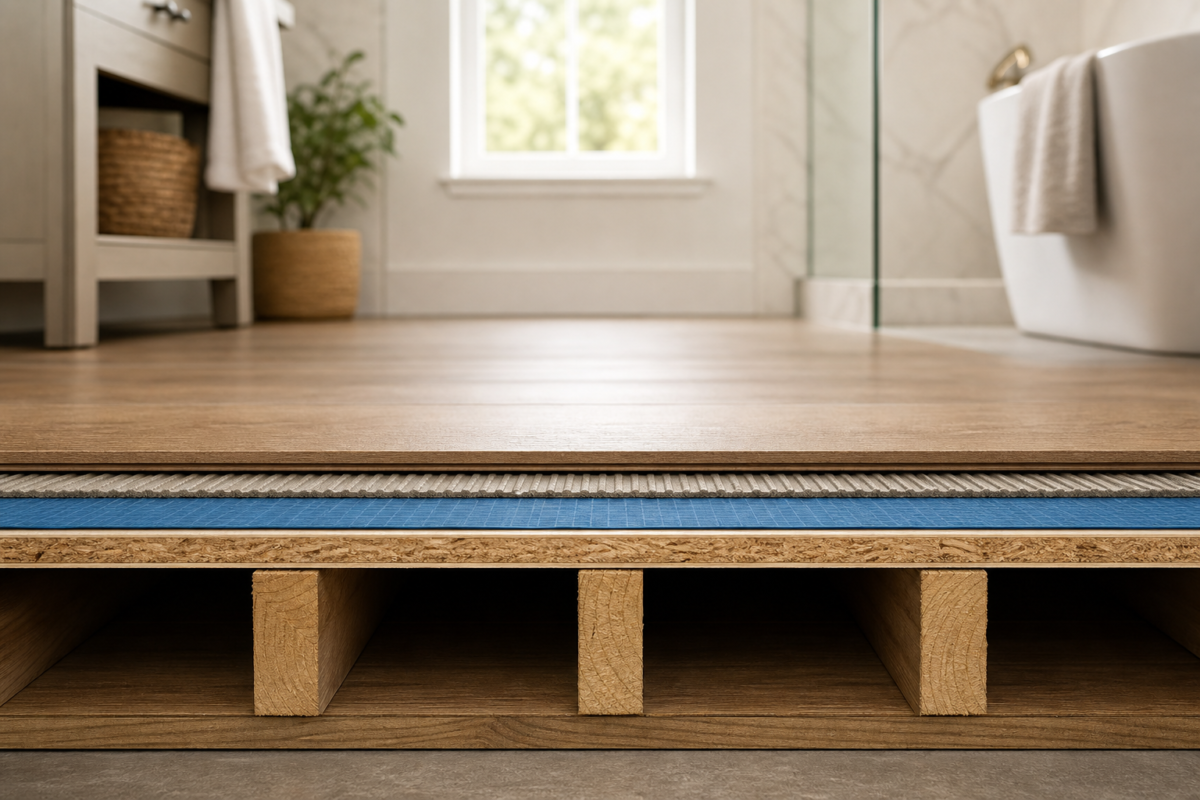
A bathroom floor is only as good as the subfloor and waterproofing beneath it. Tile and stone need a rigid, deflection-free substrate, usually cement backer board or an uncoupling membrane over plywood, to prevent cracked grout down the road, while vinyl and laminate need a clean, flat, dry subfloor within manufacturer tolerances. Heated floors add roughly $8 to $15 per square foot and pair best with tile, stone, or heat-rated SPC. Because the floor ties into the shower and drain, coordinate it with your shower installation so waterproofing and thresholds meet cleanly.
Slip resistance and ventilation
The safest bathroom floors combine a textured or matte surface with smaller tiles and more grout lines for traction, targeting a wet DCOF of 0.42 or higher. Falls send hundreds of thousands of Americans to the emergency room each year, so traction is a feature, not an afterthought.
- Choose a matte, honed, or textured finish over glossy polished surfaces in any wet zone.
- Favor smaller-format tile or mosaic in and around the shower so grout lines add grip.
- Confirm a wet DCOF rating of 0.42 or higher for floor tile (ANSI A137.1).
- Add a bath mat with a non-slip backing and consider a linear drain for better slope control.
- Run an exhaust fan sized to the room to cut lingering moisture, condensation, and mold risk.
Ventilation protects the floor too: a properly sized exhaust fan pulls humidity out fast, guarding grout, seams, and wood elements from mold. The EPA offers guidance on controlling bathroom moisture and mold, and a good fan plus a waterproof floor keeps a bathroom healthy for decades.
Contractor’s take
After 20 years of bath remodels, my default recommendation is porcelain tile for a forever primary bath and rigid-core SPC for everything else, because both stay bone-dry and neither calls me back in three years. The mistake I see most is homeowners spending on a beautiful floor and skipping the waterproof membrane and a properly sized exhaust fan underneath it. Spend the extra $300 on prep and ventilation; it is the cheapest insurance in the whole project.
Bathroom Flooring FAQ
Your next move
You know the number. What are you deciding next?
See 2026 curbless shower cost, how it is built, drain and slope requirements, and how to avoid leaks…
Continue →Compare bathroom sink types, vessel, undermount, pedestal, and wall-hung, with pros, cons, materials, and 2026 installed costs.
Continue →Compare bathroom tile patterns by cost, waste, and where each layout works best, with real 2026 US installed…
Continue →Frequently asked
What is the best waterproof bathroom flooring option?
Porcelain tile and rigid-core SPC vinyl are the two best fully waterproof choices for 2026. Porcelain lasts longest and adds the most resale value, while SPC is warmer underfoot and costs far less to install.
How much does bathroom flooring cost to install?
Most bathroom floors cost $2 to $50 per square foot installed depending on material. A typical 40-square-foot bath runs about $200 to $600 for vinyl and $600 to $2,000 for tile or stone, including labor and standard prep.
Can I put luxury vinyl plank in a bathroom?
Yes, and it is one of the best choices. Use rigid-core SPC rather than flexible glue-down vinyl, choose a wear layer of at least 20 mil, and seal the perimeter and any transitions so water cannot get beneath the planks.
Is laminate flooring safe for bathrooms?
Standard laminate is not recommended because its fiberboard core swells when wet. Only newer waterproof laminate with a sealed core belongs in a bathroom, and even then it is best kept to low-moisture powder rooms and guest baths.
What flooring is least slippery when wet?
Textured slate, matte porcelain, small-format mosaic tile, and textured SPC provide the best wet traction. Aim for a dynamic coefficient of friction (DCOF) of 0.42 or higher and avoid polished or glossy surfaces in shower and tub zones.

Installed cost ranges reflect 2026 US national averages from flooring and remodeling cost data; verify local quotes.