Bathroom Sink Types: Vessel, Undermount, Pedestal, Wall-Hung
A clear comparison of every bathroom sink type, with installed costs, materials, and the tradeoffs that decide which one fits your space.

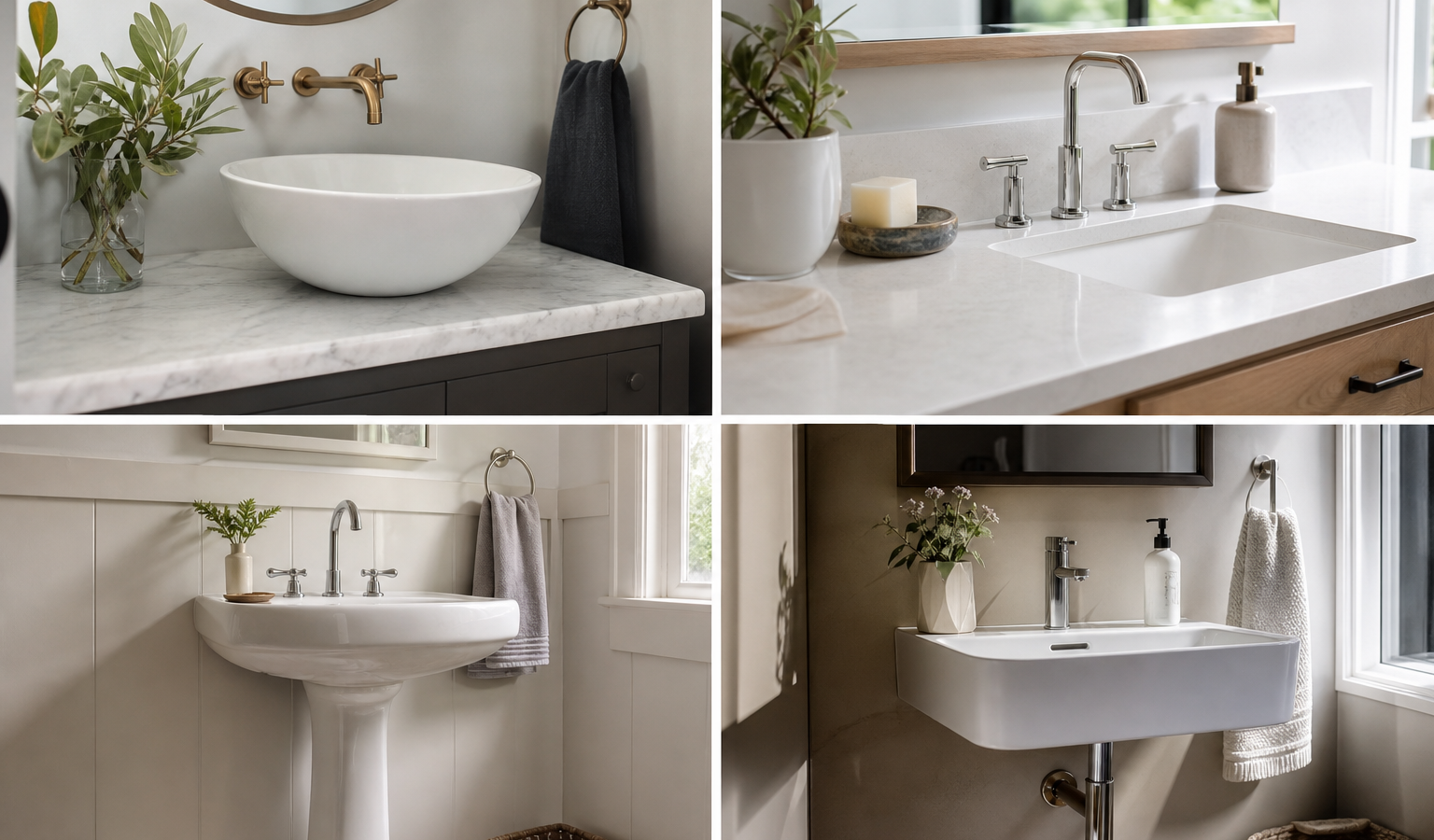
The main bathroom sink types are undermount, drop-in, vessel, pedestal, wall-hung, and console sinks, each suited to a different vanity, budget, and style. Undermount sinks give a clean, easy-to-wipe counter; vessel sinks sit on top as a design statement; pedestal and wall-hung sinks save floor space in small baths; and console sinks blend open style with a bit of storage. The right choice depends on your counter, your storage needs, and how much you want to spend, from about $80 for a basic drop-in to $2,400+ installed for a premium vessel or console.
This guide compares every common bathroom sink type side by side, with real 2026 costs, materials, and the practical tradeoffs a remodeler weighs on every job, so you can match a sink to your space and budget with confidence.
Key takeaways
- Undermount sinks are the most popular for vanities thanks to easy counter cleanup.
- Vessel sinks make the biggest statement but sit high and can splash; mind the faucet height.
- Pedestal and wall-hung sinks save space in small baths but offer no storage.
- Sinks run $40 to $1,800 each; installation adds $100 to $600, averaging about $440.
- Porcelain and ceramic are the practical default; glass, stone, and quartz cost more.
What are the main bathroom sink types?
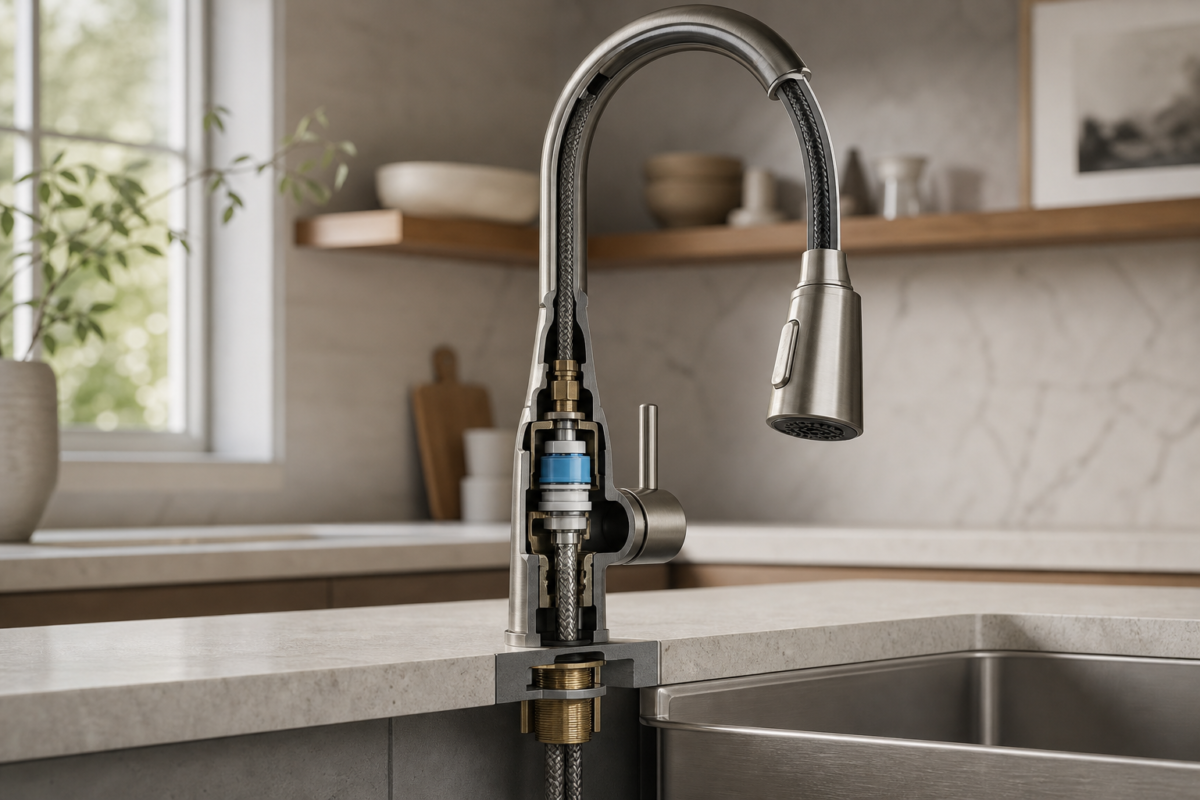
There are six core bathroom sink types: undermount, drop-in, vessel, pedestal, wall-hung, and console. The fastest way to narrow your choice is by how the sink mounts, which dictates whether you get counter space, storage, or an open, space-saving look.
| Sink type | Best for | Sink price | Storage below? |
|---|---|---|---|
| Undermount | Vanity baths, easy cleanup | $50 – $700 | Yes |
| Drop-in | Budget, easy install | $50 – $800 | Yes |
| Vessel | Statement powder rooms | $40 – $1,200 | Yes |
| Pedestal | Small baths, classic style | $150 – $1,500 | No |
| Wall-hung | Modern, tight spaces | $50 – $1,200 | No |
| Console | Open look with a shelf | $200 – $1,800 | Partial |
Your sink choice is tied to your vanity and counter, so it helps to plan them together; our bathroom vanity guide covers sizing and configurations that pair with each sink type.
Built-in bathroom sink types: undermount and drop-in
Built-in sinks install into a countertop and are the most common choice for vanity bathrooms because they combine a sink with cabinet storage below. They differ mainly in how the rim meets the counter, which affects both looks and cleanup.
Undermount sinks
An undermount sink mounts beneath the countertop so the edge disappears, letting you wipe water and debris straight into the bowl. It is the most popular vanity sink because it looks clean and is easy to keep clean, but it requires a solid, waterproof counter like quartz, granite, or solid surface; it will not work with laminate. Expect $50 to $700 for the sink plus careful installation. Pair it with the right counter using our bathroom countertops guide.
Drop-in (self-rimming) sinks
A drop-in sink sets into a cutout with its rim resting on top of the counter, making it the easiest and cheapest to install on almost any surface, including laminate. The visible rim collects a little grime where it meets the counter, which is the main tradeoff. At $50 to $800 and a simple install, it is the value pick for budget-conscious remodels.
Statement bathroom sink types: vessel sinks
A vessel sink sits on top of the counter like a bowl, making it the boldest design statement among sink types. It shows off materials like glass, stone, and hand-glazed ceramic, and it is a favorite in powder rooms where looks matter more than daily practicality.
Vessel sink pros and cons
Vessel sinks turn the sink into the room’s focal point and come in the widest range of materials, from $40 ceramic bowls to $1,200 carved stone. The downsides are height and splash: because the bowl sits on top, the usable rim is higher, which can be awkward for children, and water can splash out if the faucet is too tall or forceful. Choose a wall-mounted or short vessel faucet, and confirm the combined counter-plus-bowl height lands near a comfortable 34 to 36 inches.
Space-saving bathroom sink types: pedestal and wall-hung
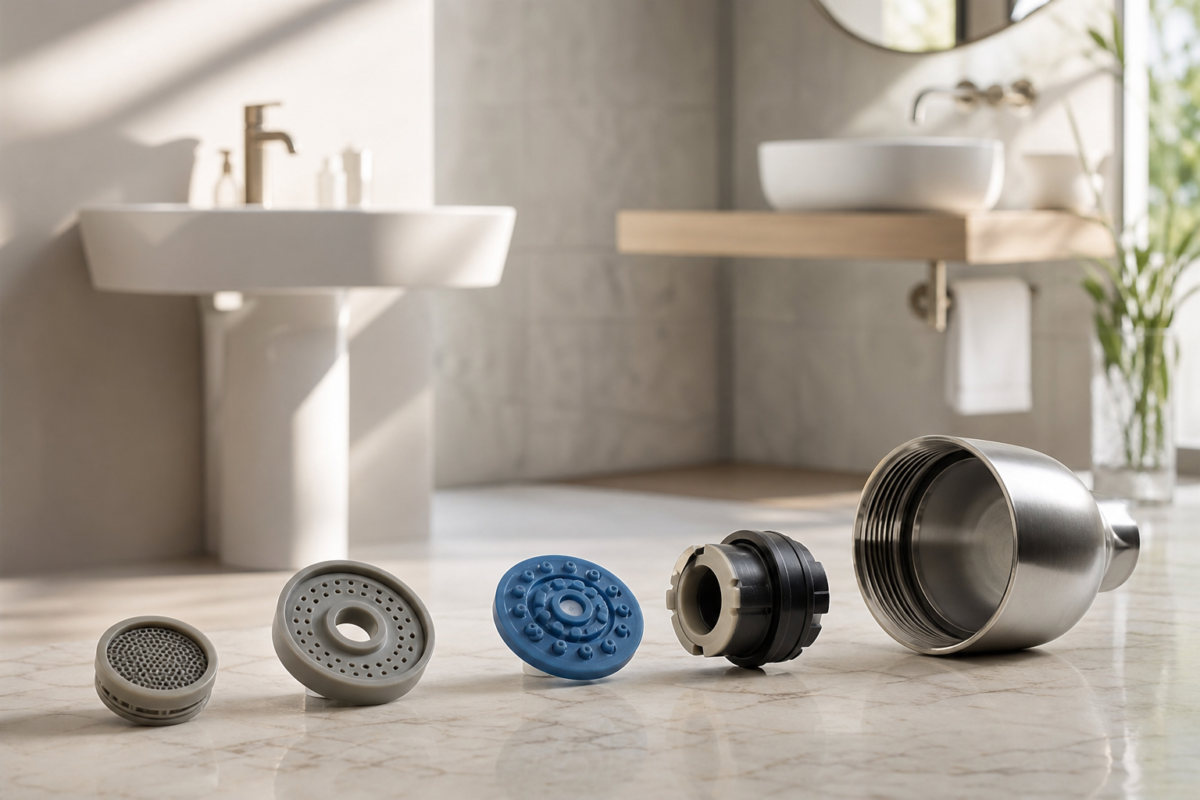
Pedestal and wall-hung sinks skip the vanity entirely, freeing floor space and visually opening a small bathroom. The tradeoff is storage: neither offers a cabinet, so they suit powder rooms and tight baths more than busy family bathrooms.
Pedestal sinks
A pedestal sink is a basin on a column that hides the plumbing, offering a classic, timeless look for $150 to $1,500. It fits tight footprints and period-style baths, but it provides no counter space and no storage, so pair it with a recessed medicine cabinet or shelving. Good lighting and a mirror do a lot of the work in a pedestal-sink powder room; see our bathroom storage ideas for compact alternatives to a vanity.
Wall-hung (wall-mount) sinks
A wall-hung sink mounts directly to the wall with exposed or semi-hidden plumbing, giving the most modern, floating look and the easiest floor to clean beneath. It is ideal for very small or accessible bathrooms because the open space below can accommodate a wheelchair. It needs in-wall blocking for support, so plan the reinforcement during rough-in; at $50 to $1,200 the sink is affordable, but retrofitting blocking adds labor.
Console and integrated bathroom sinks
Console sinks and integrated sink-countertops bridge the gap between open style and function. A console sink mounts on legs with a small shelf or towel bar, while an integrated sink is molded as one seamless piece with the countertop for the easiest cleaning of all.
Console sinks
A console sink combines an open, furniture-like look with a usable surface and often a lower shelf, running $200 to $1,800. It suits transitional and vintage baths that want more presence than a pedestal without a full vanity. Storage is limited to the open shelf, so it works best in guest and powder rooms.
Integrated sinks
An integrated sink is formed from the same material as the countertop, usually quartz, solid surface, or porcelain, with no seam where bowl meets counter. That makes it the most hygienic and easiest to wipe down, and it gives a sleek, monolithic look. It costs more than a separate sink-and-counter and must be replaced as a unit if damaged, but for a clean modern vanity it is hard to beat.
Bathroom sink materials compared
Porcelain and vitreous china are the practical default, durable, affordable, and easy to clean, while glass, stone, and quartz cost more and demand more care. Match the material to how the sink will be used: a hardworking family bath wants porcelain, while a powder room can indulge in glass or carved stone.
| Material | Price range | Upkeep | Best for |
|---|---|---|---|
| Porcelain / ceramic | $45 – $800 | Low | Everyday baths |
| Glass | $70 – $1,000 | High (shows spots) | Vessel statement |
| Stainless steel | $120 – $850 | Low | Modern, utility |
| Copper | $100 – $1,100 | Medium | Rustic, antimicrobial |
| Natural stone | $300 – $1,300 | High (sealing) | Luxury vessel |
| Quartz / solid surface | $270 – $1,600 | Low | Integrated sinks |
Bathroom sink cost and installation
A new bathroom sink costs $40 to $1,800 for the fixture plus $100 to $600 for installation, averaging about $440 in labor and taking two to three hours. Total installed cost lands near $500 for a typical mid-range sink, but relocating plumbing or adding a new faucet pushes it higher.
| Cost item | Typical range |
|---|---|
| Sink (fixture) | $40 – $1,800 |
| Professional installation | $100 – $600 |
| Faucet | $15 – $1,600 |
| Old sink removal | $30 – $150 |
| Plumbing relocation | $300 – $1,000 |
Don’t forget the faucet in your budget; it is a separate purchase that varies as much as the sink. Our bathroom faucets guide covers matching faucet style and height to your sink type, which matters most with vessel and wall-hung sinks. For the whole-room picture, see our bathroom remodel cost guide.
How to choose the right bathroom sink type
Match the sink to your storage needs, counter type, and room size first, then pick a style and material. The factors below rank what most influences which sink type will actually work in your bathroom.
- Need storage and easy cleanup: choose an undermount sink in a vanity.
- Tight budget or laminate counter: choose a drop-in sink.
- Powder room with wow factor: choose a vessel sink and a tall or wall faucet.
- Small bath, classic style: choose a pedestal sink.
- Modern, accessible, or very small bath: choose a wall-hung sink with in-wall blocking.
Room size shapes the decision most. In a compact bath, a pedestal or wall-hung sink buys back precious floor space, as covered in our small bathroom remodel cost guide. In a primary suite, a double undermount vanity usually wins for storage and daily function; see our primary bathroom remodel cost guide.
Contractor’s take
Before you commit to a vessel sink, stand at a mock-up at the real height. I have swapped out beautiful vessel sinks within a year because the owner got tired of reaching up and over the bowl every morning, or mopping splash off the counter. Vessels are stunning in a powder room used a few times a day; in a primary bath used hard every morning, a comfortable undermount almost always wins.
Faucet and drain considerations by sink type
Each sink type pairs with specific faucet and drain hardware, and getting the match wrong is a common, avoidable mistake. Vessel sinks need tall vessel faucets or wall-mounted spouts; wall-hung and pedestal sinks often use the sink’s own faucet holes; and undermount sinks mount the faucet in the counter behind them.
Check the faucet hole configuration before you buy, as single-hole, centerset (4-inch), and widespread (8-inch) are not interchangeable. Also confirm drain style: many vessel and some designer sinks lack an overflow, which requires a non-overflow (grid) drain. Choosing water-efficient fittings helps too; EPA WaterSense labeled faucets cut water use without sacrificing performance, and the National Kitchen and Bath Association publishes clearance guidelines for comfortable sink heights and spacing.
Standard sink height also varies by type. A vanity-mounted undermount or drop-in typically lands with the counter at 32 to 36 inches, while pedestal and wall-hung sinks can be set to whatever height suits the household during rough-in, an advantage in homes with tall users or children. For a second sink in a shared bath, confirm there is at least 30 inches center-to-center between bowls so two people can use them at once without crowding. Getting these dimensions right before plumbing is roughed in costs nothing; fixing them afterward means opening the wall, so it pays to decide early and measure twice.
Your next move
You know the number. What are you deciding next?
Compare bathroom vanity countertop materials, real 2026 US costs, and how to choose the right surface for your…
Continue →Compare bathroom tile patterns by cost, waste, and where each layout works best, with real 2026 US installed…
Continue →Walk-in tub cost in 2026: $5,000 to $20,000 installed. Compare tub types, features, and the real Medicare coverage…
Continue →Frequently asked
What is the most popular bathroom sink type?
Undermount sinks are the most popular for vanity bathrooms because they look clean and let you wipe water straight into the bowl. Drop-in sinks are the most common budget choice since they install on any counter.
Which bathroom sink is best for a small bathroom?
Pedestal and wall-hung sinks are best for small bathrooms because they free up floor space and open the room visually. Wall-hung sinks also suit accessible baths, though neither offers storage.
Are vessel sinks practical for everyday use?
Vessel sinks are best in powder rooms rather than busy family baths. They sit high, can splash, and the counter around them needs frequent wiping, so they trade some daily practicality for a strong design statement.
How much does it cost to install a bathroom sink?
Installation runs $100 to $600, averaging about $440 and taking two to three hours. Add the sink ($40 to $1,800) and a faucet, and total installed cost is often around $500 for a mid-range setup.
Can I put an undermount sink on a laminate counter?
Not reliably. Undermount sinks need a solid, waterproof counter like quartz, granite, or solid surface, because the exposed edge would let water into laminate. Choose a drop-in sink for laminate counters instead.

Figures reflect 2026 US retail and installed pricing from suppliers and contractor bids; installation varies by region and plumbing.