Bathroom Remodel Timeline 2026: Step-by-Step Week-by-Week Guide
Every phase of a bathroom remodel, day by day, plus the lead times and buffers that keep your project on schedule.

A realistic bathroom remodel timeline runs 2 to 4 weeks of active work for a full gut on the same layout, or 6 to 16 weeks of calendar time once you count planning, permits, and material lead times. The hands-on construction is the short part; the waiting, on inspectors, on a custom vanity, on tile mortar curing, is what actually stretches the schedule. Knowing the sequence in advance lets you order the right things early and avoid the delays that turn a one-month project into a three-month ordeal.
This guide walks through every phase day by day, from first measurement to final punch list, with 2026 lead times, cure times, and the delay traps that catch most homeowners. Use it to hold your contractor accountable to a plan and to know whether a quoted schedule is honest or optimistic.
Key takeaways
- Active construction on a full gut is 2 to 4 weeks; total calendar time is 6 to 16 weeks with planning and lead times.
- The single highest-leverage move is finalizing tile, vanity, fixtures, and glass before demolition starts.
- Order long-lead items at contract signing: custom vanities run 6 to 12 weeks, custom glass 3 to 6 weeks.
- Waterproofing membrane and thinset need 24 to 48 hours to cure before the next step; you cannot rush chemistry.
- Build in a 10-day schedule buffer and a 10 to 15 percent cost reserve for hidden damage, especially in older homes.
How long does a bathroom remodel take?
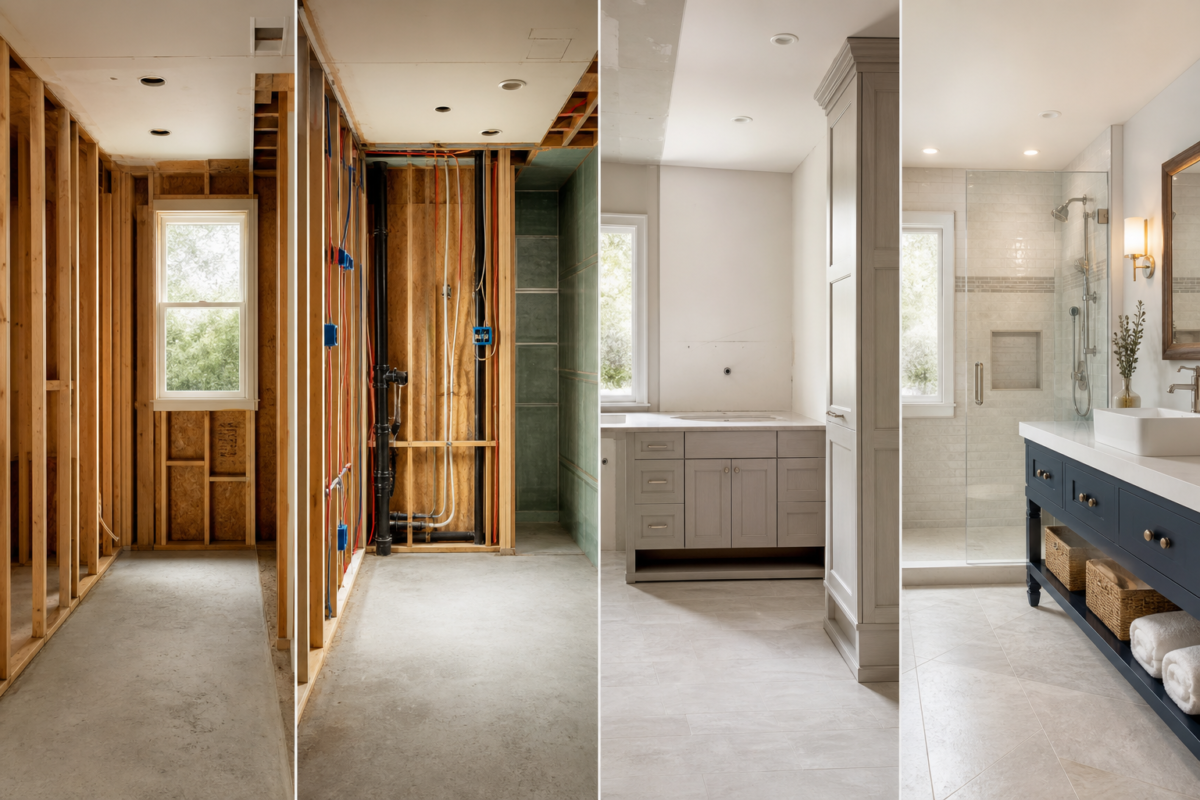
A bathroom remodel takes 3 to 7 days for a cosmetic refresh, 2 to 4 weeks for a full gut on the existing layout, and 6 to 12 weeks when you move plumbing or add a bathroom. Calendar time always exceeds work time because permits, inspections, and material lead times insert unavoidable waiting periods between active phases.
| Project scope | Active work | Total calendar time |
|---|---|---|
| Cosmetic refresh | 3 – 7 days | 2 – 4 weeks |
| Partial remodel | 1 – 2 weeks | 4 – 8 weeks |
| Full gut, same layout | 2 – 4 weeks | 6 – 10 weeks |
| Full remodel, moved plumbing | 3 – 6 weeks | 10 – 16 weeks |
| Primary bath or addition | 6 – 12 weeks | 14 – 20+ weeks |
Compare these numbers against our bathroom remodel cost guide to see how scope drives both schedule and budget, and against the budget bathroom remodel guide if you are coordinating a whole-house project.
The bathroom remodel timeline at a glance
A standard full-gut bathroom remodel timeline moves through seven phases in a fixed order: design and ordering, permits, demolition, rough-in plus inspection, waterproofing, tile and finishes, then fixtures and punch list. Each phase hands off to the next, so a slip early in the chain pushes everything behind it.
The percentages above reflect roughly how much of the total calendar each phase consumes, including its waiting time. Tile and the pre-construction ordering window are the two biggest consumers, which is exactly where homeowners should focus their planning energy.
Weeks before demo: design, bids, and ordering
The pre-construction phase, finalizing selections, collecting bids, and ordering materials, is the most important and most skipped part of the timeline, and it should happen entirely before demolition. Finalizing your tile, vanity, fixtures, and glass before the first wall comes down is the single highest-leverage scheduling decision you can make.
Material lead times to plan around
Order long-lead items the day you sign the contract, not after demo. In 2026, custom vanities run 6 to 12 weeks, custom shower glass 3 to 6 weeks, specialty or imported tile 4 to 8 weeks, and custom cabinetry on luxury jobs 8 to 12 weeks. Standard, in-stock materials ship in days. Our bathroom vanity guide and bathroom tile guide help you lock selections early so nothing stalls the crew.
Get at least three bids
Collect a minimum of three itemized bids and confirm each contractor is licensed and insured. Tie payment milestones to completed phases rather than calendar dates, which protects you if the schedule slips and keeps the crew motivated to finish each stage cleanly. Read each bid line by line: a vague lump sum hides scope gaps that surface later as change orders, while an itemized bid lets you compare apples to apples and spot what one contractor included that another left out, such as waterproofing system, debris haul-away, or permit fees.
Permits and inspections
Permits and inspections add a few days to a few weeks of mandatory waiting that must be built into the calendar before demo, not discovered after. Any remodel that moves plumbing or electrical, or changes the footprint, typically requires a permit, and inspectors in busy 2026 markets often book 5 to 10 business days out.
Homes built before 1978 trigger federal lead-safe work practices under the EPA Renovation, Repair and Painting rule, which can affect how demolition is handled. Schedule the rough-in inspection the same day the rough-in work finishes so the inspector queue overlaps with other prep rather than adding dead time.
Demolition and rough-in
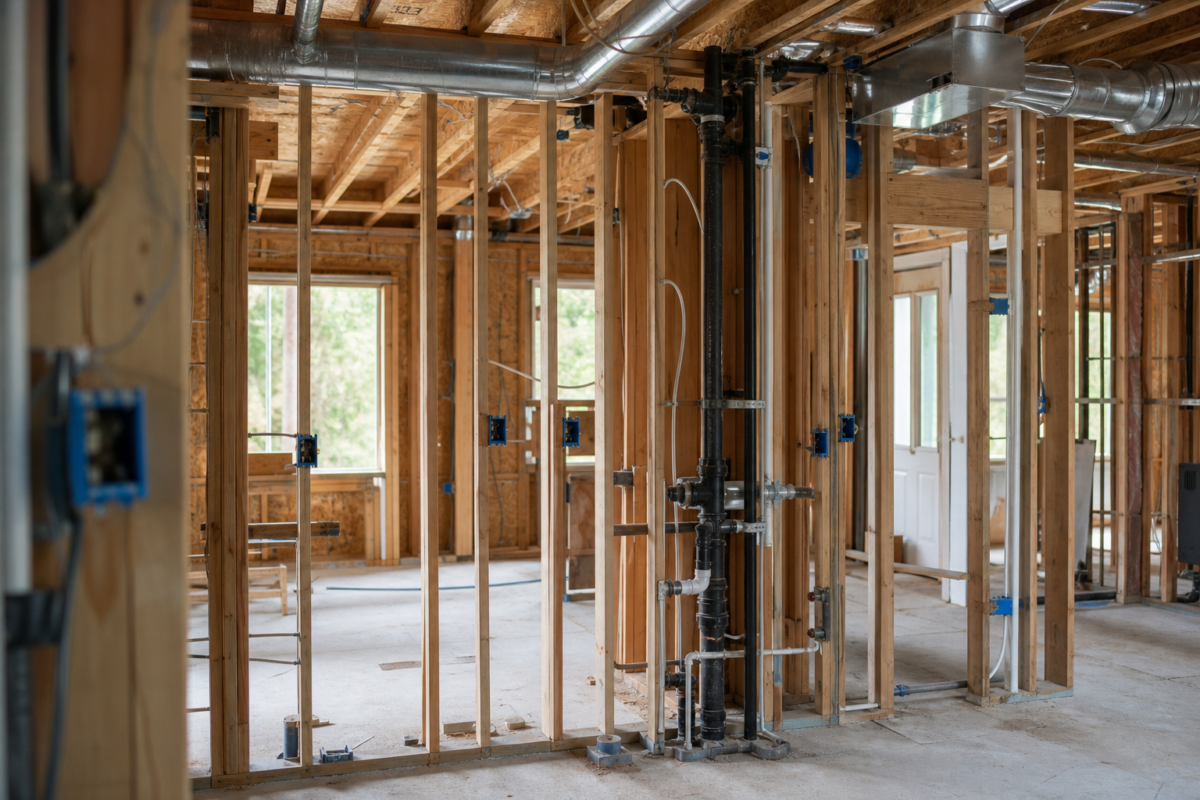
Demolition takes 1 to 2 days, and plumbing and electrical rough-in another 3 to 5 days, after which a rough-in inspection must pass before walls can close. This is the phase where hidden surprises surface: rotted subfloor, corroded supply lines, or mold behind the old shower can add 1 to 2 weeks for remediation, which is why older homes need a bigger buffer.
During rough-in the plumber sets new supply and drain lines and the electrician runs circuits for lighting, the exhaust fan, and GFCI outlets. If you are converting to a curbless or walk-in shower, the drain and slope get established now; see our walk-in shower cost guide for how that rough-in differs.
Why older homes take longer
In a house over 25 years old, demo routinely exposes work that was never meant to be seen again: galvanized pipe at the end of its life, undersized electrical, a subfloor softened by a decades-old leak, or cast-iron drains that crack when touched. None of this shows up in a bid because nobody can see it until the walls are open. Reputable contractors flag the risk up front and price a contingency; the honest answer to “will we find anything?” is “probably, and the reserve is why we plan for it.” Budget both the extra time and the extra money rather than treating a clean demo as the default.
Waterproofing, tile, and cure times
Waterproofing and tile are the phase you cannot rush, because membranes and mortar need 24 to 48 hours each to cure before the next step. After the cement backer board goes up, the waterproofing membrane is applied and must cure a full day or two before any tile is set.
Tile setting itself runs several days to over a week depending on pattern complexity; large-format tile, intricate mosaics, and heated floors all extend it. Then the thinset under the tile must cure 24 to 48 hours before grouting, and grout needs its own cure before sealing. These waits are chemistry, not labor, so a contractor who promises to tile and grout in a single day is cutting a corner that leads to cracked grout and failed waterproofing. Our bathroom flooring options shows how layout choices affect setting time.
Fixtures, paint, and the punch list
The final phase, installing the vanity, toilet, shower fixtures, mirrors, and lighting, then painting and completing the punch list, takes 3 to 5 days once tile has cured. Plumbing trim-out (connecting faucets, the toilet, and the shower valve trim) happens here, followed by a final inspection on permitted jobs.
The punch list is the running list of small fixes, a caulk gap, a sticky drawer, a touch-up, that you and the contractor walk through before final payment. Hold back the final milestone payment until the punch list is genuinely complete, because items left at this stage have a way of never getting done.
One often-overlooked step belongs here too: let new caulk and sealed grout cure before heavy water exposure. Silicone caulk typically needs 24 hours to fully skin over, and most penetrating grout sealers want 24 to 72 hours before the shower sees daily use. Resisting the urge to use the shower the same evening the glass goes in protects the work you just paid for.
Primary baths and additions take longer
A primary (master) bathroom or a brand-new bathroom addition runs 6 to 12 weeks of active work and 14 to 20-plus weeks on the calendar, because scope multiplies every phase. Double vanities, a separate soaking tub and shower, a water closet, heated floors, and custom cabinetry each add their own lead times and installation days.
Additions also carry structural and framing work, more extensive permitting, and sometimes HVAC extension, none of which exist in a same-footprint remodel. If your project is this size, treat the 20-week calendar as realistic and sequence it with the same discipline, selections locked and long-lead items ordered at signing, that keeps a smaller bathroom on track.
Contractor’s take
The homeowners who finish on time are the ones who made every selection before I swung a hammer. The ones who run long almost always changed their mind about tile or vanity mid-project, which resets a lead-time clock we cannot beat. If you take one thing from this: decide everything first, order it first, and let demo be the moment the design is already settled, not the moment you start shopping.
What causes bathroom remodel delays?
The top delays are long material lead times, permit and inspection scheduling, hidden damage found at demo, mid-project change orders, and trade scheduling conflicts. Four of the five are preventable with front-loaded planning; only hidden damage is truly unpredictable, and that is what the contingency reserve is for.
- Order custom vanities, glass, and specialty tile at contract signing, before demo.
- Confirm permit requirements and book inspections as early as the schedule allows.
- Budget a 10-day schedule buffer and a 10 to 15 percent cost reserve for surprises.
- Pre-book the plumber, electrician, and tile setter so no trade gap opens mid-project.
- Avoid change orders once work starts; each one resets a lead-time clock.
- Tie payments to completed phases, not dates, and keep the final payment until punch list is done.
Your next move
You know the number. What are you deciding next?
Walk-in tub cost in 2026: $5,000 to $20,000 installed. Compare tub types, features, and the real Medicare coverage…
Continue →Bathroom remodel financing explained: compare home equity loans, HELOCs, cash-out refi, personal loans, and 0% cards with 2026…
Continue →Steam shower cost runs $3,000 to $10,000 installed in 2026. See prices by generator size, enclosure, and prefab…
Continue →Frequently asked
How long does a full bathroom remodel take?
A full gut remodel on the same layout takes 2 to 4 weeks of active work, or 6 to 10 weeks of calendar time including planning, permits, and material lead times. Moving plumbing or adding a bathroom pushes it to 10 to 16 weeks or more.
Why does a bathroom remodel take so long if the work is quick?
Because waiting is built in. Inspectors book days out, custom materials take weeks to arrive, and waterproofing and tile mortar each need 24 to 48 hours to cure. The hands-on labor is short; the required pauses between phases are what stretch the calendar.
Can I use the bathroom during the remodel?
No, a bathroom under renovation is unusable from demolition through fixture install. If it is your only bathroom, arrange an alternative; many homeowners schedule around a guest bath or a temporary setup for the 2 to 4 week active window.
What is the longest-lead item in a bathroom remodel?
Custom cabinetry and vanities, at 6 to 12 weeks, are usually the longest, followed by custom shower glass at 3 to 6 weeks and specialty tile at 4 to 8 weeks. Order all of these before demolition begins.
How much buffer should I build into the timeline?
Plan for a 10-day schedule buffer and a 10 to 15 percent cost contingency. Homes over 25 years old carry a higher chance of hidden damage at demo, so lean toward the larger buffer there.

2026 phase durations and lead times compiled from contractor remodeling schedules; cure times per standard tile and membrane practice.