Bathtub Types Compared: Alcove, Drop-In, Freestanding, Corner
A plain-English comparison of every bathtub type, with sizes, materials, installed costs, and the tradeoffs that actually matter.

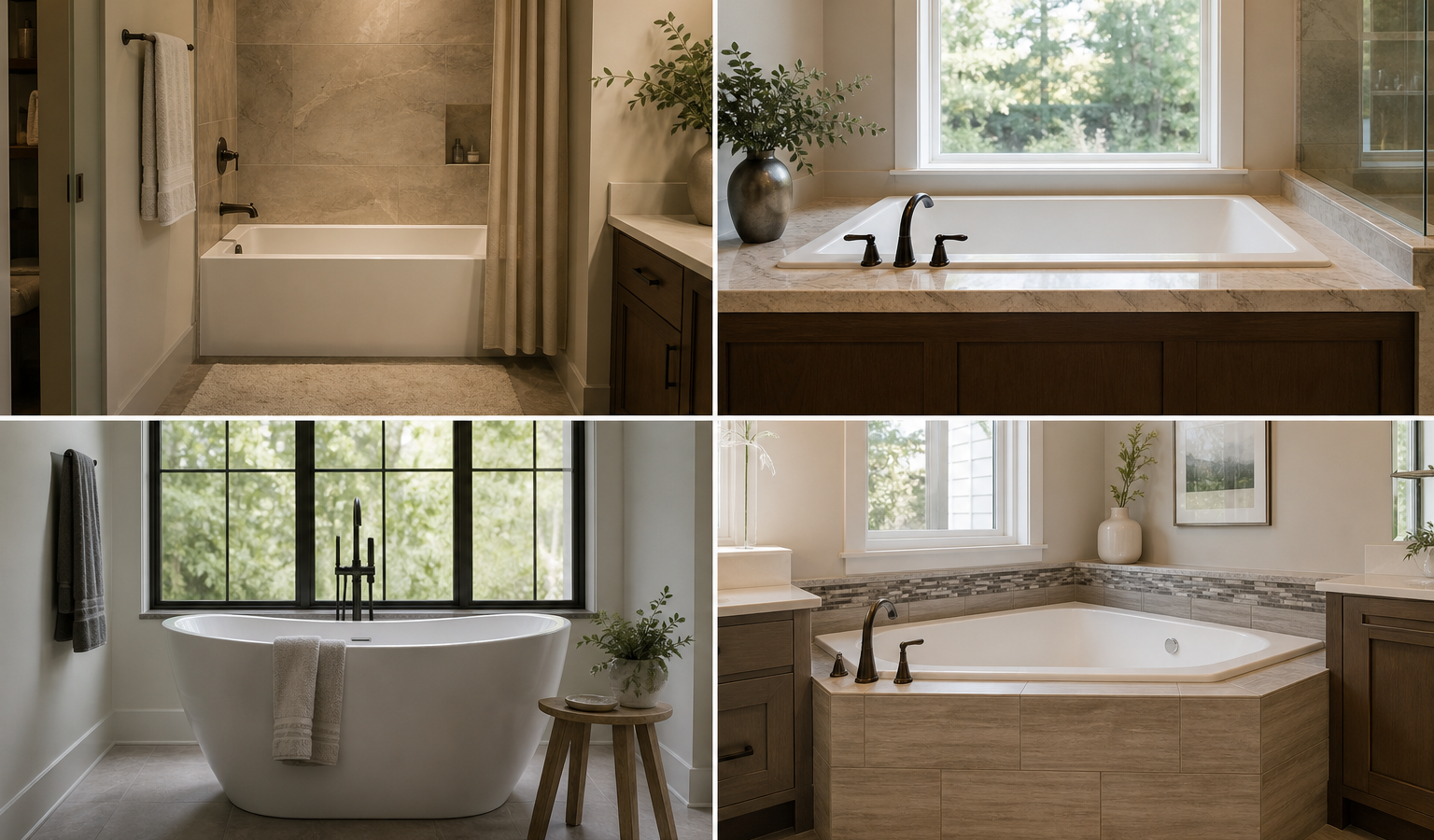
The main bathtub types are alcove, drop-in, undermount, freestanding, and corner, plus specialty tubs like soaking, whirlpool, and walk-in models. Each type suits a different layout, budget, and bathing style: alcove tubs are the budget-friendly workhorse for tub-shower combos, freestanding tubs are the spa centerpiece, and corner or walk-in tubs solve specific space and accessibility needs. Choosing the right one comes down to your bathroom size, plumbing, and how you actually like to bathe.
This guide compares every common bathtub type side by side, with real 2026 sizes, materials, installed costs, and the tradeoffs a remodeler weighs on every job, so you can match a tub to your space before you shop.
Key takeaways
- Alcove tubs are the cheapest and most space-efficient, ideal for tub-shower combos ($300-$1,200).
- Freestanding tubs make the biggest design statement but need clearance on all sides ($800-$3,000+).
- Drop-in and undermount tubs give a custom built-in look but require a framed deck.
- Acrylic is the smart default material; cast iron holds heat longest but weighs 300-500+ pounds.
- A filled tub can top 500 pounds, so upper-floor and heavy-material installs may need a floor check.
What are the main bathtub types?
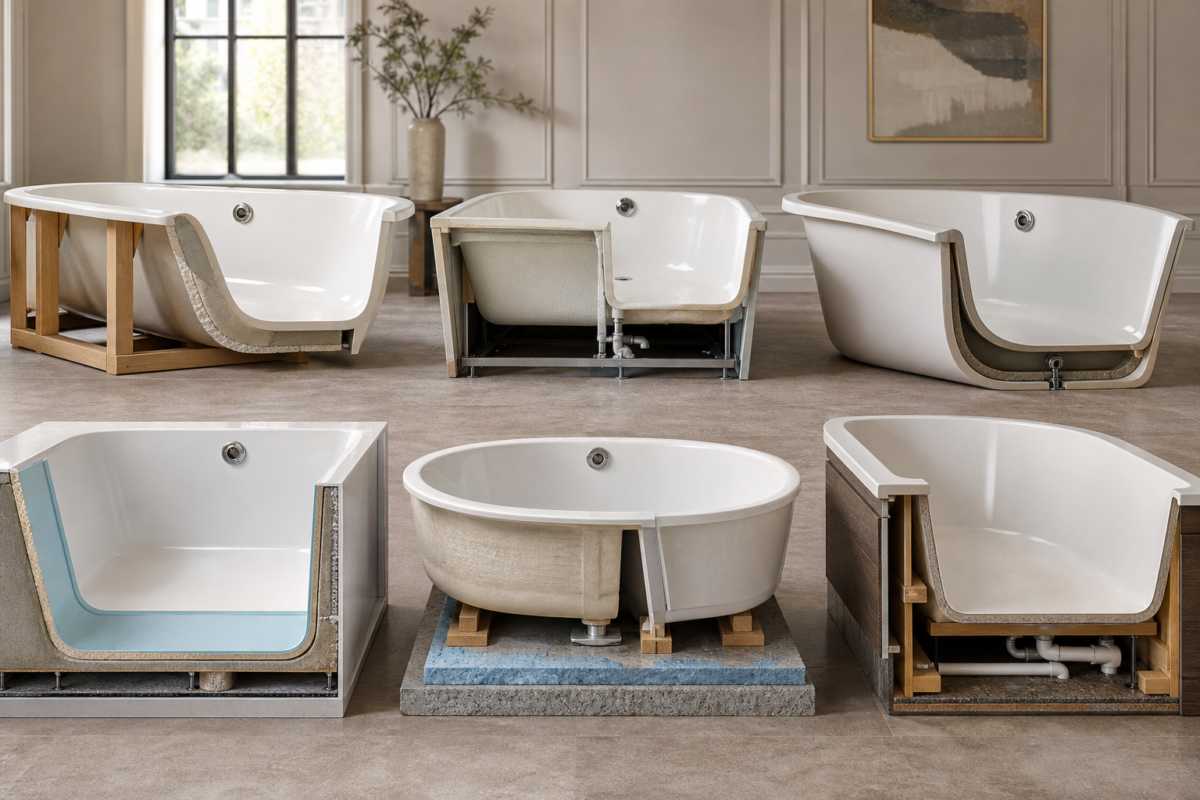
There are five core installation styles, alcove, drop-in, undermount, freestanding, and corner, plus specialty categories defined by function rather than shape. The fastest way to narrow your choice is by how the tub meets the surrounding walls and floor, which dictates the plumbing and construction behind it.
| Type | Best for | Typical cost (tub only) | Shower combo? |
|---|---|---|---|
| Alcove | Family baths, small rooms | $300 – $1,200 | Yes |
| Drop-in | Custom deck look | $500 – $2,000 | Possible |
| Undermount | Seamless high-end look | $700 – $2,500 | Rarely |
| Freestanding | Spa and primary baths | $800 – $3,000+ | No |
| Corner | Awkward or wide layouts | $700 – $2,500 | Sometimes |
| Walk-in | Accessibility, aging in place | $1,500 – $5,000+ | No |
If you are still deciding whether to include a tub at all, our shower vs bathtub comparison weighs resale, space, and daily use before you commit to either.
Built-in bathtub types: alcove, drop-in, and undermount
Built-in tubs are framed into the room, which keeps costs down and makes them the most common choice in American bathrooms. They differ in how the rim meets the surround, which drives both the look and the installation cost.
Alcove bathtubs
An alcove tub installs into a three-wall recess with a finished front apron, and it is the budget-friendly default for family bathrooms. The standard US size is 60 inches long by 30 to 32 inches wide, fitting the most common framed opening, and it doubles as a shower base, which is why it dominates secondary baths. Expect $300 to $1,200 for the tub and a straightforward, lower-labor install.
Drop-in bathtubs
A drop-in tub is a finished shell set into a built platform, with the rim resting on top of a tiled or stone deck. It delivers a custom look and a handy surround ledge, but the framing, deck, and waterproofing make it a renovation-scale project rather than a simple swap. The tub runs $500 to $2,000, with deck construction adding meaningfully to the total.
Undermount bathtubs
An undermount tub mounts beneath the deck surface so the edge disappears into the surround for the most seamless, high-end built-in look. It requires a solid, fully waterproofed deck and precise fabrication, which pushes installation cost above a drop-in. Plan on $700 to $2,500 for the tub plus premium labor for the stone or solid-surface deck.
Statement bathtub types: freestanding and corner
Freestanding and corner tubs are chosen for presence and comfort rather than efficiency. They work best in larger primary baths where there is room to walk around them and plumbing can be brought to the right spot.
Freestanding bathtubs
A freestanding tub is finished on all sides and stands on the floor or on feet, making it the spa centerpiece of a primary bath. It offers flexible placement and a striking look, but it needs clearance on every side and does not work as a tub-shower combo. Tubs run $800 to $3,000+, and because installation and floor requirements vary, we cover the full picture in our freestanding tub cost guide.
Corner bathtubs
A corner tub has a triangular footprint that tucks into a corner, using otherwise awkward space in a wide bathroom. Many are large and hold a lot of water, so weight and water-heater capacity matter. Expect $700 to $2,500; they suit generous layouts but can overwhelm a small or medium room.
Specialty tubs: soaking, whirlpool, air, and walk-in
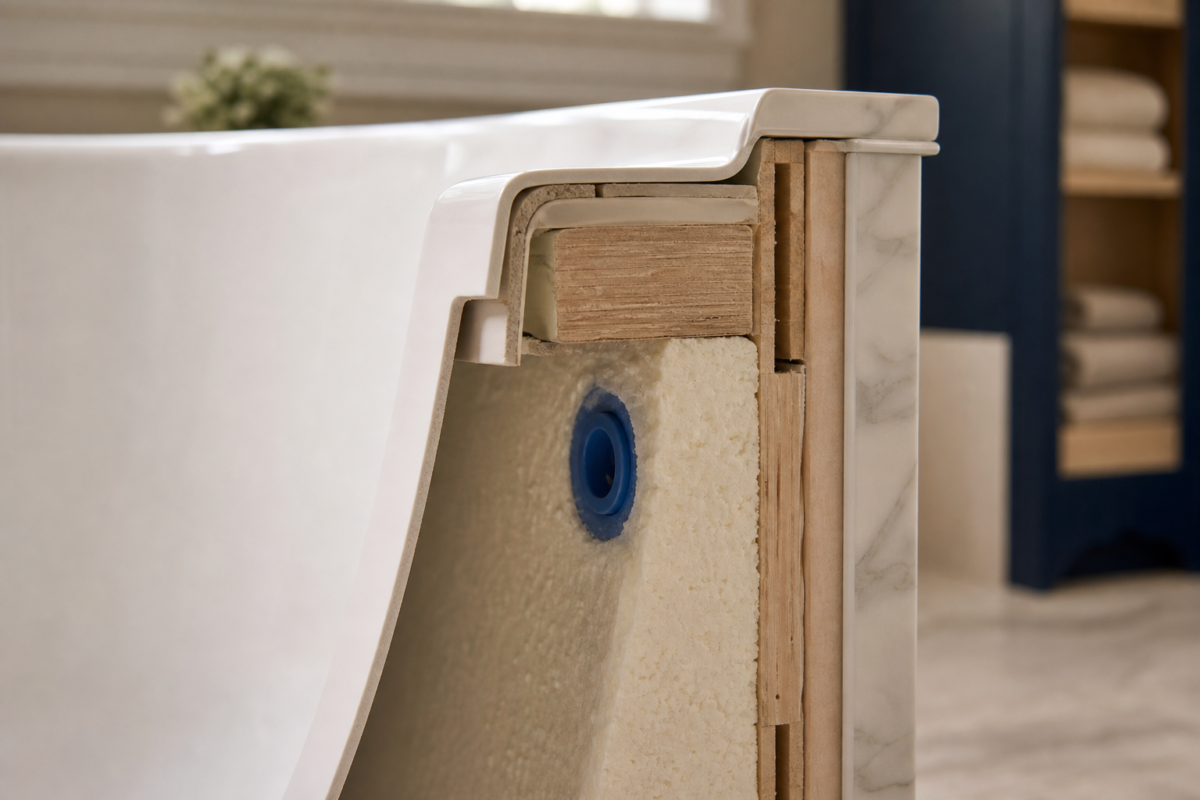
Specialty tubs are defined by how they function, not how they mount. Soaking tubs prioritize depth, jetted tubs add massage, and walk-in tubs add a watertight door for accessibility.
Soaking tubs
A soaking tub is simply any tub with extra depth, 18 to 24 inches of water versus the standard 12 to 14, so you can submerge to the shoulders. They come in freestanding, drop-in, and alcove formats. Deeper water means more volume, so confirm your water heater can fill one comfortably.
Whirlpool and air tubs
Whirlpool (jetted) tubs circulate water through jets, while air tubs push warm air through small ports for a softer massage that is easier to keep clean. Both add $1,000 to $4,000 over a plain tub and require a dedicated electrical circuit. Air tubs have largely overtaken water-jet models because they resist the biofilm that builds up in water-jet plumbing.
Walk-in tubs
A walk-in tub has a watertight door and a built-in seat, making it the top choice for aging in place and limited mobility. They cost $1,500 to $5,000+ installed and fill and drain while you are seated, so look for fast-drain features. For broader accessibility planning, the ADA publishes guidance on bathroom grab bars, clearances, and transfer space worth reviewing.
Bathtub materials compared
Acrylic reinforced with fiberglass is the smart default for most buyers: it is light, warm to the touch, holds heat well, and scratches can be buffed out. Cast iron holds heat the longest and lasts a lifetime but weighs 300 to 500+ pounds empty, which limits where it can go.
| Material | Heat retention | Weight | Durability | Relative cost |
|---|---|---|---|---|
| Acrylic (FRP) | Good | Light | Very good, repairable | $ |
| Fiberglass/gelcoat | Fair | Lightest | Lower, wears faster | $ |
| Enameled steel | Fair | Moderate | Good, can chip | $ |
| Cast iron | Excellent | Very heavy | Excellent, lifetime | $$$ |
| Stone resin | Excellent | Heavy | Excellent, matte repairable | $$$ |
| Copper | Excellent | Moderate | Excellent with care | $$$$ |
Bathtub sizes and dimensions
The standard US alcove tub is 60 inches long, 30 to 32 inches wide, and 14 to 16 inches deep, which fits most framed openings. Compact tubs drop to 48 to 54 inches for small baths, while full-size freestanding soakers run 65 to 72 inches with 18 to 24 inches of soak depth.
| Format | Length | Width | Water capacity |
|---|---|---|---|
| Compact / small bath | 48 – 54 in | 27 – 30 in | 30 – 45 gal |
| Standard alcove | 60 in | 30 – 32 in | 40 – 60 gal |
| Freestanding (full) | 65 – 72 in | 30 – 36 in | 50 – 80 gal |
Before you buy, measure your delivery path. Large tubs are heavy freight, and more than one dream soaker has been returned because it would not clear a doorway or stair turn. If your tub shares a wall with tile, coordinate the order with your bathroom tile plan so the surround details line up.
How to choose the right bathtub type
Match the tub to your room size, plumbing, and bathing habits first, then pick a material and style. The factors below rank what most influences which type will actually work in your space.
- Small bath or need a shower too: choose an alcove tub.
- Spacious primary bath and a want for drama: choose freestanding.
- Custom deck and a built-in look: choose drop-in or undermount.
- Mobility or aging-in-place concerns: choose a walk-in tub.
- Long, hot soaks a priority: pick a deep soaking tub in cast iron or stone resin.
Budget context helps too. A tub is one line item in a larger project, so weigh it against the whole scope in our bathroom remodel cost guide, and if it anchors a primary suite, our primary bathroom remodel cost guide shows where the tub fits in the total.
Matching the tub to your bathroom and budget
Room size should drive the decision before style does. In a compact bathroom, an alcove tub-shower combo is almost always the right call because it packs bathing and showering into one footprint; our small bathroom remodel cost guide shows how that choice keeps the whole project affordable. In a larger primary suite, you have room to separate the functions, pairing a dedicated soaking tub with a generous walk-in shower.
If you are torn between a tub and a large shower, think about resale and real-world habits. A home with zero tubs can deter families with young children, so keeping at least one tub in the house is wise. When the shower is the priority, see our walk-in shower cost guide to weigh a tub-to-shower conversion. For design clearances and planning standards, the National Kitchen and Bath Association publishes recommended spacing around tubs and fixtures that is worth checking before you finalize a layout.
Contractor’s take
Before you fall in love with a 72-inch cast iron soaker, size your water heater and check the floor. A standard 40-gallon tank will not fill a deep soaker with hot water, and a filled cast iron tub on a second floor can need extra joist support. I always confirm both before ordering, because a tub you cannot fill with hot water or safely support is an expensive mistake to discover after tile is set.
Bathtub installation considerations
Installation cost depends on the type far more than the tub price. A straightforward alcove swap can run $300 to $800 in labor, while a freestanding tub with a floor-mounted filler, a drop-in deck, or an undermount surround can add $1,000 to $3,000 once framing, waterproofing, and finish work are included.
Three practical rules keep installs smooth. First, confirm the drain location matches your plumbing rough-in, or budget to move it. Second, choose the filler (deck-mount, wall-mount, or floor-mount) based on the tub type before rough-in, because it changes where plumbing lands. Third, protect the new tub through the rest of construction; scratched acrylic and chipped enamel are common, avoidable end-of-project headaches.
Access for heavy tubs deserves its own planning. Cast iron and stone-resin models often require two or three people and sometimes a dolly or straps to maneuver into place, and tight stairwells or narrow hallways can rule out an oversized soaker entirely. Measure every turn in the delivery path, and if the tub lands on a second floor, have your contractor verify the joists can carry the filled weight before the order ships. Getting these logistics right up front prevents the most frustrating delays, the ones that surface on install day when it is far too late to change the plan.
Your next move
You know the number. What are you deciding next?
Walk-in tub cost in 2026: $5,000 to $20,000 installed. Compare tub types, features, and the real Medicare coverage…
Continue →Freestanding tub cost runs $1,300 to $8,000 installed in 2026. See prices by material, full installation breakdown, and…
Continue →Bathroom remodel financing explained: compare home equity loans, HELOCs, cash-out refi, personal loans, and 0% cards with 2026…
Continue →Frequently asked
What is the most popular bathtub type?
The alcove tub is the most popular because it is affordable, space-efficient, and doubles as a shower. Freestanding tubs are the most popular upgrade in primary and spa bathrooms.
Which bathtub type is best for a small bathroom?
An alcove tub is best for small bathrooms because it fits a standard three-wall recess and works as a tub-shower combo. Compact 48-to-54-inch models exist for very tight spaces.
Are freestanding tubs worth it?
Yes, in a bathroom with room to spare. They add a strong design statement and resale appeal, but they need clearance on all sides, cannot serve as a shower, and cost more to install than a built-in tub.
What bathtub material holds heat best?
Cast iron and stone resin hold heat the longest, keeping bathwater warm for extended soaks. Acrylic retains heat well too and is far lighter, which is why it is the most common choice.
How much does it cost to install a bathtub?
Tub prices range from $300 for a basic alcove to $5,000+ for a walk-in, and installation adds $300 to $3,000 depending on type. A simple alcove swap is cheapest; freestanding and deck-set tubs cost the most to install.

Figures reflect 2026 US retail and installed pricing from manufacturers and suppliers; installation varies by region and tub weight.