Best Bathroom Countertop Materials Compared: 2026 Cost and Durability Guide
Quartz, granite, quartzite, marble, porcelain and budget picks compared for the wet, chemical-heavy reality of a bathroom.

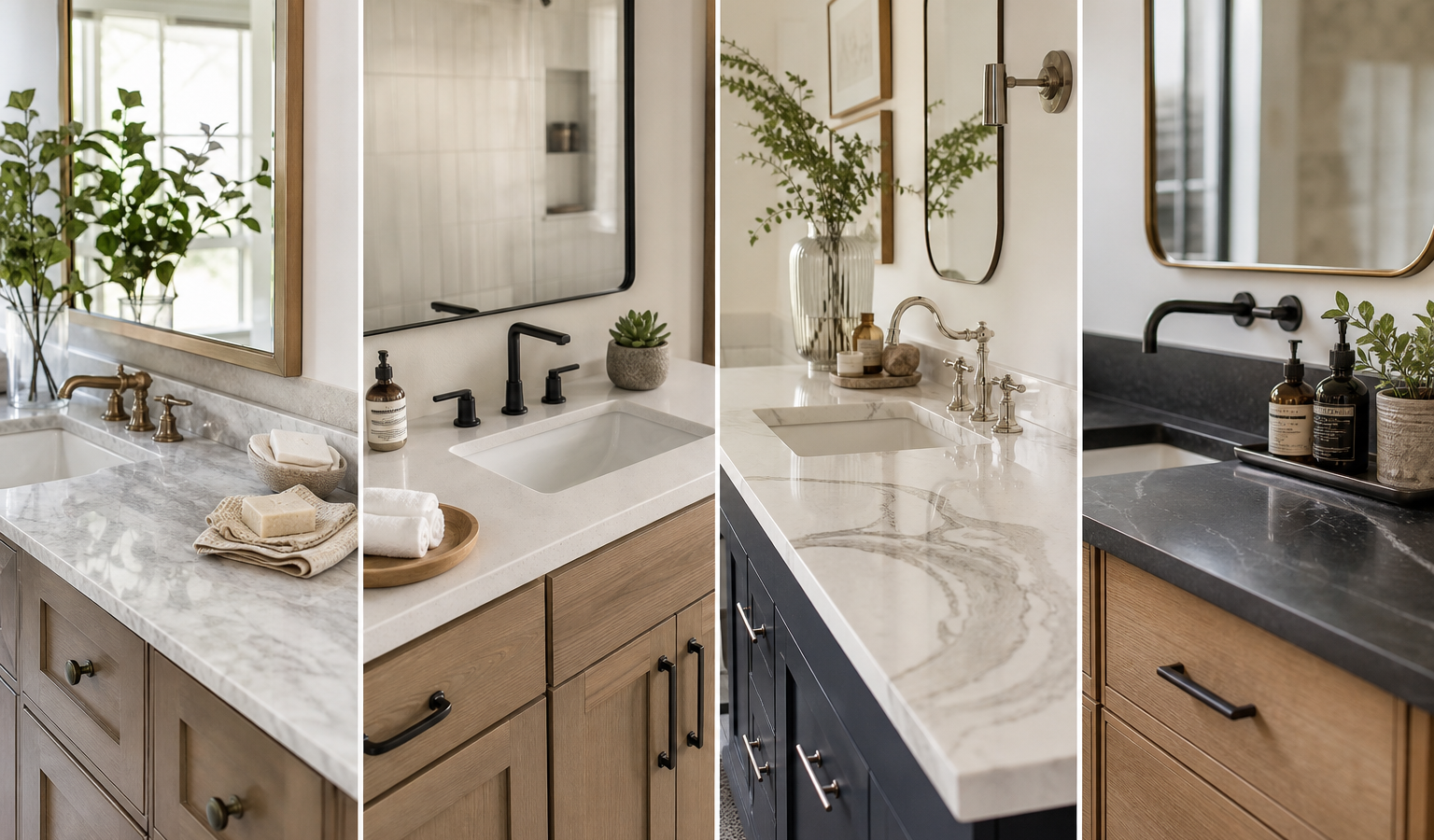
Choosing among the many bathroom countertop materials comes down to one question a kitchen buyer rarely faces: how well does the surface handle a wet, splashy, chemical-heavy zone every single day? In 2026 the strongest performers for bathrooms are non-porous surfaces such as quartz, porcelain, solid surface, and cultured marble, which never need resealing and shrug off toothpaste, cosmetics, and cleaners. Natural stones like granite, quartzite, and marble bring unmatched beauty but demand more care. This guide compares every major option on cost, durability, maintenance, and looks so you can match the right material to your vanity, your budget, and how hard the bathroom gets used.
Key takeaways
- Non-porous bathroom countertop materials (quartz, porcelain, solid surface, cultured marble) never need sealing and resist bacteria and stains best.
- Quartz is the most popular all-round choice at roughly $50 to $130 per square foot installed.
- Marble looks stunning but etches from everyday bathroom acids, so it is best reserved for low-use powder rooms.
- Laminate and butcher block are the weakest picks for bathrooms because water can swell or warp the core.
- A standard vanity top is small, so premium materials cost far less in a bathroom than in a kitchen.
What Are the Best Bathroom Countertop Materials?
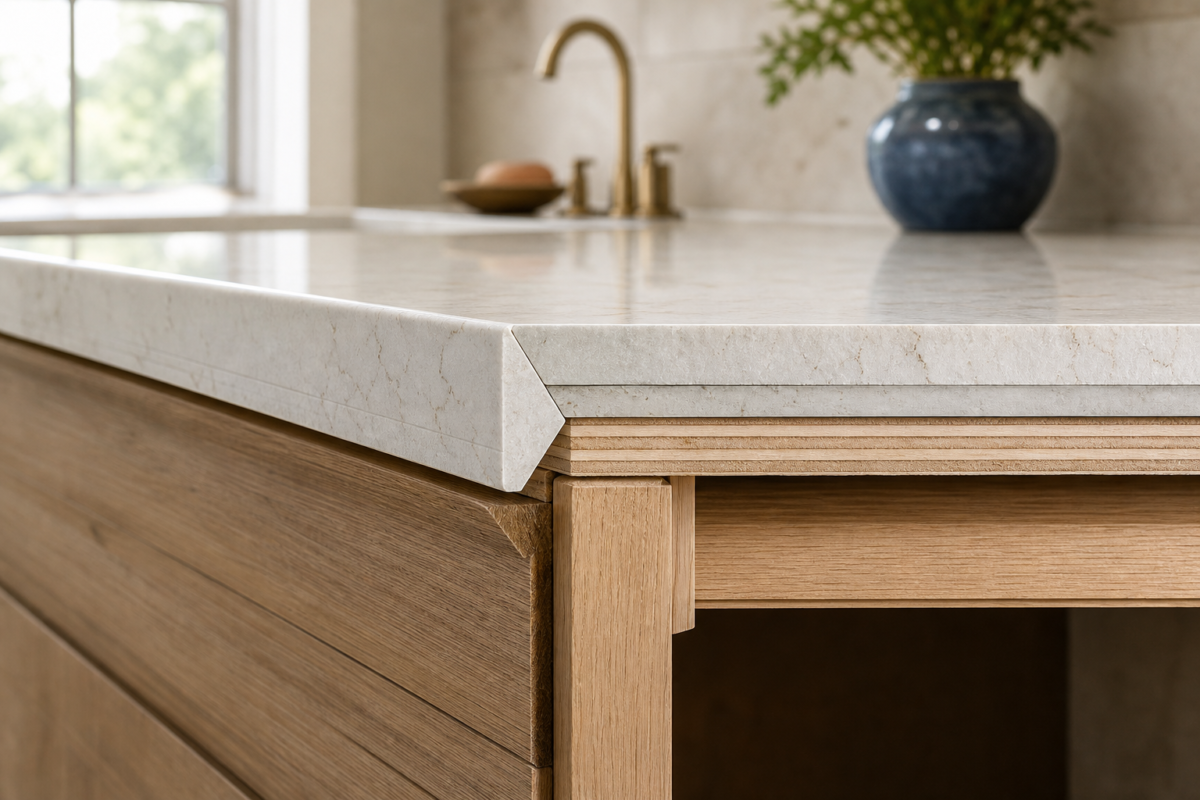
The best bathroom countertop materials are non-porous surfaces that never need sealing and resist water, stains, and chemicals, which puts quartz, porcelain slab, solid surface, and cultured marble at the top for daily-use bathrooms. Natural stone is best chosen with maintenance in mind.
A bathroom counter is a harsher environment than most people assume. It sees standing water around the faucet, acidic products like toothpaste and facial cleansers, hair dye, nail polish remover, and hot styling tools. Materials that are porous or soft show that abuse quickly. That is why the non-porous group wins for busy family and primary bathrooms, while more delicate stones make sense in a guest powder room that sees light use. If you want the full technical picture on the natural options, the Natural Stone Institute publishes care and selection standards worth reading before you buy.
Why bathrooms differ from kitchens
In a kitchen, heat resistance and cutting durability rank high. In a bathroom, water resistance and etch resistance matter more, and heat is a smaller concern beyond a curling iron. Vanity tops are also much smaller, so a splurge material that would cost a fortune across a kitchen becomes affordable across a single vanity. That reframing lets many homeowners choose a higher tier than they expected. Our best countertop materials guide explains the same materials from the kitchen angle if you are doing both rooms.
Bathroom Countertop Materials Cost Comparison
Bathroom countertop materials range from about $20 per square foot for laminate to $350 per square foot for premium marble, installed. Because a vanity top is small, even a mid-range slab often costs only a few hundred dollars in total, so per-square-foot price matters less here than in a kitchen.
| Material | Installed cost / sq ft | Sealing | Best for |
|---|---|---|---|
| Laminate | $20 – $50 | None | Tight budgets, rental refresh |
| Cultured marble | $30 – $100 | None | Kids and secondary baths |
| Solid surface (Corian) | $26 – $80 | None | Seamless integrated sinks |
| Quartz (engineered) | $50 – $130 | None | All-round low maintenance |
| Porcelain slab | $55 – $120 | None | Maximum durability |
| Granite | $50 – $120 | Every 6-12 mo | Durable natural look |
| Quartzite | $70 – $200 | Every few yrs | Marble looks, more strength |
| Marble | $75 – $350 | Regular | Low-use powder rooms |
For a typical 25 by 22 inch single vanity (under four square feet), even a $130-per-square-foot quartz top often totals well under $600 in material. Scale those numbers against the room with our countertop cost breakdown so the countertop fits the overall plan.
Quartz Bathroom Countertops
Quartz is the best all-round bathroom countertop material for most homeowners because it is non-porous, never needs sealing, and resists stains and bacteria, all at roughly $50 to $130 per square foot installed. Engineered from ground natural quartz and resin, it delivers consistent color and pattern.
The upsides are compelling for a bathroom: no annual sealing, no worry about toothpaste staining, and easy daily cleaning with mild soap. The two cautions are heat and harsh solvents. Quartz is not heatproof, so a hot flat iron laid directly on the surface can scorch the resin, and aggressive chemicals like paint remover can dull it. Neither is a real problem with normal use and a simple heat pad. If you are torn between quartz and a natural stone, our quartz vs granite comparison lays out the durability and maintenance trade-offs in detail.
Granite and Quartzite Bathroom Countertops
Granite and quartzite are excellent natural bathroom countertop materials for buyers who want real stone and accept periodic sealing, priced at about $50 to $120 and $70 to $200 per square foot installed respectively. Both are hard, heat resistant, and available in dramatic patterns.
Granite
Granite is durable and moisture resistant but porous, so it needs resealing every 6 to 12 months to stay stain-proof in a wet bathroom. Done on schedule, that is a 15-minute wipe-on job, not a burden. Granite offers enormous color variety and a genuine stone feel that many buyers prefer over engineered looks.
Quartzite
Quartzite is harder than granite, does not etch the way marble does, and gives you that coveted marble-like veining with far more resilience. It is less porous than granite and typically needs sealing only every few years. If you love the Calacatta look but fear marble maintenance, quartzite is the natural bridge, and our quartzite vs quartz guide digs into the differences that confuse most shoppers.
Marble Bathroom Countertops
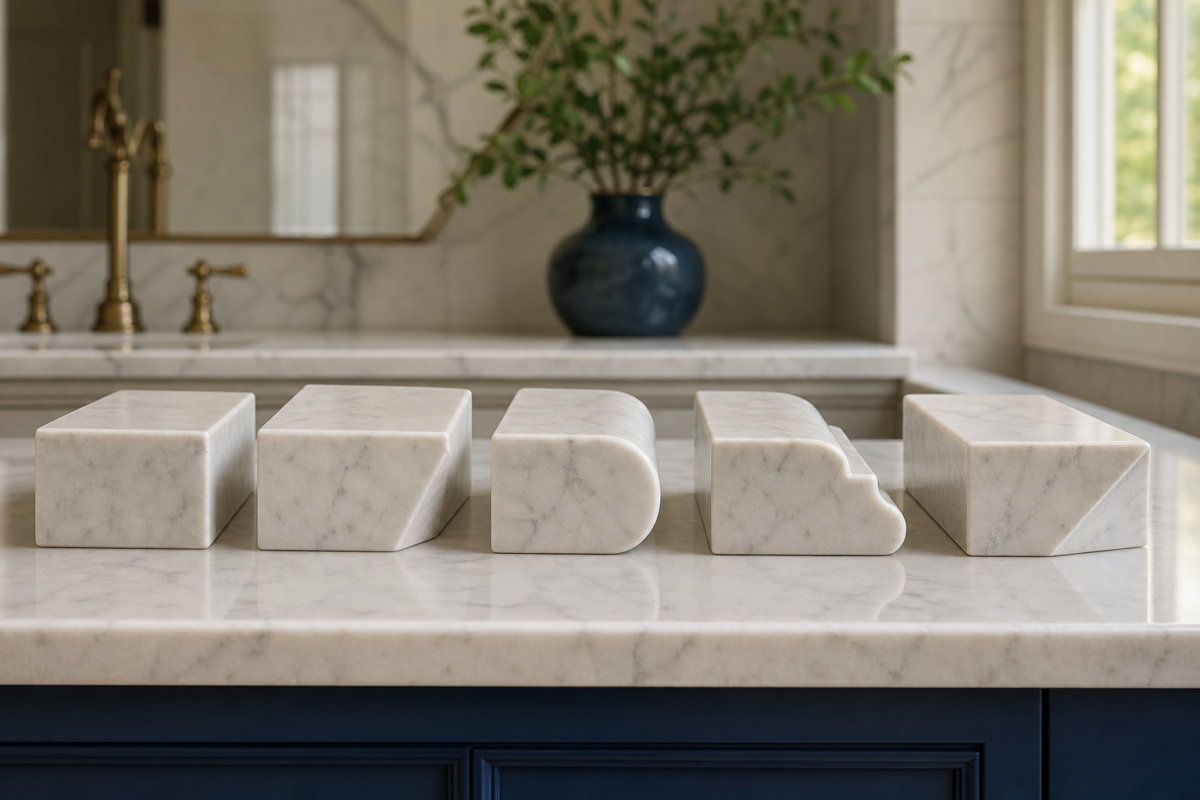
Marble is the most beautiful bathroom countertop material but also the riskiest for daily use because it etches on contact with common bathroom acids, and sealing does not prevent that etching. Reserve it for low-traffic powder rooms where its $75 to $350 per square foot cost buys pure showpiece appeal.
Etching is a dull, matte spot left when an acid such as a cleaner, cosmetic, or toothpaste touches the polished surface and eats microscopically into the calcium carbonate. Because sealing only slows staining and does nothing for etching, a busy family bathroom will develop a patina of marks within months. A honed rather than polished finish hides etching somewhat because the surface is already matte, and some homeowners embrace the lived-in patina the way they would on an antique table. In a powder room that guests use lightly, that same marble can stay pristine for years and deliver a luxury statement no engineered surface fully matches, which is why designers still specify it for high-end guest baths. Our marble pros and cons guide helps you decide whether the look is worth the upkeep.
Solid Surface, Cultured Marble, and Porcelain Options
Solid surface, cultured marble, and porcelain slab are underrated bathroom countertop materials that are all non-porous, never need sealing, and often cost less than natural stone. Each solves a specific bathroom problem better than the mainstream picks.
Solid surface and cultured marble
Solid surface (such as Corian) runs $26 to $80 per square foot and can be molded into a seamless integrated sink, eliminating the grime-catching seam where most vanity tops meet the bowl. Minor scratches can be sanded out. Cultured marble, at $30 to $100 per square foot, uses a non-porous gel coat over a marble-dust composite, frequently comes with an integrated sink, and lasts around 20 years, making it a smart pick for kids and secondary bathrooms. Both are heat-sensitive and can scratch, so they suit lower-abuse spaces.
Porcelain slab
Porcelain slab, at $55 to $120 per square foot, is arguably the toughest surface here: non-porous, highly heat resistant, and it will not etch even against bleach or acidic products. The trade-offs are that edges can chip under a hard impact and fewer fabricators are experienced with it, so vet your installer. For tile and slab standards, the Tile Council of North America is the recognized US reference.
Budget Bathroom Countertop Materials
The most affordable bathroom countertop materials are laminate at $20 to $50 per square foot and tile, but both carry water-related caveats that make them better for low-stakes or temporary bathrooms. Spending a little more on a non-porous surface usually pays off in a wet room.
Laminate is the cheapest option and comes in convincing stone-look patterns, but its particleboard core swells irreversibly if water reaches an unsealed seam near the sink, which is the single most common bathroom failure. If you choose it, seal every seam meticulously and treat it as a 5 to 8 year surface. Ceramic and porcelain tile can make a durable, water-friendly counter, but the grout lines need sealing and cleaning to resist mildew. Butcher block, popular in kitchens, is generally not recommended for bathrooms because it absorbs water and warps in humidity. Our laminate countertops guide covers the surface in depth if you are set on the look, and the materials overview explains where wood does and does not belong.
How to Choose Bathroom Countertop Materials
To choose the right bathroom countertop material, weigh maintenance tolerance, moisture exposure, budget, and looks in that order, because a surface you have to baby will frustrate you long after the price is forgotten. The bars below show how the priorities typically stack for a daily-use bathroom.
- For a busy family or primary bathroom, default to quartz or porcelain for zero sealing.
- For a showpiece powder room, marble or quartzite delivers the biggest visual impact.
- For kids or secondary baths, cultured marble or solid surface with an integrated sink cuts cleaning.
- Avoid laminate and butcher block anywhere water pools near the sink.
- Match the countertop tone to your floor and shower so the room reads as one design.
- Confirm your fabricator has done your chosen material before, especially for porcelain.
If your bathroom project also includes a new shower, coordinate the two decisions; our walk-in shower cost guide helps you budget the largest bathroom line item alongside the vanity.
Contractor’s take
Clients fall in love with marble in a showroom under perfect lighting and forget it lives in a bathroom. My rule is simple: if the bathroom sees daily use, buy quartz or porcelain and put your marble in the powder room where it stays gorgeous. And whatever you pick, spend on a good undermount installation and sealed seams, because water sneaking under a poorly set top ruins more vanities than the countertop material ever does.
Your next move
You know the number. What are you deciding next?
Compare bathroom vanity countertop materials, real 2026 US costs, and how to choose the right surface for your…
Continue →Compare bathroom sink types, vessel, undermount, pedestal, and wall-hung, with pros, cons, materials, and 2026 installed costs.
Continue →Freestanding tub cost runs $1,300 to $8,000 installed in 2026. See prices by material, full installation breakdown, and…
Continue →Frequently asked
What is the most low-maintenance bathroom countertop?
Quartz and porcelain slab are the most low-maintenance because they are non-porous and never need sealing. You clean them with mild soap and water, and they resist the stains, bacteria, and moisture a bathroom throws at them.
Is marble a bad idea for a bathroom?
Marble is not bad, but it etches from everyday acids like toothpaste and cleaners, and sealing does not stop that. It is a great choice for a lightly used powder room and a risky one for a busy family bathroom.
How much does a bathroom vanity top cost?
Because a standard single vanity top is under four square feet, most materials total a few hundred dollars. Quartz often lands between $300 and $600 in material for a typical vanity, far less than the same material across a kitchen.
Can I use the same countertop in my kitchen and bathroom?
Yes, and matching materials can create a cohesive home. Just remember the bathroom prioritizes water and etch resistance over heat and cutting durability, so a material that is merely fine in a kitchen may be ideal or ill-suited in a bath.
Do bathroom countertops need to be sealed?
Only porous natural stones need sealing: granite every 6 to 12 months and quartzite every few years. Non-porous options like quartz, porcelain, solid surface, and cultured marble never require sealing.

Installed price ranges reflect 2026 US data from SlabWise, BoiseBath, and industry fabricator pricing.