Marble Countertops: Pros, Cons, Types, and 2026 Costs
The timeless luxury surface, weighed honestly: what marble costs in 2026, how it etches and stains, and when to choose it over quartz or quartzite.

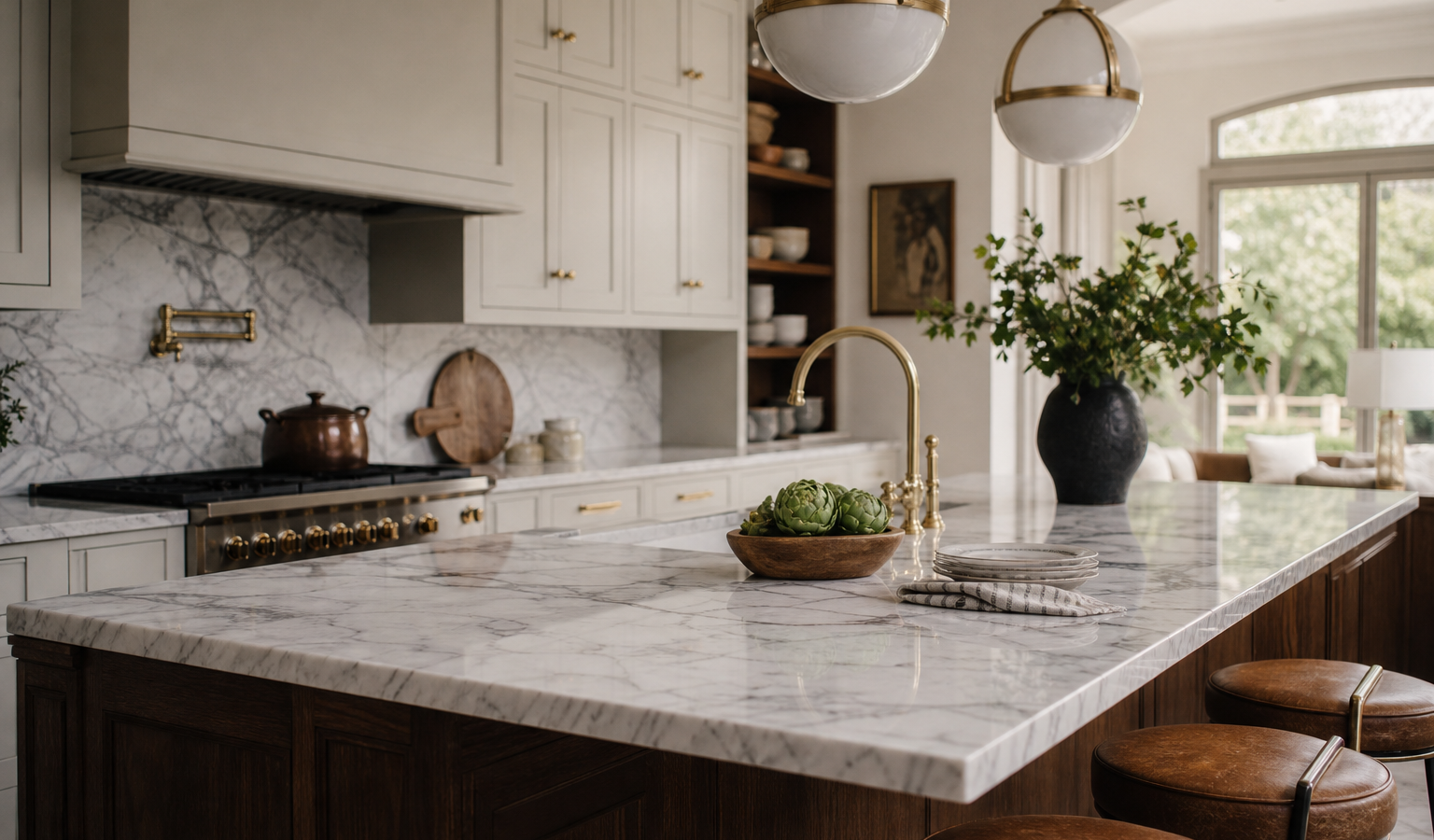
Marble countertops have anchored the world’s most photographed kitchens for centuries, and in 2026 they still stop homeowners in their tracks the moment a slab is unwrapped. Cut from natural metamorphic stone, marble delivers a depth of veining and a soft, luminous glow that no engineered surface has fully copied. But marble countertops are also the most argued-over material in any kitchen, because the same qualities that make them beautiful, a porous calcite body and a cool, buttery surface, are exactly what make them demanding to live with.
This guide breaks down the honest pros and cons of marble, the four types you are most likely to shop (Carrara, Calacatta, Statuario, and Danby), real 2026 installed prices, and the finish and sealing decisions that determine whether you love your counters or fight them. If you are weighing marble against other stone, our overview of the best countertop materials is a useful companion, but this page is the deep dive on marble alone.
What Marble Actually Is
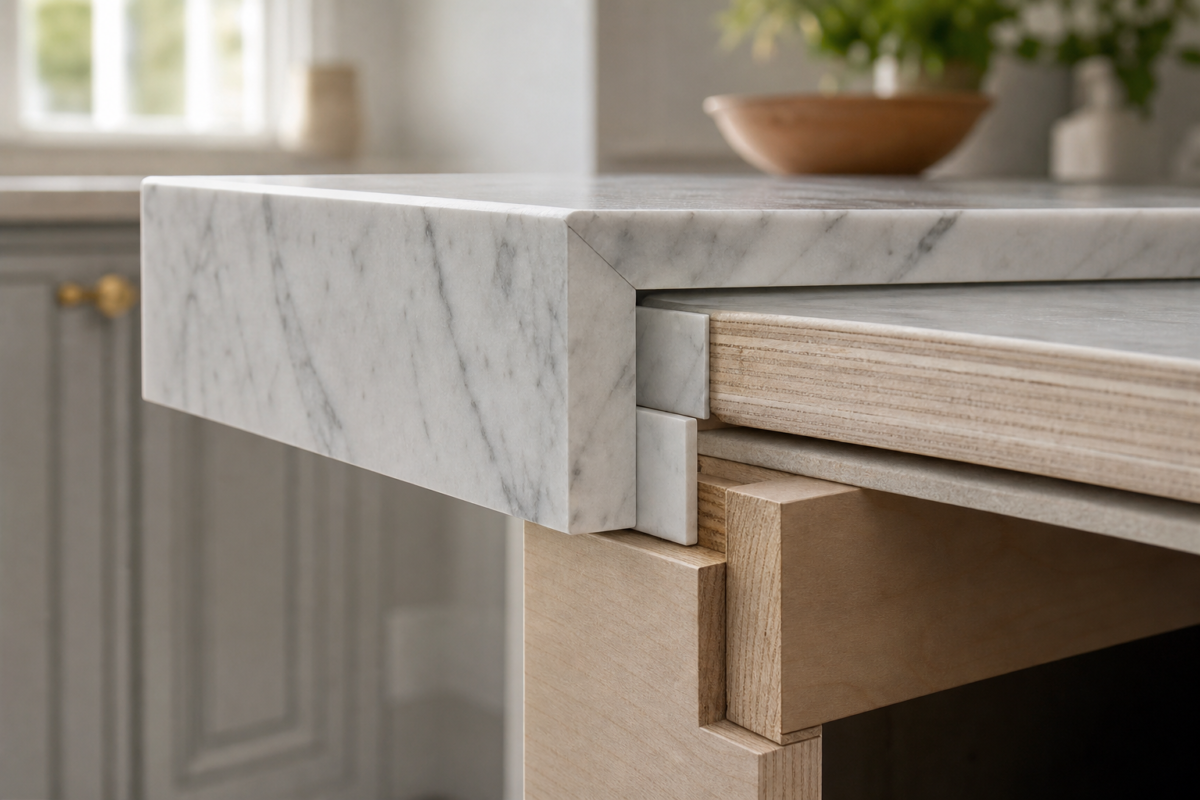
A soft stone born from limestone
Marble is a metamorphic rock, meaning it started as limestone and was transformed over millions of years by heat and pressure deep in the earth. That process recrystallizes the stone into interlocking calcite crystals, and it is the impurities trapped along the way, iron, clay, silt, and other minerals, that create the dramatic veining marble is prized for. Because the base mineral is calcite, marble sits on the softer, more reactive end of the natural-stone spectrum, unlike quartzite or granite, which are built from much harder quartz.
Why calcite makes it porous and reactive
Calcite matters for two practical reasons. First, marble is porous, so unsealed stone can absorb liquids and stain. Second, calcite reacts chemically with acids, which is why a splash of lemon juice, wine, or vinegar can dull the finish in seconds. Understanding this one fact, that marble is a soft, calcite-based, porous stone, explains almost every pro and con that follows. It is not a defect; it is simply the nature of the material.
The Types of Marble You Will Shop
Carrara, Calacatta, Statuario, and Danby
Marble is quarried all over the world, but a handful of names dominate American kitchens. Carrara is the workhorse Italian white, soft gray with feathery, watercolor veining, and it makes up roughly 95 percent of what comes out of the Italian quarries, which keeps it relatively affordable. Calacatta is the rare, dramatic cousin: a whiter background with bold, high-contrast veins that often carry gold or warm undertones, and it accounts for only about 5 percent of quarry output. Statuario splits the difference in look but sits near the top in price, prized for a bright white field with striking gray veining. Danby is the American option, quarried in Vermont, with a consistent, slightly warmer look and excellent value.
| Marble type | Background | Veining | Look | 2026 installed cost/sq ft |
|---|---|---|---|---|
| Carrara | Soft gray-white | Fine, feathery gray | Understated, classic | $75 – $120 |
| Calacatta | Bright white | Bold, thick, often gold | Dramatic, statement | $150 – $250+ |
| Statuario | Bright white | Striking gray, defined | Luxe, luminous | $130 – $220 |
| Danby (Vermont) | Warm white | Soft, consistent | Domestic, budget-friendly | $80 – $115 |
How to choose between them
If you want a quiet, timeless backdrop, Carrara or Danby will serve you well and cost less. If the counter is meant to be the star of the room, Calacatta and Statuario deliver the bold veining that reads as pure luxury, at a premium price. Crucially, all four share the same calcite chemistry, so a cheaper Carrara etches and stains no more than a costly Calacatta. You are paying for rarity and appearance, not durability.
What Marble Countertops Cost in 2026
Installed price ranges by type
In 2026, marble countertops run from about $75 to $250 per square foot installed, with most homeowners landing between $100 and $150 per square foot for quality Italian marble. Entry-level Carrara and Danby anchor the low end near $75 to $120, while premium Calacatta and Statuario push $150 to $250 or more once you factor in book-matched slabs and thicker profiles. A typical 40- to 55-square-foot kitchen therefore lands anywhere from roughly $4,000 to well over $12,000 installed. For a broader material-by-material breakdown, see our kitchen countertop cost guide, which puts marble beside every common surface.
The costs buyers forget to budget
The slab is only part of the story. Fabrication charges add up fast: an undermount sink cutout runs about $175 to $300, a cooktop cutout $200 to $350, and book-matched seams $200 to $500. Marble also wastes more material than granite, yielding usable stone on only about 55 to 70 percent of a slab, so you pay for offcuts. Then there is ongoing care: professional sealing costs $50 to $150 a year, polishing $200 to $500 every three to five years, and etch or chip repair $150 to $400 per visit. Over a decade, maintenance realistically adds $1,500 to $4,000 to the total cost of ownership. Treat marble as the splurge it is, and plan to pull back on other line items to keep the whole project on budget.
Contractor’s take
After twenty-plus years fabricating and installing stone, my rule is simple: budget for the marble you love, then set aside another 10 to 15 percent for cutouts, seams, and the first two years of sealing. The homeowners who are happiest with marble are the ones who were never surprised by the upkeep line item. Ask for honed Carrara on a working island if you want the look without the sticker shock, and never let anyone talk you into skipping the seal.
The Pros: Why People Still Choose Marble
Timeless, unrepeatable beauty
No two marble slabs are alike. The veining is a geological fingerprint, and that individuality is the single biggest reason designers keep specifying it. Marble reads as authentic luxury in a way that even the best marble-look imitations cannot fully match up close, because the veins run through the full depth of the stone rather than sitting on a printed surface. It also ages into a lived-in patina that many owners come to prefer over the factory-fresh look.
A cool surface bakers love
Marble stays naturally cool to the touch, which makes it a genuinely functional surface for rolling pastry, tempering chocolate, and working dough. Serious bakers seek it out for exactly this reason. It also tolerates heat better than most engineered surfaces, though you should still use trivets, since thermal shock and direct flame can damage any stone over time.
It can lift the feel of a home
Marble carries an unmistakable signal of quality that can make a kitchen feel more upscale to buyers and appraisers alike. With proper sealing, a marble counter can last well over a century, outlasting nearly every other surface in the house. The chart below shows how marble scores across the factors most buyers weigh.
The Cons: What You Are Signing Up For
Etching is the real dealbreaker
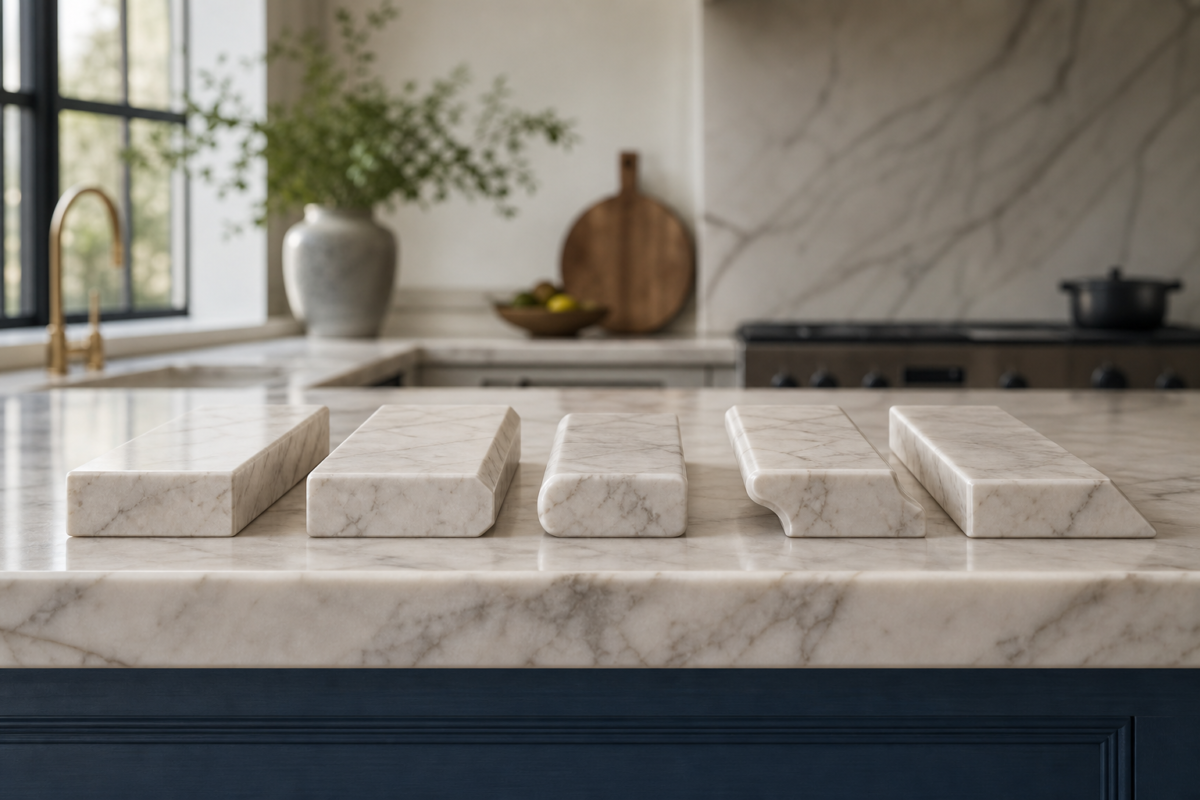
The most misunderstood downside of marble is etching. When an acid, lemon, tomato, wine, coffee, or even some cleaners, touches the surface, it chemically eats into the polish and leaves a dull, lighter mark. Sealing does not prevent etching, because sealer blocks stains, not chemical reactions. On a polished slab, etch marks catch the light and stand out; on a honed slab they largely disappear. This is the number-one complaint I hear from owners who were not warned in advance.
Staining, scratching, and chipping
Because marble is porous, an unsealed or under-sealed surface can absorb oil, wine, and other pigments and stain permanently. Marble is also soft, so knives, dropped pans, and gritty pottery can scratch or chip it, especially on edges and corners. Light scratches can sometimes be buffed, but deeper damage needs professional refinishing. None of this makes marble fragile, but it does make it high-maintenance compared with quartz or quartzite.
Ongoing maintenance you cannot skip
Marble asks for consistent care: wipe acidic spills immediately, use pH-neutral stone cleaner only, reseal on schedule, and accept periodic professional polishing. If a flawless, unblemished surface is non-negotiable for you, marble will frustrate you. If you can embrace a surface that shows its history, the maintenance becomes a rhythm rather than a burden.
Honed vs. Polished vs. Leathered
How finish changes everything
The finish you choose affects both look and livability more than most buyers realize. A polished finish is glossy and reflective, deepening the color and veining, but it also shows every etch mark and scratch. A honed finish is matte and satin-smooth; it hides etching and light wear far better, which is why it is my default recommendation for kitchens, though it can absorb stains slightly faster and needs diligent sealing. Leathered finishes add subtle texture and hide fingerprints, sitting between the two.
What the finish costs
Polished is the standard, no upcharge. Honed typically adds about $2 to $5 per square foot, and leathered $5 to $10 per square foot. For a busy family kitchen, spending a little more on a honed surface is usually money well spent, because it forgives the daily acid contact that would otherwise leave a polished counter looking cloudy within months.
Sealing, Patina, and Daily Care
A realistic sealing schedule
Sealing is non-negotiable with marble. A penetrating sealer fills the pores so liquids have time to be wiped away before they soak in. Most kitchens need resealing every 6 to 12 months, and a simple water test tells you when: drip a little water on the counter, and if it darkens the stone within a few minutes, it is time to reseal. Heavy-use zones near the sink and cooktop wear fastest.
Keep marble in good shape with this simple routine:
- Wipe up acidic spills (citrus, wine, tomato, coffee) the moment they happen
- Clean only with warm water or a pH-neutral stone cleaner, never vinegar or bleach-based sprays
- Use cutting boards and trivets to protect against scratches and thermal shock
- Run the water-drop test every few months and reseal when the stone darkens
- Blot, never wipe, a fresh stain, and use a poultice for anything that has set in
- Schedule professional polishing every 3 to 5 years to refresh the finish
Learning to love the patina
Marble is at its happiest in homes that welcome a patina. Over time the surface softens, small etch marks blend into an overall glow, and the counter takes on the character of a well-used European kitchen. Owners who fight every mark are miserable; owners who see the aging as part of the charm rarely regret their choice. Deciding which camp you fall into is the most useful thing you can do before buying.
Where Marble Works and Where It Does Not
Best-fit locations
Marble shines in lower-traffic, high-impact spots: a butler’s pantry, a baking station, a powder room vanity, a fireplace surround, or a statement backsplash where acids and knives rarely reach it. Perimeter counters in a formal kitchen that sees light use are also a reasonable fit, especially in honed Carrara. A marble slab or tile backsplash is another lower-risk way to bring the stone into a kitchen where it rarely meets acids or knives.
Where to think twice
A heavily used family island where kids do homework, juice gets spilled, and dinner gets prepped daily is the hardest place to keep marble looking pristine. Same goes for a hard-working coffee bar or a home where a spotless surface is a must. In those zones, a marble-look quartz or a true quartzite often delivers the aesthetic with a fraction of the worry.
Marble Alternatives Worth a Look
Marble-look quartz
Engineered quartz now offers convincing marble-look patterns with bold veining, and because it is non-porous it never needs sealing, resists stains and etching, and shrugs off daily abuse. The trade-off is that the veining sits on the surface and can look slightly repetitive across a large run, and it lacks the true depth of natural stone. For most busy kitchens, though, it is the practical winner.
Quartzite, the durable natural stone
Quartzite is a natural stone that can mimic marble’s soft look while being far harder and more acid-resistant, because it is quartz-based rather than calcite-based. It still needs sealing but resists etching and scratching much better. If you want real stone without marble’s fragility, compare the two in our quartzite vs. quartz breakdown before you decide.
Resale Value and Long-Term ROI
Does marble pay you back
Marble signals quality, and in higher-end homes it can help a kitchen show and sell better, reinforcing the perception that no expense was spared. In mid-market homes, however, buyers may see marble as a maintenance liability rather than a bonus, so the return is not guaranteed. The smart move is to match the surface to the home: marble in a luxury property tends to hold its appeal, while a well-chosen quartz may serve a mid-range kitchen better. Our kitchen remodel ROI guide puts countertop choices in the context of the whole project.
The bottom line on value
Marble is a lifestyle and design decision first and an investment decision second. Buy it because you want to live with it and enjoy its aging, not because you expect a dollar-for-dollar payback. Owners who choose marble with open eyes rarely regret it; those who expected a bulletproof surface usually do.
Frequently asked questions
Your next move
You know the number. What are you deciding next?
Kitchen countertops run $2,000 to $10,000+ installed. Here's the 2026 cost of every material per square foot -…
Continue →Compare the 9 best kitchen countertop materials for 2026, with real installed prices per square foot, durability, and…
Continue →Everything you need to plan a kitchen remodel in 2026 - budget, layout, cabinets, countertops, appliances, timeline, hiring,…
Continue →Frequently asked
Do marble countertops stain easily?
They can if left unsealed, because marble is porous. A properly sealed counter gives you time to wipe up spills before they soak in. Reseal every 6 to 12 months and blot acidic or oily spills immediately to keep staining to a minimum.
What is the difference between etching and staining?
A stain is absorbed color from a liquid soaking into the stone; etching is a chemical reaction where acid eats into the polish and leaves a dull mark. Sealing helps prevent stains but does not stop etching, which is why a honed finish is often recommended.
How much do marble countertops cost in 2026?
Expect $75 to $250 per square foot installed, with most homeowners paying $100 to $150 for quality Italian marble. Carrara and Danby sit at the low end, while Calacatta and Statuario command a premium.
Is honed or polished marble better for a kitchen?
Honed is usually the better kitchen choice because its matte surface hides etching and light scratches. Polished looks richer but shows every acid mark. Honed adds roughly $2 to $5 per square foot.
How long do marble countertops last?
With consistent sealing and care, marble can last well over 100 years, outliving most other surfaces. It will develop a patina of small etches and softened shine over time, which many owners come to value.

Pricing and durability data compiled from Angi, Forbes, SlabWise, and Marble Systems (2026).