Quartzite vs Quartz Countertops: 2026 Comparison
Natural stone or engineered surface? A contractor breaks down cost, heat, sealing, and durability so you can choose the right countertop for how you actually cook.

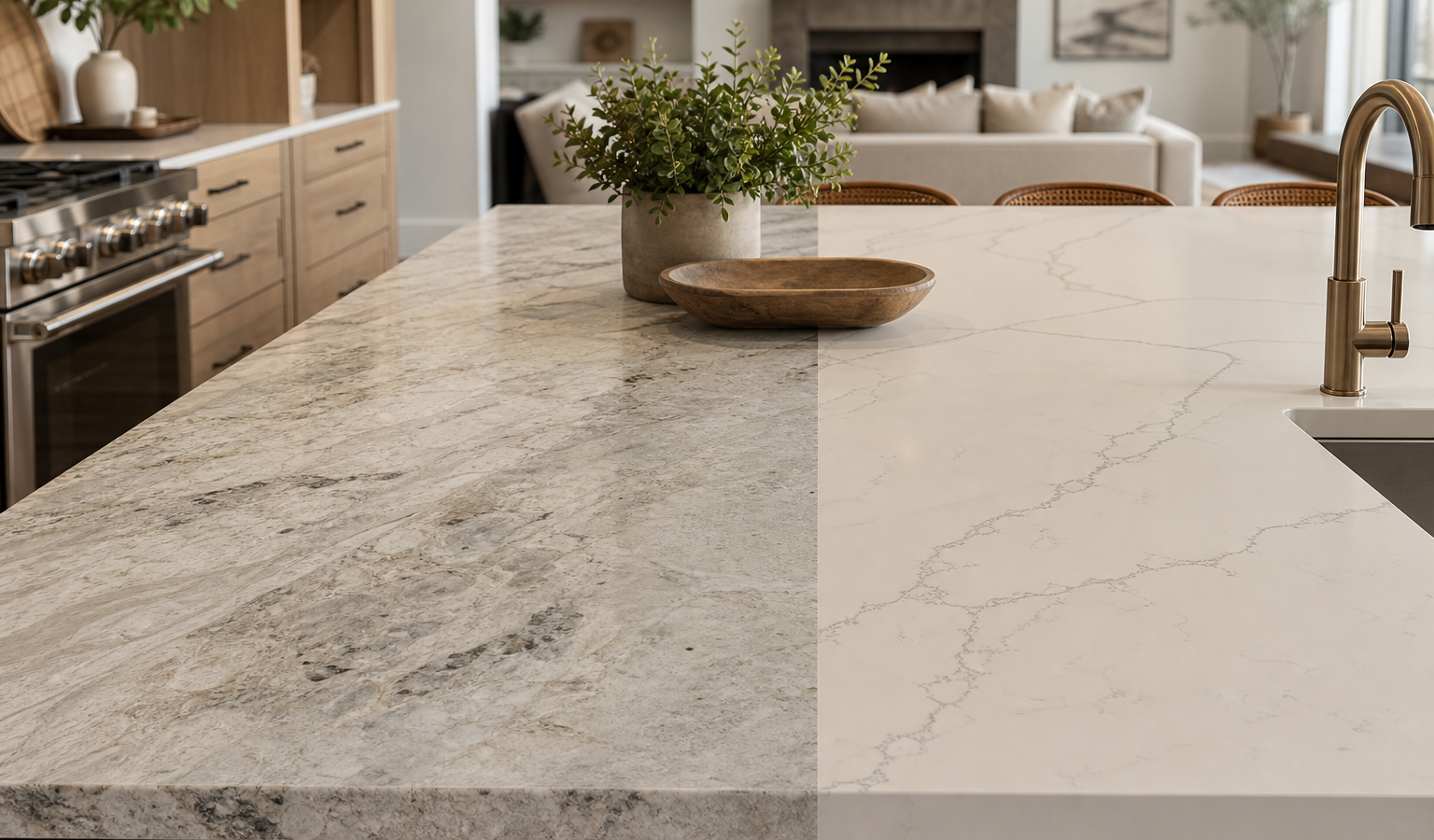
Quartzite vs quartz: the short answer
If you are weighing quartzite vs quartz for a kitchen remodel, the fastest way to understand the choice is this: quartzite is a natural stone pulled from the earth, and quartz is a factory-made surface engineered to look like stone. That single fact drives almost every difference that follows, from price and heat resistance to sealing and the way each one handles a spilled glass of red wine. One is a slab of geology; the other is a recipe.
The confusion is understandable, because the two names sound nearly identical and both surfaces are built largely from the same mineral. But after years of fabricating and installing both, I can tell you they behave like different materials in a working kitchen. This guide walks through composition, real 2026 installed prices, hardness, heat, staining, sealing, looks, and the notorious mislabeling problem so you can pick with confidence rather than by name alone.
The 30-second verdict
Choose quartz if you want a nonporous surface that never needs sealing, shrugs off wine and citrus, and comes in predictable colors on a tighter budget. Choose quartzite if you cook hard, love the depth of real stone, and want a marble look that survives hot pans and daily use. Both are excellent countertops. The right one depends on how you actually live in your kitchen and how much maintenance you are willing to trade for that natural-stone character.
Quartzite vs quartz side by side
Before we go deep, here is the head-to-head comparison. Think of the left column as the natural stone and the right as the engineered stone. These figures reflect 2026 US pricing and typical performance for the mid-range slabs most homeowners actually buy.
The comparison table
| Factor | Quartzite (natural) | Quartz (engineered) |
|---|---|---|
| Origin | Natural metamorphic stone | 93% ground quartz + resin |
| Installed price (2026) | $80-$200 / sq ft | $60-$150 / sq ft |
| Hardness (Mohs) | 7 to 8 | About 7 |
| Heat resistance | Excellent, takes hot pans | Fair, resin can scorch |
| Stain resistance | Good when sealed | Excellent, nonporous |
| Sealing | Yes, every 1-2 years | Never needed |
| Etching from acids | No | No |
| UV / fading | UV stable, outdoor ok | Can yellow in sun |
| Look | Unique veins per slab | Consistent, designed |
| Best for | Heat, natural character | Low upkeep, budget, uniformity |
Notice that neither material etches, which is the trait that separates both from true marble. That single point defeats a lot of marble-look-alike anxiety and explains why both surfaces have taken over kitchens that once defaulted to granite. For the wider field, our guide to the best countertop materials ranks these two against granite, solid surface, and butcher block.
Contractor’s take
Do not shop by name. I have seen ‘quartzite’ slabs on a showroom floor that were actually soft dolomitic marble, and ‘quartz’ remnants that were leftover engineered stone with a resin batch that had already yellowed. Ask for the slab’s trade name, then look it up. The label on the rack is a starting point, not a guarantee.
What quartzite actually is
Quartzite is a natural stone. It starts life as sandstone, then heat and pressure deep in the earth fuse those sand grains over millions of years into a dense, interlocked crystalline slab. That metamorphic process is why quartzite is so hard and so heat tolerant: you are looking at a rock that was forged, not mixed. Each slab is quarried, cut, and finished, which means no two are identical and the veining you fall in love with on the showroom floor is the veining you take home.
Honed, polished, and slab character
Quartzite comes in a polished finish that amplifies depth and color, or a honed finish that reads softer and more matte. Because it is natural stone, it is mildly porous, so it needs sealing to keep liquids from soaking in. Popular varieties like Taj Mahal, Super White, and Mont Blanc deliver the creamy, marble-look palette buyers crave without marble’s fragility. Colors skew toward whites, grays, and warm golds, so if you want a bold saturated red or a jet black, quartzite is a harder ask than engineered stone.
What quartz actually is
Quartz countertops are engineered stone. Manufacturers grind natural quartz into a fine aggregate, then bind roughly 93% ground quartz with about 7% polymer resins and pigments, compact it under heat and pressure, and cure it into slabs. The result is a nonporous, consistent surface sold under names like Caesarstone, Cambria, Silestone, and MSI Q. Because the look is designed rather than discovered, quartz can imitate marble veining, mimic concrete, or deliver a flat solid color with total repeatability.
Nonporous by design
The resin is the hero and the villain. It makes quartz nonporous, so it never needs sealing and resists stains from wine, coffee, and oil better than almost any natural stone. But that same resin is a plastic, and plastic does not love heat. Set a 400-degree pan directly on quartz and you risk a scorch mark or a heat ring the surface will not recover from. Quartz is also prone to yellowing under prolonged direct sunlight, which is why manufacturers warn against outdoor use. If you want the full engineered-versus-mined breakdown against another popular pick, our quartz vs granite comparison covers that matchup in detail.
2026 cost: what you will actually pay
Price is where most decisions land. In 2026, installed quartz runs roughly $60 to $150 per square foot, while quartzite runs about $80 to $200 per square foot installed. Quartzite typically lands 20% to 40% higher than a comparable quartz because it is quarried, harder to cut, and demands more skilled fabrication. Both include the slab, fabrication, edge work, and installation for a standard kitchen.
What moves the number
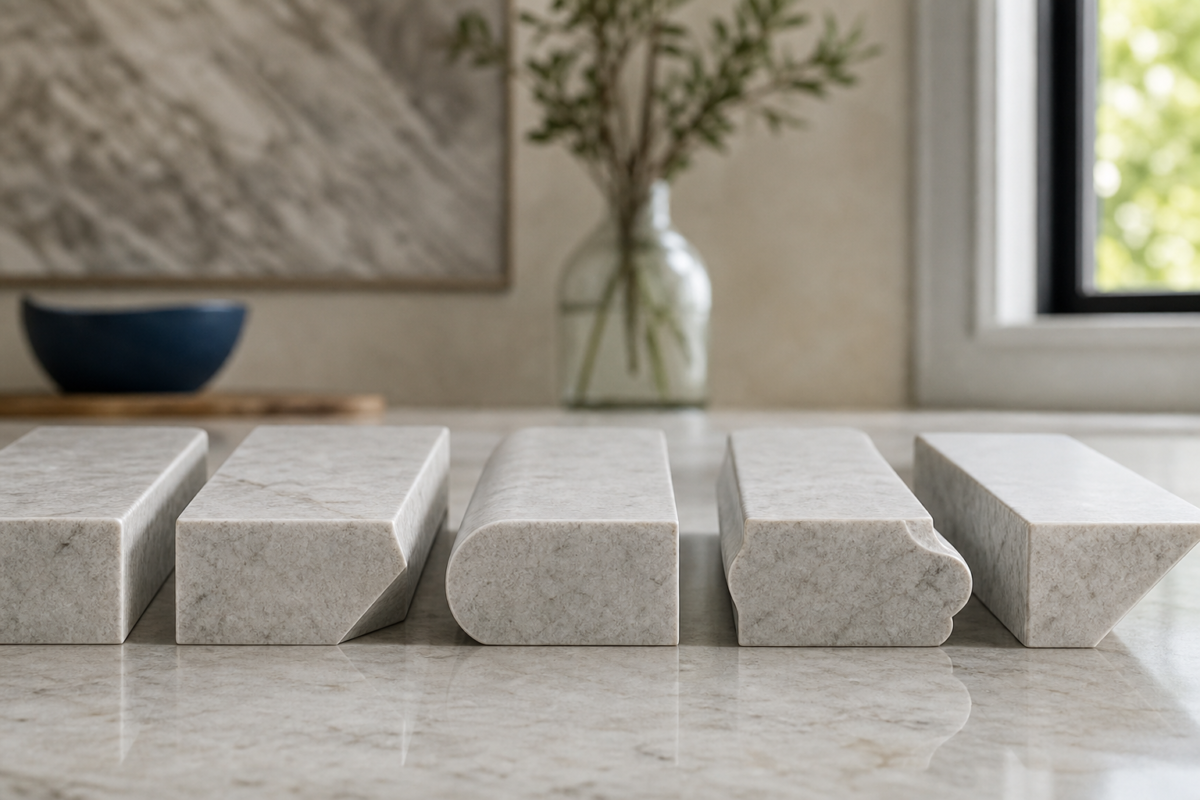
Slab rarity, thickness, edge profile, cutouts, and your local labor market all swing the total. An exotic quartzite with dramatic veining can climb well past $200 per square foot, while a builder-grade quartz can dip under $60. The bars below show how the two materials compare across the four levers that matter most when your fabricator writes the quote.
For a full breakdown of how countertops fit the overall budget, see our kitchen countertop cost guide, and for the whole project envelope, the kitchen remodel ROI data shows how surface choice affects what you recoup at sale.
Durability, hardness, and heat
Both materials are tough, but they are tough in different ways. On the Mohs hardness scale, quartz sits around 7 and quartzite ranges from 7 to 8, making quartzite marginally harder and more scratch resistant. In practice, both resist everyday knife marks and abrasion far better than marble or laminate, so hardness alone rarely decides the purchase.
Heat is the real dividing line
Heat resistance is where they truly split. Quartzite is pure stone and takes direct contact from a hot pot without flinching, which is why serious cooks and fireplace surrounds favor it. Quartz relies on resin, and that resin can soften, scorch, or discolor above roughly 300 degrees Fahrenheit. You can absolutely live happily with quartz, but you must use trivets religiously. If you routinely pull cast iron straight from the oven to the counter, quartzite buys you peace of mind that quartz cannot.
Stains, sealing, and daily upkeep
This is the trade-off that defines living with each surface. Quartz is nonporous, so it never needs sealing and resists stains, bacteria, and moisture with just soap and water. It is the lowest-maintenance premium countertop you can buy, full stop. Quartzite is mildly porous, so it needs sealing, typically every one to two years with normal kitchen use, to keep oil and wine from soaking in.
The water test and the etch myth
A simple field test tells you when to reseal quartzite: drip water on the surface. If it beads, the seal is holding; if it soaks in and darkens, it is time to reseal. Crucially, real quartzite does not etch from acids the way marble does, so lemon juice and vinegar will not leave dull spots. That etch resistance, combined with sealing, is what lets quartzite deliver a marble look you can actually cook on. A honed quartzite hides everyday wear a little better than a high-polished slab, if maintenance is a worry.
- Wipe both surfaces daily with a pH-balanced cleanser or mild soap and water
- Reseal quartzite every 1 to 2 years, or when the water test stops beading
- Skip the sealing step entirely with quartz, it is nonporous
- Use trivets and hot pads on quartz to protect the resin from scorching
- Keep quartz out of direct, prolonged sunlight to avoid yellowing
- Blot spills promptly on quartzite until you confirm the seal is fresh
Looks, patterns, and light
Aesthetics are personal, but the two materials offer fundamentally different promises. Quartzite gives you natural, one-of-a-kind veining and the depth that only real stone produces. Its palette leans white, gray, and gold, and it is the go-to for anyone chasing the marble look without marble’s upkeep. Every slab is unique, so you should hand-select the exact slab at the yard rather than ordering sight unseen.
Consistency versus character
Quartz offers the opposite: engineered consistency. Because the pattern is designed, you can order more later and get a near-perfect match, and large kitchens avoid the surprise of wildly different slabs. The trade-off is that repeated patterns can look manufactured at seams, and quartz can yellow under UV. Quartzite is UV stable and works outdoors; quartz does not. If you want warmth that no stone provides, compare both against butcher block countertops for an island accent.
The mislabeling problem you must avoid
Here is the pitfall that catches even careful buyers. Some slabs sold as quartzite are actually dolomitic or soft marble that has been mislabeled, either by mistake or to command a quartzite price. The classic example is Fantasy Brown, frequently marketed as soft quartzite but chemically closer to marble, which means it etches from acids and scratches more easily than true quartzite.
How to verify a real slab
Protect yourself with two simple checks. First, ask the fabricator for the slab’s trade name and confirm it against reputable stone databases. Second, request an acid and scratch test on a sample: true quartzite resists a few drops of lemon juice and a knife edge, while soft marble dulls and marks. A reputable supplier will happily do this. Mislabeled quartz is rarer, but confirm you are getting a first-quality slab and not a discounted lot with an off-color resin batch. Getting this right protects the whole budget you set in your kitchen remodel cost plan.
Which countertop should you choose?
Match the material to how you actually use your kitchen. Neither is objectively better; they optimize for different priorities. Quartz wins on convenience, budget flexibility, and color range. Quartzite wins on heat, natural beauty, and outdoor durability. Both hold strong resale value, with quartzite carrying a slight premium in luxury markets because buyers perceive genuine natural stone as higher end.
Pick quartz or quartzite by lifestyle
Choose quartz if you want a set-and-forget surface, cook casually, prefer a specific color, or are managing a tighter budget. Choose quartzite if you cook hot and often, crave the look of real marble, plan an outdoor kitchen, or simply value authentic stone. Whichever you pick, both will outlast laminate by decades and reward the investment when you sell, especially when paired with the finishes covered in our complete kitchen remodeling guide.
Frequently asked questions
Your next move
You know the number. What are you deciding next?
Kitchen countertops run $2,000 to $10,000+ installed. Here's the 2026 cost of every material per square foot -…
Continue →Quartz vs. granite: the two most-chosen kitchen countertops compared on 2026 cost, durability, maintenance, heat, and looks -…
Continue →Compare the 9 best kitchen countertop materials for 2026, with real installed prices per square foot, durability, and…
Continue →Frequently asked
Is quartzite better than quartz?
Neither is universally better. Quartzite is harder and far more heat resistant, so it suits serious cooks and outdoor use, while quartz is nonporous, never needs sealing, and resists stains with less upkeep. The best choice depends on your cooking habits and maintenance appetite.
Which is more expensive, quartzite or quartz?
Quartzite is usually pricier. In 2026, installed quartz runs about $60 to $150 per square foot and quartzite about $80 to $200, so quartzite typically costs 20% to 40% more because it is quarried and harder to fabricate.
Does quartzite need to be sealed?
Yes. Quartzite is mildly porous and should be sealed every one to two years. Use the water test: if water beads, the seal holds; if it soaks in and darkens the stone, reseal. Quartz is nonporous and never needs sealing.
Can you put a hot pan on quartz?
You should not. Quartz contains resin that can scorch or discolor above roughly 300 degrees Fahrenheit, so always use trivets. Quartzite is natural stone and tolerates direct heat far better, though a trivet is still smart practice.
How can I tell if a slab is real quartzite?
Ask for the trade name and request an acid and scratch test. True quartzite resists lemon juice and a knife edge, while mislabeled soft marble such as Fantasy Brown dulls and etches. A reputable fabricator will test a sample for you.

Pricing and specifications compiled from 2026 US fabricator and industry cost data; verify local quotes with your installer.