Toilet Buying Guide: Types, Features, and 2026 Cost
Flush type, bowl shape, rough-in, and water use decoded, plus what a new toilet really costs installed in 2026.

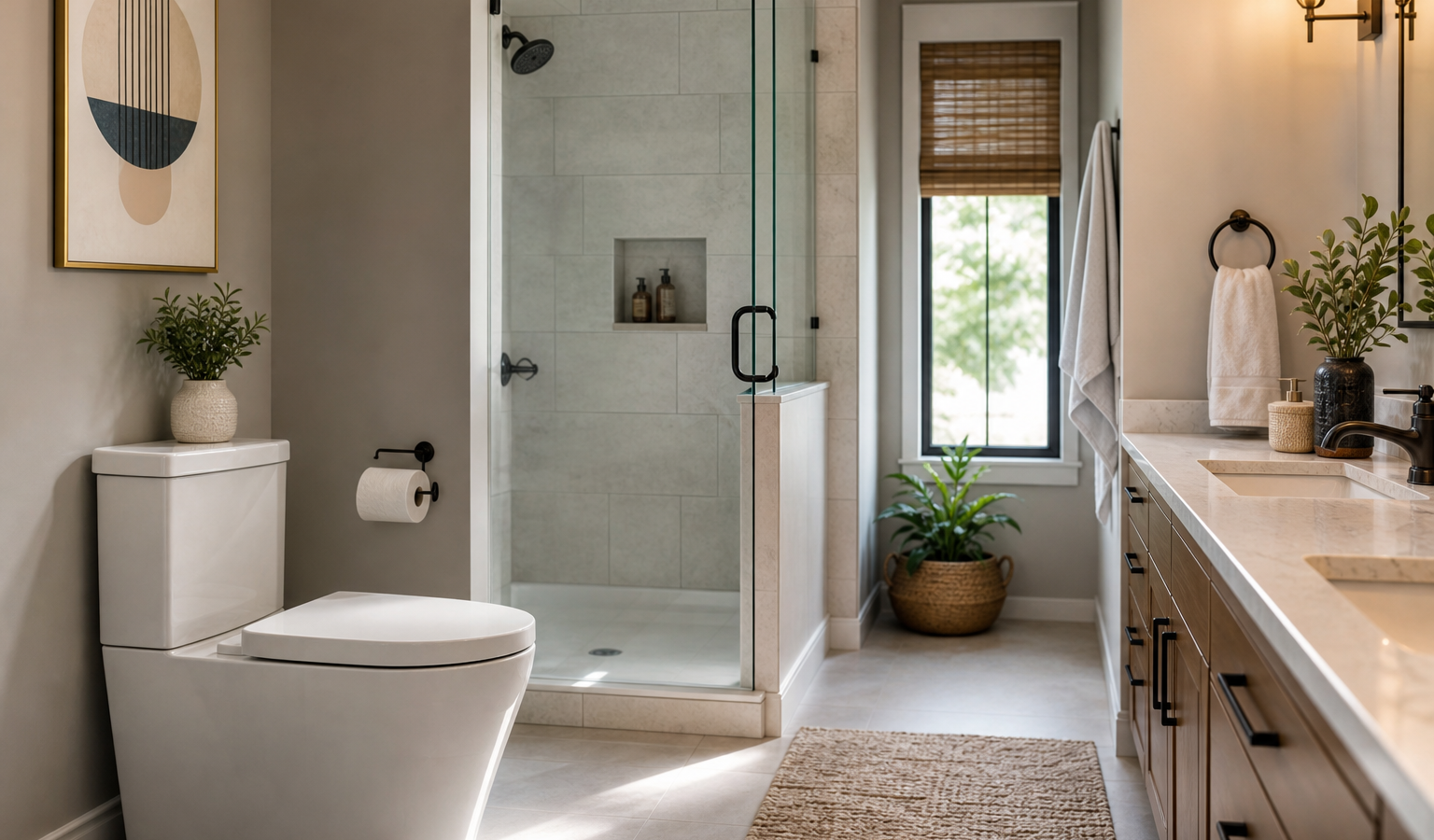
This toilet buying guide walks you through every decision that matters before you spend money, from flush type and bowl shape to rough-in measurements and the real 2026 price of getting a new toilet installed. A basic two-piece model still sells for $100 to $500, while a smart toilet with a heated seat and auto-flush can run $600 to $2,000 or more. Most homeowners pay about $600 all-in once labor is added, but the right choice depends on your plumbing, your household, and how much maintenance you want to avoid.
Below you will find the specifications pros actually check on the box, honest tradeoffs between one-piece and two-piece designs, water-use ratings that cut your bill, and a clear sense of what fits a standard 12-inch rough-in versus an older home. Use it to shortlist two or three models before you ever walk into a showroom.
Key takeaways
- Measure your rough-in first: 12 inches is standard, but 10- and 14-inch rough-ins exist in older homes and limit which models fit.
- An elongated bowl at comfort height (17 to 19 inches) suits most adults; round-front saves space in a powder room.
- Look for WaterSense certification (1.28 gallons per flush or less) and a MaP score of 800 grams or higher for reliable flushing.
- Expect $100 to $900 for the fixture and $150 to $450 in labor, for a typical installed total of $350 to $800.
- One-piece toilets clean easier and leak less; two-piece models cost less and are simpler to carry and repair.
Toilet buying guide: how much does a new toilet cost in 2026?
A new toilet costs $350 to $800 installed for most homeowners in 2026, with a national average near $600. That figure covers a mid-range fixture plus professional labor and haul-away of the old unit. Budget two-piece toilets start around $100, while premium smart models push past $2,000 before installation.
Labor alone runs $150 to $450 for a straightforward swap where the drain and water supply stay put. Costs climb fast when a plumber has to replace a corroded flange, move the drain line, or repair subfloor damage from a slow leak. If you are weighing a toilet as one line item in a larger project, our bathroom remodel cost breakdown shows how fixtures fit the whole budget.
| Toilet type | Fixture price | Installed total | Best for |
|---|---|---|---|
| Two-piece | $100 – $500 | $250 – $700 | Most homes, easy repairs |
| One-piece | $200 – $900 | $400 – $1,100 | Easy cleaning, modern look |
| Wall-hung | $300 – $1,500+ | $900 – $3,000 | Small baths, floating style |
| Smart toilet | $600 – $2,000+ | $900 – $3,500 | Bidet function, comfort |
| Upflush/macerating | $750 – $1,500 | $1,200 – $2,500 | Basements below the sewer line |
What toilet types should you compare?
The five main toilet types are two-piece, one-piece, wall-hung, smart, and specialty units like upflush or composting toilets. Two-piece and one-piece floor-mounted models cover the vast majority of US bathrooms; the rest solve specific layout or plumbing problems.
One-piece vs two-piece toilets
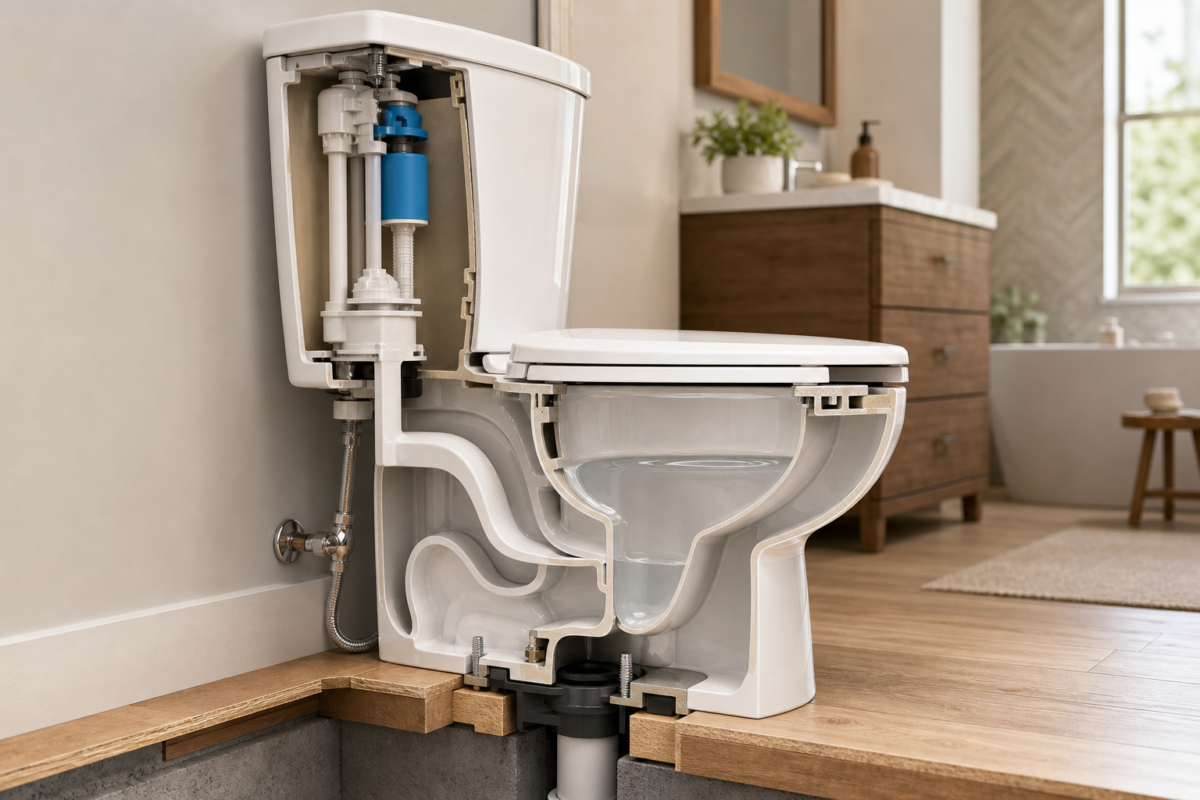
A two-piece toilet has a separate tank that bolts onto the bowl, while a one-piece fuses both into a single molded unit. One-piece models have no seam between tank and bowl, so they wipe clean in seconds and have one fewer gasket to leak. They are heavier and pricier, and if the unit cracks you replace the whole thing. Two-piece toilets cost less, ship in lighter boxes, and let you swap a worn tank-to-bowl gasket instead of the entire fixture, which is why they remain the default in rentals and new construction.
Wall-hung and smart toilets
Wall-hung toilets mount to an in-wall carrier frame with the tank hidden behind the finished wall, freeing up floor space and making mopping effortless. They demand a sturdier wall assembly and cost more to install, but they are a favorite in small baths and modern designs. Smart toilets add heated seats, warm-water washing, air drying, automatic lids, and night lights; many combine a toilet and bidet in one fixture. If a washing function is your main goal, compare a standalone unit against adding a seat in our bidet and bidet-seat guide.
How to measure your rough-in before buying
Measure from the finished wall behind the toilet to the center of the closet bolts that hold it down; that distance is your rough-in. Twelve inches is the modern standard, but homes built before the 1980s often use a 10-inch or 14-inch rough-in, and buying the wrong size means the toilet will not fit.
Measure to the center of the bolt caps, not the baseboard, and ignore the baseboard thickness in your number. If your home has two bolts on each side, measure to the rear set. Also confirm you have at least 15 inches from the toilet centerline to any side wall or vanity, and 21 inches of clear space in front, which are the minimums most codes enforce and the clearances outlined by the National Kitchen and Bath Association.
Bowl shape, height, and seat comfort
Choose an elongated bowl at comfort height for most adults, and a round-front bowl only where space is tight. Elongated bowls add about two inches of length for better support, while round-front bowls save floor space in a powder room or tight corner.
Standard-height toilets place the seat about 15 inches off the floor. Comfort height, also called chair height or right height, raises the seat to 17 to 19 inches, which is easier on knees and hips and matches the seated height recommended by the Americans with Disabilities Act for accessible fixtures. Taller users and anyone planning to age in place should lean toward comfort height; households with small children sometimes prefer a standard bowl so little feet reach the floor.
Water efficiency and flush systems explained
Buy a WaterSense-labeled toilet that uses 1.28 gallons per flush or less, which cuts water use roughly 20 percent below the 1.6-gallon federal maximum without sacrificing performance. A WaterSense toilet can save a family of four thousands of gallons a year compared with an old 3.5-gallon model.
Gravity, pressure-assist, and dual flush
Gravity-fed toilets are the quiet, reliable standard, using the weight of falling water to clear the bowl. Pressure-assist models trap air in an inner tank to blast waste out with more force, which resists clogs in busy households but is noticeably louder. Dual-flush toilets give you two buttons, typically 1.1 gallons for liquid waste and 1.6 for solids, letting you save water on most flushes. Check the manufacturer’s MaP score, which measures how many grams of solid waste a toilet clears in a single flush; 800 grams or higher signals a strong flush, and many top models now exceed 1,000. The EPA WaterSense program lists certified models you can filter by flush volume.
Materials, glazing, and easy-clean features
Nearly all toilets use vitreous china, a glazed ceramic that resists stains and scratches. The differences that matter are the glaze and the trap design, both of which affect how often you scrub.
Premium antimicrobial glazes, marketed under names like CeFiONtect or EverClean, make the surface slicker so waste and mineral deposits rinse away instead of sticking. A skirted or concealed trapway hides the curved pipe behind a smooth skirt, eliminating the hard-to-reach nooks where dust and grime collect. Rimless or open-rim bowls remove the hidden under-rim channel entirely, a design that wipes clean in one pass. These features add $100 to $400 to the price but pay off in cleaning time, especially in a frequently used family bath. Coordinate the finish with the rest of your fixtures using our bathroom sink types overview.
Smart toilets and bidet features
Smart toilets are worth it if you value a heated seat, warm-water cleansing, and hands-free operation, and you have a GFCI outlet nearby to power them. Prices run $600 to $2,000 or more, and installation needs both a water supply and electricity within reach of the unit.
Common features include adjustable water temperature and pressure, a warm-air dryer, deodorizing fans, self-cleaning nozzles, motion-activated lids, and app or remote controls. If you like your current toilet, a bidet seat or washlet delivers most of these benefits for $200 to $800 without replacing the whole fixture. Factor the electrical work into your plan; adding a dedicated outlet can add $150 to $300 if one is not already behind the toilet, a cost you will also see in a broader small bathroom remodel.
Contractor’s take
Before you fall in love with a model online, pull the old toilet’s data sheet or measure the rough-in yourself and write it on your phone. I have seen more returns over a 10-inch rough-in than any other mistake. While the toilet is off, replace the supply line and wax ring too; those two parts cost under $25 together and are the usual suspects behind a leak a year later.
Which toilet brands last the longest?
Toto, Kohler, and American Standard are the three brands most pros install for proven flush performance and easy parts availability. All three sell models across every price tier, from a sub-$150 two-piece to a $4,000 smart toilet, so brand loyalty matters less than picking the right model within a trusted line.
Toto is known for powerful, quiet flushing and its CeFiONtect glaze; Kohler offers the widest range of styles and strong design options; American Standard tends to deliver the best value with its Champion and VorMax flushing systems. Whatever the badge, a toilet is only as serviceable as its replacement parts, so favor a model that uses a standard flapper, fill valve, and flush valve you can buy at any hardware store a decade from now. Overseas or no-name smart toilets often use proprietary parts that are impossible to source once the importer disappears. For a higher-end suite where the toilet matches premium finishes, see how fixtures scale in a primary bathroom remodel.
DIY vs professional toilet installation
A confident DIYer can replace a toilet in two to three hours and save the $150 to $450 labor charge, but hire a pro if the flange is damaged, the floor is soft, or the drain needs to move. A botched wax seal or overtightened bolt can crack the bowl or leak into the subfloor, which costs far more to fix than the labor you saved.
- Confirm the rough-in and bowl shape match your space before buying.
- Shut off the supply, flush, and sponge out the tank and bowl.
- Inspect the closet flange; replace it if it is cracked or below the finished floor.
- Set a new wax ring or waxless seal and lower the toilet straight down without rocking.
- Hand-tighten the closet bolts, then snug them a quarter turn at a time to avoid cracking the base.
- Install a new flexible supply line and check for leaks through several flushes.
Pair a new toilet with durable, water-resistant flooring so a future leak does not ruin the room; our bathroom flooring options guide compares tile, luxury vinyl, and more. And if the toilet is part of a full renovation, the bathroom vanity guide helps you coordinate the other major fixtures.
Frequently asked questions
Your next move
You know the number. What are you deciding next?
Walk-in tub cost in 2026: $5,000 to $20,000 installed. Compare tub types, features, and the real Medicare coverage…
Continue →Bathroom remodel financing explained: compare home equity loans, HELOCs, cash-out refi, personal loans, and 0% cards with 2026…
Continue →Steam shower cost runs $3,000 to $10,000 installed in 2026. See prices by generator size, enclosure, and prefab…
Continue →Frequently asked
What is the most important spec in a toilet buying guide?
The rough-in measurement comes first, because a toilet that does not fit the drain location is useless no matter how good it is. After that, prioritize flush performance (a MaP score of 800 grams or more) and the right bowl height for your household.
Is a one-piece or two-piece toilet better?
One-piece toilets clean easier and have fewer leak points, making them worth the premium in a frequently used bath. Two-piece toilets cost less, are lighter to install, and let you replace parts individually, which is why they are still the most common choice.
How many gallons per flush should a new toilet use?
Choose a WaterSense toilet rated at 1.28 gallons per flush or less. It uses about 20 percent less water than the 1.6-gallon federal limit and still clears the bowl reliably, saving thousands of gallons a year for an average family.
What height toilet is best?
Comfort height, with a seat 17 to 19 inches off the floor, suits most adults and anyone with knee or hip issues. Standard 15-inch toilets work well for homes with young children or shorter users who prefer their feet flat on the floor.
Can I install a toilet myself?
Yes, a straightforward replacement is a two to three hour DIY job if the flange and floor are sound. Call a plumber when the drain must move, the flange is damaged, or the subfloor feels soft, since those problems can turn a simple swap into water damage.

Pricing reflects 2026 US averages from HomeGuide, Fixr, and manufacturer data; water specs from EPA WaterSense.