Bidet Guide: Types, Features, and 2026 Cost
Attachment, seat, standalone, or integrated: which bidet fits your bathroom and what each costs installed in 2026.

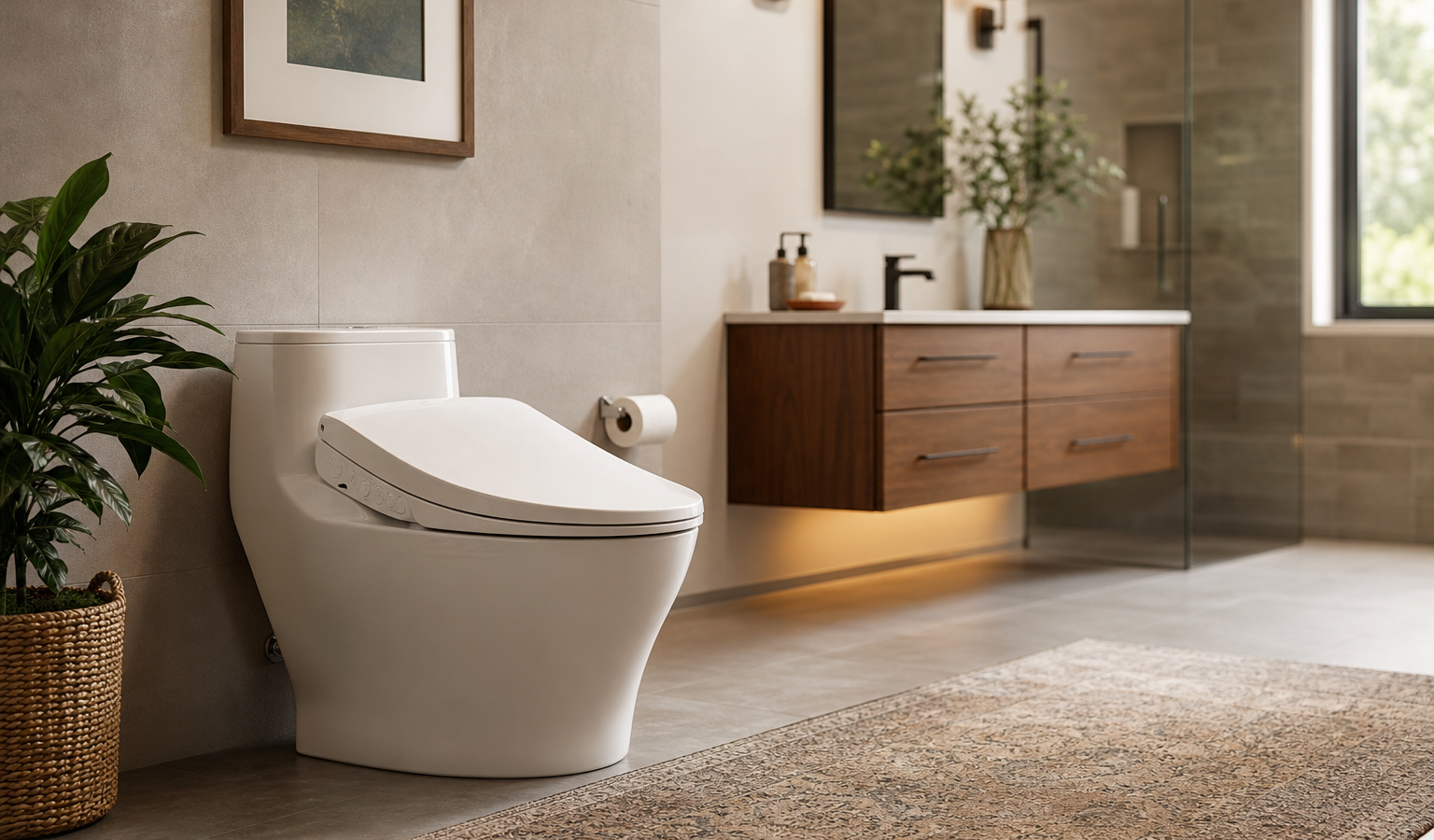
A bidet cleans you with a stream of water instead of (or alongside) toilet paper, and in 2026 you can add one to almost any bathroom for as little as $40 or spend $2,000-plus on an integrated smart toilet. This bidet guide explains the four main types, what each costs installed, and the plumbing and electrical details that decide which one fits your home. Most homeowners who want warm water and a heated seat land on an electric bidet seat for $170 to $650, bolted onto their existing toilet in under an hour.
Below you will find honest tradeoffs between attachments, seats, standalone fixtures, and built-in units, plus the water, outlet, and clearance requirements that trip people up. By the end you should know exactly which product to buy and whether you need a plumber or an electrician at all.
Key takeaways
- A non-electric bidet attachment costs $30 to $120 and installs in 20 minutes with no electrician needed.
- Electric bidet seats ($170 to $650) add warm water, a heated seat, and a dryer but require a nearby GFCI outlet.
- Standalone bidet fixtures run $500 to $1,500 plus roughly $1,180 in new plumbing, and need floor space beside the toilet.
- Integrated smart toilets combine toilet and bidet for $1,200 to $3,500 installed.
- Bidets cut toilet paper use sharply and use only about one-eighth of a gallon of water per wash.
Bidet guide: how much does a bidet cost in 2026?
A bidet costs $400 to $1,500 installed for most homeowners, with a national average around $640. The price swings widely because the category spans a $40 handheld sprayer and a $3,500 integrated smart toilet, so your total depends entirely on which type you choose and whether new plumbing or wiring is involved.
Simple attachments and non-electric seats are pure DIY and cost only the price of the hardware. Electric seats add a possible $150 to $300 for a GFCI outlet if one is not already behind the toilet. Standalone fixtures are the most expensive route because they need their own hot and cold supply and a drain, work that averages $1,180 on its own. See how this slots into a larger budget in our bathroom remodel cost guide.
| Bidet type | Product price | Installed total | Power / plumbing |
|---|---|---|---|
| Handheld sprayer | $40 – $120 | $40 – $200 | Cold water tee only |
| Non-electric attachment | $30 – $120 | $30 – $250 | Cold (or hot/cold) tee |
| Non-electric seat | $80 – $250 | $80 – $350 | No outlet needed |
| Electric bidet seat | $170 – $650 | $320 – $950 | GFCI outlet required |
| Standalone fixture | $500 – $1,500 | $1,500 – $3,000 | Hot/cold supply + drain |
| Integrated smart toilet | $1,200 – $2,000+ | $1,500 – $3,500 | Outlet + water supply |
The four main bidet types explained
The four main bidet types are attachments, seats, standalone fixtures, and integrated toilets. Attachments and seats mount to the toilet you already own, while standalone and integrated options are separate fixtures that need their own plumbing.
Bidet attachments and handheld sprayers
A bidet attachment is a thin panel that slips under your existing toilet seat and sprays through a retractable nozzle, controlled by a dial on the side. It taps into the toilet’s water supply with a tee valve and needs no electricity, which is why it is the cheapest and simplest entry point. Handheld sprayers, sometimes called bidet showers or shattafs, hang beside the toilet and let you aim the stream manually. Both are excellent budget choices, though basic models deliver only room-temperature water unless you run a hot line.
Bidet seats: non-electric vs electric
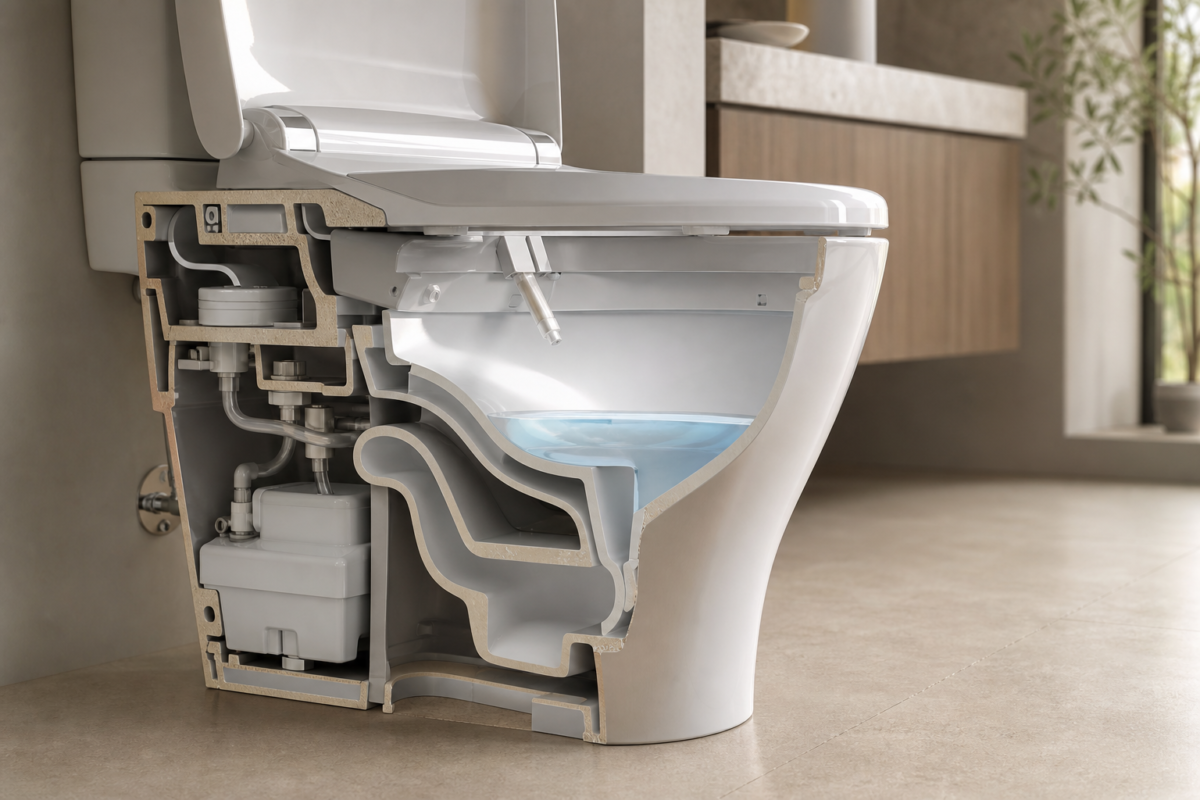
A bidet seat replaces your existing toilet seat entirely and offers far more control. Non-electric seats use water pressure alone and often include a dual-nozzle design and adjustable pressure for under $250. Electric seats are where the premium features live: a heated seat, instant or tank-warmed water, adjustable temperature and position, a warm-air dryer, a deodorizer, and a remote or side panel. They need a grounded GFCI outlet within a few feet, so plan for an electrician if your toilet wall has no outlet. For a full fixture swap, pair your choice with our toilet buying guide so the seat matches the bowl shape.
Standalone and integrated bidets
A standalone bidet is the traditional porcelain basin you sit on after using the toilet, common in Europe and still specified in large or luxury baths. It needs its own hot and cold supply, a drain, and roughly 30 inches of floor space beside the toilet. An integrated smart toilet builds the washing function directly into the bowl for a seamless, tankless look and the most features, at the highest price. Both are best planned during a full renovation; see how fixtures scale in a primary bathroom remodel.
Which bidet is right for your bathroom?
Choose an attachment or non-electric seat if you want the benefits on a budget and have no outlet, an electric seat if warm water and a heated seat matter to you, and a standalone or integrated unit only if you are already remodeling. The deciding factors are your budget, whether a GFCI outlet exists, and how much floor space you have.
Installation requirements and plumbing
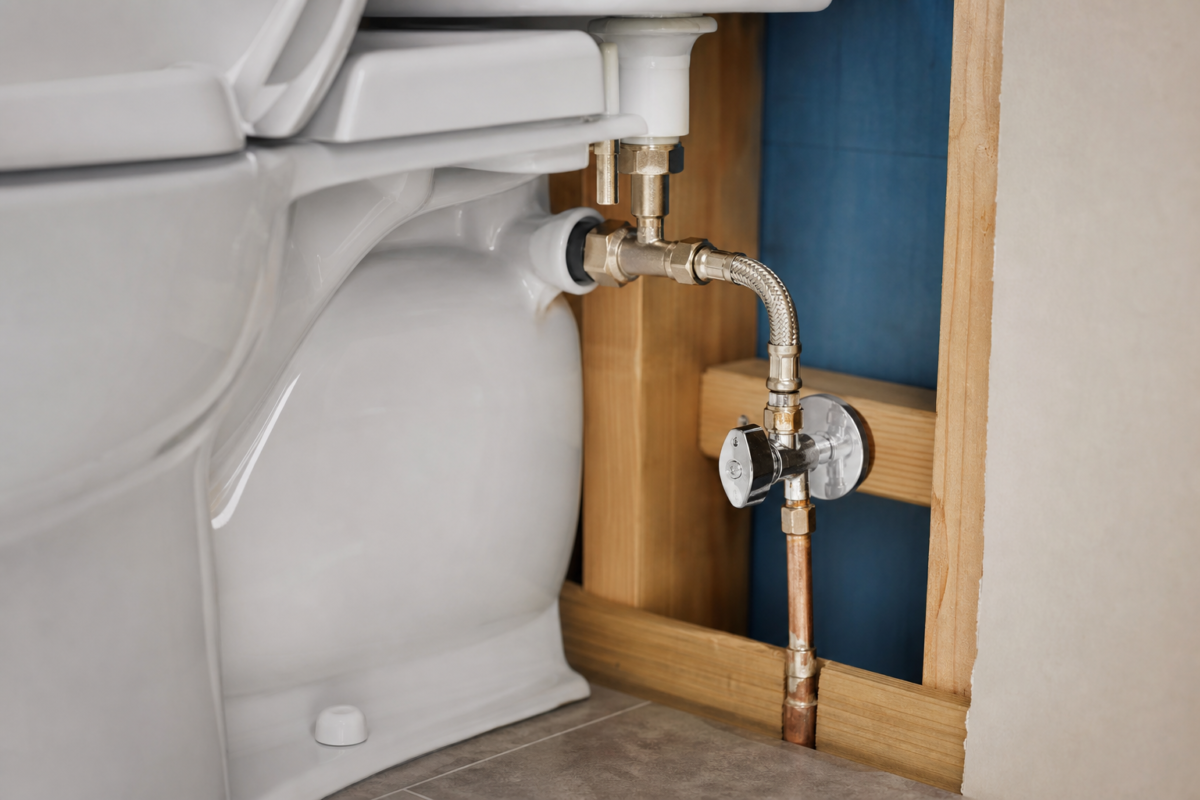
Most bidet seats and attachments install in under an hour using the toilet’s existing cold-water supply and a brass T-valve, with no plumber required. Electric models add one real requirement: a grounded GFCI outlet within reach, which costs $150 to $300 to add if you do not have one.
Attachments and seats tee off the fill-valve line, so you only need an adjustable wrench and the included hose. For warm-water performance, a tank-type electric seat heats a small reservoir, while higher-end units heat water on demand for an endless warm stream. Standalone fixtures are a different job entirely, requiring new supply lines and a drain, which is why their plumbing averages over $1,000. Keep a bidet’s extra moisture in check with good ventilation; our bathroom exhaust fan guide covers sizing a fan correctly.
Contractor’s take
If you want an electric seat but have no outlet behind the toilet, have the electrician run the GFCI line while the wall is open for any other work, not as a one-off trip later. Fishing a single outlet through finished drywall and tile can cost as much as the bidet seat itself. And measure your toilet: most seats fit elongated and round bowls, but a few French-curve or skirted designs need a specific model, so confirm the fit before you order.
Bidet features worth paying for
The features that justify a higher price are adjustable warm water, a heated seat, and a reliable dryer, in that order. Everything beyond those is a nice-to-have that varies by how often you will actually use it.
- On-demand (tankless) water heating for an endless warm stream instead of a limited reservoir.
- Adjustable nozzle position, spray width, and pressure for a personalized clean.
- Oscillating and pulsating wash modes, plus a dedicated feminine wash setting.
- Heated seat with adjustable temperature for cold mornings.
- Warm-air dryer and carbon deodorizer to reduce paper use and odor.
- Self-cleaning stainless nozzle, night light, and auto open/close lid.
Skip gimmicks like built-in speakers, but do not skimp on nozzle hygiene; a self-cleaning stainless nozzle is worth the upgrade. Bidets are also a quiet win for accessibility, reducing the twisting and reaching that make toileting hard for people with limited mobility, a benefit the ADA accessibility standards recognize for aging in place.
Who benefits most from a bidet?
Bidets help nearly everyone, but they are especially valuable for people with limited mobility, arthritis, hemorrhoids, or sensitive skin, and for seniors who want to stay independent at home. The warm-water wash removes the twisting, reaching, and wiping that cause pain or are simply hard to perform.
For aging-in-place remodels, a bidet seat is one of the highest-impact upgrades per dollar, often paired with grab bars and a comfort-height toilet. Parents find the hands-free rinse useful for potty training and postpartum recovery, and anyone prone to skin irritation appreciates skipping dry paper. If chronic conditions are a concern, water cleansing is gentler and more thorough, which is why many occupational therapists recommend it. When you plan the surrounding fixtures, coordinate heights and finishes with the bathroom vanity guide so the whole room works together for every user in the household.
Water savings and environmental impact
A bidet uses roughly one-eighth of a gallon of water per wash, far less than the water required to manufacture the toilet paper it replaces. Households that switch typically cut toilet paper use by 75 percent or more, which offsets the small amount of water the bidet draws.
Producing a single roll of toilet paper takes dozens of gallons of water plus pulp and energy, so the net resource savings are real even after accounting for the bidet’s spray. For the water-conscious, pairing a bidet with a high-efficiency toilet is a smart combination; the EPA WaterSense program certifies fixtures that use 1.28 gallons per flush or less. If you are planning a tight space, our small bathroom remodel guide shows how to fit modern fixtures without crowding the room.
Bidet maintenance and hygiene
Bidet maintenance is minimal: run the self-cleaning nozzle cycle regularly, wipe the seat as you would any toilet seat, and replace the inline water filter every few months if your model has one. The nozzle sprays clean water and retracts when not in use, so it stays hygienic with little effort.
In hard-water areas, descale the nozzle every few months to prevent mineral buildup from weakening the spray. Electric units need almost no upkeep beyond keeping the control panel dry. Coordinate the bidet’s finish and controls with your other fixtures using our bathroom faucets guide for a consistent look.
Expect a quality bidet seat to last seven to ten years, with the nozzle and heating element being the parts most likely to wear. Register the product and keep the warranty, which typically runs one to three years on electric models; reputable brands sell replacement nozzles and fill valves so a minor failure does not force a full replacement. A basic attachment, with no electronics to fail, can outlast the toilet it is mounted on. When budgeting a renovation, treat the bidet as a long-term fixture rather than a disposable gadget, and spend a little more up front on a brand with real parts support.
Frequently asked questions
Your next move
You know the number. What are you deciding next?
Walk-in tub cost in 2026: $5,000 to $20,000 installed. Compare tub types, features, and the real Medicare coverage…
Continue →Bathroom remodel financing explained: compare home equity loans, HELOCs, cash-out refi, personal loans, and 0% cards with 2026…
Continue →Steam shower cost runs $3,000 to $10,000 installed in 2026. See prices by generator size, enclosure, and prefab…
Continue →Frequently asked
Is a bidet seat or attachment better?
A bidet seat is better if you want warm water, a heated seat, and a dryer, since it replaces the whole seat and often needs an outlet. An attachment is the better pick on a tight budget or where no outlet exists, delivering the core cleaning function for under $120.
Do bidets need electricity?
Only electric bidet seats and smart toilets need electricity, and they require a grounded GFCI outlet within a few feet. Attachments, non-electric seats, handheld sprayers, and standalone fixtures work on water pressure alone with no outlet.
Can I install a bidet myself?
Yes, attachments and seats are a 20 to 60 minute DIY job using the toilet’s existing water line and a T-valve. Adding a GFCI outlet for an electric model or installing a standalone fixture with new plumbing is work best left to a licensed electrician or plumber.
How much water does a bidet use?
A bidet uses about one-eighth of a gallon of water per wash, a tiny amount compared with the water needed to produce toilet paper. Most households cut their paper use by 75 percent or more after switching.
Will a bidet seat fit my toilet?
Most bidet seats fit standard elongated and round bowls, and many are adjustable to both. Measure your bowl and check the mounting-hole spacing before ordering, since a few skirted or uniquely shaped toilets need a specific model.

Pricing reflects 2026 US averages from HomeAdvisor and manufacturer data; water specs from EPA WaterSense.