Bathroom Tile Guide: Types, Costs, and Where Each One Belongs
How to match bathroom tile to material, rating, and zone, with real 2026 US costs for floors, showers, and walls.

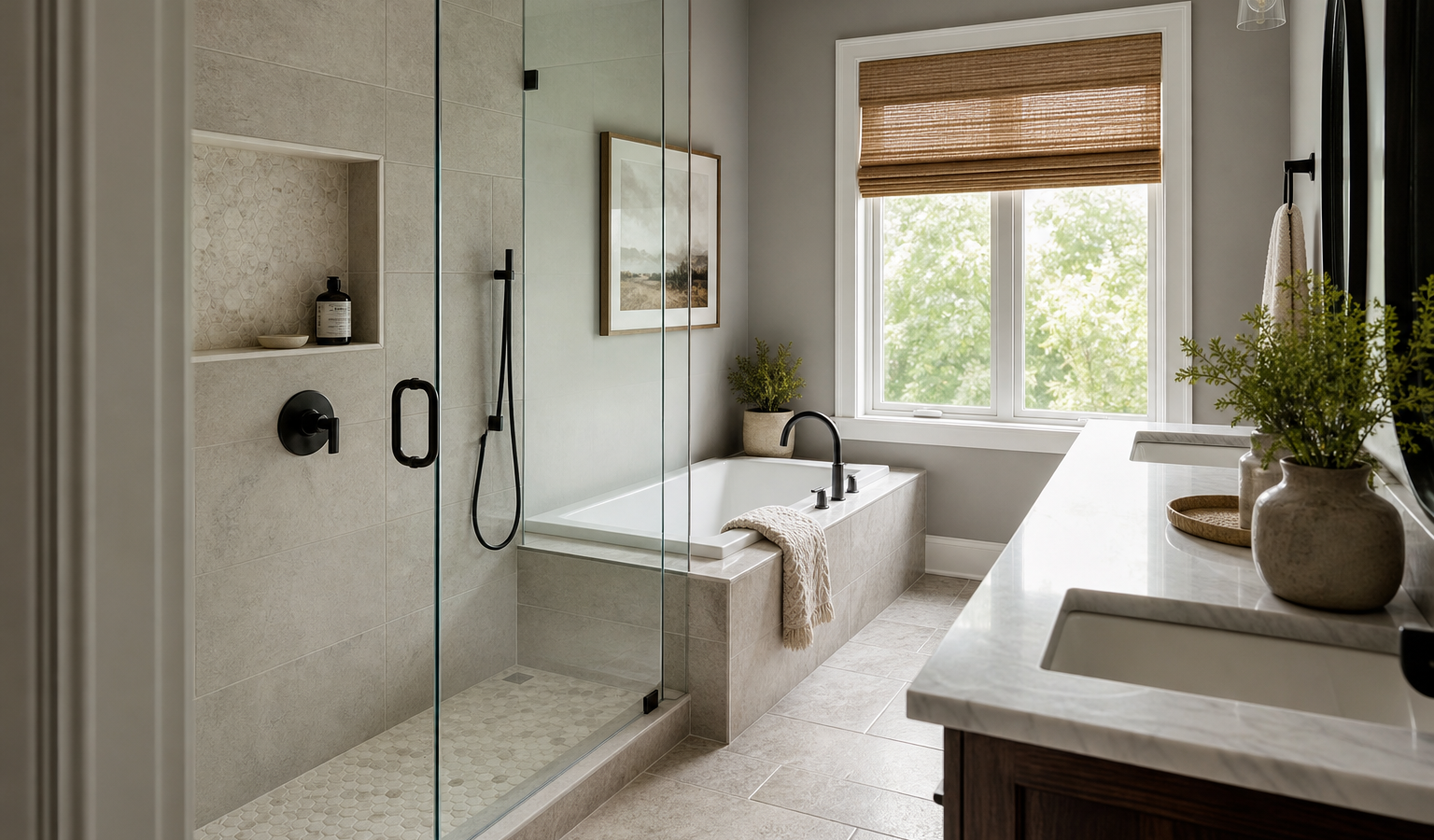
Choosing bathroom tile is the decision that most shapes how a finished bathroom looks, and it is also the one where a wrong pick quietly causes problems for years. A tile that is beautiful on a showroom wall can be dangerously slick on a wet shower floor, and a bargain ceramic rated for walls will crack under foot traffic. This bathroom tile guide sorts the materials, ratings, sizes, and 2026 US costs so you can put the right tile in the right place the first time. Get the placement and the substrate right and the tile outlasts the rest of the room; get it wrong and you are chasing loose grout, mildew, and slip hazards before the warranty is up.
Tile also swings the budget more than almost any other bathroom finish because labor, waterproofing, and pattern complexity stack on top of the tile itself. If you are still setting the overall number, our bathroom remodel cost guide shows where tile lands in a full project, and pairing your floor and wall selections with the right vanity, covered in our bathroom vanity guide, keeps the whole room reading as one design.
Key takeaways
- Porcelain (0.5 percent or less water absorption) is the safe all-round pick for wet areas.
- Match the PEI rating to use: PEI 3-plus for floors, PEI 0-2 for walls only.
- Use small mosaic on shower floors for grip; large format on walls.
- Installed cost runs $5-$14 (ceramic) to $18-$50 (stone) per sq ft.
- The waterproofing behind the tile matters more than the tile itself.
Why bathroom tile is a special case
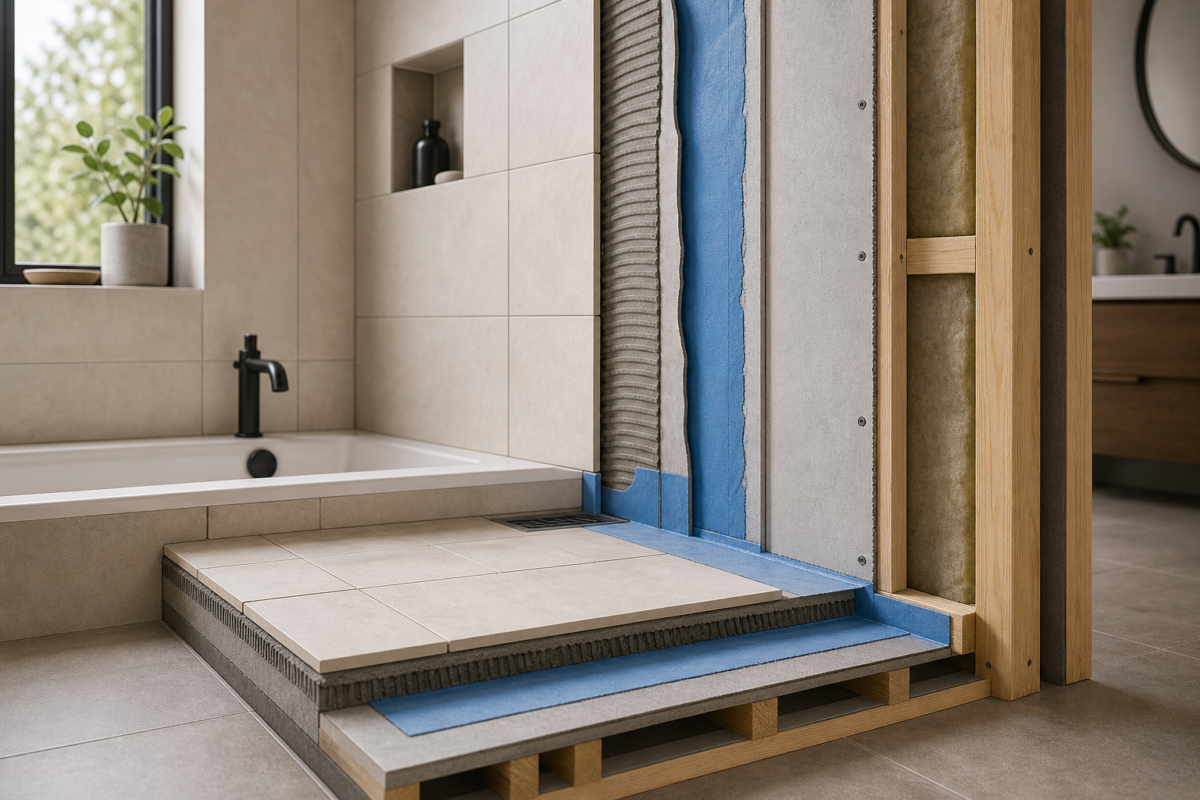
Bathrooms punish materials in ways other rooms do not. Standing water, steam, temperature swings, and constant humidity mean a bathroom tile has to resist moisture, stay slip-safe when wet, and survive a substrate that flexes slightly with every footstep. That is why the same tile is not appropriate everywhere in the room: a large, smooth porcelain that looks flawless on a shower wall becomes a slip risk on the shower floor, where you want smaller tiles and more grout lines for grip. Thinking in zones, dry floor, wet shower floor, shower walls, and accent surfaces, is the core skill this guide teaches.
Bathroom tile materials compared
Five material families cover almost every bathroom project, and each has a clear personality. Ceramic is the budget-friendly all-rounder, easy to cut and install. Porcelain is denser, less porous, and the workhorse for wet areas and floors. Natural stone, marble, travertine, and slate, brings unmatched character but demands sealing and care. Glass tile reflects light and shines on accents. Mosaic, sold in any of these materials on mesh sheets, delivers grip and detail where you need it most. The table below shows where 2026 installed pricing lands for each.
| Material | Material cost per sq ft | Installed cost per sq ft | Best used for |
|---|---|---|---|
| Ceramic | $1 – $8 | $5 – $14 | Walls, secondary floors, budget baths |
| Porcelain (standard) | $3 – $12 | $7 – $20 | Floors, shower walls, wet areas |
| Porcelain (large format) | $6 – $18 | $12 – $30 | Feature floors, seamless shower walls |
| Marble | $8 – $30 | $18 – $50 | Accents, dry floors, feature walls |
| Travertine | $5 – $18 | $12 – $30 | Warm floors (specify filled/honed) |
| Slate | $5 – $15 | $10 – $25 | Slip-resistant floors |
| Glass | $8 – $35 | $15 – $50 | Accent walls, niches, backsplash |
| Mosaic (any material) | $10 – $40 | $20 – $60 | Shower floors, detail bands |
Relative installed cost per square foot, entry to premium:
Ceramic versus porcelain: the everyday choice
Most bathroom decisions come down to ceramic versus porcelain. Porcelain is fired denser and absorbs less than 0.5 percent water, which makes it the safer pick for shower floors, shower walls, and any surface that gets truly wet. Ceramic absorbs more, typically 3 to 7 percent for wall grades, so it belongs on dry walls and lower-traffic floors where its lower price shines. If you want one material for the whole room and value peace of mind over saving a few dollars, porcelain is the default answer in 2026.
Natural stone: character with commitment
Marble, travertine, and slate reward you with depth and warmth that manufactured tile only imitates, but they are porous and need resealing every one to three years. In a bathroom, specify filled and honed travertine so moisture cannot collect in natural voids, and keep marble away from the wettest zones unless you accept the maintenance. Slate is the exception that loves a bathroom floor; its naturally textured surface is genuinely slip-resistant, though its irregular thickness makes installation slower and pricier.
PEI ratings and water absorption: what to actually check
Two specs on the box tell you whether a tile belongs where you want to put it, and most homeowners never read them. The PEI rating measures surface hardness against foot traffic. PEI 0 to 1 is wall-only, PEI 2 handles light bathroom traffic, PEI 3 is the standard for residential bathroom floors, and PEI 4 to 5 is built for heavy or commercial use. Put a PEI 1 wall tile on the floor and it will scratch and wear within a season. Water absorption is the second number: for any tile going in a shower or on a shower floor, look for an absorption rate at or below 0.5 percent, which is the porcelain threshold. Standard wall ceramic at 3 to 7 percent is fine for dry walls but wrong for shower floors.
Contractor’s take
The single most common tile mistake I fix is a slick, oversized tile on a shower floor. It photographs beautifully and then someone slips. On any shower pan I use a 2-inch mosaic or a textured tile, because all those extra grout lines are what give your feet grip when the floor is soapy and wet. Save the big, smooth stuff for the walls where it belongs. And spend the money on the waterproofing you will never see; a proper membrane behind the tile is the difference between a shower that lasts twenty years and one that rots the framing in five.
Where each tile belongs in the bathroom
Matching tile to zone is where good bathrooms separate from problem bathrooms. On the shower floor, use porcelain mosaic in the 1-by-4 to 4-by-4 range for slip resistance and to let the tile follow the pan slope to the drain. On shower walls, rectified porcelain in 12-by-24 or larger gives a clean, low-grout look that is easy to keep mildew-free. For the main bathroom floor, mid-grade porcelain or stone earns the visual upgrade because the floor is the largest continuous surface you see. In a secondary or guest bath, mid-grade ceramic on the floor is indistinguishable to visitors and saves real money. Reserve glass and marble mosaic for accent walls and niches, where a small quantity delivers outsized impact.
Slip resistance and the wet zone
Any surface that gets wet underfoot needs texture or small format for grip. Look for a coefficient of friction rating suited to wet areas, or simply choose smaller tiles with more grout joints for the shower floor and a matte or textured finish for the main floor near the tub. Polished and high-gloss tiles are gorgeous on walls but treacherous underfoot when wet, so keep them vertical.
Tile sizes and formats
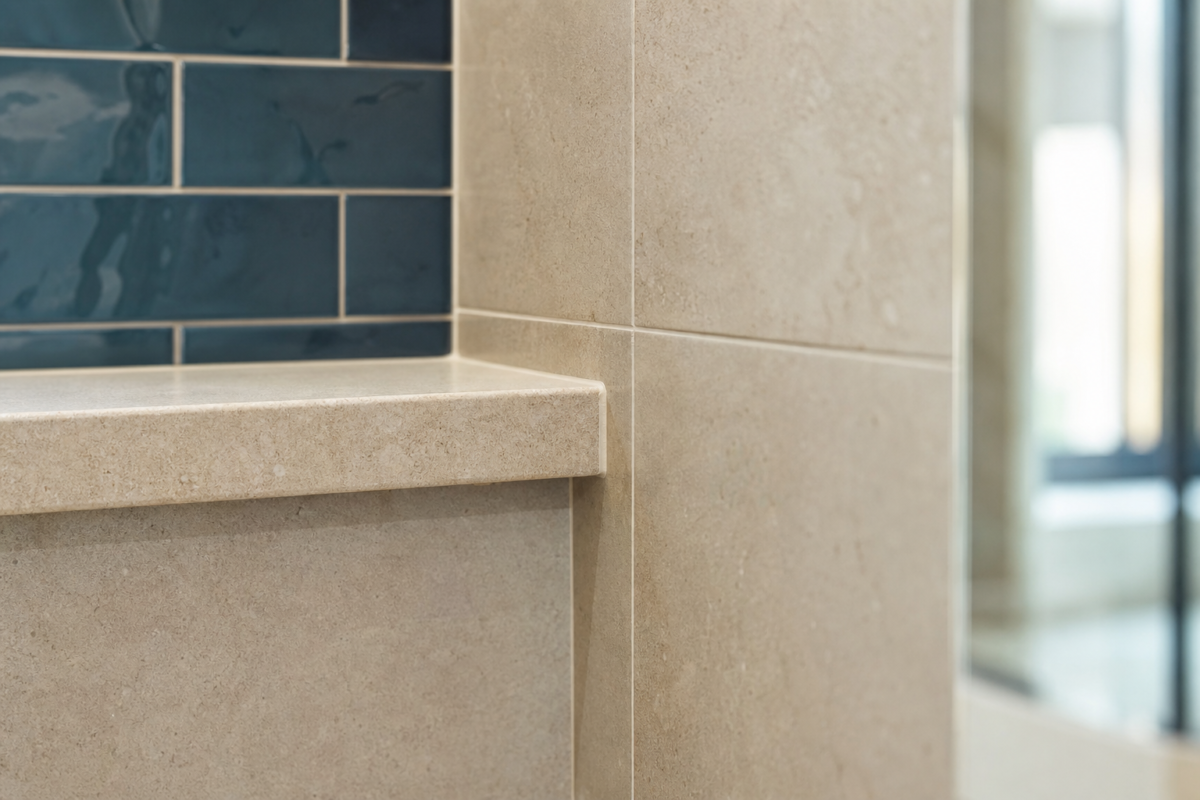
Format changes both the look and the labor. Large-format tiles, 12-by-24 and up, create a modern, seamless feel with fewer grout lines to clean, but they demand a very flat substrate; a floor out of plane by more than an eighth inch over ten feet will cause lippage, where tile edges sit proud of each other. Classic subway tile, usually 3-by-6, remains a timeless, budget-friendly wall option. Hexagons and penny rounds are popular on floors for vintage character and built-in grip. Mosaic sheets are the go-to for shower floors and detail bands. Match the format to the surface: big and flat where you want calm, small and textured where you need grip.
Popular 2026 bathroom tile patterns
Layout is a design lever that costs mostly labor. A straight stack or standard offset is the most economical. Herringbone and diagonal layouts add drama but also add cost, because they take longer to set and generate more cut waste. In 2026, popular directions include vertical stacked subway for a fresh take on a classic, large-format stone-look porcelain for a spa feel, and warm earthy tones replacing the cool grays of the previous decade. Bold patterned floor tile in a powder room remains a low-risk way to make a statement in a small space where the square footage keeps the cost contained.
Bathroom tile cost in 2026
Installed bathroom tile runs about $5 to $50 per square foot in 2026 – roughly $7 to $20 for porcelain, with stone and glass costing more. The tile itself is only part of the number. Installation labor runs $4 to $7 per square foot for straight-lay floor tile, $5 to $9 for standard wall tile, $7 to $12 for large-format floors, and $10 to $18 for natural stone, which is heavier and less forgiving. Pattern complexity adds a premium: a diagonal layout adds roughly 25 to 40 percent, herringbone 40 to 60 percent, and basketweave 50 to 75 percent over a straight lay. A custom mud-bed shower pan is often a flat $300 to $600 on top. Because tile labor mirrors flooring labor across the house, the cost logic in our kitchen flooring cost guide translates directly, and our best kitchen flooring comparison covers many of the same porcelain and stone products from a durability angle.
The hidden line items buyers forget
Grout runs $0.50 to $1.50 per square foot, edge trim and transitions $3 to $8 per linear foot, and specialty cuts around fixtures can add 10 to 20 percent to labor. Always order overage: 10 percent for straight-lay, 15 to 20 percent for complex patterns, and an extra 5 percent for natural stone to account for variation and breakage. These extras are also where a tile budget resembles a backsplash budget, so the itemization in our kitchen backsplash cost guide is a useful cross-check before you sign a quote.
Waterproofing and substrate: the work you never see
Tile does not make a shower waterproof; the layer behind it does. Skipping or shortcutting waterproofing is the most expensive mistake in any bathroom because failure means tearing out finished tile to reach rotted framing. Following TCNA installation methods, a proper wet-area assembly starts with cement board rather than ordinary drywall, then a waterproofing layer, either liquid-applied membrane at $1.00 to $2.50 per square foot in materials or a sheet membrane at $2.00 to $5.00, or a pre-sloped foam shower system at $3 to $8 per square foot. Cement board installation itself adds $1.50 to $3.00 per square foot in labor. None of this shows in the finished room, and all of it determines how long the finished room lasts.
Grout, sealing, and long-term maintenance
Grout choice quietly decides how much you will scrub. Standard cement grout is cheapest but porous, so it stains and needs periodic sealing. Epoxy grout costs more and is harder to install, but it is nearly stain-proof and waterproof, which makes it worth the upgrade in a shower or on a heavily used floor. For natural stone, budget $0.50 to $1.50 per square foot per application to reseal every one to three years. Porcelain and glazed ceramic never need sealing, one more reason they dominate low-maintenance bathrooms. Wiping down shower walls after use and running the exhaust fan does more for grout life than any product you can buy.
DIY versus hiring a pro
Tiling a simple, dry floor is within reach for a confident DIYer and can save the $4 to $15 per square foot that labor costs. A wet shower, however, is a different animal: it hinges on flawless waterproofing and a correctly sloped pan, and a small error becomes a hidden leak. If you tackle the floor yourself, hire out the shower, or at least the pan and waterproofing. Factor in tool rental for a wet saw and the learning-curve waste on your first cuts. When the timeline matters or the layout is complex, a professional pays for itself in speed and in a warranty you can lean on, a trade-off our kitchen remodel timeline guide frames well for any tile-heavy renovation.
- Confirm the tile’s PEI rating suits its surface (PEI 3+ for floors).
- Check water absorption at or below 0.5% for shower floors and wet zones.
- Use small-format or textured tile on shower floors for slip resistance.
- Budget separately for cement board, waterproofing membrane, and grout.
- Order 10-20% overage depending on pattern, plus 5% for natural stone.
- Choose epoxy grout for showers and high-use floors to cut maintenance.
Frequently asked questions
Your next move
You know the number. What are you deciding next?
See 2026 curbless shower cost, how it is built, drain and slope requirements, and how to avoid leaks…
Continue →Compare bathroom sink types, vessel, undermount, pedestal, and wall-hung, with pros, cons, materials, and 2026 installed costs.
Continue →Compare bathroom tile patterns by cost, waste, and where each layout works best, with real 2026 US installed…
Continue →Frequently asked
Is porcelain or ceramic tile better for a bathroom?
Porcelain is better for wet areas and floors because it absorbs less than 0.5 percent water and is denser and more durable. Ceramic is fine and cheaper for dry walls and lower-traffic floors. For a whole-room single material, porcelain is the safer choice.
What tile is safest for a shower floor?
Small-format porcelain mosaic, roughly 1-by-4 to 4-by-4 inches, is safest because the many grout lines add grip and let the tile follow the pan slope to the drain. Avoid large, smooth, polished tiles on any shower floor.
How much does it cost to tile a bathroom in 2026?
Installed tile ranges from about $5 to $14 per square foot for ceramic, $7 to $20 for standard porcelain, and $18 to $50 for marble. Waterproofing, grout, trim, and complex patterns add on top, so wet areas cost more than dry floors.
Do I need to seal bathroom tile?
Porcelain and glazed ceramic never need sealing. Natural stone such as marble and travertine needs resealing every one to three years. Cement grout benefits from periodic sealing, while epoxy grout does not, which is why many pros recommend it for showers.
What size tile makes a small bathroom look bigger?
Large-format tiles with minimal grout lines make a small bathroom feel larger and less busy, provided the substrate is flat enough to avoid lippage. Continuing the same tile from floor to shower also visually expands the space by reducing visual breaks.

Costs reflect 2026 US material and installed price ranges from tile retailers and contractor data.