Kitchen Appliance Cost in 2026: Package & Individual Prices
Appliances are the line that stays high no matter how big your kitchen is. Here's what a full appliance package costs in 2026, the price of each machine at budget, mid and high-end tiers, and where it's safe to save.

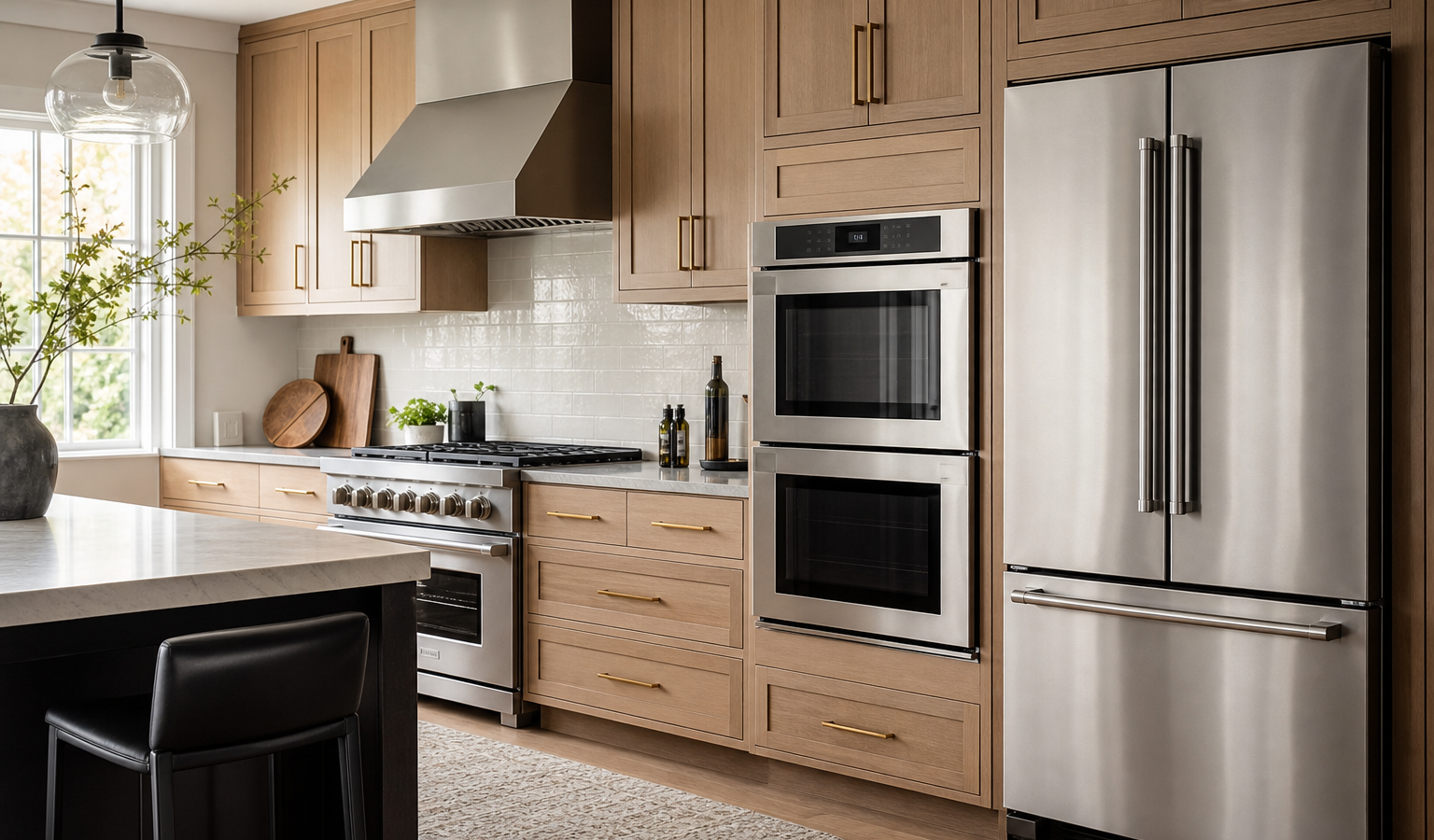
New appliances transform how a kitchen works and looks – and the kitchen appliance cost surprises people because it barely changes with the size of the room. A tiny kitchen and a large one both need a refrigerator, a range, a dishwasher, and ventilation. In 2026, a full kitchen appliance package runs from about $1,200 at the budget end to $13,000 for a high-end suite, with most homeowners spending around $3,000-$5,000. This guide breaks down what a package costs at each tier, the price of every individual appliance – including the ones people forget to budget for, like a wall oven, a garbage disposal, or a wine fridge – what delivery and installation add, and where it’s safe to save.
Kitchen appliance package cost by tier
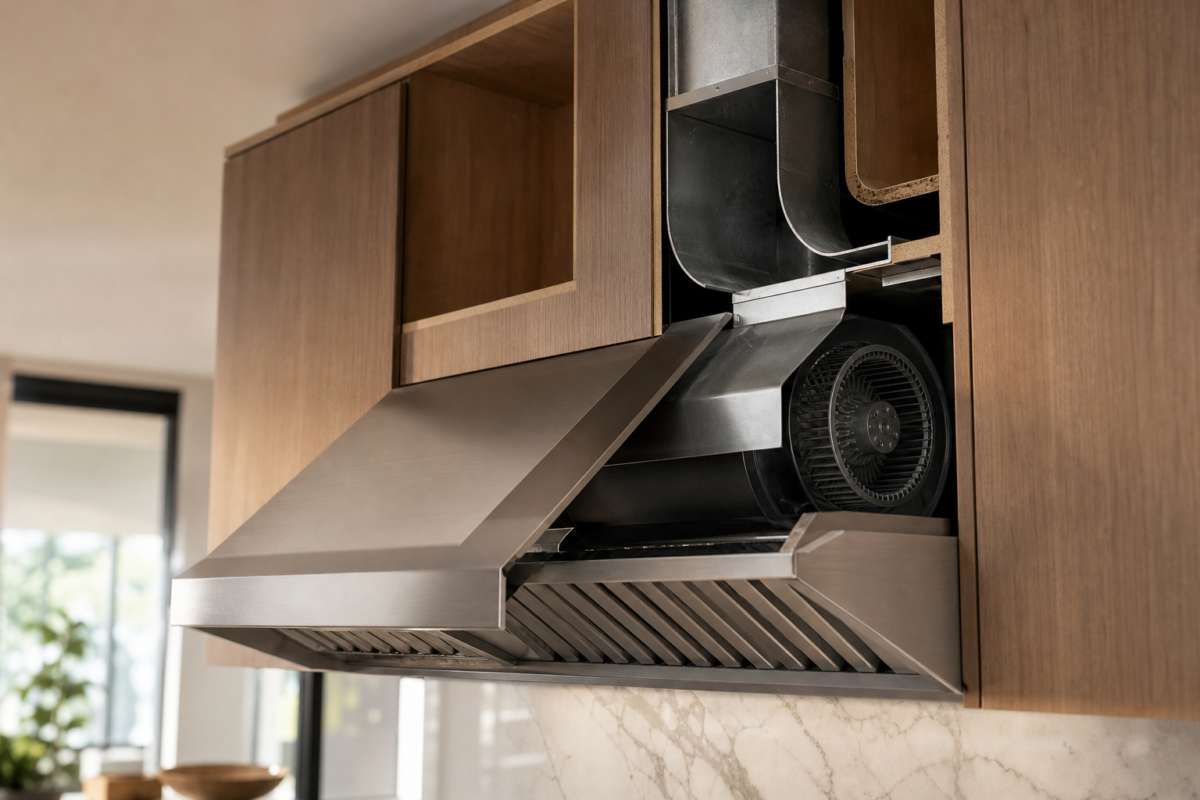
A “package” or “suite” is the core four – refrigerator, range or stove, dishwasher, and a microwave or range hood – often bought together, sometimes with a bundle discount. Here’s what a full package costs in 2026:
| Tier | Package cost | What you get |
|---|---|---|
| Budget | $1,200-$2,100 | Basic finishes, essential features, standard sizes |
| Mid-range | $2,100-$5,400 | Stainless finishes, better capacity, quieter dishwasher |
| High-end | $5,400-$13,000 | Pro-style ranges, counter-depth fridge, smart features |
Most kitchen remodels land in the mid-range, where a matched stainless suite looks great and lasts. Appliances make up roughly 10-15% of a full kitchen budget – see the whole picture in the kitchen remodel cost guide.
A matched 4-piece package typically saves 10-20% versus buying the same four appliances one at a time, because manufacturers and big-box retailers use the suite as the discount lever. The tradeoff is flexibility: if you only need to replace one appliance, or you want a different brand for a specific feature – a particular dishwasher’s decibel rating, say – buying individually and shopping each piece on its own sale cycle can land close to package pricing without locking you into one brand across the whole kitchen.
Individual appliance costs in 2026
If you’re replacing one machine at a time rather than a full suite, here’s what each appliance costs on its own, including the pieces a package quote often leaves out:
| Appliance | Budget | Mid-range | High-end |
|---|---|---|---|
| Refrigerator | $200-$600 | $600-$2,300 | $2,300-$5,000 |
| Range / cooktop | $530-$600 | $600-$1,300 | $1,300-$3,000 |
| Wall oven (single/double) | $800-$1,200 | $1,200-$2,200 | $2,200-$5,000 |
| Dishwasher | $400-$800 | $800-$1,200 | $1,200-$3,000 |
| Microwave | $60-$100 | $100-$600 | $600-$2,000 |
| Range hood / vent | $50-$100 | $100-$600 | $600-$1,650 |
| Garbage disposal | $80-$150 | $150-$300 | $300-$500 |
| Wine fridge / beverage center | $150-$300 | $600-$1,200 | $1,200-$3,000 |
The refrigerator and range are where premium money goes fastest, and where the biggest visual and performance differences show. The dishwasher is where the mid-tier is the smart buy – a quiet, reliable mid-range unit outperforms a cheap one for years. Disposals and wine fridges are the two line items homeowners most often forget to price in until the appliance quote arrives.
Contractor insight
“Where people overspend is the fridge – it’s easy to jump $2,000 chasing a look. Where they should spend a little more is the dishwasher and the range hood, because a quiet dishwasher and real ventilation are things you notice every day.” – Marcus Hale, licensed GC
Delivery, haul-away, and installation fees
The sticker price is rarely the whole bill. Most appliances add $150 to $350 each in installation labor, and delivery and disposal carry their own fees that get added at checkout or billed by the installer:
| Line item | Typical cost |
|---|---|
| Delivery per appliance | $50-$150 (often waived on package purchases) |
| Standard installation (like-for-like swap) | $150-$350 per appliance |
| Haul-away of old appliance | $25-$75 per unit |
| Fridge recycling / CFC removal fee | $10-$25 in addition to standard haul-away |
| New gas line for a range | $200-$800 depending on run length and permit |
| New 240-volt circuit (induction or electric range) | $500-$1,200, more if the panel needs upgrading |
| New water line (icemaker or dishwasher hookup) | $150-$450 |
| Ductwork for a vented range hood | $300-$1,000 depending on the roof or wall run |
If you’re keeping the same connections, a straight swap stays near the low end of those ranges; new locations pull in a plumber or electrician and can double the labor cost. Ask any quote to itemize delivery, haul-away, and hookup separately – bundled “installation included” pricing sometimes hides a higher appliance price to cover it.
Panel-ready and smart appliances
Two upgrades push a package toward the high end. Panel-ready appliances take a cabinet front so the fridge and dishwasher disappear into the cabinetry – a premium, seamless look. Expect a panel-ready refrigerator to cost $800-$2,500 more than a comparable stainless model, and a panel-ready dishwasher to run $300-$700 more. That’s before the panel itself: the matching cabinet front and hardware typically adds another $300-$800 per appliance from your cabinet maker, a cost that lives in the cabinet budget and surprises a lot of homeowners late in the process.
Smart features – app control, cameras, guided cooking – are genuinely useful on some machines and gimmicks on others; buy them where they solve a real problem, not for the spec sheet.
What changes the appliance price
How to save on kitchen appliances
Appliances are one of the easiest places to save without anyone noticing – if you’re strategic:
- Buy the suite together during a holiday sale – Black Friday, Memorial Day and Labor Day carry the deepest package discounts.
- Spend mid-tier on the fridge and range; skip the premium unless you cook seriously.
- Choose fingerprint-resistant stainless over specialty finishes that cost more.
- Keep existing gas, water, and electrical locations to avoid new-connection labor.
- Consider last year’s model – appliance lines refresh yearly and the outgoing model is often heavily discounted.
- Ask for delivery and haul-away to be itemized so you can decline what you don’t need.
Once you’ve set an appliance budget, fit it into your whole project with the kitchen remodel cost guide, and if you’re choosing a faucet at the same time, see our top picks for the best kitchen faucets.
When to splurge and when to save on appliances
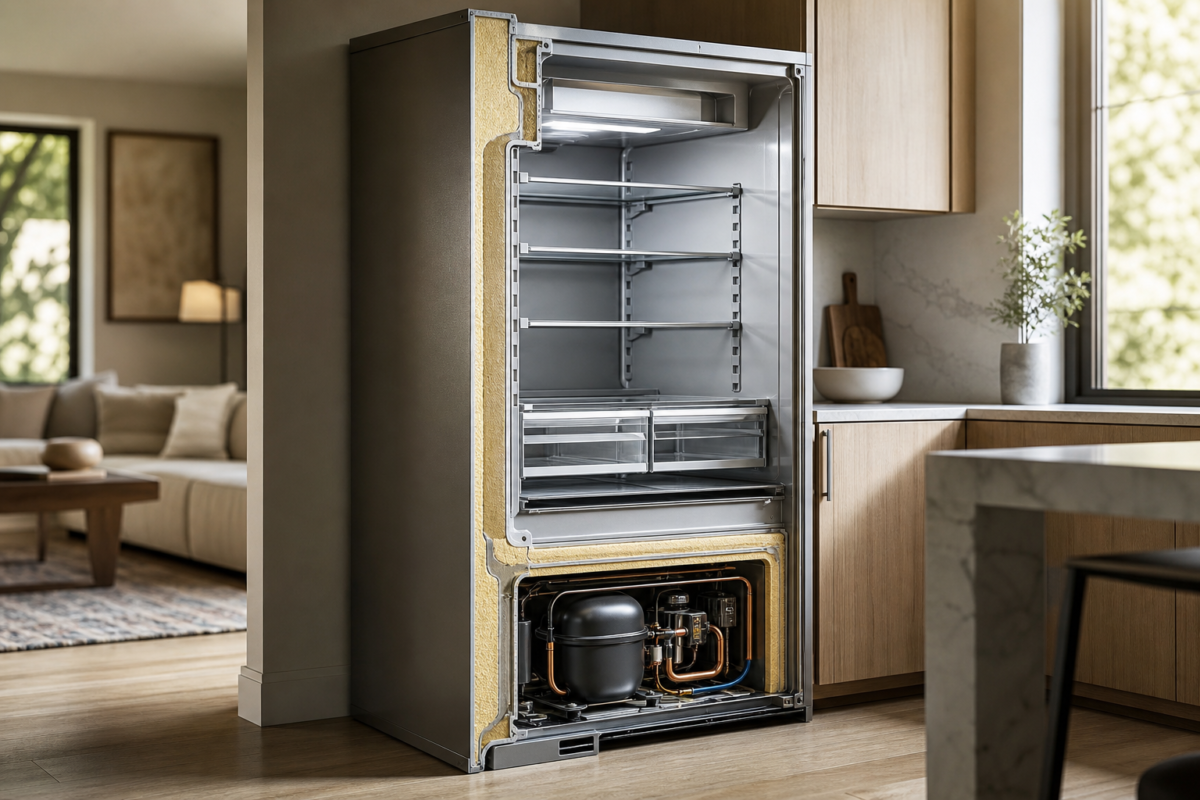
Not every appliance deserves the same budget priority. Three are worth spending up for: real ventilation (hard to retrofit later, and you smell the difference every night you cook), a quieter mid-to-upper dishwasher (you run it daily, so decibel rating matters more than most spec sheet items), and the range or cooktop if you cook seriously – a workhorse burner and an even-temperature oven pay for themselves in every meal.
Three are safe to save on: the microwave (a $100 unit reheats coffee exactly as well as a $600 one unless you want a drawer style to free up counter space), the garbage disposal (mid-tier 1/2-horsepower handles nearly every household), and the wine fridge or beverage center (a nice-to-have that’s easy to add later). For the bigger-picture version of this question across cabinets, counters, and floors, see our full splurge vs. save guide.
The bottom line
Budget $1,200-$2,100 for a basic appliance package, $2,100-$5,400 for mid-range, and $5,400-$13,000 for high-end in 2026, plus $150-$350 per unit to install and modest delivery and haul-away fees on top. Most homeowners are well served in the mid-range, spending premium only on the one or two appliances they use hardest. Buy the suite on sale, keep your existing connections, and appliances become the upgrade that makes a kitchen feel brand new.
Appliance by appliance: what drives each price
Refrigerator – $200-$5,000
The widest range of any appliance. A basic top-freezer starts near $200; a mid-range French-door lands $600-$2,300; and a counter-depth or built-in panel-ready model climbs to $5,000. Counter-depth fridges look built-in and suit small kitchens, but they cost more and hold a little less than standard-depth models – a trade of capacity for a flush, high-end look that’s especially common in a small kitchen remodel, where floor space is tight and every inch of clearance matters.
Range and cooktop – $530-$3,000
A basic electric coil range starts around $530; mid-range gas and induction ranges run $600-$1,300; and pro-style ranges reach $3,000. Induction is the fastest and most efficient option and has fallen in price, though it needs induction-compatible cookware. Gas remains a favorite of serious cooks but requires a gas line.
Wall oven – $800-$5,000
A separate cooktop-and-wall-oven setup replaces the single range and usually costs more in total, but it puts the oven at eye level and frees up the range footprint for design flexibility – a popular move on an island layout. A single wall oven runs $800-$2,200; a double wall oven with steam or convection reaches $5,000. Budget $1,800-$6,000 combined for cooktop plus wall oven versus $600-$3,000 for a single range.
Dishwasher – $400-$3,000
The appliance where the mid-tier pays off most. A $400 unit cleans, but an $800-$1,200 model is dramatically quieter and more reliable – the difference you notice every single evening. High-end panel-ready dishwashers that hide behind a cabinet front hit $3,000.
Range hood and ventilation – $50-$1,650
The most under-budgeted appliance in the kitchen. A basic recirculating hood or microwave-hood combo starts at $50-$100, but a vented hood that actually exhausts outside – the kind that keeps grease, moisture, and odors out of the house – runs $600-$1,650 plus ductwork. Real ventilation is worth the upgrade, especially with a gas range.
Microwave – $60-$2,000
A countertop microwave is $60-$100; an over-the-range model $100-$600; and a built-in drawer microwave $600-$2,000. In a small kitchen, an over-the-range or drawer unit frees up valuable counter space.
Garbage disposal – $80-$500
Sized by horsepower. A 1/3-horsepower budget unit is $80-$150 and suits light use; a 1/2-to-3/4-horsepower mid-range disposal at $150-$300 is the workhorse most kitchens actually need; and a 3/4-to-1-horsepower premium model with added sound insulation runs $300-$500. Installation adds $100-$250 on a straight swap, more if the sink doesn’t already have the opening or wiring.
Wine fridge and beverage center – $150-$3,000
A compact countertop unit holding a dozen or so bottles starts at $150-$300. A built-in, dual-zone beverage center in the $600-$1,200 range is the common mid-tier choice for an island or butler’s pantry. Panel-ready or large-capacity premium units – the kind built into a full wall of cabinetry – reach $3,000. Because it’s rarely essential, this is one of the easiest line items to defer to a later phase.
Gas vs. electric vs. induction: the cost difference
The fuel you choose affects both the appliance and the install. Electric coil is the cheapest to buy and runs off existing wiring. Gas requires a gas line – adding a new one runs $200-$800 – but many cooks prefer the control. Induction is electric but needs its own 240-volt circuit, which costs $500-$1,200 to add (more if the panel needs upgrading), plus compatible pans; it’s the priciest of the three to buy, yet the fastest and most efficient to use. If you’re switching fuel types, budget for the new connection before you fall in love with a range.
How long do kitchen appliances last?
Appliances are a 10-to-15-year purchase, so buy for the years, not just the sticker. Refrigerators and ranges typically last 13-15 years, dishwashers about 10, and microwaves 8-10, while a well-built garbage disposal often runs 10-12 years. A slightly better mid-range machine that runs quieter and lasts longer usually beats the cheapest option over its lifetime – one of the reasons the mid-tier is where most remodels land.
Do new appliances add resale value?
Matching stainless or panel-ready appliances sit near the top of buyers’ kitchen wish lists, so a fresh suite helps a kitchen show and sell. But appliances are personal property that can leave with the seller, so they rarely return their full cost the way cabinets and counters do. The move that pays off is a cohesive, mid-range stainless suite that makes the whole kitchen read as updated – not one showpiece appliance surrounded by dated ones. For how appliance spending fits the bigger return-on-investment picture, see kitchen remodel ROI.
Appliance finishes and what they cost
Finish is the other lever on price and look. Standard stainless steel is the safe, resale-friendly default. Fingerprint-resistant, black-stainless, and matte finishes cost a little more and hide smudges – worth it in a busy kitchen with kids. Panel-ready is the priciest route, hiding the fridge and dishwasher behind cabinet fronts for a seamless, built-in look, and it adds cost to both the appliance and the cabinet order. White and black enamel are the budget finishes and can look dated fast. For most remodels, a matched stainless or fingerprint-resistant suite is the sweet spot of price, looks, and resale.
Common appliance-buying mistakes to avoid
- Buying the fridge before measuring the opening – depth, width, and door swing all matter.
- Skipping real ventilation – a recirculating hood doesn’t remove heat and grease the way a vented one does.
- Over-buying smart features you’ll never use instead of a quieter, more reliable core machine.
- Forgetting the install extras – a gas line, ductwork, or a new circuit can add hundreds.
- Paying full price – appliances go on deep discount several times a year.
Your next move
You know the number. What are you deciding next?
Quartz vs. granite: the two most-chosen kitchen countertops compared on 2026 cost, durability, maintenance, heat, and looks -…
Continue →Luxury vinyl, tile, or hardwood? The three most-chosen kitchen floors compared on 2026 cost, water resistance, comfort, and…
Continue →Everything you need to plan a kitchen remodel in 2026 - budget, layout, cabinets, countertops, appliances, timeline, hiring,…
Continue →Frequently asked
How much does a kitchen appliance package cost in 2026?
A full package (fridge, range, dishwasher, and microwave or hood) costs $1,200-$2,100 at the budget tier, $2,100-$5,400 mid-range, and $5,400-$13,000 high-end. Most homeowners spend around $3,000-$5,000.
What is the most expensive kitchen appliance?
The refrigerator, which reaches $2,300-$5,000 at the high end, followed by a pro-style range or a double wall oven at up to $3,000-$5,000. These are where premium appliance money goes fastest.
How much does it cost to install kitchen appliances?
Most appliances add $150-$350 each in labor, plus $50-$150 for delivery and $25-$75 for haul-away of the old unit. Extras apply when you need a new gas line ($200-$800) for a range, ductwork ($300-$1,000) for a vented hood, or a new 240-volt circuit ($500-$1,200) for an induction range.
Should I buy a kitchen appliance package or individual appliances?
A package often carries a 10-20% bundle discount and gives a matched look, which is ideal in a remodel. Buying individually makes sense when you only need to replace one machine or want to mix brands for a specific feature.
Where can I save on kitchen appliances?
Buy the suite during a holiday sale, choose mid-tier on the fridge and range unless you cook seriously, stick with standard stainless finishes, keep your existing connections, and consider last year’s model at a discount. Save on the microwave, disposal, and wine fridge; splurge on ventilation and the dishwasher.

Package and individual appliance figures are 2026 national ranges from appliance-pricing data. Brand, finish, and smart features move the number; installation adds $150-$350 per unit.