White Kitchen Ideas That Are Not Boring: 2026 Design Guide
How designers keep a white kitchen from going flat, using warmth, texture, and contrast instead of a bright accent color.

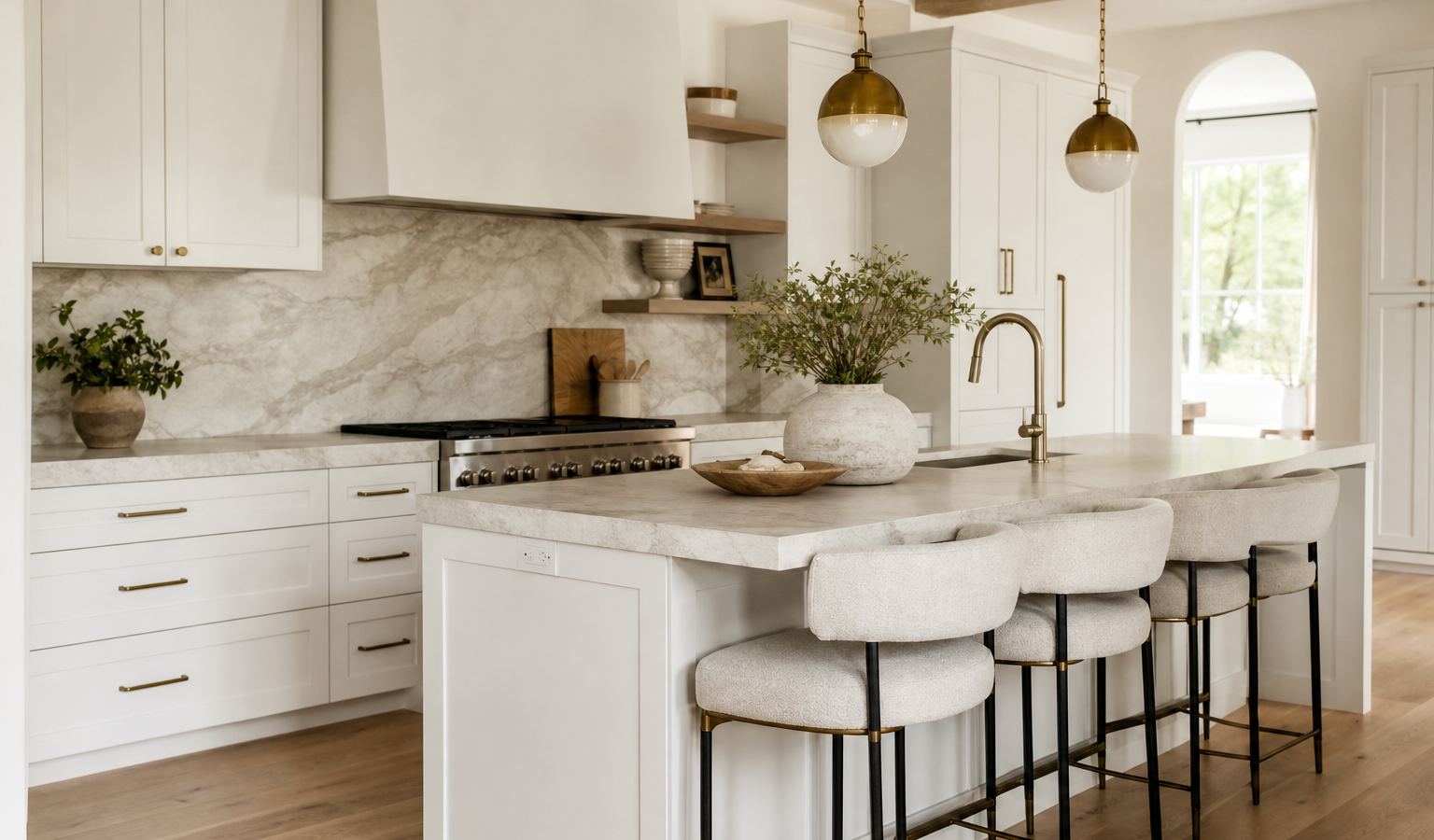
A white kitchen should read as calm and timeless, not flat and forgettable. If you have searched for white kitchen ideas that still feel personal, you already know the trap: an all-white room can slide from clean to clinical the moment the light goes gray. The fix is almost never adding a bright accent color. It is layering warmth, texture, and contrast so the eye has somewhere to travel. This 2026 guide walks through the exact moves professional designers use to keep a white kitchen crisp and interesting, from choosing the right shade of white to mixing metals, wood, and stone with intent.
Everything here is built around real US remodeling decisions, so you will find current price ranges, specific paint colors, and practical guidance you can hand to a contractor or use to plan a weekend refresh.
Why White Kitchens Feel Boring (And the Real Fix)
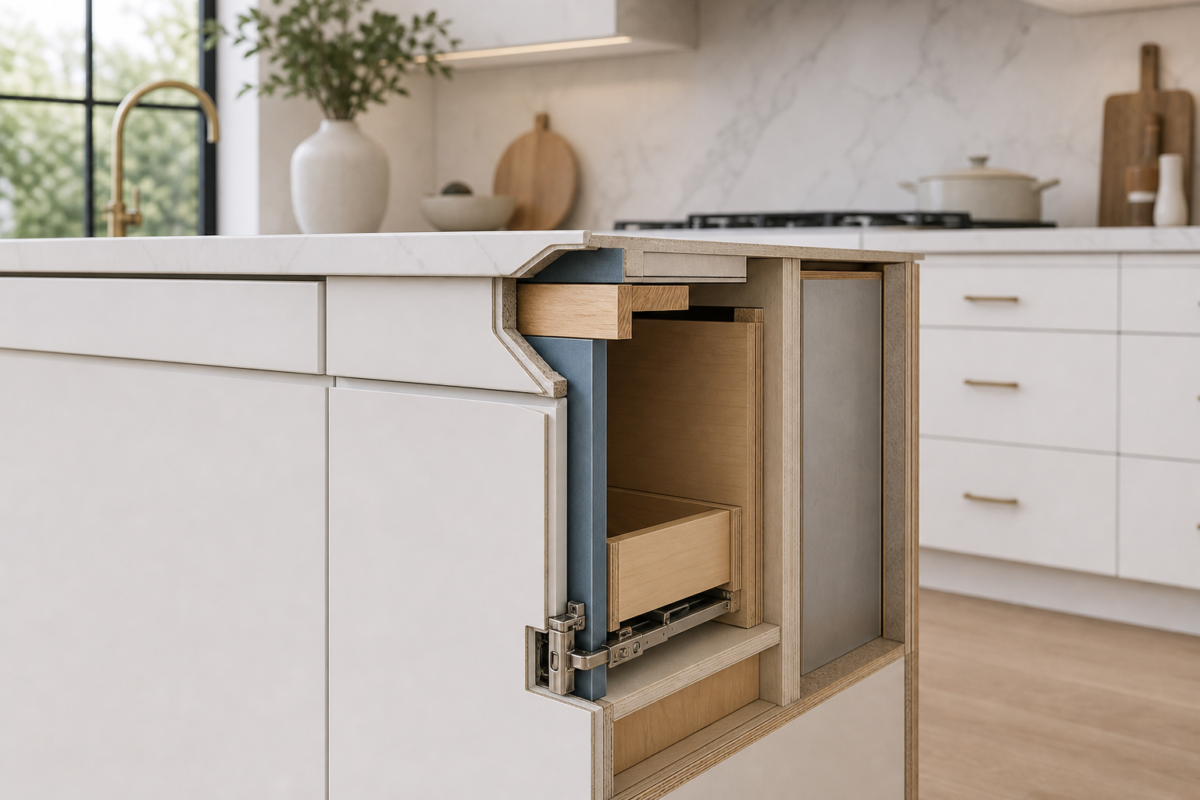
A white kitchen goes lifeless for one of three reasons: everything sits at the same value, everything shares the same texture, or every finish is the same temperature of white. When cabinets, walls, backsplash, and counters all land at the same brightness, there is no shadow line for the eye to catch. The room flattens into a single plane. The cure is contrast, but contrast does not have to mean color.
Designers break monotony with three levers: value (light versus dark), texture (smooth versus tactile), and temperature (warm versus cool whites). Pull any one of them and the room gains depth. Pull two or three and a plain white kitchen turns into something that photographs beautifully and lives even better. Think of a matte white slab counter against a fluted island, or warm oak floors grounding bright uppers. That is the whole game.
Start With the Right White
The single biggest reason a white kitchen feels cold is the wrong undertone. Whites are not neutral. They lean warm (yellow, cream, greige) or cool (blue, gray), and that lean either flatters your light or fights it. North-facing kitchens get bluish daylight, so a cool white can turn sterile; a warm white balances it. South- and west-facing rooms flood with warm light, so a crisper white keeps things fresh without going dingy.
Warm whites for cozy, welcoming rooms
Benjamin Moore White Dove and Simply White are the workhorses here, both soft warm whites that pair naturally with brass and wood. Swiss Coffee (OC-45) reads even creamier and looks especially good with unlacquered brass. If you want warmth without going full cream, Sherwin-Williams Alabaster (SW 7008) is a designer favorite for cabinetry that feels current rather than yellow.
Cool and true whites for bright, modern looks
Benjamin Moore Chantilly Lace and Sherwin-Williams Pure White (SW 7005) sit closer to a true white and suit contemporary spaces with plenty of natural light. Use them when you want the backsplash or hardware to be the star and the cabinets to stay quiet.
Greige and off-white alternatives
If a pure white feels like too much, a soft greige such as Sherwin-Williams Accessible Beige (SW 7036) or a creamy off-white keeps the airy feel while adding built-in warmth. This is a smart move for open-plan homes where the kitchen flows into a living space with wood tones. For a deeper look at picking and applying cabinet color, our guide to painting kitchen cabinets covers prep, sheen, and durability.
| White paint | Undertone | Best for |
|---|---|---|
| BM White Dove | Soft warm | All-purpose, pairs with brass and wood |
| BM Simply White | Warm | Cozy, welcoming kitchens |
| BM Swiss Coffee OC-45 | Creamy warm | Warm brass, farmhouse and transitional |
| SW Alabaster SW 7008 | Warm neutral | Cabinets that read current, not yellow |
| BM Chantilly Lace | Cool, true white | Modern, high-light rooms |
| SW Pure White SW 7005 | Slightly cool | Trim, contemporary cabinetry |
Layer Texture, Not Color
Texture is the most underused tool in a white kitchen. Because it adds depth through shadow rather than pigment, it keeps the palette clean while banishing the flat look. The goal is to give light something to grab.
Fluted, reeded, and beadboard details
A fluted or reeded island base is one of the strongest 2026 moves for a white kitchen. The vertical channels throw soft shadows that shift all day. Beadboard cabinet fronts, V-groove paneling, and shiplap range walls do the same thing at a lower cost. Even a single detailed surface, an island or a hood surround, is enough to wake up the whole room.
Plaster hoods and tactile walls
A hand-troweled plaster range hood has become a signature detail in high-end white kitchens because the slight irregularity reads as handmade and warm. Limewash paint on a feature wall does the same for far less money. These matte, cloudy surfaces are the antidote to a room full of hard, shiny planes.
Use a Contrast Island or a Two-Tone Move
A contrasting island is the fastest way to make a white kitchen feel designed rather than default. Ground the room with a stained walnut, deep green, navy, or soft charcoal island while keeping the perimeter bright. The island becomes the focal point and the white cabinetry becomes the calm backdrop. Because it is a single unit, it is also low-risk: you can commit to a bolder color than you would ever paint across a full wall of cabinets, and if trends move on you only have one piece to refinish.
Repeat the island color in one small accent elsewhere, a set of counter stools, a runner, or a window shade, so it reads as a deliberate thread rather than a one-off. If you like the idea of splitting color more broadly, our full guide to two-tone kitchen cabinets breaks down every combination and exactly where to place each shade.
Let Countertops and the Backsplash Do the Talking
When cabinets stay quiet, the counters and backsplash carry the personality. This is where you buy visual interest without committing to a color you might tire of.
Veined stone for movement
A dramatically veined white marble or a quartz that mimics it adds organic movement that a solid white counter never will. Honed finishes read softer and more current than high polish in 2026. If you love the look but worry about etching, weigh the tradeoffs in our marble countertops pros and cons guide before you commit.
A backsplash with real character
Handmade zellige tile, a full-height marble slab, or a vertical stack of glossy subway tile all give a white kitchen texture and shadow. Zellige in particular, with its uneven glaze, catches light differently across the wall and keeps a white-on-white scheme from going flat. Plan the spend with our kitchen backsplash cost guide, since material and layout swing the price widely.
Mix Metals and Treat Hardware Like Jewelry
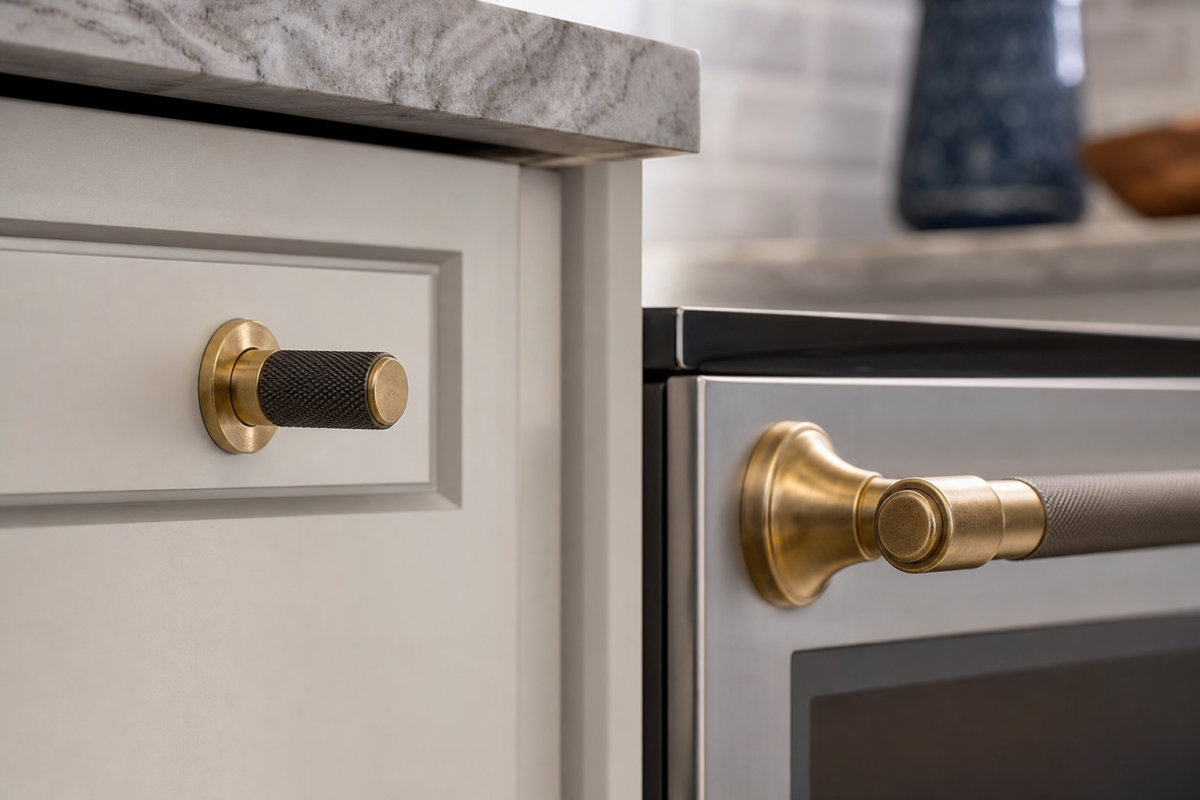
In an all-white room, metal finishes read loudly, so use them. Mixing two metals, warm brass on the cabinets with matte black on the lighting, for example, instantly adds the contrast that a single finish cannot. Aged or unlacquered brass brings warmth; matte black adds a graphic edge. Oversized appliance-style pulls or elongated bar handles make a bigger statement than tiny knobs. For finish pairings and sizing, our kitchen cabinet hardware guide walks through what works where.
Contractor’s take
When clients tell me their white kitchen feels cold, nine times out of ten the problem is a single cool white plus chrome hardware under bright LED downlights. I swap the cans for 2700K bulbs, change the pulls to unlacquered brass, and add one warm wood element. No repaint required, and the room reads completely different by that afternoon.
Bring in Wood and Natural Materials
Wood is the warmth that keeps white from feeling sterile. You do not need much. White oak floors, a butcher-block section of counter, floating oak shelves, or a stained island base all add the organic note the eye is looking for. Woven pendant shades, rattan counter stools, and a wood cutting-board wall rack layer in more texture at almost no cost. The trick is repetition: echo one wood tone in two or three spots so it reads intentional rather than random.
Open Shelving and Glass-Front Cabinets
Replacing a run of upper cabinets with open shelving or glass fronts breaks up a solid white wall and invites you to style it with ceramics, wood boards, and greenery. Glass-front cabinets, especially with a warm interior light, add depth without the commitment of fully open shelves. Weigh the practical tradeoffs, dust and constant styling versus airiness, in our open shelving vs upper cabinets comparison before you tear out storage.
Layer Your Lighting
Lighting temperature can make or break a white kitchen. Bright, bluish LEDs push white toward hospital-white; warm 2700K to 3000K bulbs make the same paint glow. Layer three sources: ambient ceiling light, task light under the uppers, and accent light from pendants or interior cabinet strips. Under-cabinet lighting is the highest-impact upgrade for both function and mood, and it eliminates the shadowy counters that make a kitchen feel dull. Our under-cabinet lighting guide covers strip types, color temperature, and installation.
Common White Kitchen Mistakes to Avoid
Most flat white kitchens share a few root causes, and each is easy to prevent. The first is choosing a white by its swatch on the wall of a store instead of testing a sample board in your own light; a white that looks perfect at the paint counter can turn gray or yellow at home. The second is matching every white in the room, cabinets, walls, trim, and ceiling, at the exact same shade and sheen, which erases the subtle shadow lines that give a room life. The third is over-lighting with cool, bluish LEDs that strip every trace of warmth out of the palette.
The last common trap is stopping at paint. A white kitchen needs at least one layer of texture and one warm material to feel finished; without them, even the loveliest white reads as a builder-grade blank. Treat the white as your backdrop, then build depth on top of it, and the room will feel intentional rather than unfinished.
Pull It Together: A Practical Checklist
Before you finalize a white kitchen scheme, run through the essentials that separate a warm, layered room from a flat one.
- Choose a white with an undertone that flatters your natural light direction
- Add at least one textured surface: fluted island, beadboard, plaster hood, or zellige tile
- Introduce a contrast element such as a stained or painted island
- Let the countertop or backsplash carry movement and personality
- Mix two metal finishes and size hardware generously
- Repeat one warm wood tone in two or three places
- Use 2700K to 3000K bulbs and layer ambient, task, and accent lighting
What These Upgrades Cost in 2026
Most white-kitchen refreshes are additive, so you can phase them. Repainting existing cabinets a new white runs about $30 to $70 per linear foot, or roughly $2,000 to $6,500 for an average kitchen when hiring a pro; a careful DIY job costs $200 to $600 in materials but 30 to 60 hours of labor. The texture and accent layers, hardware, lighting, a plaster hood, an island restain, generally cost less than new cabinetry and deliver the biggest visual return.
| Upgrade | Typical 2026 cost | Impact |
|---|---|---|
| Repaint cabinets (pro) | $2,000 – $6,500 | High |
| New hardware (full kitchen) | $150 – $900 | High |
| Under-cabinet lighting | $230 – $800 | High |
| Fluted or paneled island base | $400 – $1,800 | Medium-high |
| Plaster range hood | $1,000 – $3,500 | Medium-high |
| Zellige or slab backsplash | $1,200 – $4,500 | High |
Your next move
You know the number. What are you deciding next?
Everything you need to plan a kitchen remodel in 2026 - budget, layout, cabinets, countertops, appliances, timeline, hiring,…
Continue →A kitchen remodel costs $18,000 to $120,000 in 2026, with a national average near $42,000. Here's the full…
Continue →Kitchen cabinets cost $80-$800 per linear foot installed in 2026. Here's what stock, semi-custom, and custom really cost,…
Continue →Frequently asked
Are white kitchens still in style in 2026?
Yes. White remains the most popular kitchen palette because it is bright and timeless. The 2026 shift is toward warm whites layered with texture, wood, and contrast rather than stark, all-white rooms.
How do I keep a white kitchen from looking cold?
Use a warm-white paint, add wood and woven textures, mix metal finishes, and switch to 2700K to 3000K bulbs. One warm element in three spots is usually enough to turn the temperature of the whole room.
What is the best white paint for kitchen cabinets?
Benjamin Moore White Dove and Sherwin-Williams Alabaster are safe, flattering warm whites. Chantilly Lace or Pure White suit brighter, modern rooms. Always test a sample in your own light before committing.
Should my white cabinets match my white walls?
Not exactly. A slight difference in shade or sheen between cabinets and walls creates subtle depth. Matching them exactly is one of the fastest ways to flatten a room.
Is a white kitchen hard to keep clean?
White shows crumbs but hides hard water and dust better than dark finishes. A satin or semi-gloss cabinet sheen wipes down easily, and honed counters disguise smudges better than polished ones.

Prices reflect 2026 US averages for cabinet painting, lighting, and finish upgrades.