Kitchen Cabinet Hardware: 2026 Guide to Pulls, Knobs & Finishes
Pulls, knobs, cup pulls and finishes decoded, with the sizing math, placement rules and 2026 prices that make any kitchen look custom.

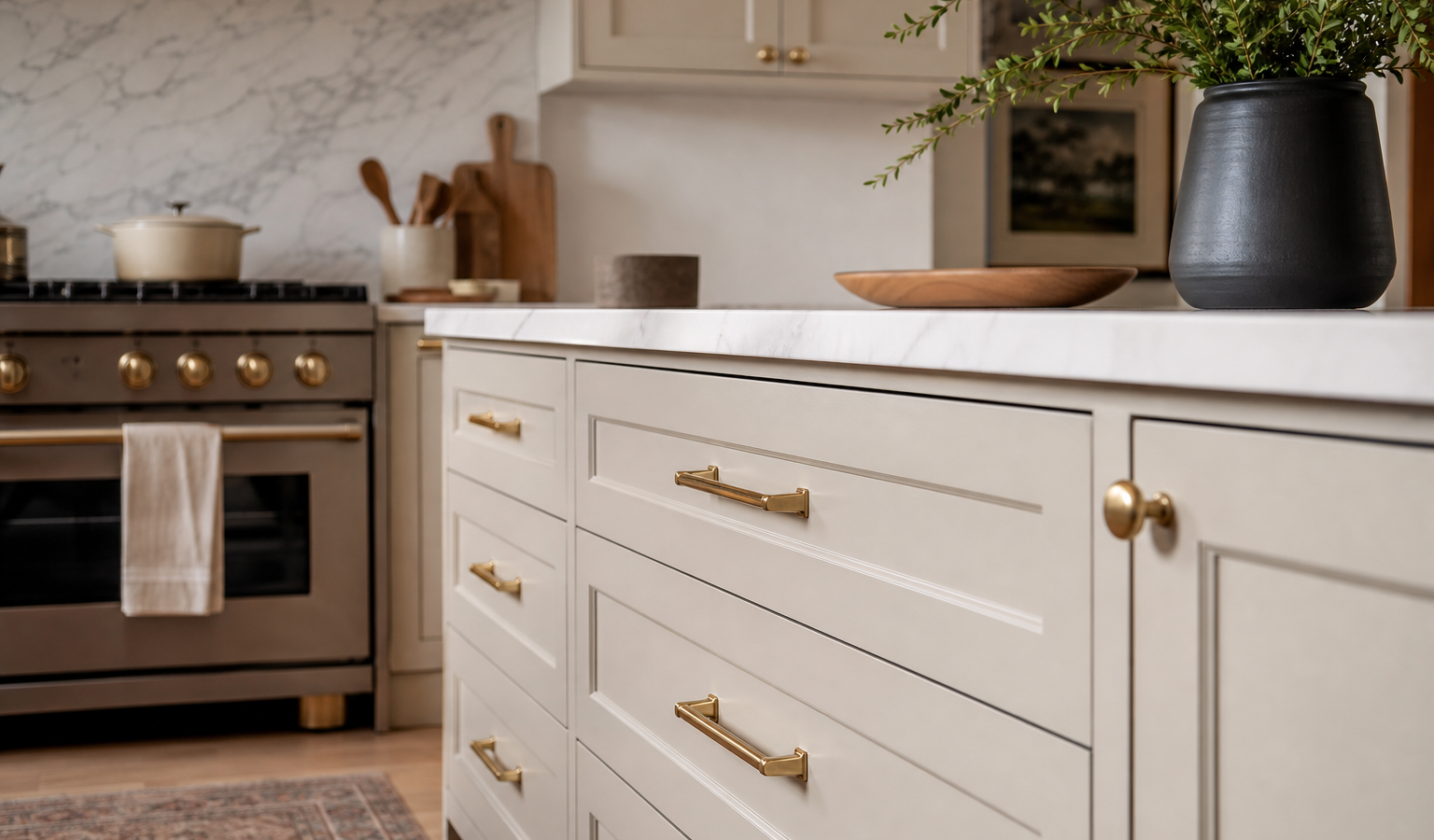
RenHive may earn a commission when you buy through links on this page. It never affects which products we recommend or how we rank them, and we do not accept product samples. How we review →
Kitchen cabinet hardware is the smallest line item in most remodels and the one people touch a thousand times a week. The right pulls and knobs make a $400 cabinet feel like a $900 one; the wrong ones cheapen a beautiful kitchen instantly. This guide covers every decision, from knobs versus pulls to finishes, sizing, materials, mounting, trends, and cost.
I have hung hardware on hundreds of kitchens as a general contractor, and the pattern never changes: homeowners agonize over finish color and skip the two things that matter most, correct sizing and consistent placement. Get those right and almost any style reads as intentional.
Knobs vs. pulls: the core decision
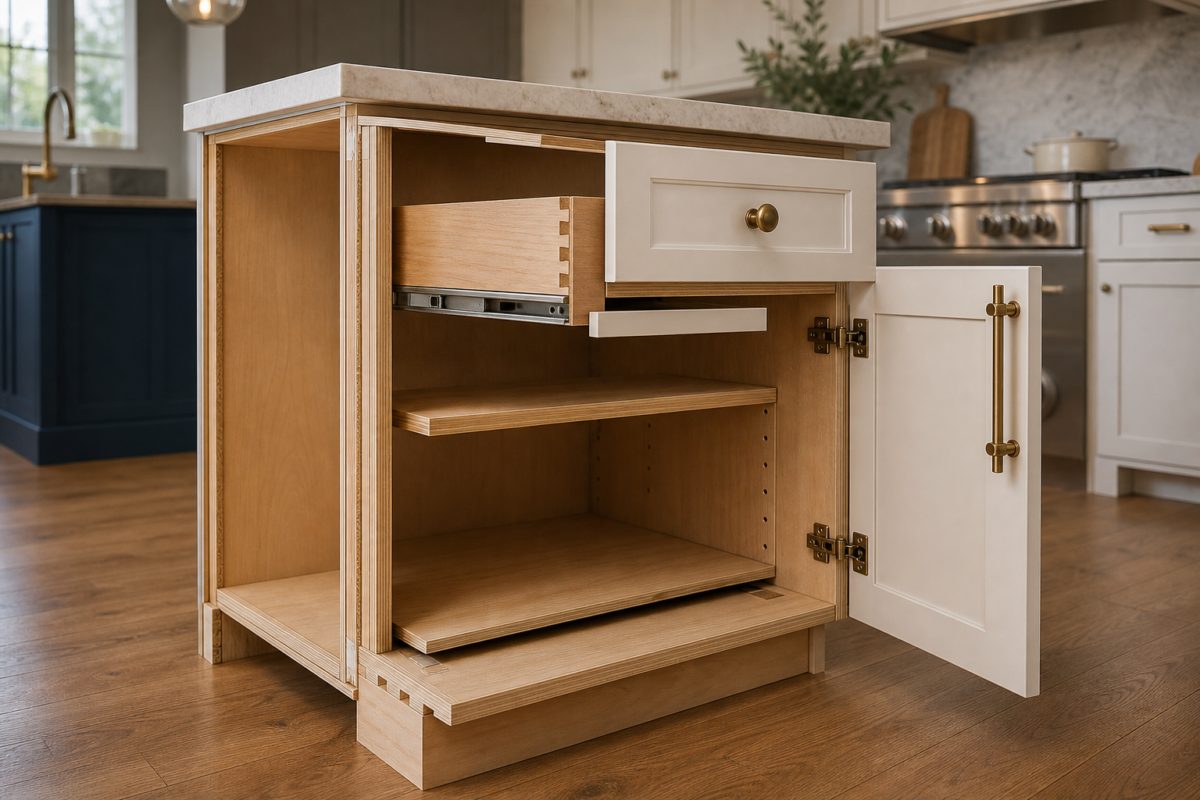
The first fork is knobs versus pulls. A knob attaches with a single screw and gives a small round or square grip. A pull, or bar pull, mounts with two screws for a wider surface you can hook your hand around. Neither is better, but they suit different jobs, and most kitchens use a mix.
When knobs win
Knobs shine on upper doors, glass fronts, and small base doors where a compact grip is all you need. They cost less, install faster with only one hole to drill, and read as traditional. Many designers default to knobs on doors and pulls on drawers, which looks balanced in Shaker and farmhouse kitchens. If you love your cabinet door style, knobs stay quietly in the background.
When pulls win
Pulls are the ergonomic winner on drawers, especially heavy pot drawers and pull-out pantries you yank open with a full grip. They are also the modern default, since long linear bar pulls define flat-panel kitchens. Because a pull spreads force across two screws, it holds up better on weighty fronts, and it is simply easier to grab for kids and anyone with arthritis.
Cup pulls, bin pulls, and specialty hardware
Beyond the knob-versus-pull basics is a family of specialty shapes. Knowing the names helps you shop, because catalogs sort by these categories, and mixing two or three types adds character without looking chaotic.
Cup and bin pulls
A cup pull, also called a bin pull, is a half-moon scoop you grip from underneath. It is the signature drawer hardware of farmhouse kitchens and pairs beautifully with knobs on the doors. Cup pulls mount with two screws on a fixed spread, so measure center-to-center before buying. They belong on drawers, not doors, since you grab up into the cup.
Edge, tab, and finger pulls
Edge pulls, tab pulls, and finger pulls sit at the top or edge of a drawer and nearly disappear. A finger pull is often just a channel routed behind the panel or a slim edge profile. These suit minimalist, handleless-look kitchens with clean flat fronts. They are less forgiving on placement, so they work best on newer cabinets with tight tolerances.
Appliance pulls
Appliance pulls are oversized bar pulls, typically 12 to 18 inches long, made for panel-ready refrigerators and dishwashers wearing cabinet fronts. They match your regular pulls in finish but scale up so the big doors do not look under-dressed. Budget these separately, since they cost far more per piece.
Sizing rules that actually work
Sizing is where most DIY hardware jobs go wrong. Pulls that are too short look like an afterthought, and knobs that are too small vanish on a wide drawer. Two simple rules cover most situations, and a lookup table handles the rest.
The one-third rule for pulls
The classic guideline is a pull roughly one-third the width of the drawer front. A 30-inch drawer points to a 10-inch pull or two smaller pulls; a 12-inch drawer wants a 4-inch pull. Pull length is the total end-to-end measurement, while center-to-center is the distance between the screw holes and always runs shorter. When you order, match the center-to-center to your holes, not the overall length.
Knob sizing by width
Knobs typically run 1 inch to 1-1/2 inches in diameter. Use 1 to 1-1/4 inch knobs on standard doors, 1-1/4 to 1-3/8 inch on medium cabinets, and 1-3/8 to 1-1/2 inch on larger fronts. Anything wider than about 30 inches should get two knobs or a pull rather than one lonely knob floating in the middle.
| Drawer width | Pull center-to-center | Knob diameter |
|---|---|---|
| Under 12 in | 3 in | 1 to 1-1/4 in |
| 12 to 18 in | 3 to 4 in | 1-1/4 in |
| 18 to 24 in | 4 to 5 in | 1-1/4 to 1-3/8 in |
| 24 to 30 in | 6 to 8 in | 1-3/8 to 1-1/2 in |
| 30 to 36 in and up | 8 to 12 in or two pulls | Two knobs or a pull |
Contractor’s take
When in doubt, size up. A pull that is slightly too long reads as generous and custom; one that is too short reads as cheap. On big pot drawers I would rather run a single 12-inch pull or two matched pulls than force an undersized handle to do a big job.
Placement: where hardware goes
Consistent placement is invisible when done right and glaring when done wrong. Pick a rule for each cabinet type and repeat it across the kitchen. The eye reads alignment before finish.
Cabinet door knob and pull placement
On upper doors, mount hardware 2-1/2 to 3 inches down from the bottom inside corner and 1 to 1-1/2 inches in from the door edge. On lower doors, flip it and mount the same distance up from the top inside corner. Vertical pulls follow the same edge offset, centered on the door stile. Keeping that edge margin uniform is what makes a row of cabinets look installed by a pro.
Drawer placement and dual pulls
Center a single knob or pull on drawers under about 24 inches wide. On drawers over 30 inches, use two pulls spaced roughly one-sixth of the drawer width in from each edge so they align over the drawer-box slides. On shallow drawers under 6 inches tall, nudge hardware slightly above center; on deep drawers, center it or set it for comfortable reach.
Finishes: matte black to satin brass
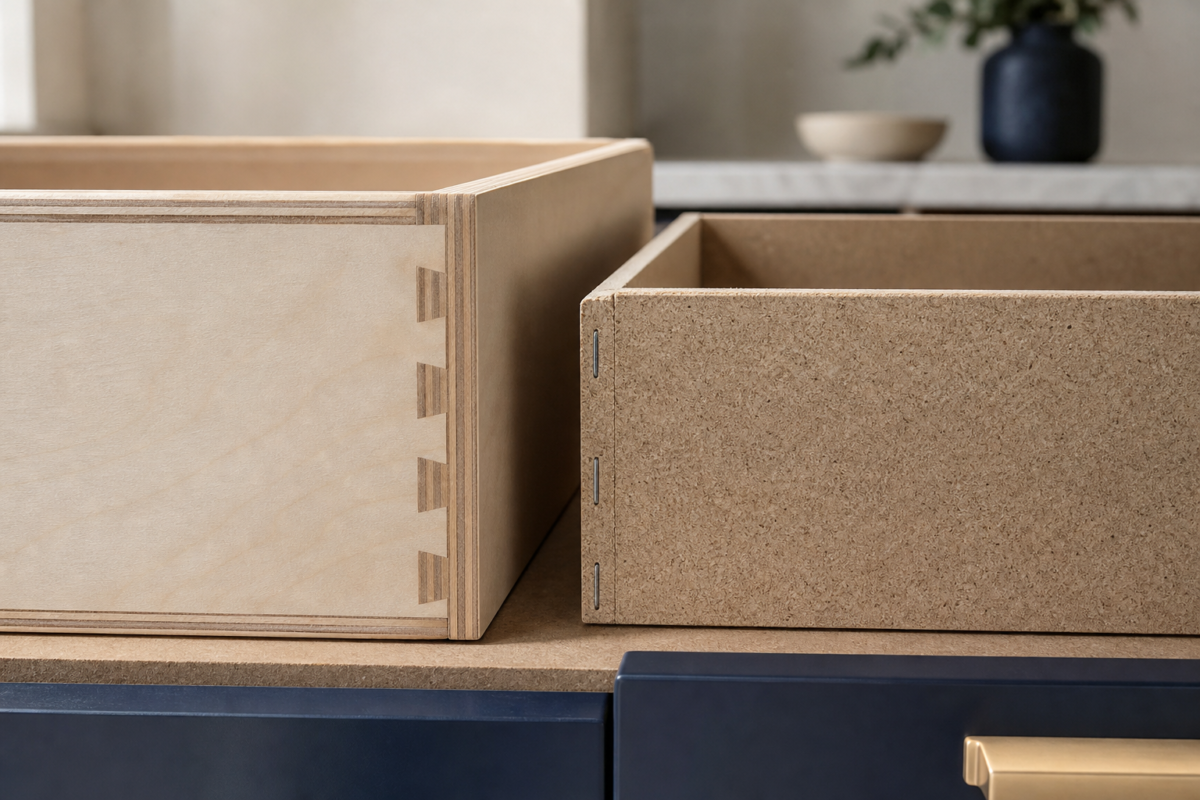
Finish is the decision everyone obsesses over, and for good reason, since it sets the personality of the room. The 2026 palette has shifted toward warmth, but every finish below still has a place.
The 2026 finish lineup
Warm metals lead. Satin and champagne brass, aged brass, and unlacquered brass add warmth without looking flashy, and bronze is surging as a richer, less common alternative. Matte black remains a workhorse against white and natural wood. Satin nickel stays the safe all-rounder, polished nickel is making a refined comeback, and polished chrome reads clean and slightly retro.
| Finish | Best with | Vibe | Upkeep |
|---|---|---|---|
| Matte black | White, wood | Grounding, modern | Hides prints |
| Satin/brushed brass | Navy, green, wood | Warm, current | Patina if unlacquered |
| Satin nickel | Almost anything | Safe, transitional | Very low upkeep |
| Polished chrome | White, gray | Crisp, retro-clean | Shows water spots |
| Oil-rubbed bronze | Warm wood | Deep, classic | Ages gracefully |
If you are also repainting your cabinets, choose the paint color and hardware finish together, because the same brass reads golden on white and almost bronze on deep green.
Mixing metals without the mess
Mixed metals are firmly in style, but there is a discipline to it. Done well it looks collected and custom; done randomly it looks like you ran out of one finish at the store.
The two-finish rule
Stick to two main finishes, three at most, and repeat each one more than once so nothing feels accidental. Pick one finish to lead and use the second as an accent. A common move is one finish on the perimeter and a second on the island, or hardware in one metal with lighting in another. Warm brass and bronze mix comfortably with matte black; brass plus polished nickel is a more traditional pairing.
Matching hardware to your faucet
Your faucet is the biggest piece of metal in the kitchen, so it either anchors your hardware finish or deliberately contrasts it. The easiest path is to match hardware to the faucet exactly. For contrast, keep the faucet and sink accessories in one finish and let the cabinet hardware be the accent. See our guide to the best kitchen faucets for 2026 to coordinate the two before committing.
Material and quality: what you are paying for
Two pulls can look identical online and feel completely different in hand. Material and construction are where price differences hide, and they matter most on the pieces you grip daily.
Solid vs. hollow
Solid hardware has real heft and a substantial feel; hollow or tubular pulls are lighter and can feel tinny, though a good hollow stainless bar pull is fine for lighter doors. The test is simple: pick it up. If it feels like a toothpaste cap, skip it for anything you open constantly. Spend on the workhorse drawers and save on decorative uppers.
Zinc vs. brass vs. stainless
Die-cast zinc alloy is the budget standard, plated to mimic any finish, but the coating can chip over years. Solid brass is heavier, ages beautifully, and holds premium finishes best, which is why it costs more. Stainless steel is durable, corrosion-resistant, and ideal for a brushed look. As a rule: zinc for value, brass for finish depth and longevity, stainless for a clean modern feel and toughness.
Contractor’s take
I tell clients to buy one sample of each finalist before ordering 40 pieces. Hold it, screw it to a scrap of cabinet, and live with it for a day. The finish you loved on screen is sometimes a full shade off in your actual light, and returns on 40 pulls are a headache.
Mounting and measuring
Getting the technical details right means your hardware fits existing holes or gives your installer a clean plan. This is the vocabulary on every product page.
Center-to-center and bore spacing
Center-to-center, sometimes called bore spacing, is the distance between the two screw holes on a pull. It is the most important number when replacing existing pulls, because a mismatch means drilling new holes and patching old ones. Standard sizes include 3 inch, 3-3/4 inch, 5 inch, and 6-1/4 inch, but longer pulls run well beyond that. Always measure hole to hole before ordering.
Single vs. dual mounting and backplates
Knobs use a single screw, so they can rotate over time; a dab of thread locker or a backing washer keeps them put. Pulls use dual mounting for stability. A backplate is a decorative metal plate mounted behind a knob or pull that adds a traditional look and conveniently covers old holes when you switch from a pull to a knob without patching.
2026 trends worth following
Trends should inform your choice, not dictate it, since hardware is easy to swap later. Still, a few 2026 directions are worth leaning into if resale is on your mind.
Warm metals and mixed finishes
The headline is warmth. Champagne, aged, and unlacquered brass and rising bronze tones dominate showrooms, and disciplined two-tone combinations like black-and-brass are increasingly common. This pairs naturally with the two-tone cabinet trend, where hardware finish bridges the upper and lower colors.
Longer pulls and integrated looks
Pulls keep getting longer and slimmer on modern kitchens, and the handleless look using edge and finger pulls is spreading beyond high-end European designs into mainstream flat-panel cabinets. Fluted and knurled textures on knobs and pull ends add subtle interest without changing your finish palette.
Cost and how many pieces you need
Hardware pricing spans a wide range, and because you buy in bulk, small per-piece differences add up fast. Here is what to expect in 2026 and how to estimate a whole kitchen.
Price per piece in 2026
Budget zinc knobs and small pulls run about $2 to $5 each. Solid, well-finished mid-range pieces land around $6 to $15. Higher-end solid brass and stainless run $15 to $30, and designer hardware starts at $40 and climbs past $60 for statement pieces. Appliance pulls are their own category, often $30 to $100+ each. For most kitchens, mid-range is the sweet spot. For the bigger picture, see our kitchen cabinet cost breakdown.
Budgeting for a full kitchen
A typical kitchen has 25 to 40 hardware pieces once you count every door and drawer. At mid-range pricing that is roughly $150 to $600, a small slice of a full remodel but one of the highest-impact dollars you will spend. Count your doors and drawers, add a couple of spares, and multiply by your per-piece target before you shop. If money is tight, our budget kitchen remodel ideas show where hardware fits among other savings.
| Tier | Per piece | 35-piece kitchen |
|---|---|---|
| Budget zinc | $2 to $5 | $70 to $175 |
| Mid-range | $6 to $15 | $210 to $525 |
| High-end solid | $15 to $30 | $525 to $1,050 |
| Designer | $40+ | $1,400+ |
Your hardware shopping checklist
Before you place an order, run through this checklist so you buy the right count, size, and finish the first time.
- Count every door and drawer, then add 2 to 3 spares
- Measure existing center-to-center before replacing pulls
- Confirm knob and pull sizes against the sizing table
- Pick a lead finish and one accent finish only
- Order one physical sample of each finalist first
- Match or intentionally contrast the faucet finish
- Budget appliance pulls separately
- Buy one finish in a single batch to avoid dye-lot variation
Frequently asked questions
A few questions come up on nearly every hardware job. Here are the short, practical answers.
Common hardware questions
These cover count, finish matching, sizing, current style, and where solid materials are worth the money.
Your next move
You know the number. What are you deciding next?
Everything you need to plan a kitchen remodel in 2026 - budget, layout, cabinets, countertops, appliances, timeline, hiring,…
Continue →A kitchen remodel costs $18,000 to $120,000 in 2026, with a national average near $42,000. Here's the full…
Continue →Kitchen cabinets cost $80-$800 per linear foot installed in 2026. Here's what stock, semi-custom, and custom really cost,…
Continue →Frequently asked
How many hardware pieces does an average kitchen need?
Most kitchens use 25 to 40 pieces once you count every door and drawer front. Count yours exactly, then add two or three spares in case one arrives damaged or you want a match later.
Should knobs and pulls match in finish?
Yes, keep all hardware in one finish unless you are intentionally mixing two finishes with a plan. Mixing knob and pull shapes in the same finish looks great; mixing random finishes looks like a mistake.
What size pull should I use on a 30-inch drawer?
Follow the one-third rule: aim for about a 10-inch pull, or use two matched pulls spaced roughly one-sixth of the drawer width in from each edge. Match the center-to-center to your drilled holes.
Is matte black still in style for 2026?
Yes, matte black remains popular and grounds white and wood kitchens, but warm metals like satin brass and bronze are the fastest-growing choice for 2026.
Is it worth paying for solid brass hardware?
On drawers and doors you open daily, yes, since solid brass feels substantial and holds its finish for years. On rarely-used uppers, plated zinc is fine.

Based on 2026 hardware retailer guides, manufacturer sizing standards, and current US per-piece pricing; reviewed by a licensed general contractor.