Cabinet Refacing vs Replacing: 2026 Cost, Time & ROI Guide
Refacing keeps your boxes and swaps the doors; replacing starts over. Here is how the two compare on cost, time, and resale in 2026, with painting as the budget path.

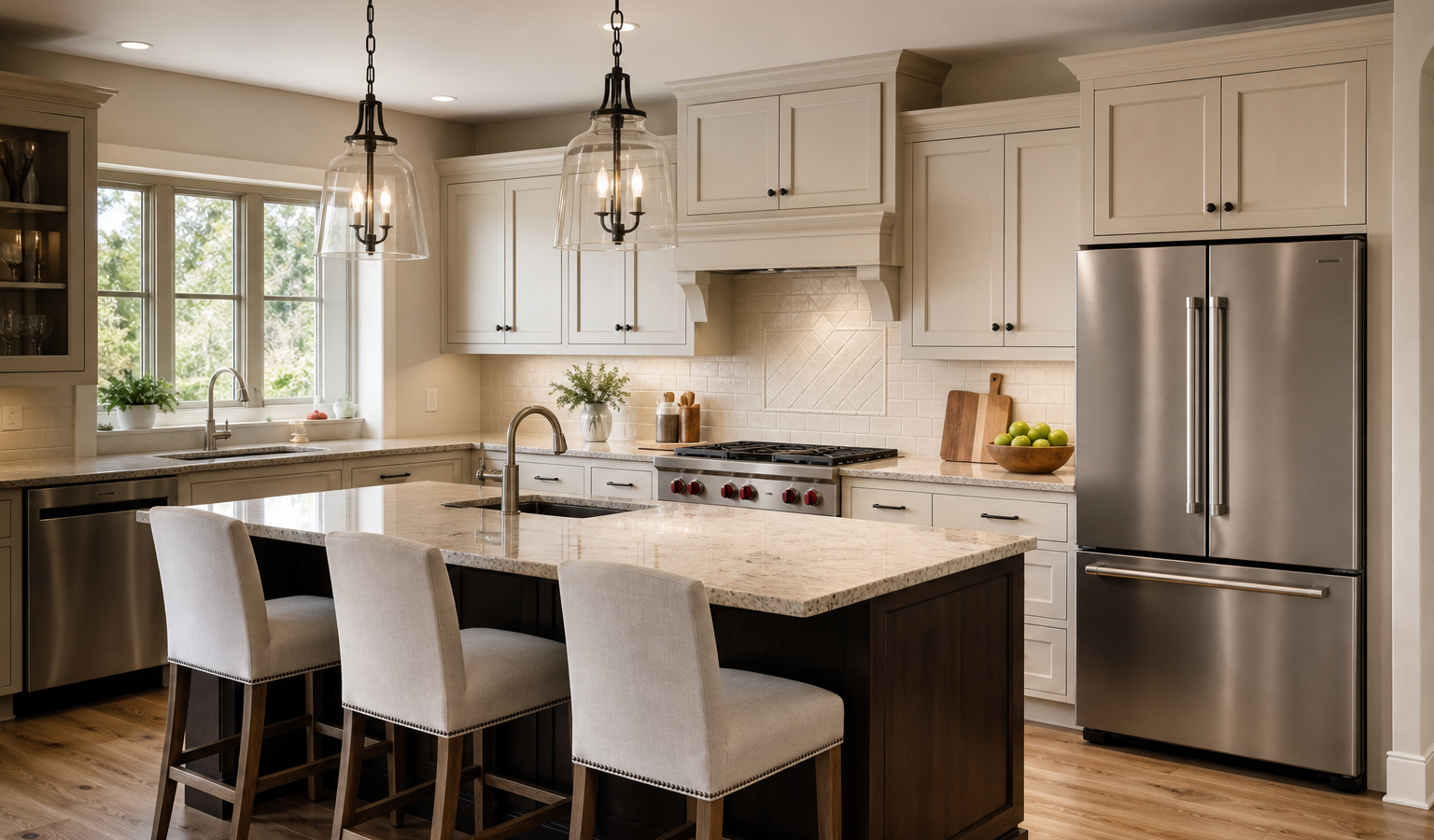
If your kitchen boxes are still solid but the doors look dated, the choice usually comes down to cabinet refacing vs replacing (with painting sitting quietly in between as the budget option). Refacing keeps your existing cabinet boxes and swaps in new doors, new drawer fronts, and a fresh veneer skin over the frames. Replacing tears everything out and starts over. Painting or refinishing leaves the structure and the doors in place and just changes the finish. The right call depends on the condition of your boxes, whether the layout works, and how much you want to spend.
This guide breaks down all three paths with real 2026 US pricing, honest timelines, and the structural checks a contractor actually runs before recommending one. By the end you will know which option fits your kitchen and how long you plan to stay in the home. We keep the numbers grounded in what crews are quoting this year, not aspirational marketing figures.
The three options at a glance
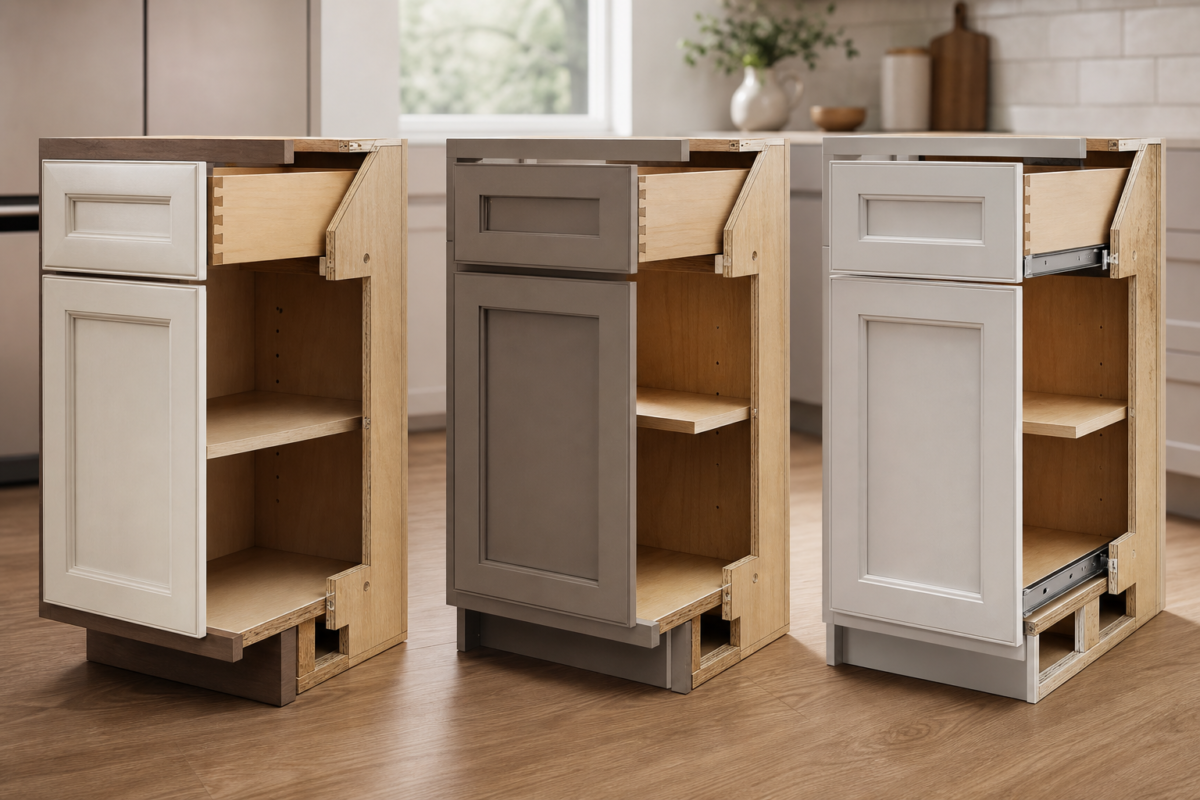
Refacing, refinishing, and replacing side by side
Before the details, here is the shape of the decision. Refinishing and painting are cosmetic surface work. Refacing is a hybrid: new visible surfaces on a reused frame. Replacement is a full teardown that lets you change materials, storage, and layout. Each step up the ladder costs more, takes longer, and buys you more change. The table below is the one most homeowners screenshot.
| Approach | Typical 2026 cost | Time on site | Disruption | Lifespan | Best for |
|---|---|---|---|---|---|
| Refinishing / painting | $1,000-$4,000 | 2-5 days | Low | 5-8 years | Solid boxes and doors, color-only change |
| Refacing | $4,000-$12,000 | 2-4 days | Low to medium | 10-20 years | Good boxes, dated or worn doors, layout works |
| Full replacement | $12,000-$35,000+ | 2-6 weeks | High | 20-30+ years | Damaged boxes, layout change, more storage |
If your boxes are healthy and the footprint works, refacing or painting will almost always be the smarter spend. If the layout fights you every day or the boxes are failing, replacement is the only path that fixes the real problem. For a wider view of where cabinets sit in a full budget, our kitchen cabinet cost breakdown puts these numbers in context.
Contractor’s take
Nine times out of ten, the deciding factor is not the doors, it is the boxes. Doors are easy to change. Boxes are not. Before you fall in love with a finish, I put a level on the frames and press on the shelves. That two-minute check saves people thousands.
What cabinet refacing actually is
New doors and drawer fronts over your existing boxes
Refacing means the cabinet boxes stay exactly where they are while everything you can see gets replaced. A crew removes all the doors and drawer fronts, then applies a thin skin, either wood veneer, plastic laminate, or rigid thermofoil (RTF), over the face frames and exposed cabinet sides. New doors and drawer fronts go on in the style and color you choose, and you get new hinges, pulls, and often soft-close hardware. End panels, toe kicks, and crown molding can be updated to match.
The material you pick for the skin and doors drives both cost and durability. Real wood veneer looks the most authentic and can be stained. Rigid thermofoil is a vinyl layer heat-pressed onto an MDF core, which gives you a seamless painted look for less money but can peel near heat over time. Plastic laminate skins are the most durable against moisture. If you are weighing door profiles, our guide to cabinet door styles covers Shaker, slab, and raised-panel looks in detail.
Contractor’s take
Refacing is not a paint job in disguise. Done right, it is real millwork: new doors machined to fit, veneer trimmed tight to the frame, hardware drilled to a template. If a quote sounds too cheap, ask whether they are veneering the boxes or just swapping doors, because those are two different products at two different prices.
Refinishing and painting explained
The budget path when the doors are still good
Refinishing and painting keep your existing doors and drawer fronts and change only the finish. Professionals remove the doors, degrease and sand every surface, apply a bonding primer, and spray two or more coats for a factory-smooth result. The look is dramatically fresher for a fraction of refacing money, but it cannot change the door profile, hide worn edges, or fix a bad layout. Expect a professional painted finish to last five to eight years before it needs a refresh in a busy kitchen.
This is also the most realistic do-it-yourself project of the three. A committed homeowner can paint a small kitchen with $300 to $800 in materials, though the prep and dry time stretch the job over a week or more. If you want to try it, our step-by-step guide to painting kitchen cabinets walks through the sanding, priming, and spraying that separate a lasting finish from a peeling one. Skip painting entirely if your doors are thermofoil or melamine that is already delaminating, because paint will not bond to a failing surface.
| Painting detail | DIY | Professional |
|---|---|---|
| Typical cost | $300-$800 materials | $1,500-$4,000 |
| Time | 1-2 weeks | 2-5 days |
| Finish quality | Good with practice | Factory-smooth spray |
| Best for | Confident, patient DIYer | Flawless result, no downtime |
Full replacement: when you cannot skip it
Starting over with new boxes and a new layout
Replacement removes the old cabinets down to the walls and installs entirely new units. It is the most expensive and disruptive route, but it is the only one that lets you change the footprint, add a pantry run, move to all-plywood boxes, or upgrade to features like pull-out drawers and interior organizers. If your boxes are water-damaged, moldy, or racking out of square, no amount of surface work will save them, and replacement becomes the honest answer.
Cost swings widely by cabinet grade. Ready-to-assemble flat-pack cabinets you install yourself can land around $6,500 to $17,000, semi-custom lines from a big-box store run $15,000 to $35,000 installed, and full custom millwork climbs past $35,000. Match the grade to how long you will keep the home, since a starter house rarely justifies custom millwork while a forever home might.
Contractor’s take
People assume replacement means a new layout, but most replacements I do keep the same footprint because moving plumbing and gas adds thousands. If your only complaint is looks and the layout works, you are paying a huge premium over refacing for the same visual result. Replace to fix the box or the floor plan, not just the finish.
Real 2026 costs compared
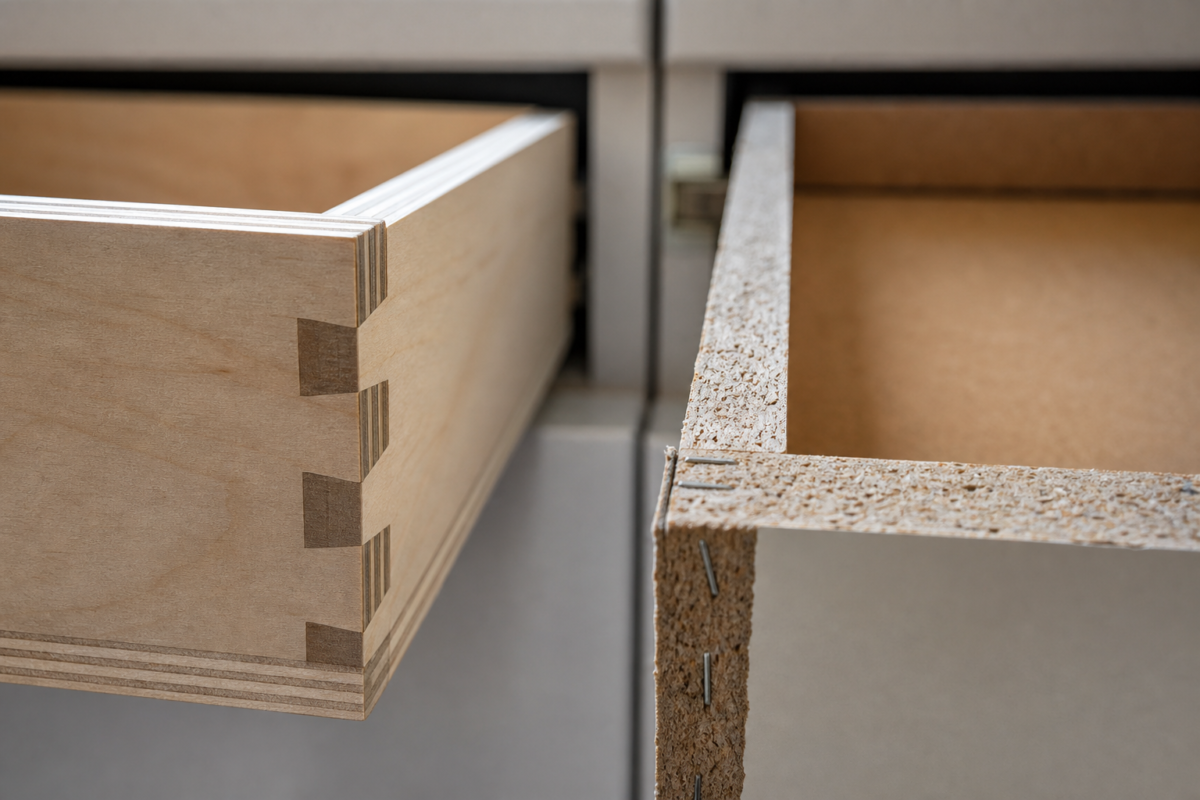
What crews are quoting this year
Pricing in 2026 has settled after a few volatile years, and the ranges below reflect verified project data across US markets. Refacing runs roughly $150 to $450 per linear foot depending on material, which lands most kitchens between $4,000 and $12,000. Painting or refinishing sits at $1,000 to $4,000. Replacement starts around $12,000 for modest cabinets and climbs past $35,000 for custom work. Material choice inside each tier matters as much as the tier itself.
| Item | Reface | Refinish / paint | Replace |
|---|---|---|---|
| Whole kitchen | $4,000-$12,000 | $1,000-$4,000 | $12,000-$35,000+ |
| Per linear foot | $150-$450 | $50-$180 | $300-$1,000+ |
| Wood veneer / real wood | $100-$250 per LF | n/a | $200-$500 per LF |
| Thermofoil / laminate | $60-$125 per LF | n/a | n/a |
| Common add-ons | Soft-close, crown, glass | New hardware | Layout, plumbing, electrical |
Watch the add-ons. Soft-close hinges and slides run $20 to $50 per set, new pulls $5 to $60 each, crown molding $300 to $570, and under-cabinet lighting $200 to $600. These stack fast on a reface and can quietly close the gap toward replacement. To see how cabinet spend fits the whole project, cross-check our kitchen remodel cost guide.
Timelines and daily disruption
How long your kitchen is out of commission
Time out of your kitchen is a real cost that quotes never list. Refacing and painting are fast because the boxes never leave: most refacing jobs wrap in two to four days, and painting takes two to five. Replacement is a different animal, running two to six weeks once you account for demolition, template, fabrication, and the countertop and backsplash work that follows. The bars below show the practical differences that shape day-to-day life during the job.
Refacing and painting usually leave your counters, sink, and appliances usable throughout, so you can still cook most nights. Replacement takes the whole kitchen offline and often the countertop with it, which means a temporary setup and eating out. If timing is tight, map the sequence with our kitchen remodel timeline before you commit.
Contractor’s take
The hidden clock on replacement is the countertop. New boxes have to be set and leveled before anyone can template stone, and that template-to-install gap is often another one to two weeks of a plywood-topped kitchen. Refacing skips that entirely because your existing counters stay put.
When your cabinet boxes are worth keeping
The condition and layout checks that decide it
Refacing and painting only make sense if the boxes underneath are sound and the layout works for how you cook. A contractor runs a quick physical inspection before recommending either. Press on the cabinet sides and shelf bottoms: solid plywood barely flexes, while water-damaged particleboard feels soft, spongy, or visibly swollen. Push the corners of a box diagonally; a healthy cabinet shows zero racking, while failing joints wobble. Run this checklist yourself before you get quotes.
- Boxes are solid plywood or intact particleboard with no soft or swollen spots
- Frames are plumb and square, with no diagonal wobble when pushed
- No water damage, mold, or lingering musty smell under the sink
- The current layout works and you do not need to move walls or plumbing
- You are happy with the storage and do not need major new capacity
- Face frames are wide enough and flat enough to accept veneer
If you checked every box, refacing or painting will give you a like-new kitchen for a fraction of replacement cost. If you missed two or more, especially on structure or layout, replacement earns its price. When the sticking point is only budget, our budget kitchen remodel ideas show how to stretch dollars without cutting corners on the parts that matter.
Pros and cons of each approach
The honest tradeoffs
Every path has a real downside, and matching the tradeoff to your priorities is the whole game. Refacing gives you a new look fast and cheap but locks in your existing layout and storage. Painting is the cheapest change but the least durable and cannot alter the door profile. Replacement fixes everything but costs the most and takes the longest. The table lays out the give-and-take at a glance.
| Approach | Pros | Cons |
|---|---|---|
| Refacing | Fast, keeps counters, new door style, half the cost of replacing | No layout or storage change, veneer can peel, boxes must be sound |
| Painting | Cheapest, DIY-friendly, quick | 5-8 year lifespan, no profile change, will not bond to failing surfaces |
| Replacement | New layout, new boxes, max lifespan and resale, adds storage | Highest cost, weeks of downtime, requires new counters |
The material you choose within refacing changes its own tradeoff too. Rigid thermofoil looks seamless and paints well but is heat-sensitive near ovens; real wood veneer takes stain and repairs but costs more; laminate skins shrug off moisture. Weigh how each holds up over a decade of daily use before you sign, because the cheapest skin is rarely the cheapest choice over time.
ROI and resale value
What each option returns at sale
If you plan to sell within a few years, spend with resale in mind. Minor kitchen updates like painting and refacing tend to return roughly 80 percent of their cost, while major remodels including full cabinet replacement return closer to 60 to 70 percent. In dollar terms, a $3,000 paint job might add about $2,400 in perceived value, a $9,000 reface around $7,200, and a $13,000 replacement roughly $8,000 to $9,000. Refacing often wins the ratio because it delivers a new-kitchen look at a cosmetic price.
Buyers respond to what they see, and a kitchen with fresh doors and clean hardware shows nearly as well as a full replacement. That is why refacing punches above its weight for budget sellers. To model your own return, run the numbers with our kitchen remodel ROI guide.
Contractor’s take
If you are selling within two years, I steer people toward refacing or paint almost every time. Buyers do not pull out a cabinet drawer to check if the box is new, but they absolutely notice tired doors and mismatched hardware. Spend where the eye lands.
How to decide for your kitchen
Matching the option to your situation
Put the three factors together and the answer usually reveals itself. Start with the boxes: if they are failing, replace. If they are sound, move to layout: if the footprint fights you daily, replace. If the layout works, the choice narrows to refacing or painting, and that comes down to whether your doors are worth keeping and how much change you want. Time in the home is the tiebreaker, since short stays reward the cheaper cosmetic routes.
A simple rule of thumb: choose painting when the doors are solid and you only want a new color, refacing when the boxes are good but the doors are tired or you want a new style, and replacement when the structure or floor plan is the real problem. Whatever you choose, get at least three itemized quotes so you can see exactly what each crew includes.
Frequently asked questions
Quick answers before you get quotes
Your next move
You know the number. What are you deciding next?
Everything you need to plan a kitchen remodel in 2026 - budget, layout, cabinets, countertops, appliances, timeline, hiring,…
Continue →A kitchen remodel costs $18,000 to $120,000 in 2026, with a national average near $42,000. Here's the full…
Continue →Kitchen cabinets cost $80-$800 per linear foot installed in 2026. Here's what stock, semi-custom, and custom really cost,…
Continue →Frequently asked
Is cabinet refacing cheaper than replacing?
Yes, usually by about half. Refacing runs $4,000 to $12,000 for most kitchens versus $12,000 to $35,000 or more for replacement, because you reuse the existing boxes instead of buying and installing new ones.
How long does cabinet refacing take?
Most professional refacing jobs finish in two to four days on site. Because your boxes and counters stay put, your kitchen remains largely usable throughout, unlike a replacement that can take two to six weeks.
Can I reface cabinets myself?
Refacing is difficult for DIYers because veneer application and door fitting require precision and tools. Painting is the far more realistic DIY project, costing $300 to $800 in materials for a small kitchen if you are patient with prep.
How long does refacing last?
Quality refacing with real wood veneer and solid doors lasts 10 to 20 years, and laminate skins can go longer. Painted finishes last a shorter five to eight years before needing a refresh in a busy kitchen.
When is replacement worth the extra cost?
Replace when the boxes are water-damaged or racking, when you need to change the layout or add storage, or when you want to upgrade from particleboard to all-plywood construction. Surface work cannot fix any of those.

Cost and timeline ranges compiled from 2026 US contractor and industry pricing data; reviewed by a licensed general contractor.