Kitchen Backsplash Cost in 2026: Price by Material
A backsplash is the cheapest way to give a kitchen a finished, custom look - but the cost swings widely by tile. Here's what a kitchen backsplash costs per square foot installed in 2026, by material and by size, and where you can safely save.

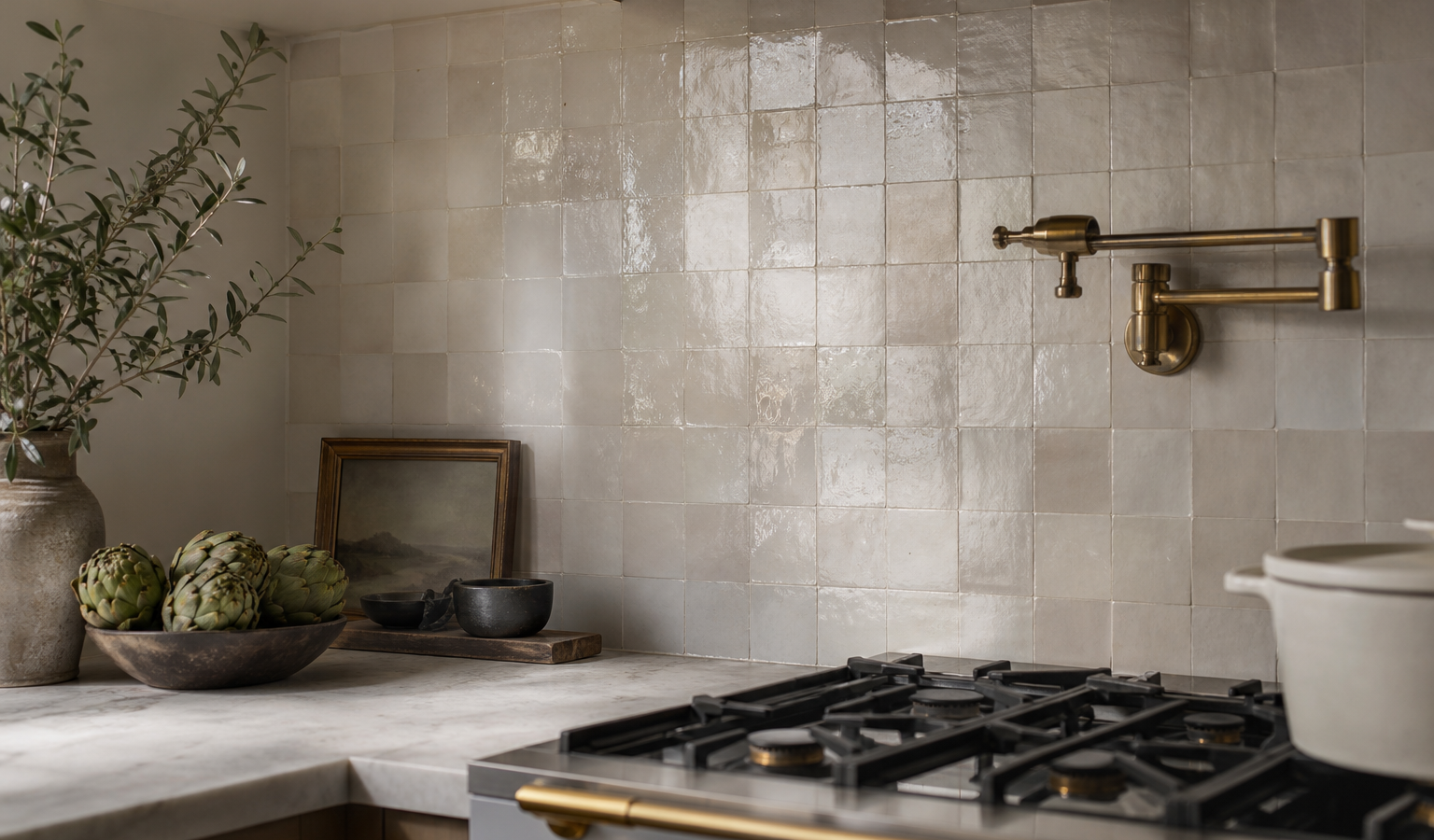
A backsplash is the smallest surface in a kitchen and one of the highest-impact – the strip of tile between counter and cabinets that pulls the whole room together. The good news is the kitchen backsplash cost is modest next to cabinets or countertops. In 2026, a typical kitchen backsplash costs between $500 and $1,800 installed, with a national average near $1,150, or roughly $10 to $50 per square foot including labor. This guide breaks down the installed kitchen backsplash cost by tile material – ceramic, porcelain, glass, natural stone, marble, mosaic, quartz slab, peel-and-stick, and tin – by size, by pattern, and by labor versus materials, then shows where you can save, including whether a DIY install makes sense for your kitchen.
Kitchen backsplash cost per square foot in 2026
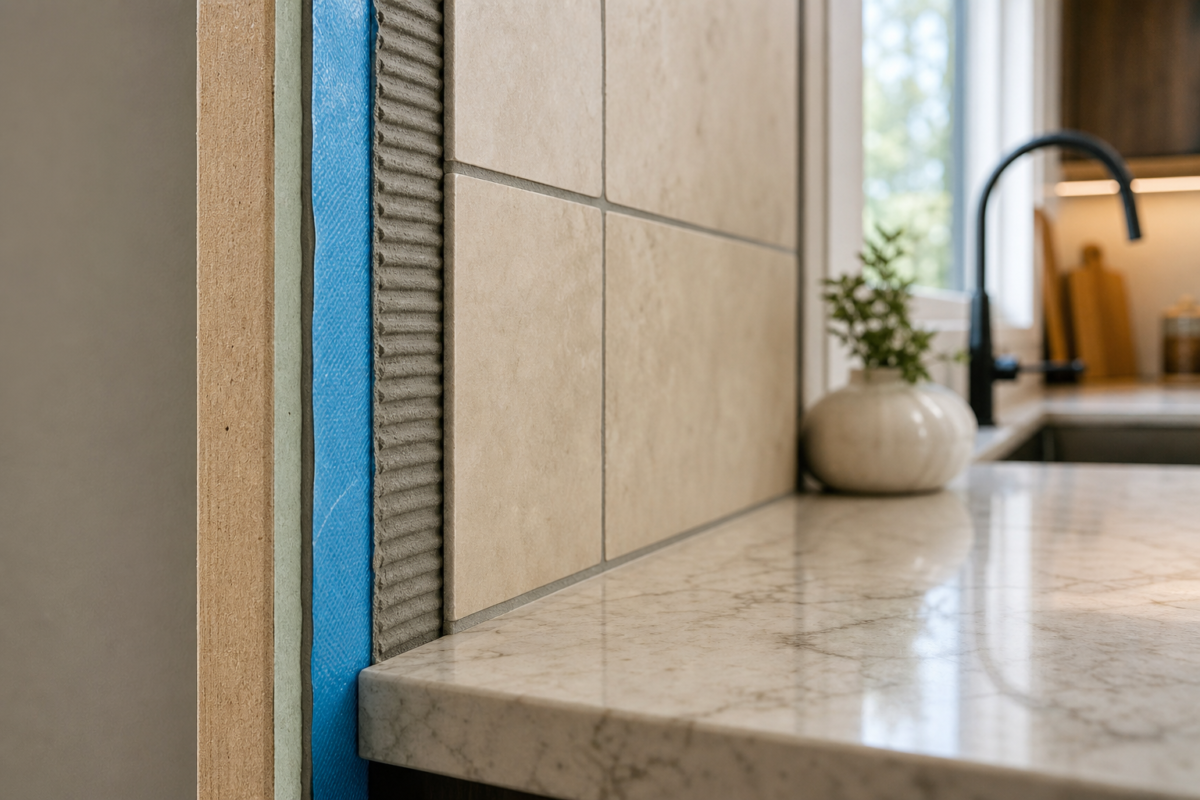
Backsplash tile is priced per square foot installed, a number that bundles the material with the labor to set and grout it. Most kitchens have 20 to 40 square feet of backsplash – the strip along the counters plus, often, a taller panel behind the range. Installed, the material breaks down like this:
| Material | Installed cost / sq ft | Notes |
|---|---|---|
| Peel-and-stick | $4-$30 | DIY-friendly, renter-safe, least durable |
| Ceramic subway | $6-$28 | The budget workhorse; classic 3×6 look |
| Porcelain | $7-$32 | Denser and tougher than ceramic |
| Natural stone | $8-$35 | Travertine, slate – warm and organic |
| Mosaic | $9-$45 | Small tiles on mesh sheets; more labor |
| Glass tile | $10-$45 | Bright and reflective; premium look |
| Tin / stamped metal | $15-$60 | Vintage or industrial statement |
| Marble | $10-$150 | Luxury look; soft and needs sealing |
| Quartz slab (full-height) | $60-$150 | Seamless engineered-stone panel |
Notice the split: labor typically runs $5 to $25 per square foot and material anywhere from $1 to $140, so the tile you choose – more than anything else – sets the total. A simple ceramic subway backsplash and a marble mosaic can cover the identical wall and land thousands of dollars apart.
Backsplash cost by size
Because tile is priced per square foot, the size of your backsplash sets the base number. Here’s what a typical kitchen backsplash costs installed, by area:
| Backsplash size | Average cost | Range |
|---|---|---|
| 15 sq ft | $430 | $225-$625 |
| 25 sq ft | $725 | $350-$1,050 |
| 40 sq ft | $1,160 | $600-$1,700 |
| 50 sq ft | $1,450 | $750-$2,100 |
To size yours, measure the length of your counters and multiply by the height to the upper cabinets (usually 18 inches), then add the area behind the range if you’re going taller there. Add 10% for waste – cuts, breakage, and future repairs from the same lot.
Contractor’s take
“The line people underestimate is the pattern. A straight subway or stacked layout goes up fast, but a herringbone, a picket, or a tiny mosaic can double the labor because every piece is cut and aligned by hand. If your budget is tight, spend it on a nicer tile in a simple layout rather than a fancy layout in a cheap one.” – Marcus Hale, licensed GC
Material and labor: where the money goes
A backsplash quote is really two numbers stacked together: what the tile costs and what it costs to set it. Installers typically bill $45 to $120 per hour, or a flat $350 to $600 day rate, and a straightforward subway job on a flat, prepped wall runs 20-40 square feet in a single day. Add a pattern, extra outlets, or an uneven wall needing skim-coat first, and the same square footage stretches to two days. Rough shares of a typical budget look like this:
For a budget-focused kitchen, that math argues for spending on the tile and keeping labor simple: a nicer ceramic or porcelain in a straight layout beats a bargain tile set on the diagonal. It pairs naturally with the rest of a kitchen remodel cost plan, since backsplash and countertops are almost always priced and scheduled together.
Cost by material: what you’re paying for
Ceramic and porcelain subway tile – $6-$32 / sq ft
The most popular and most budget-friendly backsplash. Ceramic comes in endless colors and finishes, and the classic 3×6 subway tile is the most-requested format in America – stain-resistant, easy to clean, and impossible to date. Porcelain costs a bit more but is denser and more chip- and moisture-resistant, which matters right behind a sink or range. This pairing is the default for good reason and the best value for most kitchens.
Glass tile and mosaic – $9-$45 / sq ft
Glass tile is bright and reflective, bouncing light around a kitchen, while mosaics – small tiles pre-mounted on mesh sheets – add texture in penny rounds, hexagons, or herringbone chips. Both cost more in labor because there are more grout lines to fill and, with mosaics, more sheets to align and level. Beautiful as an accent behind the range even if the rest of the kitchen is plainer tile.
Natural stone and marble – $8-$150 / sq ft
Travertine, slate, and marble bring warmth and a high-end look no manufactured tile quite matches. Marble is the luxury statement, but it’s soft, porous, and needs sealing to resist grease and stains in a working kitchen. Natural stone in general is the pricier, higher-maintenance route – stunning, but choose it knowing the upkeep and the periodic reseal.
Quartz slab and full-height stone – $60-$150 / sq ft
A quartz slab backsplash – one continuous engineered-stone panel running from counter to cabinet, or all the way to the ceiling behind a range – is the premium, seamless option. It matches or complements the countertop, has zero grout to clean, and shrugs off grease. It’s also the most expensive backsplash by far, mainly for fabrication and precision cutting, not labor hours; see quartz vs. granite for how the material compares on the counter.
Peel-and-stick and tin – $4-$60 / sq ft
Peel-and-stick tile is the renter’s and budget DIYer’s friend – it goes up in an afternoon with no mortar and comes off cleanly, though it won’t last like real tile and can peel near heat or heavy moisture. Stamped tin and stainless backsplashes deliver a vintage or commercial-kitchen look; tin panels are lightweight and fast to hang but push the price up with specialty material and trim.
Pattern complexity: herringbone, chevron, and mosaic surcharges
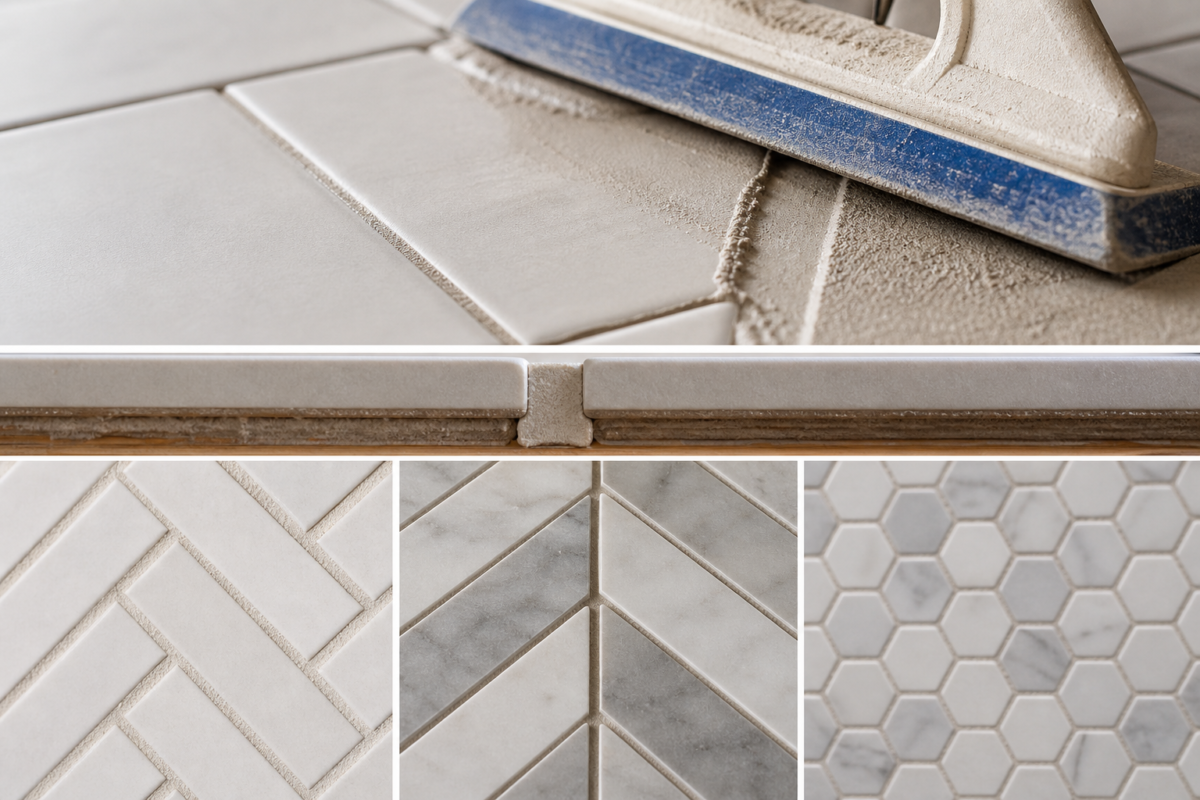
Layout is the hidden line item in every backsplash quote. A straight or stacked subway pattern is the fastest thing an installer can set, and it’s baked into the base labor rate above. Ask for a herringbone or chevron layout and expect a 20% to 50% labor surcharge, since every tile is mitered or cut at an angle and dry-fit before it’s set. A tight mosaic sheet with dozens of small pieces per square foot adds its own surcharge for grout work and alignment, even though the sheets install faster than loose tile. On a demanding pattern, day rates can climb toward $500 to $800 instead of the standard $350-$600.
| Style | Relative labor cost | Why |
|---|---|---|
| Classic subway (stacked or offset) | $ | Fast to set, minimal cutting |
| Picket / arabesque | $$ | Shaped tiles, moderate labor |
| Mosaic sheets | $$ | Pre-mounted, but many grout lines |
| Herringbone / chevron | $$$ | Every piece angle-cut and aligned by hand |
| Full-height slab | $$$$ | Large stone piece, premium material and fabrication |
Backsplash height, edges, niches, and outlets
Standard vs. full-height backsplash
How far up the wall you tile changes both the look and the cost. A standard backsplash runs about 18 inches, from the counter to the upper cabinets. A full-height backsplash carries the tile all the way up – to the cabinet bottoms, or to the range hood and ceiling behind the stove – a dramatic, high-end look that uses more tile and labor and adds roughly 40% to 60% to the backsplash cost. For most budgets, a standard-height tile backsplash with a full-height accent behind the range is the sweet spot of impact and cost.
Edge trim and finishing
Every tiled edge needs a clean finish. A metal or PVC edge trim (Schluter-style strip) runs $3 to $8 per linear foot installed and protects the raw tile edge where it meets a wall, window, or cabinet. Bullnose tile, which has a rounded factory edge, avoids trim entirely but costs a bit more per piece and isn’t available in every line.
Niches and outlets
A recessed spice or oil niche cut into the backsplash wall adds $150 to $400 for framing, tile edge, and shelf. Outlets are the more common wrinkle: code requires outlets along a kitchen counter roughly every 4 feet, and a taller or repositioned backsplash often means relocating one. Expect $50 to $130 an hour for a licensed electrician, or a flat $150 to $350 to cut the box out, extend the wiring, and reset the cover.
Removing an old backsplash
Tiling over an existing backsplash is rarely a good idea – it adds thickness that throws off outlet depth and trim lines – so most jobs start with demolition. Removing a simple tiled backsplash runs $2 to $6 per square foot. Tile that was set directly into mortar or thin-set on cement board, common in older homes, runs $4 to $10 per square foot and often damages the drywall behind it. Budget an extra $200 to $600 for patching and priming a damaged wall before the new tile goes up, and mention any pre-1980s tile to your contractor so it can be tested before demolition.
DIY vs. hiring a pro
A backsplash is one of the more approachable kitchen projects for a confident DIYer, and doing it yourself saves the $5-$25 per square foot in labor – often half the total. A straightforward ceramic or subway backsplash on a flat wall is realistic for a beginner over a weekend; expect 3 to 4 days for a DIY job versus about 2 days for a pro, once cutting, setting, and grouting are all counted. The difficulty climbs fast with the tile: glass and marble chip and crack under an unpracticed hand, mosaic sheets are unforgiving to keep level, and any job with electrical work or an uneven wall calls for a pro. Where hiring out pays off most: natural stone, glass, intricate patterns, and full-height or slab installs, where a clean, level result is worth the labor.
Does a backsplash add resale value?
For its low cost, a backsplash punches above its weight at resale. A fresh, neutral tile backsplash is one of the cosmetic updates that helps a kitchen show as move-in ready, and it’s among the most frequently updated features in a remodel. As a standalone upgrade it returns roughly 50% to 70% of its cost, and as part of a light cosmetic refresh – see kitchen remodel ROI for how that compares to bigger projects – it helps the whole kitchen read as current. Stick to timeless tile in a neutral tone for the best return; trendy colors and patterns date the fastest.
How to save on a kitchen backsplash
Because the material and the pattern drive the cost, smart choices here go a long way:
- Choose ceramic or porcelain subway tile – classic looks at the lowest price.
- Use larger tiles or pre-arranged sheets to cut installation time and labor.
- Keep the layout simple – a straight or stacked set is far faster than herringbone or chevron.
- Save the pricey tile or quartz slab for a small accent behind the range, plainer tile elsewhere.
- Group any outlet moves into one electrician visit instead of several trip charges.
- DIY a simple ceramic backsplash – it’s one of the most beginner-friendly kitchen jobs.
- Buy the tile yourself on sale and add 10% for waste so you’re not paying installer markup.
Budget $10 to $50 per square foot installed for a kitchen backsplash in 2026 – roughly $500 to $1,800 for a typical 20-40 square foot kitchen, with ceramic or porcelain subway tile at the low end and glass, natural stone, marble, or quartz slab at the top. A backsplash is usually chosen alongside cabinets and countertops, so price it as part of the whole room, not in isolation – it’s one of the highest-impact dollars in a kitchen: a small surface that finishes the entire look, returns well at resale, and, in a simple tile on a flat wall, is genuinely DIY-able.
Your next move
You know the number. What are you deciding next?
Luxury vinyl, tile, or hardwood? The three most-chosen kitchen floors compared on 2026 cost, water resistance, comfort, and…
Continue →Quartz vs. granite: the two most-chosen kitchen countertops compared on 2026 cost, durability, maintenance, heat, and looks -…
Continue →New kitchen flooring costs $800 to $5,000 installed for a typical kitchen. Here's the 2026 price per square…
Continue →Frequently asked
How much does a kitchen backsplash cost in 2026?
A typical kitchen backsplash costs $500 to $1,800 installed, averaging about $1,150, or $10 to $50 per square foot. Ceramic and porcelain subway tile are cheapest; glass, natural stone, marble, and quartz slab cost the most.
How much does it cost to install a backsplash per square foot?
Installed, $10 to $50 per square foot – roughly $1 to $140 in material and $5 to $25 in labor. Complex patterns like herringbone and small mosaics push labor toward the higher end, sometimes adding a 20% to 50% surcharge on top of the base rate.
How much extra does herringbone or a pattern add to a backsplash?
Expect roughly 20% to 50% more in labor for herringbone or chevron layouts, since every tile is cut at an angle and dry-fit before setting. Mosaic sheets add a smaller but real surcharge for the extra grout lines and alignment work, even though the sheets themselves go up quickly.
Is a tile backsplash worth it?
Yes. For its low cost it makes a big visual difference and returns roughly 50% to 70% at resale as a standalone upgrade, helping a kitchen show as move-in ready. Neutral, timeless tile in a simple layout returns best.
Can I install a kitchen backsplash myself?
A simple ceramic or subway backsplash on a flat wall is one of the more DIY-friendly kitchen projects and saves the $5-$25 per square foot labor. Expect 3-4 days DIY versus about 2 for a pro. Leave natural stone, glass, intricate patterns, and outlet relocation to a professional.
Is a full-height backsplash worth the extra cost?
It adds roughly 40% to 60% to the backsplash line item, so most budgets do better with a standard 18-inch backsplash plus a full-height accent panel behind the range – most of the visual drama for a fraction of the tile and labor of tiling the whole wall.

Installed per-square-foot ranges are 2026 national figures (material plus labor) compiled from tile and remodeler cost data. Tile size, pattern, outlet work, and your metro will move the final number.