Best Kitchen Countertop Materials Compared (2026 Guide)
Quartz, granite, marble, quartzite and more, ranked on price, durability and upkeep so you can pick the right slab with confidence.

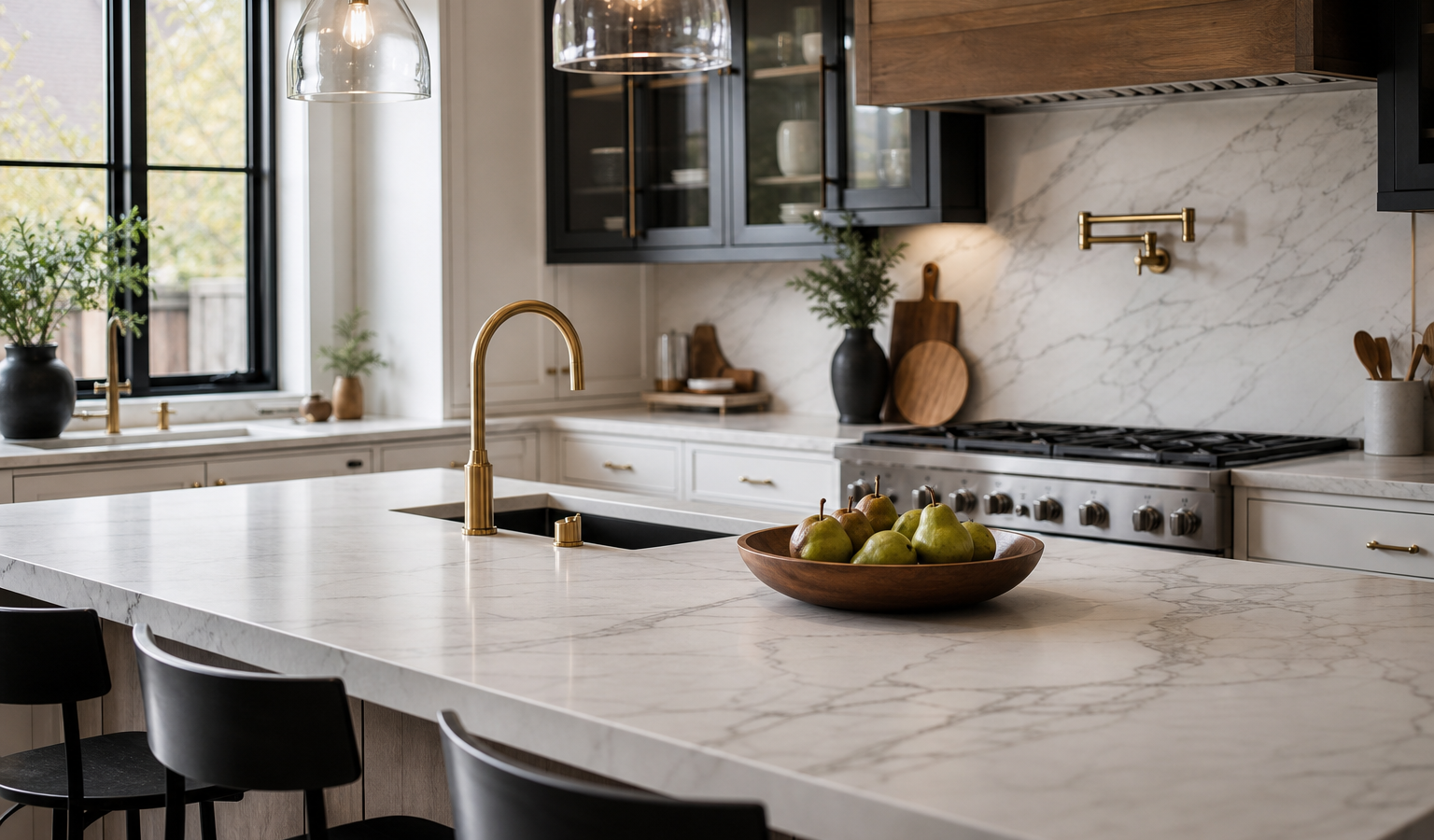
Choosing the best kitchen countertop materials is one of the highest-stakes calls in any remodel, because the surface you pick shapes how the room looks, how it performs under daily cooking, and what you pay per square foot. This 2026 comparison breaks down the nine countertop families most American homeowners actually weigh, with real installed prices, durability notes, and honest maintenance expectations. Whether you cook every night, chase a low-maintenance kitchen, or want a showpiece island, the right slab is out there. Below we put quartz, granite, marble, quartzite, butcher block, laminate, solid surface, concrete, and soapstone head to head.
Prices here are installed 2026 US figures per square foot, covering the slab, fabrication, edge work, and standard install. Your real number depends on slab grade, edge profile, cutouts, and your local market, so treat each range as a planning band. For a fuller picture of what drives the bill, see our kitchen countertop cost guide.
| Material | Installed $/sq ft | Durability | Maintenance | Best for |
|---|---|---|---|---|
| Quartz | $60-$150 | Excellent | None (nonporous) | Busy families, resale |
| Granite | $50-$120 | Excellent | Seal every 1-3 yrs | Serious cooks, value |
| Marble | $75-$250 | Fair | High, seals and etches | Luxury, patina lovers |
| Quartzite | $80-$200 | Outstanding | Seal every 1-3 yrs | Forever homes, islands |
| Butcher block | $40-$120 | Fair | Oil regularly | Warmth, budget accents |
| Laminate | $20-$50 | Good | Wipe clean only | Tight budgets, rentals |
| Solid surface | $45-$100 | Good | Low, buffs out | Seamless, mid budgets |
| Concrete | $75-$150 | Good | Seal periodically | Custom modern looks |
| Soapstone | $80-$180 | Good | Oil optional, no seal | Character, heat-heavy |
Quartz: the low-maintenance best-seller
Cost, durability, and daily upkeep
Quartz is engineered stone, roughly 90 to 93 percent crushed natural quartz bound with resin, which makes it completely nonporous. That means no sealing, ever, and no lingering stains from wine, coffee, or oil. Installed prices run $60 to $150 per square foot in 2026, with marble-look premium lines from brands like Cambria, Silestone, and Caesarstone landing at the top. It is scratch resistant and impact resistant, and its consistent color across a large slab makes for a clean, predictable look.
The catch is heat. The resin binder softens and can scorch around 300 degrees Fahrenheit, so hot pans need a trivet. Quartz also yellows under UV, so it is an indoor-only surface. For most busy households that want a set-and-forget counter with strong resale appeal, engineered stone is the safe default, which is exactly why it outsells everything else in America.
Granite: natural stone that earns its keep
Heat resistance and sealing needs
Granite is the value champion among natural stones. Entry-level slabs start near $50 per square foot installed, and even premium exotic colors rarely pass $120. It is genuinely heatproof, so a hot pot straight off the burner will not hurt a well-fabricated top, and at Mohs 6 to 6.5 it shrugs off everyday knife slips and abrasion.
Because granite is porous, it needs sealing every one to three years to stay stain resistant; a quick water-bead test tells you when it is time. Modern quarries offer whites, grays, and leathered finishes that look nothing like the busy brown-and-gold slabs of the 2000s. For serious cooks and busy families who want real stone without a fussy routine, granite delivers the best durability per dollar. If you are torn between the two most popular picks, our quartz vs granite breakdown goes deeper.
Marble: timeless beauty with a caveat
Etching, honed vs polished, and who it suits
Nothing reads luxury like marble. Bianco Carrara, Calacatta Gold, and Statuario carry veining that designers have chased for centuries, and installed costs reflect that pedigree, from about $75 per square foot for Carrara to $250 or more for premium Calacatta. It handles heat well, but that is where the good news slows down.
At Mohs 3 to 4, marble scratches easily, and it etches from acids like lemon, wine, and vinegar. Etching is a chemical reaction, not a stain, so no sealer prevents it. A honed (matte) finish hides etching far better than a polished one and is the smart choice for a working kitchen. Marble is best for owners who embrace patina, or who want it on a low-traffic island or a bathroom vanity rather than the main prep zone.
Contractor’s take
Nine times out of ten, the daily experience of a countertop comes down to fabrication, not just the material. I have seen a $60 quartz top outlast a $200 marble slab because the seams were placed right and the overhangs were supported. Tag your actual slab, not a three-inch sample, and settle your sink, faucet, and edge profile before template day.
Quartzite: the marble look, granite toughness
Why designers named it 2026’s top pick
Quartzite is natural stone often mistaken for marble, but it is far harder, around Mohs 7, which beats granite. That means it resists scratches from any kitchen tool, takes heat without flinching, and stays UV stable for indoor or covered outdoor use. Slabs like Taj Mahal and Sea Pearl carry flowing, marble-style veining that has made quartzite the fastest-growing category and a designer favorite this year. Installed prices run $80 to $200 per square foot.
Like granite, it is porous and wants sealing every one to three years. One buyer-beware note: soft dolomites are sometimes mislabeled and sold as quartzite, so ask your fabricator to verify the stone. For a forever home or a statement island where you want marble drama without marble anxiety, quartzite is hard to beat. It is a natural upgrade if you are budgeting a showpiece kitchen island.
Butcher block: warmth and workability
Wood species, oiling, and water care
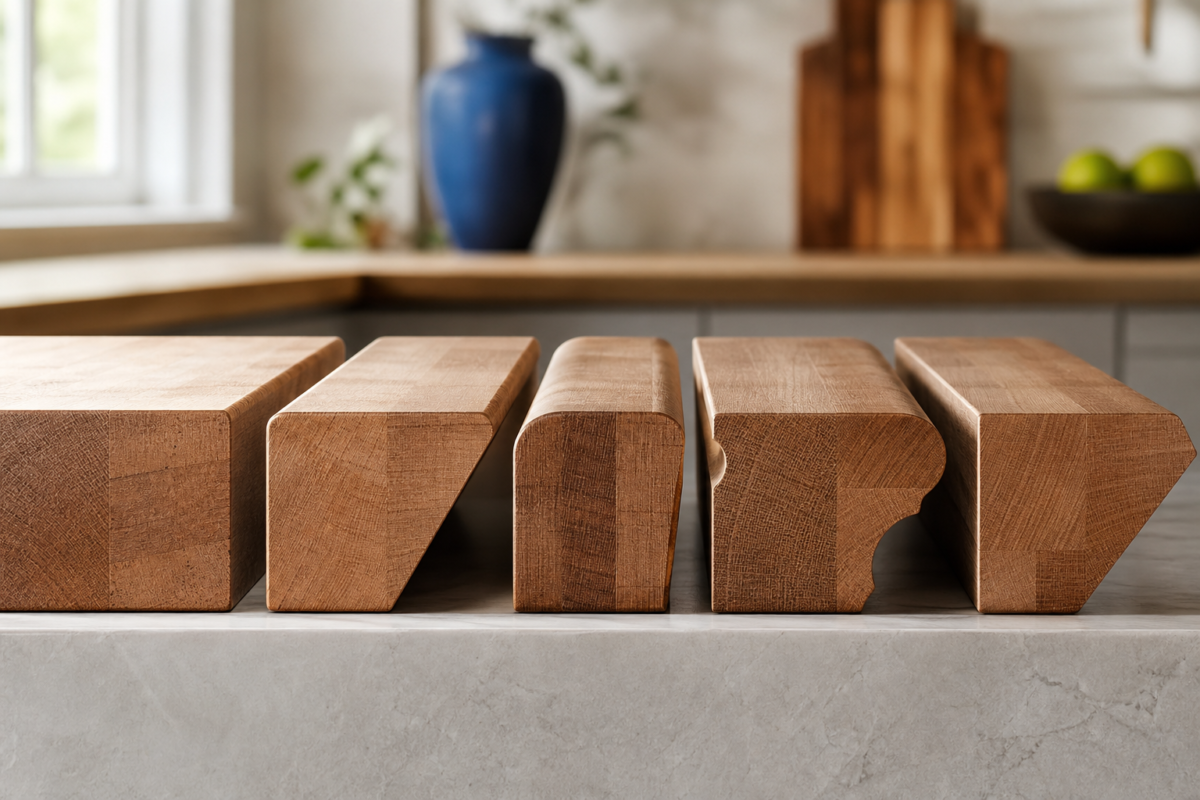
Butcher block brings warmth that stone cannot, and at $40 to $120 per square foot installed it fits a range of budgets. Hard maple, walnut, and oak are common; you can chop directly on it and sand out scratches or burns, which makes wood uniquely repairable. It pairs beautifully as an accent, such as an island top against stone perimeters.
The trade-off is upkeep. Wood is porous and needs regular oiling to stay water resistant, and standing water near the sink can cause swelling, staining, or cracking over time. Keep it away from the dishwasher zone, wipe spills fast, and re-oil every few weeks at first. For homeowners who love the organic look and do not mind the ritual, it is a rewarding surface.
Laminate: the budget workhorse
Modern looks and honest limits
Laminate is the most affordable real countertop at $20 to $50 per square foot installed, and it has come a long way. Today’s high-definition patterns convincingly mimic stone and wood, with matte finishes and even squared, seamless-look edges. It wipes clean, resists everyday stains, and installs fast, which makes it ideal for rentals, flips, and tight budgets.
The limits are real: laminate cannot take a hot pan, dulls or gouges under a knife, and cannot be refinished. Moisture can creep into seams or edges over the years and cause peeling. It rarely adds resale value, but if your goal is a fresh, clean kitchen for the least money, laminate stretches a budget further than anything else. Pair it with other savings in our budget kitchen remodel ideas.
Solid surface: seamless and forgiving
Invisible seams and easy repairs
Solid surface, best known by the Corian brand, is a nonporous blend of acrylic or polyester resin and mineral fillers. Its signature trick is nearly invisible seams: pieces are bonded so the counter can wrap sinks and backsplashes in one continuous, hygienic sweep. Installed costs land at $45 to $100 per square foot, a comfortable mid-range.
Because the color runs through the material, minor scratches, scorches, and dull spots buff right out with a fine abrasive pad, so the surface is genuinely renewable. It is only moderately heat resistant, so trivets are a must, and it lacks the depth of real stone. For a smooth, low-maintenance, integrated look at a sensible price, solid surface is an underrated pick.
Concrete: custom, industrial, one of a kind
Sealing, weight, and cure time
Concrete counters are custom-cast, so you control shape, color, edge, and embedded details like glass or shells. That flexibility, plus a warm industrial-modern vibe, runs $75 to $150 per square foot installed. It is heat resistant and, when properly sealed, holds up to daily use, developing a lived-in character many owners love.
The demands are real: concrete is heavy, roughly 18 pounds per square foot, so cabinets may need reinforcement. It needs a skilled fabricator, a 7 to 14 day cure, and periodic resealing, and hairline cracks can appear as it settles, part of the material’s honest charm. For a truly bespoke, design-forward kitchen and an owner who accepts some patina, concrete rewards the effort.
Soapstone: the quiet overachiever
Nonporous by nature and heatproof
Soapstone is a dense, talc-rich natural stone in charcoals and deep, moody greens. Its rare edge is that it is naturally nonporous, so it never needs sealing, and it is chemically inert, meaning acids that would etch marble do nothing to it. It is also fully heatproof, so you can set a hot pan straight down. Installed prices run $80 to $180 per square foot.
Softer than granite, soapstone scratches and dents more easily, but marks blend into its evolving patina rather than standing out, and light sanding erases the worst. Many owners rub in mineral oil to deepen the color, though it is optional. For a stain-proof, maintenance-light stone with real character, especially in a heavy-cooking kitchen, soapstone quietly outperforms its reputation.
How to choose the best countertop for your kitchen
Match the material to budget and lifestyle
Start with how you cook and how much upkeep you tolerate. If you want zero maintenance, quartz or solid surface win. If you cook hot and hard, granite, quartzite, soapstone, and concrete take heat that quartz cannot. If natural beauty leads, quartzite and marble deliver, with quartzite far more forgiving. On a tight budget, laminate stretches the dollar, while entry granite gives the best durability per dollar in real stone.
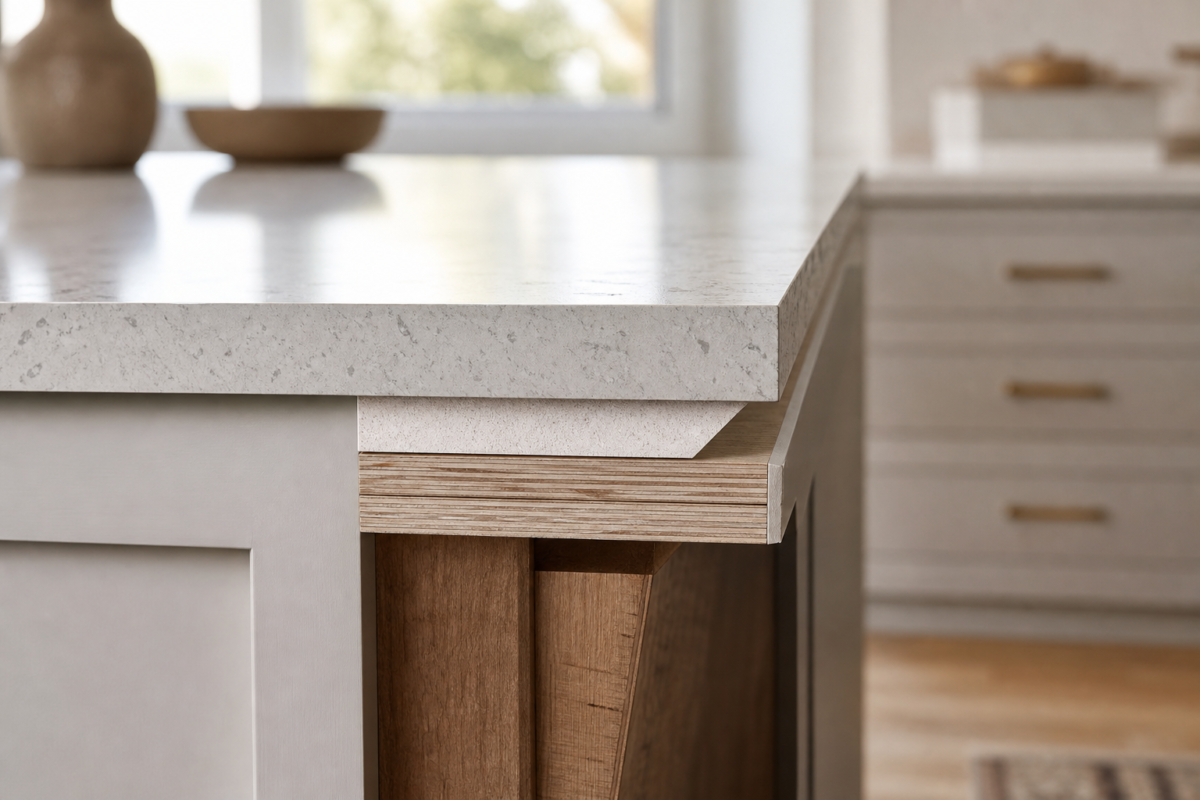
Two technical choices shape both look and price. Thickness: a 3cm (about 1.25 inch) slab is the modern standard and can be installed without a plywood substrate, while 2cm is thinner, cheaper, and often needs backing or a built-up edge to look substantial. Edge profiles, from a simple eased or beveled edge to a bullnose or ogee, affect cost and style; squared edges read modern, rounded edges read traditional. Ask about using a remnant for a small vanity or island to save money, and always confirm seam placement before fabrication.
Use this quick checklist when you compare quotes so you are pricing the same scope, not just the same material.
- Confirm installed price includes fabrication, edges, and cutouts
- Choose 2cm vs 3cm thickness and the edge profile up front
- Tag your actual slab, not a small sample chip
- Ask where seams will fall and how overhangs are supported
- Verify sealing schedule and whether the stone is nonporous
- Price a remnant for small islands or vanities to cut cost
Common questions before you buy
The answers below cover the questions homeowners ask most once they have narrowed the field, from upkeep to heat to picking the right thickness.
Frequently asked questions
Your next move
You know the number. What are you deciding next?
Kitchen countertops run $2,000 to $10,000+ installed. Here's the 2026 cost of every material per square foot -…
Continue →Quartz vs. granite: the two most-chosen kitchen countertops compared on 2026 cost, durability, maintenance, heat, and looks -…
Continue →Modern laminate countertops in 2026 mimic stone, cost $20 to $50 installed, and install fast. See prices, brands,…
Continue →Frequently asked
What is the best low-maintenance countertop material?
Quartz is the top low-maintenance choice: it is nonporous, never needs sealing, and wipes clean with soap and water. Solid surface is a close, more affordable runner-up that also resists stains and buffs out minor marks.
Which countertop handles heat the best?
Granite, quartzite, soapstone, and concrete are all genuinely heat resistant and can take a hot pan. Quartz and laminate cannot, so those surfaces always need a trivet or hot pad.
Is quartzite better than marble?
For a working kitchen, usually yes. Quartzite has the marble-style veining many buyers want but is far harder at about Mohs 7, so it resists scratches and does not etch from acids the way marble does.
Do I need 2cm or 3cm countertops?
A 3cm slab is the modern standard, installs without plywood backing, and looks substantial. A 2cm slab costs less but usually needs a support substrate or a built-up edge to match that thickness.
What is the cheapest countertop that still looks good?
Laminate at $20 to $50 per square foot offers the best looks for the least money, with convincing stone and wood patterns. Entry-level granite is the cheapest real stone with strong durability.

Prices reflect 2026 US installed averages compiled from national cost guides and fabricator pricing; verify with local quotes.